- Side
- NATO

Raytheon's AN/ALE-50 data sheet says the towed decoy provided combat-proven aircraft protection against RF missile threats in Kosovo, while JED later identified successful B-1B ALE-50 use during Operation Allied Force.
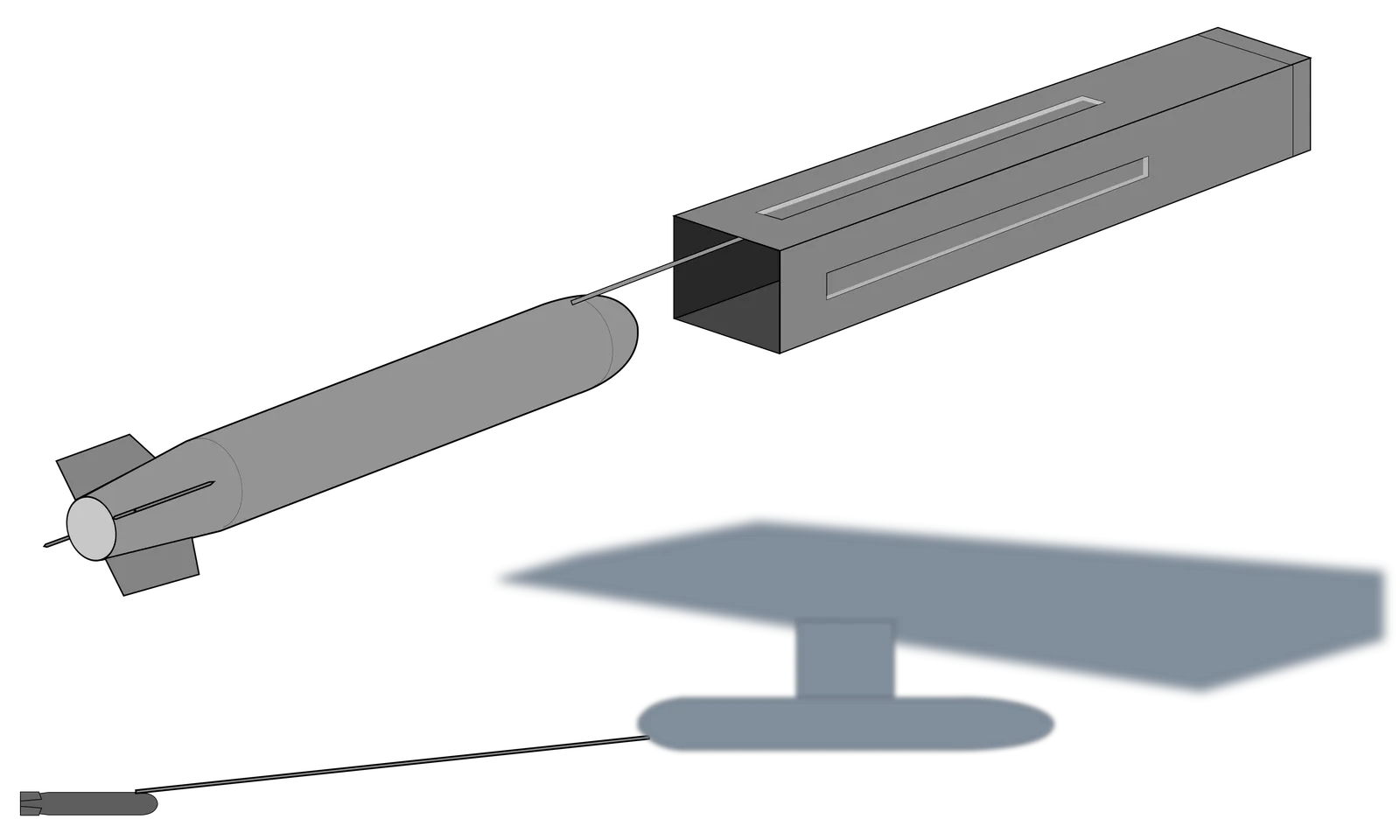
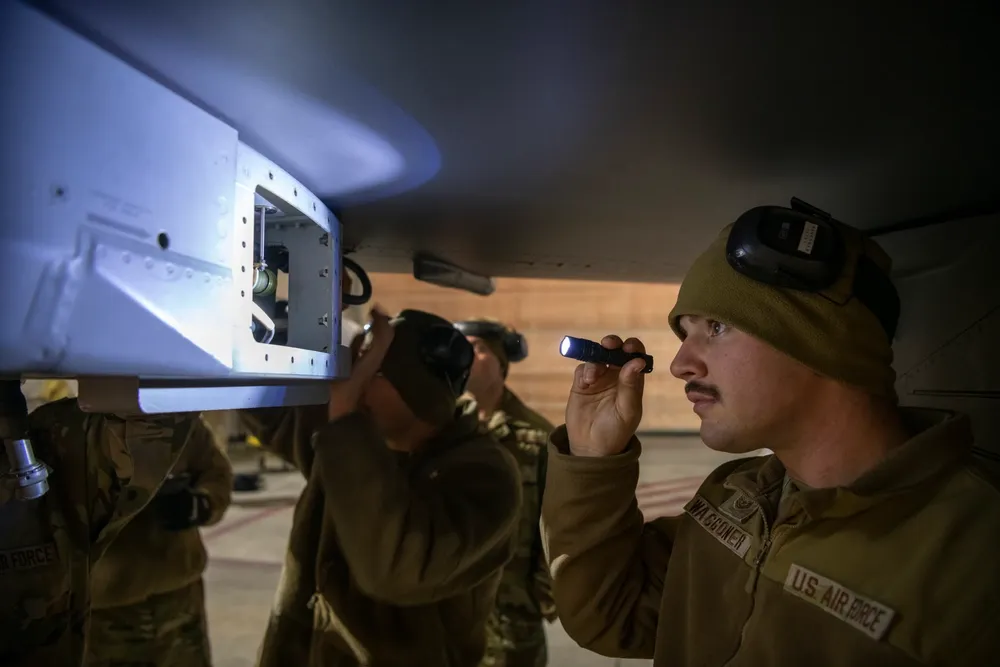
The AN/ALE-50 is a Raytheon airborne towed decoy countermeasure developed from Naval Research Laboratory work to draw radar-guided missiles away from combat aircraft. It entered production in December 1996, pairs a launcher/controller installation with expendable decoy canisters, and is documented on F-16, F/A-18E/F Super Hornet, and B-1B aircraft as a compact radio-frequency self-protection system used from Kosovo and Iraq to later U.S. air operations.
Raytheon's AN/ALE-50 data sheet says the towed decoy provided combat-proven aircraft protection against RF missile threats in Kosovo, while JED later identified successful B-1B ALE-50 use during Operation Allied Force.
Raytheon's archived AN/ALE-50 data sheet identifies Afghanistan among conflicts where the decoy provided RF missile-threat protection, and Forecast International described ALE-50(V) interim decoys as used in combat over Afghanistan.
Role detailsDoD's FY 2004 supplemental request sought replacement funding for air-launched expendable ALE-50 decoys expended in support of Operation Iraqi Freedom, and JED later identified B-1B ALE-50 use in OIF.
Role detailsTWZ reported evidence of U.S. tactical aircraft using AN/ALE-50 towed decoys during the 2026 Iran War, while noting the public evidence came from recovered-decoy imagery rather than an official confirmation.
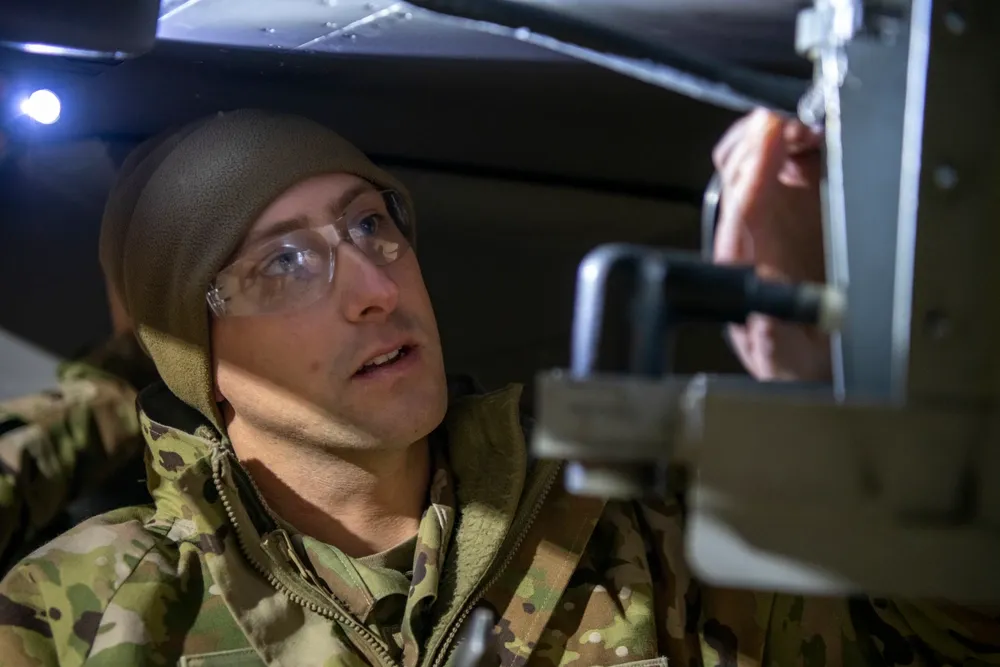
The AN/ALE-50 is best read as an aircraft defensive subsystem: public sources document it through the host aircraft launcher, controller, and expendable decoy round rather than as a standalone munition.
The aircraft carries a launch controller and launcher, then streams an expendable decoy behind the aircraft when a radar-guided missile threat requires it.
GAO describes the ALE-50 decoy as a single-use component; the tow line is severed before the aircraft returns to base.
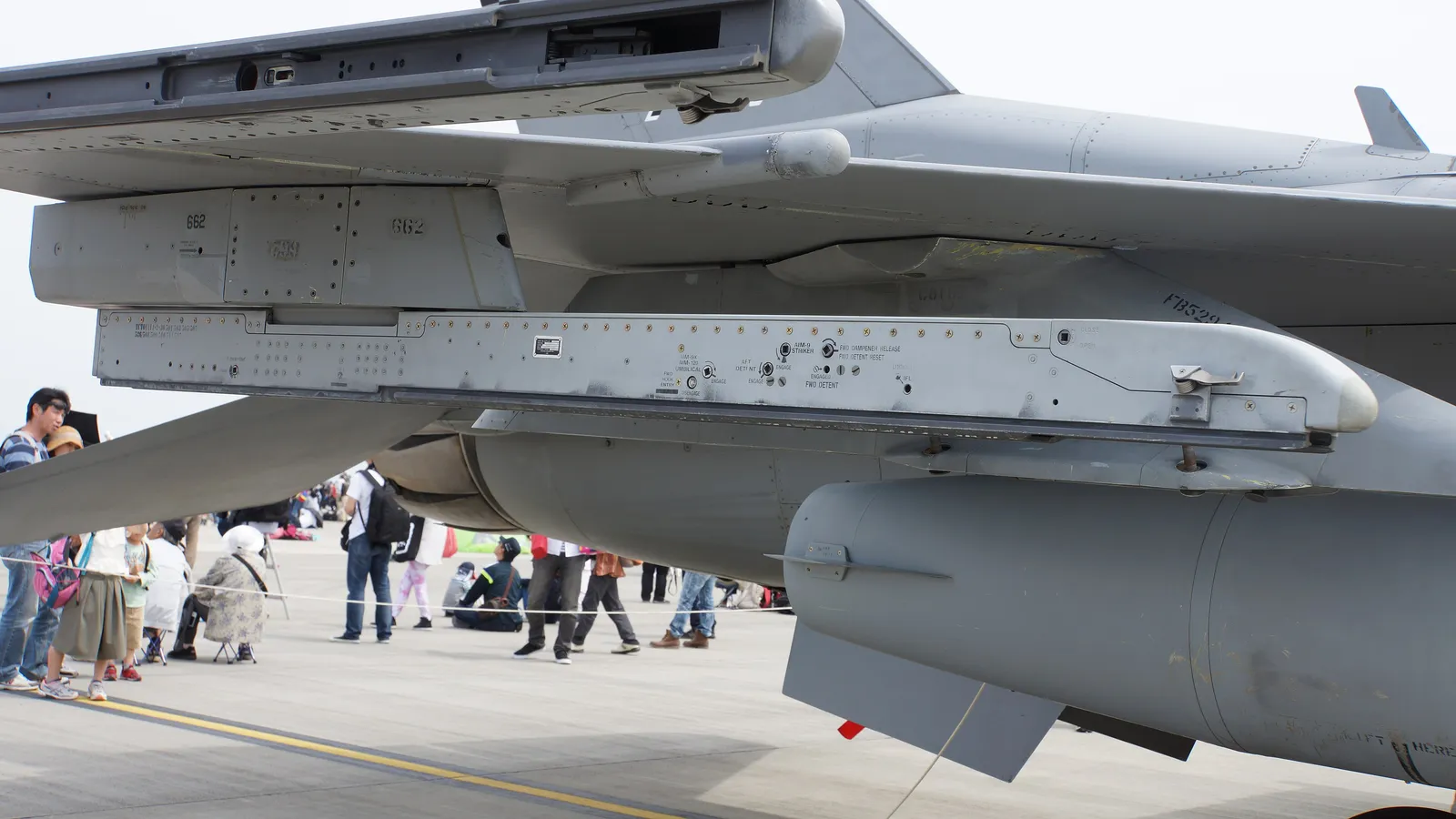
Open sources tie the system to F-16, F/A-18E/F, and B-1B installations, with platform-specific launcher arrangements around the same expendable-decoy concept.
Source labels used here: GAO Towed Decoys and Navy Aircraft Survivability; Raytheon Delivers 20,000th ALE-50 Towed Decoy; Air Force FY2001 Aircraft Procurement Justification.
Public sources use AN/ALE-50 and AN/ALE-50(V) language for the decoy set, with platform-specific launcher and controller configurations rather than wholly separate weapon families.
| Variant | Configuration | Designation notes |
|---|---|---|
| B-1B Towed Decoy System installation | B-1B towed decoy installation | U.S. Air Force budget material describes a B-1B Towed Decoy System installation using two launcher controllers, two launchers with magazines and canisters, and eight AN/ALE-50 decoy rounds. Sources: Air Force FY2001 Aircraft Procurement Justification |
| ALE-50 Bravo T3F launcher | F/A-18E/F launcher procurement | The Department of Defense reported a 2014 Navy delivery order for 226 ALE-50 Bravo T3F launchers for U.S. Navy F/A-18E/F aircraft. Sources: DoD Contracts for September 23 2014 |
| Integrated Multi-Platform Launch Controller | Shared launch-control component | Defense Industry Daily describes the IMPLC as the standard launch controller used with platform-specific launchers in AN/ALE-50-related installations. Sources: Defense Industry Daily on ALE-50 Little Buddy Decoys |
ALE-50 is an aircraft-installed countermeasure: the decoy round matters through the aircraft launcher, controller, and defensive avionics around it.
| Launcher | Launcher type | Launch evidence |
|---|---|---|
 | Multirole fighter | GAO reported that the Air Force had modified the F-16 for ALE-50 use, and Raytheon later identified the F-16 as an operational ALE-50 aircraft. Sources: GAO Towed Decoys and Navy Aircraft Survivability, Raytheon Delivers 20,000th ALE-50 Towed Decoy |
 | Carrier-based strike fighter | NAVAIR and DoD contract notices document ALE-50 deployment, procurement, and repair activity for F/A-18E/F Super Hornet aircraft. Sources: NAVAIR Next-Generation Dual-Band Towed Decoy, DoD Contracts for September 23 2014, DoD Contracts for April 22 2020 |
 | Long-range bomber | GAO reported Air Force plans for B-1 ALE-50 installations, while Air Force budget material describes B-1B kits with launcher controllers, launchers, magazines, canisters, and eight decoy rounds. Sources: GAO Towed Decoys and Navy Aircraft Survivability, Air Force FY2001 Aircraft Procurement Justification |
 | Proposed multirole fighter | TWZ reported that Lockheed Martin's F-21 promotional video showed outboard underwing pylons able to deploy the AN/ALE-50 towed decoy; this is a proposal-context link, not a fielded operator relationship. |
DOT&E-derived reporting records the ALE-50 system installed on the F-16 completing IOT&E in September 1996 and being assessed as effective and suitable.
Raytheon and NRL sources place ALE-50 production start in December 1996.
GAO described Air Force plans for hundreds of F-16 and B-1 installations and Navy plans to use ALE-50 for F/A-18E/F testing and contingency needs.
Raytheon announced delivery of the 20,000th ALE-50 towed decoy and identified F-16, F/A-18, and B-1B operational aircraft.
A Department of Defense contract notice covered 226 ALE-50 Bravo T3F launchers for U.S. Navy F/A-18E/F aircraft.
A Department of Defense contract notice identified repair work for ALE-50 towed decoy systems used in support of F/A-18 Super Hornet aircraft.