Profile
- Type
- Directional fragmentation antipersonnel mine
- Conflict side
- Russia
- Origin
- Soviet Union
- Service note
- Cold War design; documented in the Russia-Ukraine War
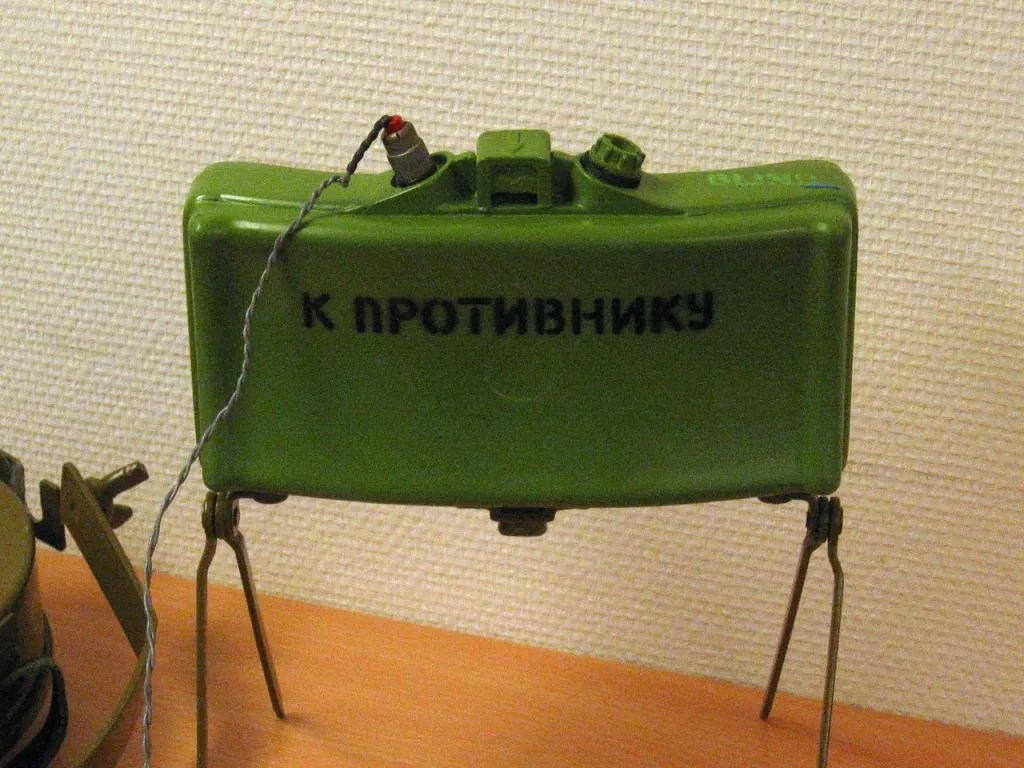
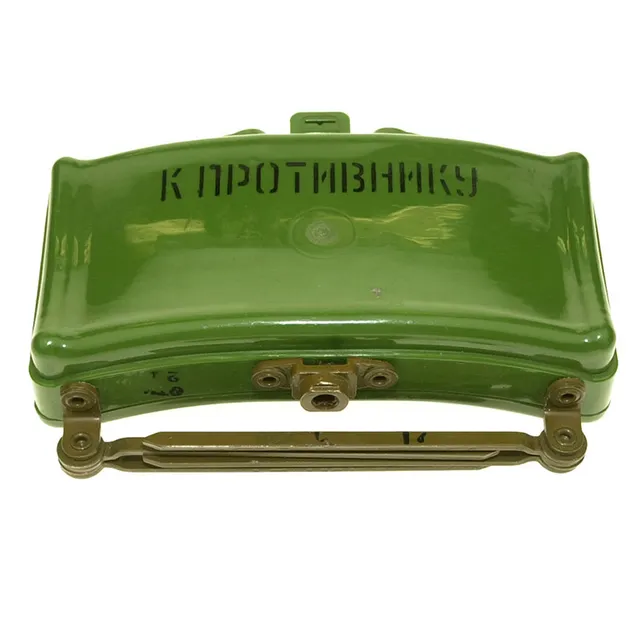
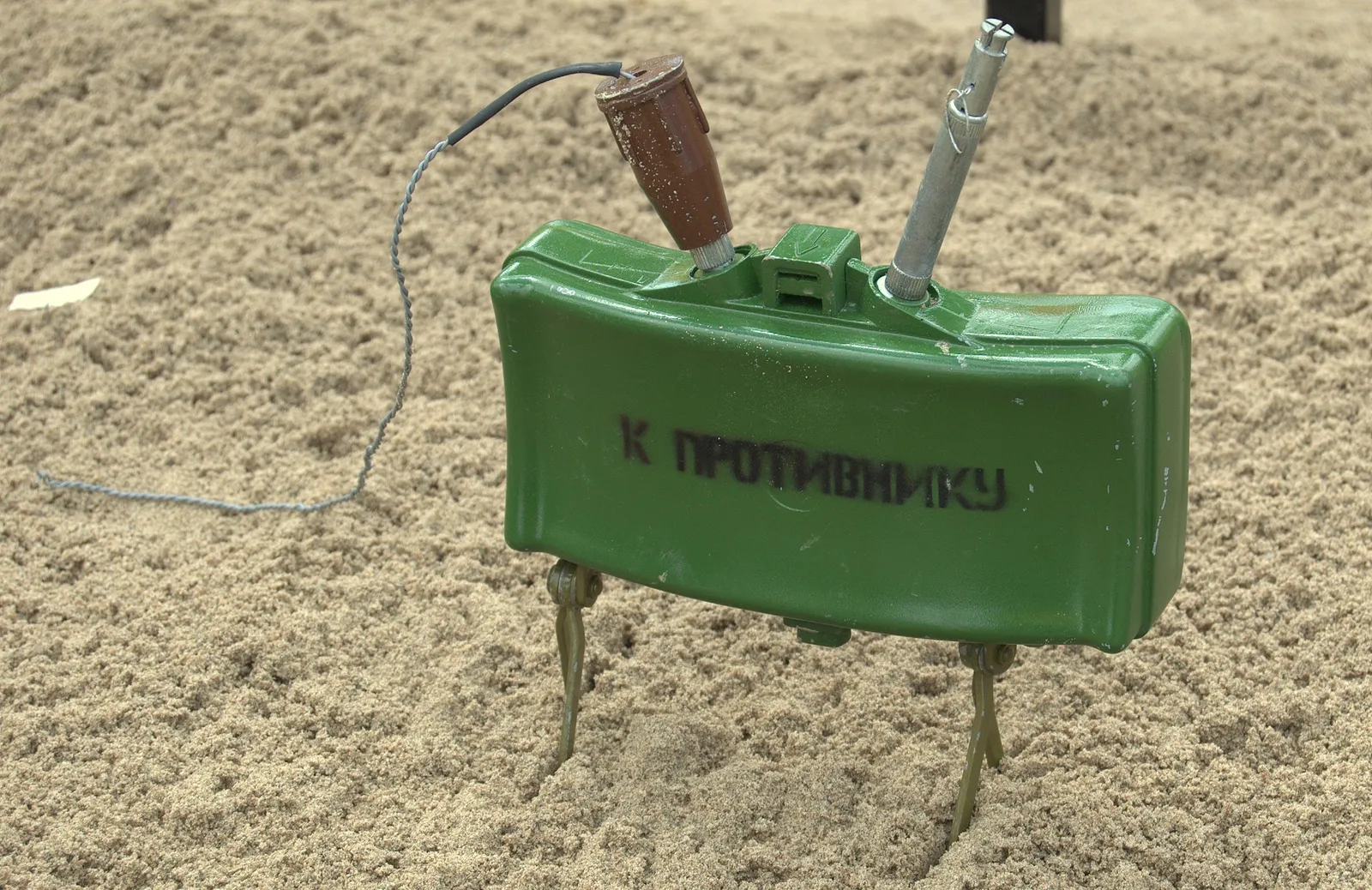
The MON-50 is a Soviet directional fragmentation antipersonnel mine broadly comparable in role to the M18 Claymore, with a plastic body, folding legs, and a forward fragmentation pattern. It can be command-detonated or configured with tripwire and other fuzing, making it a compact infantry obstacle and ambush munition. In the Russia-Ukraine War, monitoring groups identify MON-50 mines among Russian-used hand-emplaced antipersonnel mines, adding to the dense explosive contamination faced by Ukrainian deminers and civilians.
Russian forces have used MON-50 hand-emplaced directional fragmentation antipersonnel mines in Ukraine since the February 2022 full-scale invasion; Human Rights Watch and Landmine Monitor list the type among MON-series mines documented in the conflict.
MON-90Directional fragmentation anti-personnel mineThe MON-90 is a Soviet-designed directional fragmentation anti-personnel mine, broadly comparable in role to a large Claymore-type munition. It uses a plastic, curved body and a heavy explosive charge to project steel fragments across a fixed arc, and open-source mine-action reporting identifies it among the antipersonnel mines contaminating Ukrainian territory during the Russia-Ukraine War.
MON-100Directional anti-personnel fragmentation mineThe MON-100 is a Soviet/Russian directional anti-personnel fragmentation mine, a larger member of the MON family intended to project steel fragments across a 100-meter danger area. In the Russia-Ukraine War it appears in mine-action reporting as one of the MON-series mines used by Russian forces, adding to the hand-emplaced and tripwire or command-initiated explosive hazards facing Ukrainian deminers and civilians.
PFM-1Scatterable anti-personnel blast mineThe PFM-1 is a Soviet scatterable anti-personnel blast mine with a plastic winged body and a small liquid-explosive charge, designed for remote delivery rather than hand emplacement. In the Russia-Ukraine War it has been documented in PFM-series rocket-scattered mine contamination around Izium, where Human Rights Watch linked the mines to 220 mm Uragan mine-laying rockets and civilian casualties.
PMN-1/2/4Antipersonnel blast mine familyThe PMN-1/2/4 family covers Soviet and Russian pressure-activated antipersonnel blast mines used to deny foot movement and injure personnel at close range. PMN-1 and PMN-2 are Soviet designs, while PMN-4 is a later Russian circular plastic-cased mine; all three are relevant to mine-contamination reporting in and around Ukraine, where PMN-2 and PMN-4 examples have been documented during the Russia-Ukraine War.
POM-2Scatterable antipersonnel fragmentation mineThe POM-2 is a Soviet/Russian scatterable antipersonnel fragmentation mine that deploys tripwire sensors after delivery by rockets, helicopters, aircraft, vehicles, or specialized dispensers. In Ukraine, it appears as part of Russia's remotely delivered mine threat, including documented POM-2 mines and KPOM-2 canisters recovered in areas cleared by Ukrainian emergency services.
TM-72Shaped-charge anti-tank mineThe TM-72 is a Soviet metal-cased anti-tank mine built around a shaped-charge effect and magnetic-influence fuzing, rather than a simple pressure blast. In Ukraine it is documented less often than common TM-62-series mines, but open reporting in 2026 described both limited battlefield use and Russian efforts to employ TM-72 mines in contested urban approaches.