- Side
- Russia

Human Rights Watch lists MON-90 among antipersonnel mines used by Russian forces in Ukraine after the February 2022 invasion.
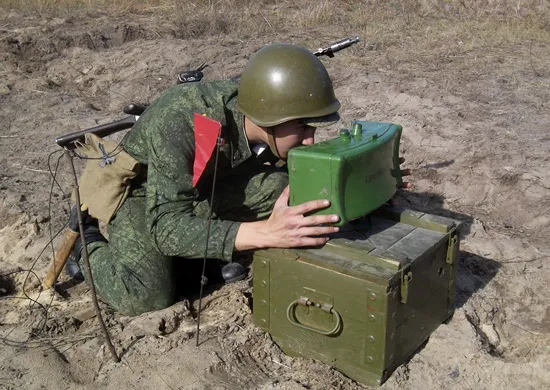
Role detailsThe MON-90 is a Soviet-designed directional fragmentation antipersonnel mine and the 90 m member of the MON family between the smaller MON-50 and larger MON-100. Technical references describe a plastic-bodied, tree-spike-mounted mine with about 2,000 steel fragments, two M-10 threaded fuze wells, and command or tripwire initiation depending on setup. Direct monitoring sources place MON-90 mines in Russian use in Ukraine after the 2022 invasion and in Russian-linked Tripoli mine contamination during the Second Libyan Civil War.
Human Rights Watch lists MON-90 among antipersonnel mines used by Russian forces in Ukraine after the February 2022 invasion.
Role detailsLandmine Monitor lists MON-90 antipersonnel mines as Russian-made weapons used in and around Tripoli in 2019-2020 by Russian mercenaries fighting on the Libyan National Army side.
GICHD treats the MON-90 as a larger MON-50 family member. Technical references emphasize the mine's 90 m range class, two fuze wells, and mounting kit.
| Feature | MON-90 detail |
|---|---|
| Range | About 90 m in a directional arc |
| Coverage | Forward 40/60-degree area of coverage in Bulletpicker's summary |
| Mounting | Tree spike only; no scissor legs |
| Storage case | Case size comparable to an 82 mm mortar case and usable as a deployment base |
| Fuze wells | Two M-10 threaded wells |
| Fragments | About 2,000 chopped or cylindrical steel fragments |
The MON model number broadly marks intended fragment range. MON-90 is the 90 m class member in the same directional mine family as MON-50, MON-100, and MON-200.
| Variant | Configuration | Designation notes |
|---|---|---|
 | 50 m class directional mine | Smaller MON family mine with folding support legs and 50 m forward fragmentation coverage. Sources: Russian Landmine, APERS, MON-90, Explosive Ordnance Guide for Ukraine, Third Edition |
 | 100 m class directional mine | Larger circular MON family mine listed alongside MON-90 in Ukraine and Libya conflict-use reporting. Sources: Landmine Use in Ukraine, Libya Mine Ban Policy |
| MON-200 | 200 m class directional mine | The largest commonly listed MON family model in current monitoring tables for Ukraine and Libya. Sources: Ukraine Mine Ban Policy, Libya Mine Ban Policy |
A State Emergency Service of Ukraine video documents disposal of a MON-90 found in Irpin after Russian occupation.
Sources: Disposal of MON-90 Anti-Personnel Mine
Human Rights Watch lists MON-90 among antipersonnel mines used by Russian forces in Ukraine after the February 2022 invasion.
Sources: Landmine Use in Ukraine
Landmine Monitor's Libya profile lists MON-90 mines among Russian-made antipersonnel mines used in Tripoli in 2019-2020 by Russian mercenaries.
Sources: Libya Mine Ban Policy
The strongest direct conflict-use evidence for MON-90 is concentrated in Ukraine and Libya. The table separates disposal footage from monitoring tables so the sourcing limits are visible.
| Date | Conflict | Documented context |
|---|---|---|
| 10 Apr 2022 | 2014 Russia-Ukraine War | State Emergency Service of Ukraine video shows disposal of a MON-90 found in Irpin after Russian occupation. |
| 13 Jun 2023 | 2014 Russia-Ukraine War | Human Rights Watch lists MON-90 among antipersonnel mines used by Russian forces in Ukraine after the February 2022 invasion. |
| 27 Nov 2025 | 2014 Second Libyan Civil War | Landmine Monitor's Libya profile lists MON-90 mines among Russian-made antipersonnel mines used in Tripoli in 2019-2020 by Russian mercenaries. |


