- Side
- Russia

Listed by Human Rights Watch and Landmine Monitor among MON-series antipersonnel mines used by Russian forces in Ukraine after the February 2022 full-scale invasion.
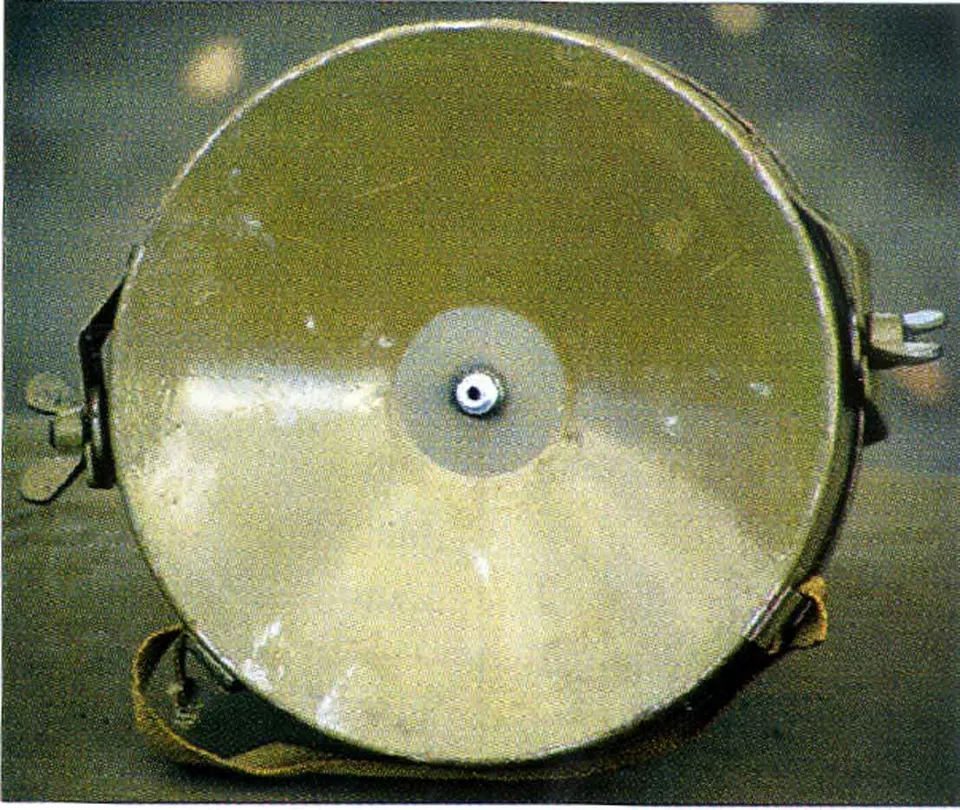
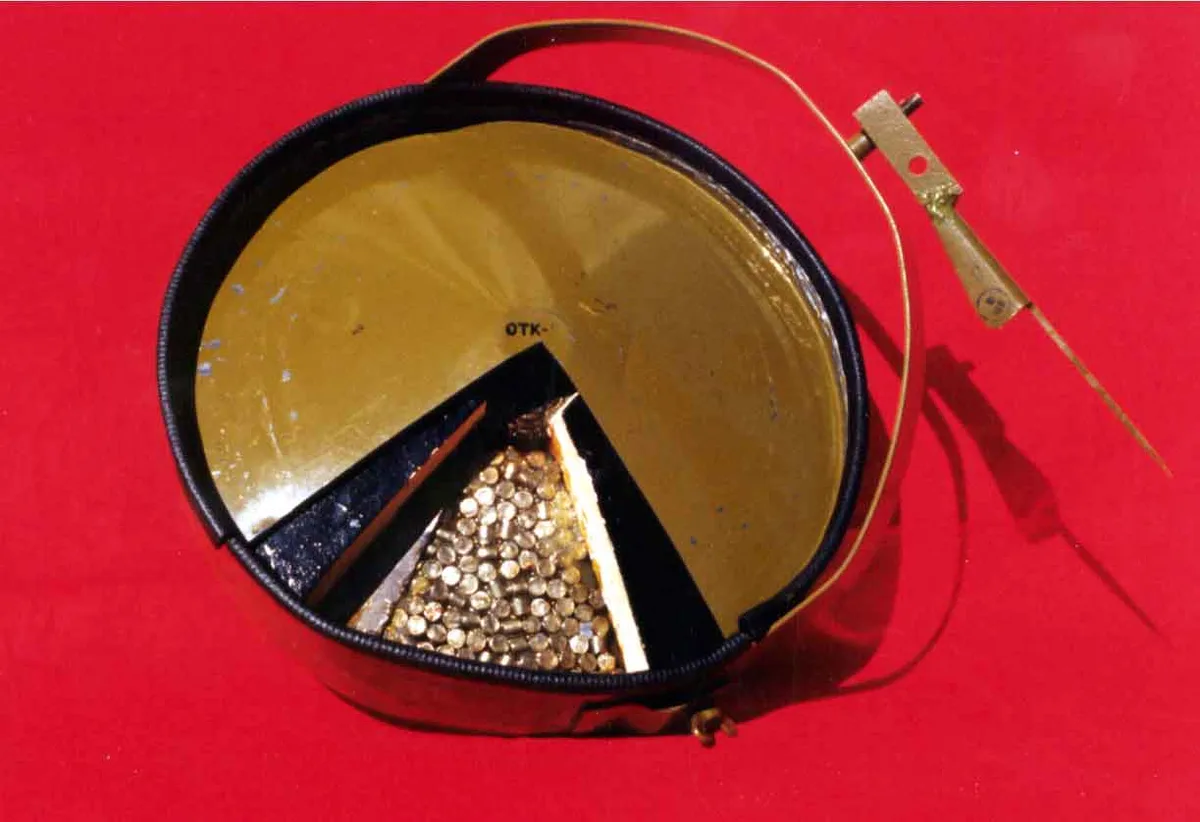
Role detailsThe MON-100 is a Soviet/Russian directional anti-personnel fragmentation mine in the larger end of the MON family. Technical references describe a circular metal-bodied, stake- or fixture-mounted mine with a 2 kg TNT charge, roughly 400 steel fragments, and command or tripwire-capable initiation. Monitoring groups identify MON-100 use by Russian forces in the 2014 Russia-Ukraine War and by Russian mercenaries around Tripoli during the 2014 Second Libyan Civil War.
Listed by Human Rights Watch and Landmine Monitor among MON-series antipersonnel mines used by Russian forces in Ukraine after the February 2022 full-scale invasion.
Role detailsHuman Rights Watch identified MON-100 directional fragmentation mines among Soviet/Russian-origin antipersonnel mines found in southern Tripoli after the 2019-2020 fighting, and Landmine Monitor attributes MON-100 use in Tripoli to Russian mercenaries fighting for Khalifa Haftar's LNA.
MON-100 identification depends on both the large circular body and the way the mine is mounted and initiated. The table separates the physical recognition details from the conflict-use issue: the same mine can be command detonated or configured with victim-activated fuzing.
| Feature | Sourced MON-100 detail | Reader context |
|---|---|---|
| Body and mount | Technical references describe a cylindrical or circular metal body with a metal stand, stake, or attachment to a fixed object. | The MON-100 is an above-ground directional mine rather than a buried pressure plate. |
| Fragment package | References list about 400 cylindrical steel fragments in front of a 2 kg TNT charge. | The preformed fragments explain the 100 m directional range class and the mine's anti-personnel role. |
| Initiation | Bulletpicker and mine-monitoring sources describe command, tripwire, break-wire, or related fuze/control-device setups. | Victim-activated setup is the key humanitarian-law and clearance concern in conflict reporting. |
| Family position | Landmine Monitor describes MON model numbers as range indicators from 50 m to 200 m. | That places MON-100 between MON-90 and MON-200 in the numbered family. |
The MON model number broadly indicates intended fragment range. MON-100 is the 100 m class member between smaller MON-50/MON-90 mines and the larger MON-200.
| Variant | Configuration | Designation notes |
|---|---|---|
 | 50 m class directional mine | Smaller MON family mine whose model number marks the 50 m range class. |
 | 90 m class directional mine | Intermediate MON family mine listed with MON-100 in current Ukraine and Libya mine-use reporting. |
| MON-200 | 200 m class directional mine | Larger MON family mine listed with MON-100 in Ukraine and Libya monitoring tables, but not yet represented by a separate public catalog record. |
Human Rights Watch described MON-100 among Soviet/Russian-origin antipersonnel mines found in southern Tripoli after the 2019-2020 fighting.
Sources: Libya: Landmines, Other War Hazards, Killing Civilians
Human Rights Watch listed MON-100 among MON-series antipersonnel mines used by Russian forces in Ukraine after the February 2022 invasion.
Sources: Landmine Use in Ukraine
The Monitor's Ukraine profile continued to list MON-100 among antipersonnel mines used by Russian forces in Ukraine since February 2022 and described MON-series mines as command-detonated or victim-activated depending on setup.
Sources: Ukraine: Mine Ban Policy