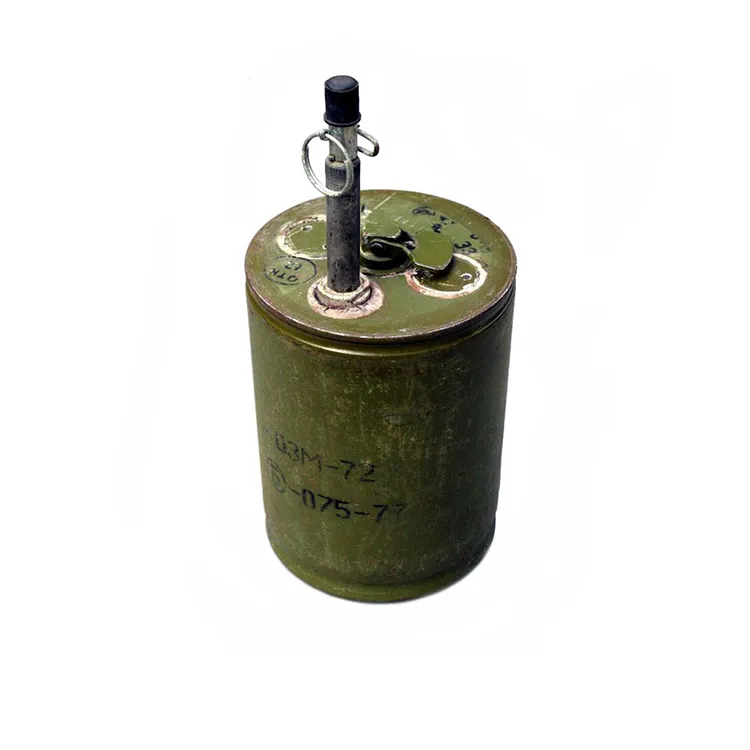
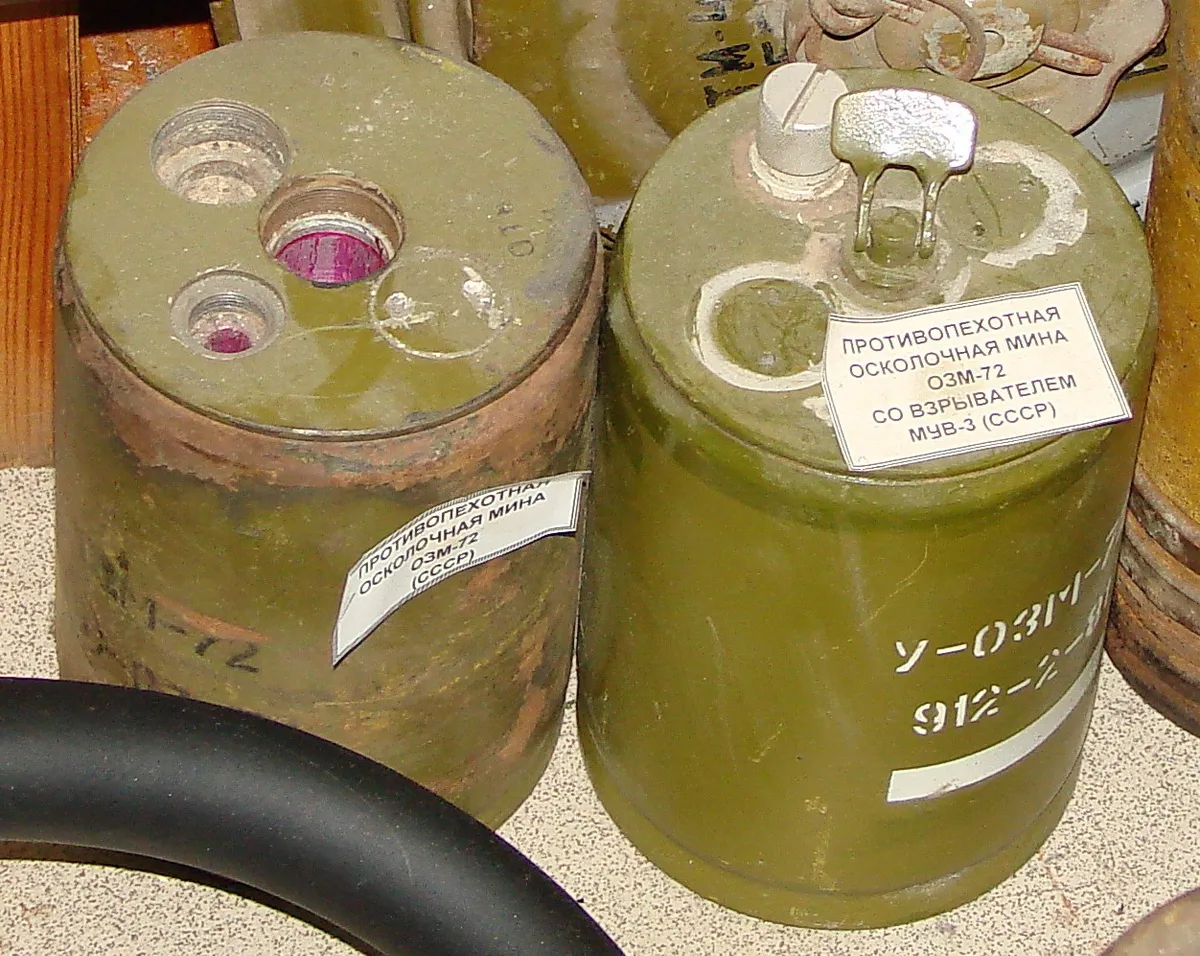
The OZM-72 is most useful to field forces as an area-denial mine because the munition bursts above ground level instead of detonating only at the casing. That same configuration makes it a recurring clearance problem in places where minefields remain after front lines move.
| Feature | Catalog context | Operational effect |
|---|
| Bounding burst | Technical references list a 0.6-0.9 m burst height and a fragmentation payload around the mine body. | The detonation is intended to project fragments through a wider standing-personnel danger area than a simple blast mine. |
| Tripwire or controlled initiation | OZM-72 references describe MUV-style tripwire use as well as electrical or command-initiation options. | The same mine can appear in victim-activated obstacles, guarded positions, or controlled defensive minefields. |
| Post-battle clearance | Human Rights Watch reporting in Ukraine, Yemen, and Syria identifies OZM-72 mines during demining or explosive-ordnance response work. | The mine remains a civilian and deminer hazard after units withdraw, front lines shift, or abandoned positions are reopened. |
Sources: Soviet OZM-72 Anti-Personnel Mine; Background Briefing on Landmine Use in Ukraine; Yemen: Houthi-Saleh Forces Using Landmines; Syria: Landmines, Explosive Remnants Harming Civilians.