- Side
- United States and South Vietnam


National Museum of the Marine Corps Vietnam-gallery material identifies the M18A1 command-detonated Claymore as a Marine weapon used offensively and defensively in Vietnam.
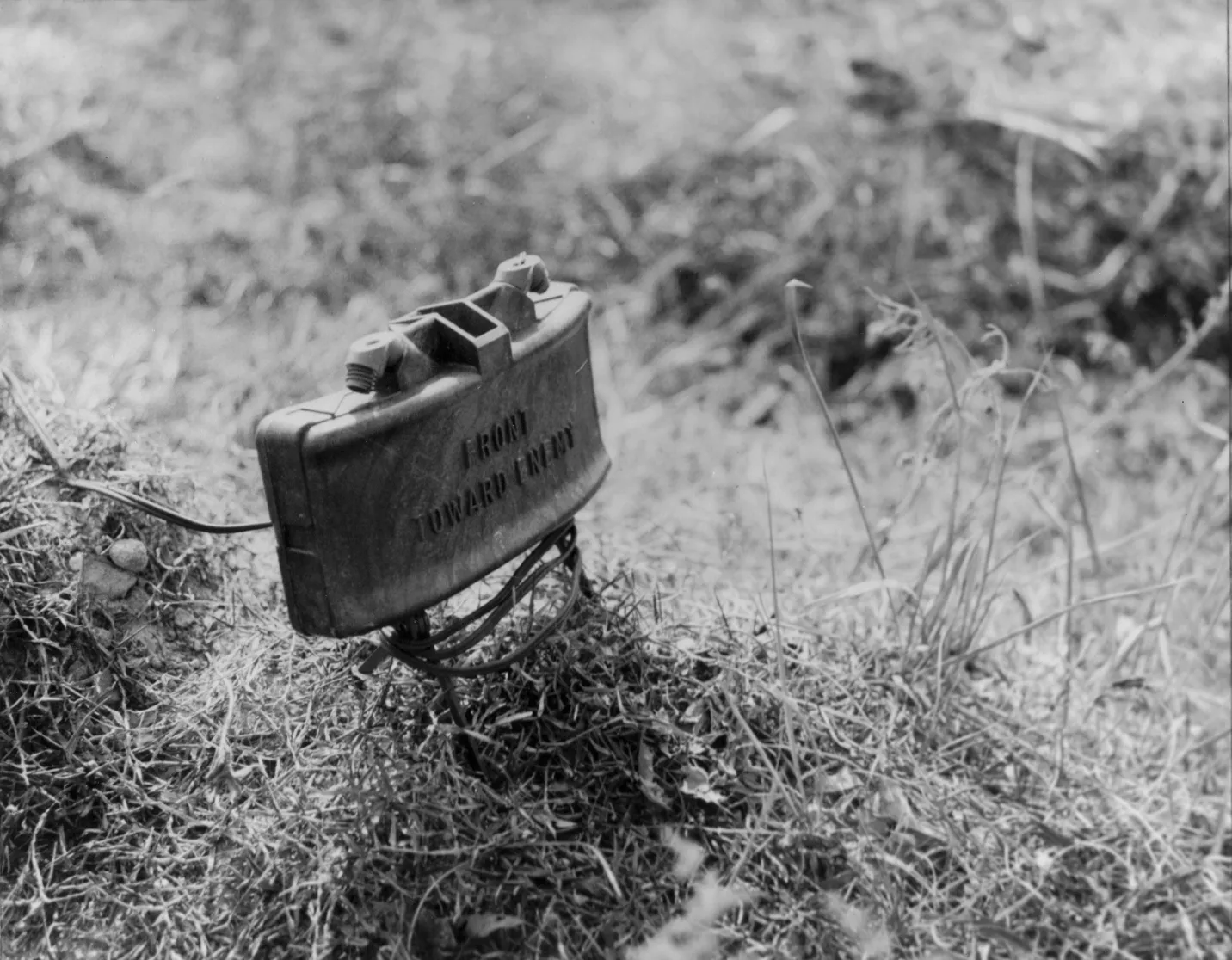
The M18A1 Claymore mine is a U.S. directional fragmentation anti-personnel munition built around a C-4 charge and a forward-facing steel-ball fragmentation matrix. Army sources describe controlled electric or non-electric initiation for perimeter defense, outpost protection, and anti-infiltration tasks, with direct records tying the M18A1 to Vietnam, Afghanistan, and U.S. transfers to Ukraine.
National Museum of the Marine Corps Vietnam-gallery material identifies the M18A1 command-detonated Claymore as a Marine weapon used offensively and defensively in Vietnam.
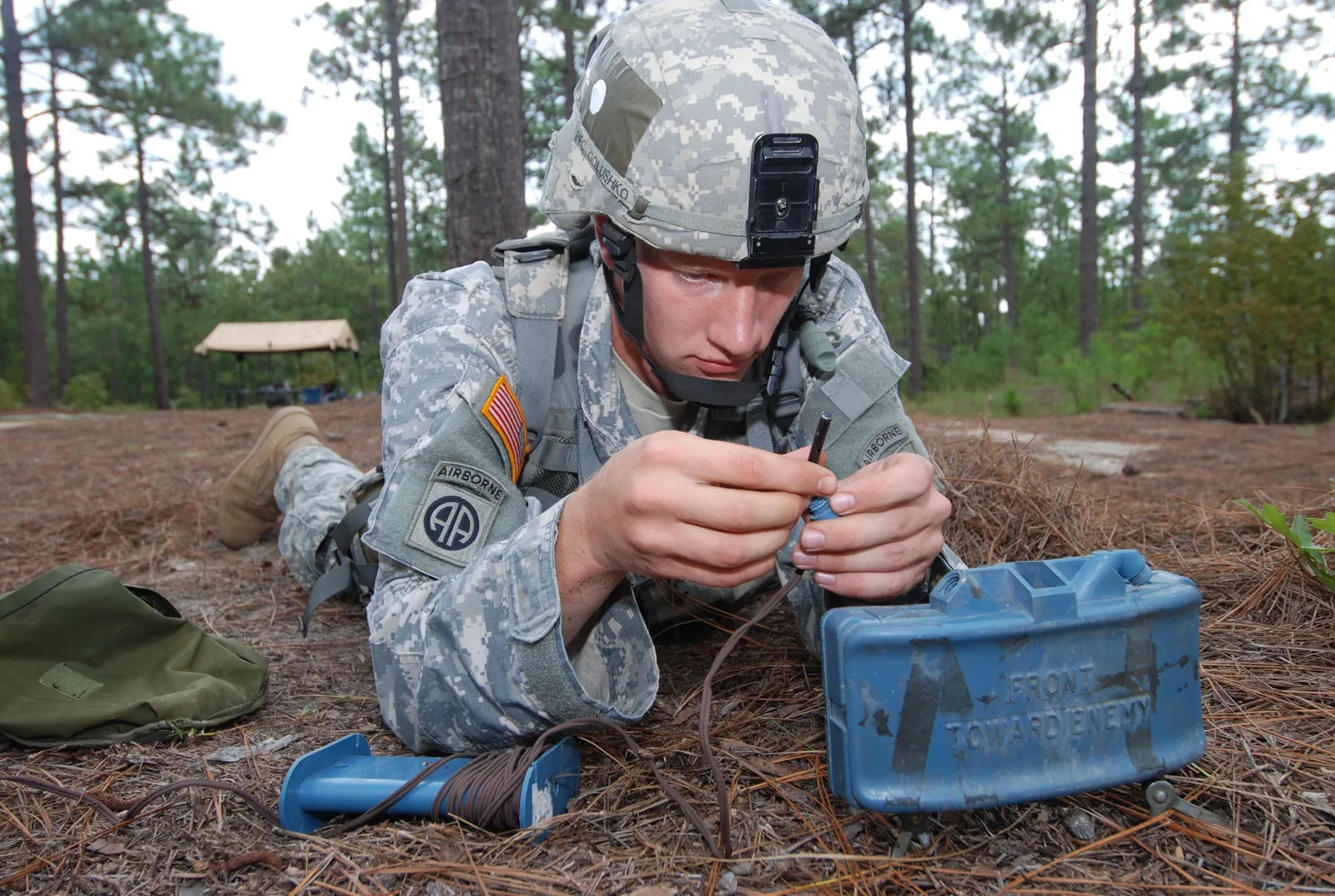
Army University Press documents U.S. paratroopers at OP Topside/COP Kahler emplacing M18A1 command-detonated Claymore mines for close-threat protection before the July 2008 Wanat attack.
Role detailsThe United States included M18A1 Claymore anti-personnel munitions in an April 2022 drawdown package for Ukraine; Human Rights Watch later described the transfer as command-detonated Claymores without victim-activated trip-wire fuzes.
Role detailsThe Army manual frames the Claymore as a controlled one-shot weapon when the operator deliberately fires it, while warning that uncontrolled employment is treated as mine or boobytrap use. That distinction matters for U.S. assistance releases that specify Ottawa Convention-consistent configuration.
A 60-degree forward fan, about 2 meters high and 50 meters wide at 50 meters.
FM 23-23 also describes a 250-meter forward fragment danger area.
Electric firing uses the M57 hand-held pulse generator, M4 blasting-cap assembly, and 100 feet of firing wire.
The later Army fact sheet also documents non-electric initiation.
The mine body uses a curved plastic case, about 700 1/8-inch steel balls in a forward matrix, and a 1.5 lb C-4 layer behind the fragmentation face.
ODIN and FM 23-23 support the internal C-4 and fragmentation-face description.
Claymore-family designations separate the earlier M18 service mine, the standardized M18A1 with revised body and accessories, and later electric and non-electric initiation configurations.
| Variant | Configuration | Designation notes |
|---|---|---|
| M18 Claymore | Earlier limited-standard model | FM 23-23 says the M18A1 was standardized in 1960 and replaced the earlier M18 antipersonnel mine; its appendix describes the M18 as using C-3 explosive, rectangular fragments, three folding legs, and a different firing device. |
| M18A1 electric initiation configuration | M4/M57 firing configuration | Army manual material describes the classic M18A1 electric setup with an M57 pulse-generator firing device and M4 electric blasting cap assembly. |
| M18A1 non-electric initiation configuration | Shock-tube firing configuration | The Army ammunition fact sheet says non-electric shock-tube initiator production started in 2005. Sources: M18A1 Claymore Fact Sheet |
The Claymore body uses C-4 explosive behind its fragmentation face.
| Carried item | Item type | Carriage evidence |
|---|---|---|
 | Plastic demolition explosive | ODIN notes that the M18A1 Claymore mine contains a layer of C-4 explosive behind the fragmentation face. |
The Army field manual identifies 1960 as the M18A1 standardization point and states that it replaced the earlier M18 antipersonnel mine.
Sources: FM 23-23 Antipersonnel Mine M18A1 and M18
The Army ammunition fact sheet dates production start for the non-electric initiation configuration to 2005.
Sources: M18A1 Claymore Fact Sheet
Army University Press documents U.S. paratroopers emplacing four M18A1 command-detonated Claymores around OP Topside for close-threat protection before the July 2008 battle at Wanat.
Sources: Wanat: Combat Action in Afghanistan, 2008
The Department of Defense listed M18A1 Claymore anti-personnel munitions in an $800 million Ukraine security-assistance package.
Sources: DoD $800 Million Ukraine Security Assistance