Munitions

C4

Also known as
  • Composition C-4
  • Composition C4
  • C-4 explosive

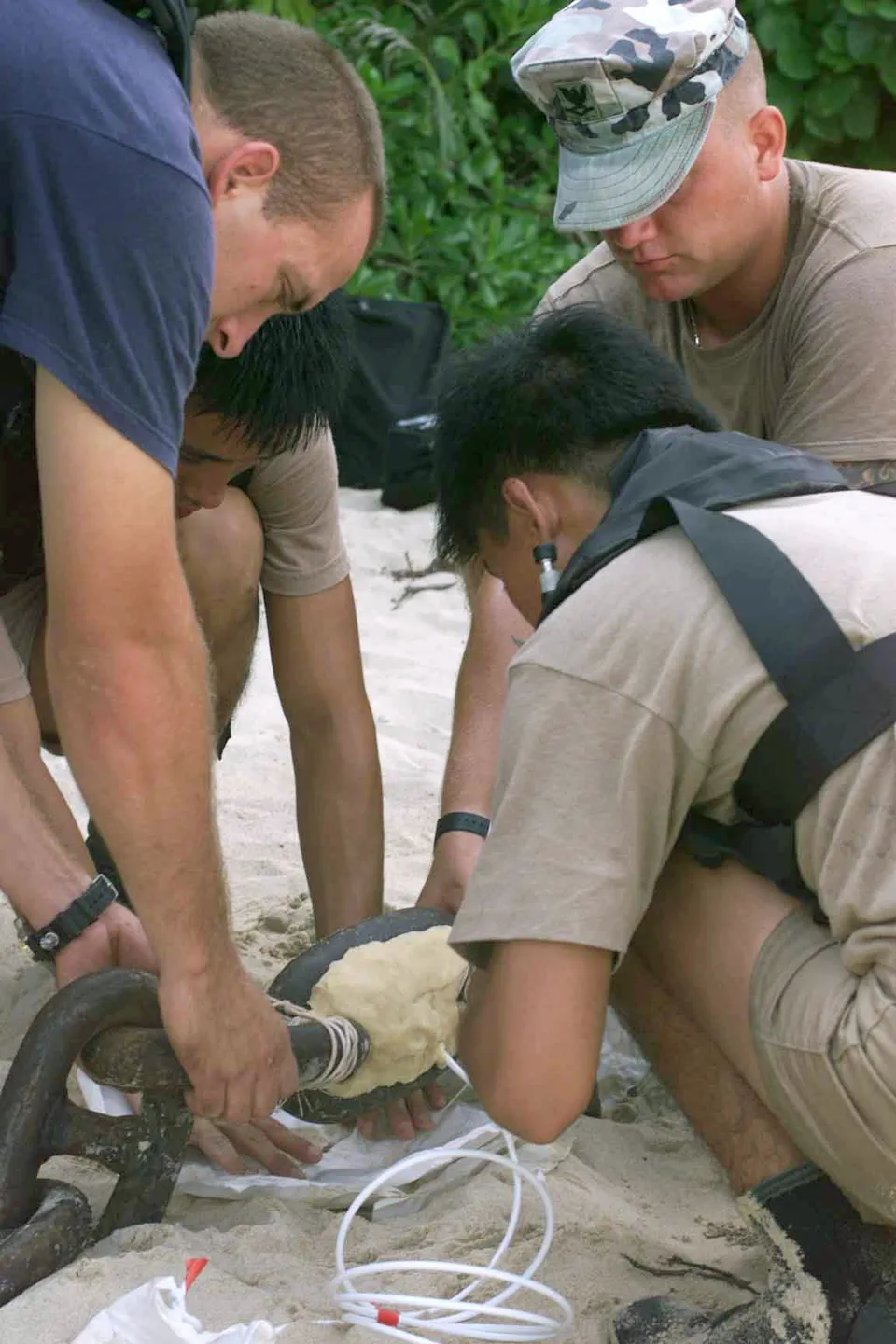
C4 is a moldable RDX-based plastic explosive used for demolition, obstacle reduction, and explosive breaching. Army records tie it to the M112 demolition block, while Philippine government forces used it in Marawi to make mouseholes through fortified buildings during close urban clearing.

Role in Conflicts

Side
Philippine government forces
Role in conflict
Urban breaching and mouseholing

Philippine government forces used C4 plastic explosive during the 2017 Battle of Marawi to create mouseholes through buildings as they adapted to dense urban clearing.

Documented Service Forms

Army records describe C4 less as loose bulk stock and more as a charge filler built into standard demolition packages.

FormDocumented detailUnit costSource
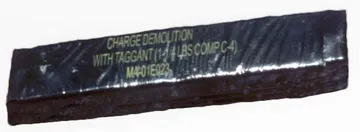
M112 demolition block1.25 lb of Composition C4; the Army portfolio book dates it to March 1989 and calls it the primary block demolition charge presently in use.Not listed in that snapshotPEO Ammunition 2017 Portfolio Book
FY 2002 procurement lineArmy ammunition budget materials list CHG DEMO BLK COMP C-4 1-1/4 LB M112 as an active line item.About $14.76 eachFY 2002 Army Ammunition Budget Justification
Profile / Specs

Profile

Origin
United States
Type
Plastic demolition explosive
Service note
Cold War-era explosive still used in modern military demolition and breaching roles
Designer
U.S. military explosive development program
Designed
1950s
Unit cost
About $14.76 per M112 demolition block in FY2002 Army budget materials.
Produced
1950s-present
Number built
Produced in bulk quantities for military demolition charges

Specifications

Composition
About 91 percent RDX and 9 percent non-explosive plasticizer in the GAO-described U.S. formulation
Form
Semiplastic, putty-like material that can be molded across a wide temperature range
Detonation velocity
About 26,400 feet per second
Relative effectiveness
About 1.34 times as effective as the same weight of TNT, according to a U.S. Army field manual cited by GAO
Primary service form
M112 demolition block uses 1.25 lb of C4
Variants
  • M112 demolition block
  • Bulk Composition C4
Carried Explosives

C4 appears inside the Claymore body as the mine's internal explosive layer.

CarrierCarrier typeCarriage evidence
M18A1 Claymore mine, Directional fragmentation anti-personnel mine, MunitionsM18A1 Claymore mineDirectional anti-personnel mine

ODIN notes that the M18A1 Claymore mine contains a layer of C-4 explosive behind the fragmentation face.

Sources: M18A1 Claymore American Anti-Personnel Mine

Carrier Systems

Army records place M112 C-4 demolition charges inside the M183 demolition charge assembly.

CarrierCarrier typeCarriage evidence
M183 Demolition Charge Assembly, Satchel charge assembly, MunitionsM183 Demolition Charge AssemblySatchel charge assembly

The Army portfolio book says the M183 assembly consists of 16 M112 C-4 demolition charges and four priming assemblies.

Sources: PEO Ammunition 2017 Portfolio Book

Line Charges

Army fact sheet material ties C4 to the M58 line charge used by MICLIC.

CarrierCarrier typeCarriage evidence
M58 Mine Clearing Line Charge, Linear demolition charge, MunitionsM58 Mine Clearing Line ChargeLinear demolition charge

The MICLIC fact sheet says the M58 linear demolition charge is 350 feet long and contains 700 C4 block charges in three 100-foot sections and one 50-foot section.

Sources: MICLIC Fact Sheet

Launch Systems

The Marine anthology describes MICLIC launching C4 during the Now Zad breach.

LauncherLauncher typeLaunch evidence
M58 Mine Clearing Line Charge, Linear demolition charge, MunitionsM58 Mine Clearing Line ChargeRocket-propelled explosive line-charge breaching system

The anthology says MICLIC launched 1,700 pounds of C4 in Now Zad.

Sources: U.S. Marines in Afghanistan Anthology

Timeline

C4 Key Events

  1. Army portfolio dates the M112 block to March 1989

    The Army portfolio book lists the M112 demolition block as the primary block demolition charge presently in use and gives it an MR date of March 1989.

    Sources: PEO Ammunition 2017 Portfolio Book

  2. Army budget keeps the M112 C4 block in procurement

    Army ammunition budget materials list CHG DEMO BLK COMP C-4 1-1/4 LB M112, showing the charge remained a recurring procurement line item.

    Sources: FY 2002 Army Ammunition Budget Justification

Media
Related Weapon Systems
Composition B, RDX/TNT melt-cast explosive filler, MunitionsMunitionsComposition BRDX/TNT melt-cast explosive fillerComposition B is a castable RDX/TNT military explosive mixture used as a high-explosive filler rather than as a standalone weapon. U.S. Army technical material describes a British formula transferred to the United States in 1940, then documents melt-cast processing, grade distinctions, density, and detonation data. Cataloged munitions such as the M107 projectile, M933A1 mortar cartridge, M888 mortar cartridge, M106 projectile, and 76mm HE-T M330 show how the filler appears inside shells, mortar rounds, and fixed ammunition.
Door-breaching explosive charge, Explosive breaching charge, Infantry WeaponsInfantry WeaponsDoor-breaching explosive chargeExplosive breaching chargeA door-breaching explosive charge is a portable combat-engineering entry device used by assault teams and sappers to defeat doors, locks, hardware, walls, or light obstacles with a controlled blast. Military training sources describe task-specific charge patterns such as donut, linear, silhouette, and water-impulse charges, while conflict reporting documents explosive entry use in Afghanistan, Iraq, and Gaza urban operations.
Chlorine gas cylinders, Improvised chlorine chemical munition, MunitionsMunitionsChlorine gas cylindersImprovised chlorine chemical munitionChlorine gas cylinders are industrial pressure vessels that become improvised chemical munitions when adapted or delivered to release toxic chlorine intentionally. In the April 2018 U.S., UK, and French strikes in the 2011 Syrian Civil War archive, the relevant use is the Douma attack: OPCW investigators found that Syrian Arab Air Force helicopters dropped two yellow chlorine-filled cylinders on residential buildings, providing the chemical-weapons trigger cited by the United States, United Kingdom, and France for the 14 April 2018 missile strikes.
Counter Rocket, Artillery, and Mortar system / C-RAM, Land-based close-in weapon system, Air DefenseAir DefenseCounter Rocket, Artillery, and Mortar system / C-RAMLand-based close-in weapon systemCounter Rocket, Artillery, and Mortar system (C-RAM), also known as the Land-Based Phalanx Weapon System, is a U.S. close-in air-defense and force-protection system derived from the Navy Phalanx gun mount. Army and CJTF-OIR sources document LPWS/C-RAM use protecting bases and high-value sites in Iraq, Afghanistan, and Syria, while the shipboard Phalanx lineage also appears in Red Sea close-in missile defense.
Weaponized civilian bulldozer or front loader, Combat engineering bulldozer/front loader, Armored VehiclesArmored VehiclesWeaponized civilian bulldozer or front loaderCombat engineering bulldozer/front loaderWeaponized civilian bulldozers and front loaders are heavy construction machines adapted for combat engineering, barrier breaching, demolition, and protected route work. The Israeli Caterpillar D9 family is the best-documented armored example, appearing in Gaza operations in 2008, 2014, and 2023 and in the July 2023 Jenin operation, while Hamas-led attackers also used construction equipment for barrier breaching on October 7. Remote-control and autonomous conversions such as Panda and RobDozer reduce crew exposure during IED, obstacle, berm, and demolition tasks.

Sources