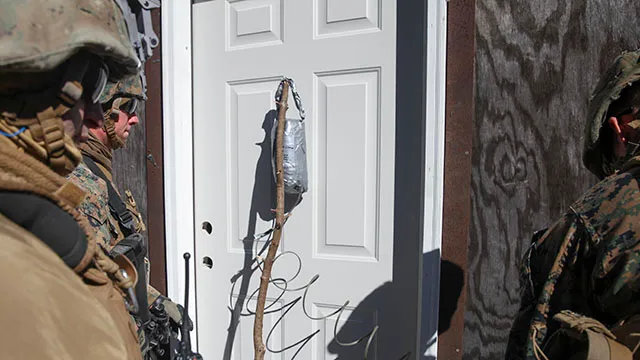


2001 War in Afghanistan: U.S. Army reporting stated that engineers were using explosive building-entry breaching techniques in Afghanistan, and a Helmand Province report documented deployed combat engineers working with silhouette, ribbon, donut, and water-impulse charges for doors, walls, IED reduction, and obstacle breaching.
Role detailsInfantry Weapons
Door-breaching explosive charge
Also known as
- Breaching charge
- Explosive door breach charge
- Door breach charge
- Explosive entry charge
- Explosive breaching charge
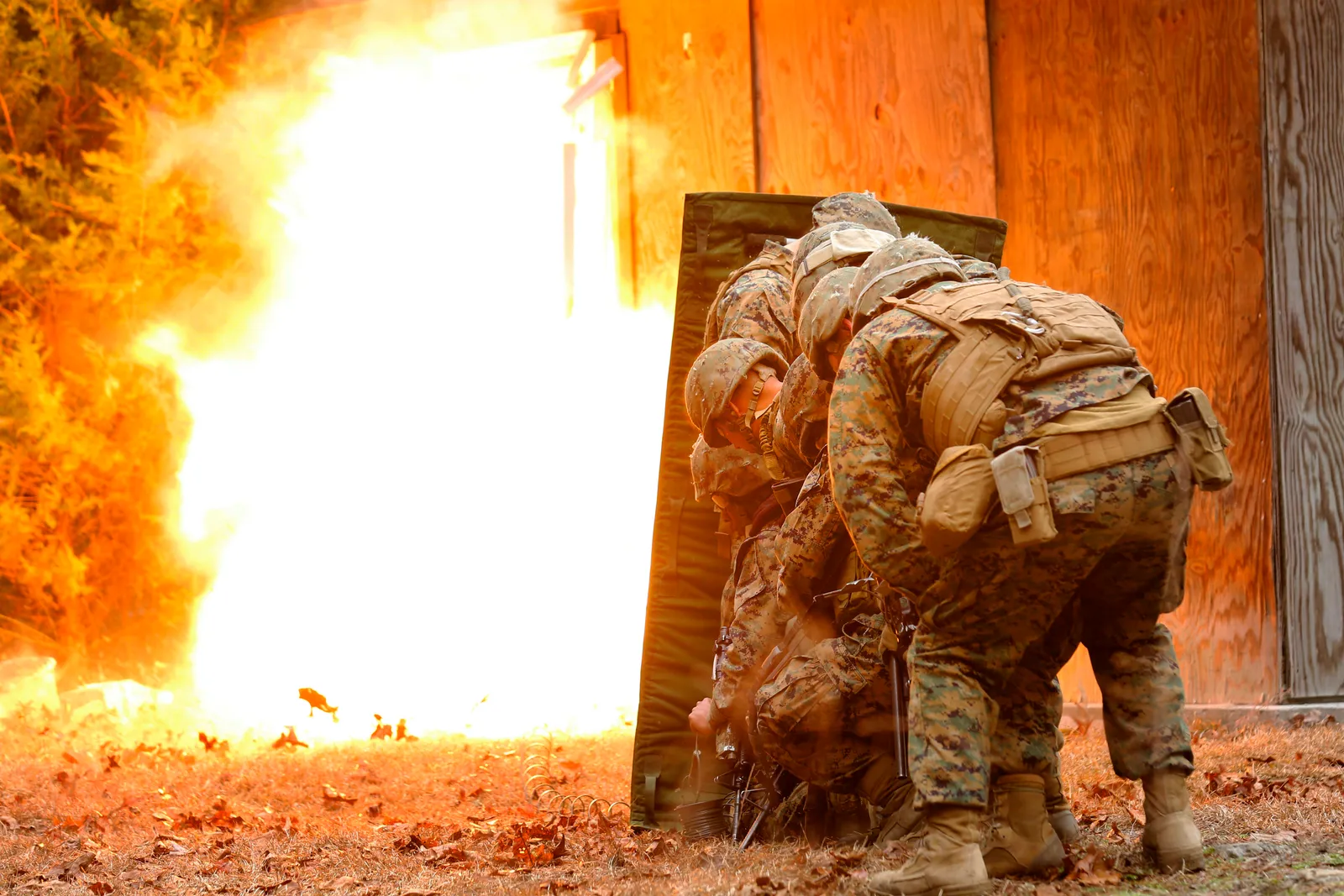
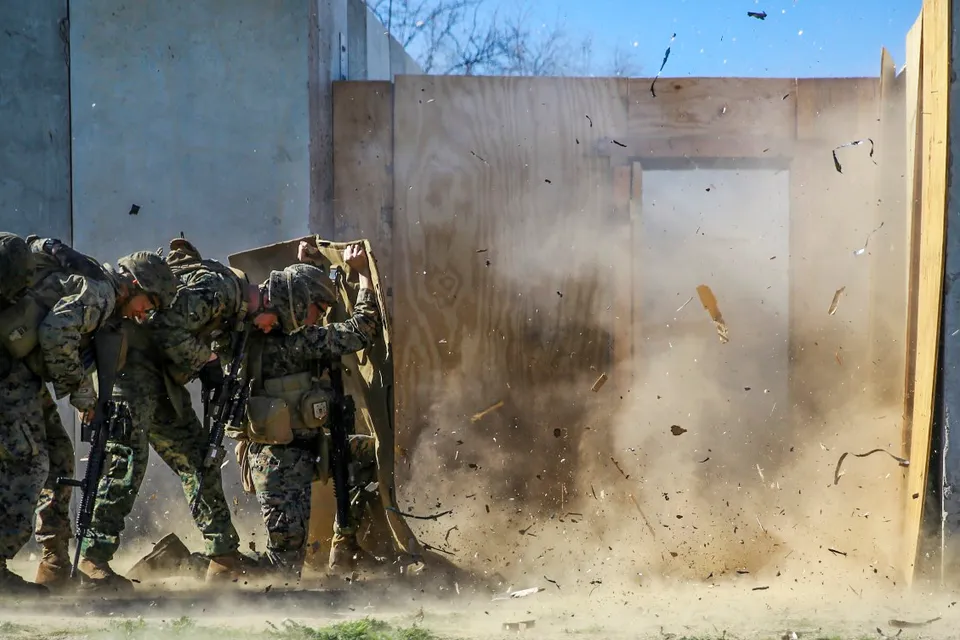
A door-breaching explosive charge is a portable combat-engineering entry device used by assault teams and sappers to defeat doors, locks, hardware, walls, or light obstacles with a controlled blast. Military training sources describe task-specific charge patterns such as donut, linear, silhouette, and water-impulse charges, while conflict reporting documents explosive entry use in Afghanistan, Iraq, and Gaza urban operations.
Role in Conflicts
2003 Iraq War: U.S. Army reporting on live explosive-breach instruction stated that engineers were using the same building-entry breaching techniques in Iraq, where explosive charges let assault teams enter and clear buildings with controlled damage.
Role details- Side
- Israel

2023 Israel-Hamas War: AP reporting from northern Gaza described Israeli troops using an explosive door-entry method during house-to-house operations, with soldiers blasting open home doors while detaining Palestinians.
Role detailsProfile / Specs
Profile
- Origin
- Multiple
- Built by
- Various manufacturers
- Type
- Explosive breaching charge
- Service note
- Modern combat-engineering and urban assault use
Specifications
- Charge form
- Portable explosive entry charge assembled for a specific door, wall, lock, or obstacle target
- Primary effect
- Defeats locked or barricaded entry points so assault teams can enter or clear a structure
- Common patterns
- Donut, linear/ribbon, silhouette, and water-impulse charge layouts
- Typical users
- Combat engineers, sappers, explosive ordnance specialists, and infantry assault teams
- Emplacement options
- Hand emplaced by a breacher or remotely placed by a robotic carrier when stand-off is needed
Charge Patterns
Military breaching sources describe door charges as task-specific layouts rather than a single standardized model. The common thread is controlled explosive entry: enough blast to defeat the target door, lock, wall, or obstacle while trying to limit unnecessary structural damage.
| Pattern | Documented role | Source context |
|---|---|---|
| Donut charge | Concentrates the explosive effect around door hardware. | Marine Corps urban-breaching training sources describe donut charges in door-entry instruction. |
| Linear or ribbon charge | Uses detonation cord in a line or ribbon layout to cut through doors, walls, or light obstacles. | Army and Marine Corps training sources describe detonation-cord layouts for breaching tasks. |
| Water impulse charge | Uses water tamping to push blast effect into the target door. | Army breacher-course and DVIDS video sources document water impulse charge training. |
| Silhouette charge | Creates an entry opening in a door or wall target. | Army reporting from Helmand Province documents a silhouette charge used against a mock door. |
Variants
Door-breaching charges are usually described by charge pattern and intended effect rather than by one universal model designation.
| Variant | Configuration | Designation notes |
|---|---|---|
| Donut charge | Hardware-focused door charge | Marine Corps training coverage describes donut charges as explosive layouts placed around door hardware to remove or defeat the knob area for entry. Sources: Marine Corps urban breach course, Marine Corps breaching charges in training |
| Detonation-cord linear charge | Linear cutting or entry charge | Marine Corps and Army training sources describe detonation cord being arranged in linear, ribbon, or related layouts for breaching doors, walls, and light obstacles. Sources: Marine Corps breaching charges in training, Army sappers in Afghanistan |
| Water impulse charge | Water-tamped door charge | Army breaching sources identify water impulse charges as a door-breaching configuration used to shape blast effects against doors while limiting unnecessary damage. Sources: Army Guard breaching course, Army sappers in Afghanistan, DVIDS water impulse charge video |
| Silhouette charge | Door or wall opening charge | The Army's Afghanistan reporting documents a silhouette charge being attached to a mock door and detonated to create an entry opening. Sources: Army sappers in Afghanistan |
Carrier Robots
Robotic carriers can move a breaching charge onto an obstacle before remote detonation when the mission calls for stand-off emplacement.
| Carrier | Carrier type | Carriage evidence |
|---|---|---|
 | Tracked robotic system | The African Lion 2025 video shows Soldiers using an MTRS to autonomously emplace and remotely detonate a breaching charge on an enemy obstacle. Sources: African Lion 2025 video |
Timeline
Door-breaching explosive charge Key Events
Army reports Iraq and Afghanistan breaching use
Army reporting on a National Guard engineer breaching course stated that the same explosive building-entry techniques were then being used by engineers in Iraq and Afghanistan.
Sources: Army Guard breaching course
Helmand engineers train with door and wall charges
U.S. Army engineers in Helmand Province trained with silhouette, ribbon, donut, and water-impulse charges during a deployed demolitions range.
Sources: Army sappers in Afghanistan
AP documents explosive door entry in Gaza
Associated Press reporting from northern Gaza described Israeli troops blasting open home doors during house-to-house operations in the 2023 Israel-Hamas War.
Sources: AP northern Gaza detentions
Media
Door-breaching explosive charge Videos
Door-breaching explosive charge Images
Related Weapon Systems


Sources
Marine Corps urban breach coursePublisher: U.S. Marine Corps | Note: Supports background and specifications for urban breaching charges, including a donut charge used around door hardware during room-entry training. | Accessed: 2026-07-01Marine Corps breaching charges in trainingPublisher: U.S. Marine Corps | Note: Supports background and specifications for multiple explosive breaching charge forms used in training, including donut charges and detonation-cord linear charges. | Accessed: 2026-07-01Army Guard breaching coursePublisher: U.S. Army | Note: 2003 Iraq War and 2001 War in Afghanistan: reports that engineers currently used the same explosive building-entry breaching techniques in Iraq and Afghanistan; also supports water impulse charge background. | Accessed: 2026-07-01Army sappers in AfghanistanPublisher: U.S. Army | Note: 2001 War in Afghanistan: documents U.S. Army combat engineers in Helmand Province training with silhouette, ribbon, donut, and water-impulse charges for doors, walls, route-clearance, and obstacle-breaching tasks. | Accessed: 2026-07-01DVIDS water impulse charge videoPublisher: DVIDS | Note: Supports water impulse charge background and public-domain video provenance for U.S. Army instructional footage of the charge type. | Accessed: 2026-07-01AP northern Gaza detentionsPublisher: Associated Press | Note: 2023 Israel-Hamas War: documents Israeli troops in northern Gaza using an explosive door-entry method during house-to-house operations. | Accessed: 2026-07-01Marine Corps door-charge photoPublisher: U.S. Marine Corps | Note: Image provenance for the public-domain Marine Corps photo showing an explosive charge set on a door during urban breaching training. | Accessed: 2026-07-01DoD det-cord door breach photoPublisher: U.S. Department of War | Note: Image provenance for the public-domain DoD photo showing detonation cord igniting to blow a door in during an urban breaching course. | Accessed: 2026-07-01DoD breaching tactics photoPublisher: U.S. Department of War | Note: Image provenance for the public-domain DoD photo showing Marines behind a detonated explosive charge during urban breaching training. | Accessed: 2026-07-01African Lion 2025 videoPublisher: U.S. Army Europe and Africa | Note: Supports the relationship note showing Soldiers using an MTRS to emplace and remotely detonate a breaching charge during African Lion 2025. | Accessed: 2026-07-01