Profile
- Origin
- United States
- Type
- Tracked robotic system
- Service note
- Modern Army EOD robotics
- Developed from
- TALON family of EOD robots
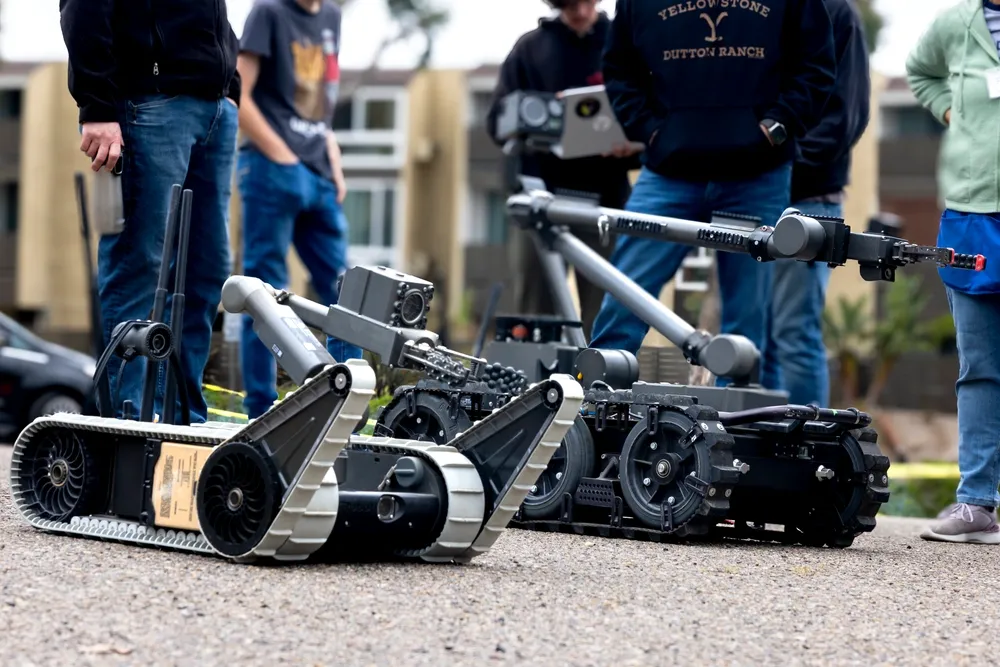
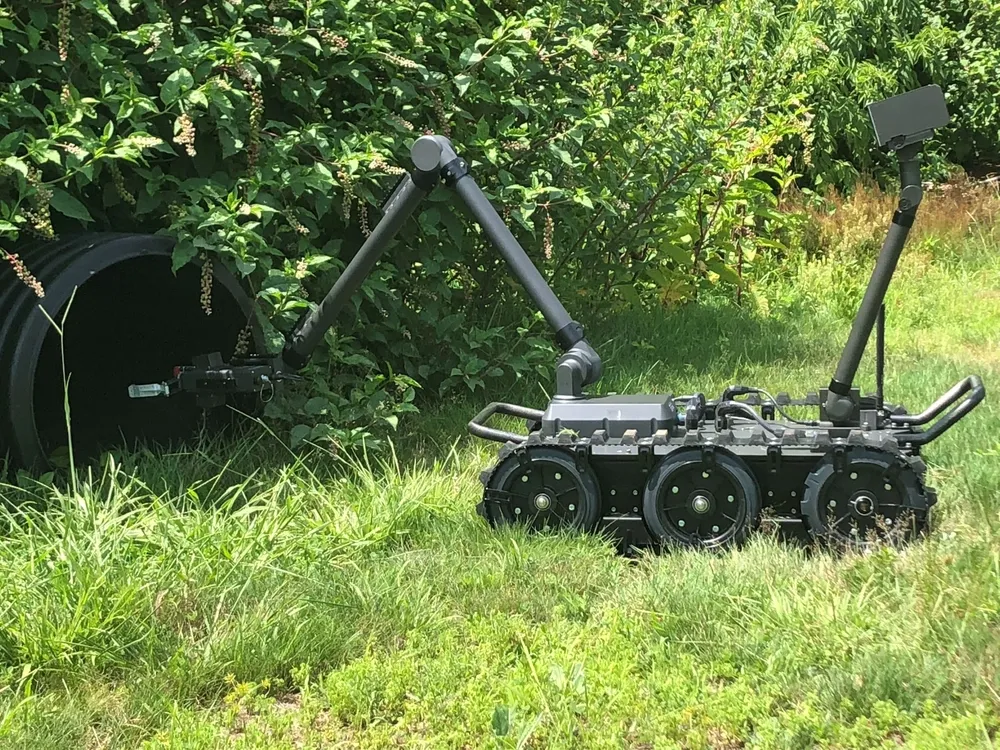
The man-transportable robotic system is the U.S. Army's medium tracked unmanned ground robot program represented by MTRS Increment II, the Teledyne FLIR Centaur platform. Army and manufacturer sources describe it as a roughly 160-pound, IOP-compliant robot for standoff EOD, route-clearance, reconnaissance, and CBRN tasks, with modular payloads, a handheld controller, a dexterous manipulator arm, and fielding across U.S. Army, Navy, Air Force, and Marine Corps EOD units.
The MTRS Increment II program moved the Army's medium EOD robot requirement toward a common tracked platform rather than a collection of one-off robots. Its interoperability profile lets controllers, payloads, and robot subsystems communicate through a shared architecture, so new sensors or tools can be integrated without replacing the whole robot.
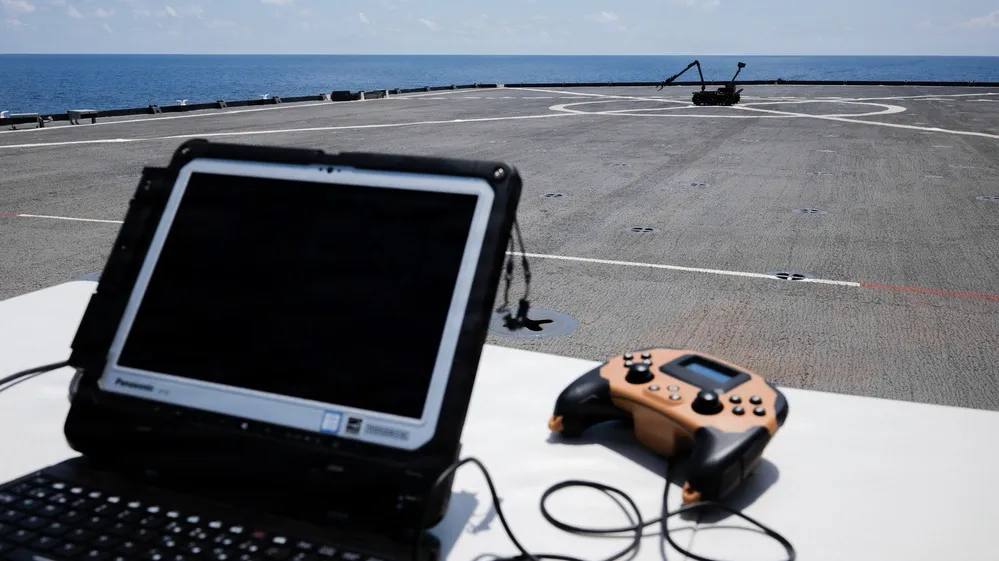
Remote operation from a handheld controller keeps EOD, engineer, or CBRN personnel away from the hazard while the robot investigates or manipulates it.
The platform is built around modular payloads for explosive-hazard work, route clearance, reconnaissance, and CBRN sensing rather than a single fixed tool set.
Teledyne FLIR identifies Centaur as the platform used for the Army's MTRS Increment II program of record.
The African Lion 2025 video shows Soldiers using an MTRS to place and detonate a breaching charge against an obstacle.
| Carried item | Item type | Carriage evidence |
|---|---|---|
 | Breaching charge | The African Lion 2025 video shows Soldiers using an MTRS to autonomously emplace and remotely detonate a breaching charge on an enemy obstacle. Sources: African Lion 2025 video |
An Army ground-robotics overview lists the MTRS Increment II capability production document as approved on 15 May 2013.
Sources: Army ground robotics overview
The Army ground-robotics overview lists the MTRS Increment II request for proposals as released on 9 November 2016.
Sources: Army ground robotics overview
The U.S. Army awarded Endeavor Robotics the MTRS Increment II engineering-development and production contract, with options taking the total value to about $158.5 million.
Sources: Army MTRS Increment II award, DoD MTRS Increment II contract notice
Army acquisition coverage expected production and fielding activity to begin in fiscal year 2019 for engineer, EOD, and CBRN-related units.
Sources: Army MTRS family article, Army MTRS Increment II award
DVIDS identified the 55th Ordnance Company EOD at Fort Belvoir as the first unit to field the new MTRS Increment II robot.
Sources: DVIDS 55th Ordnance MTRS fielding video
Teledyne FLIR Defense reported delivery of the 1,000th MTRS Increment II/Centaur robot under the U.S. Army contract.
Sources: Teledyne FLIR 1000th MTRS