

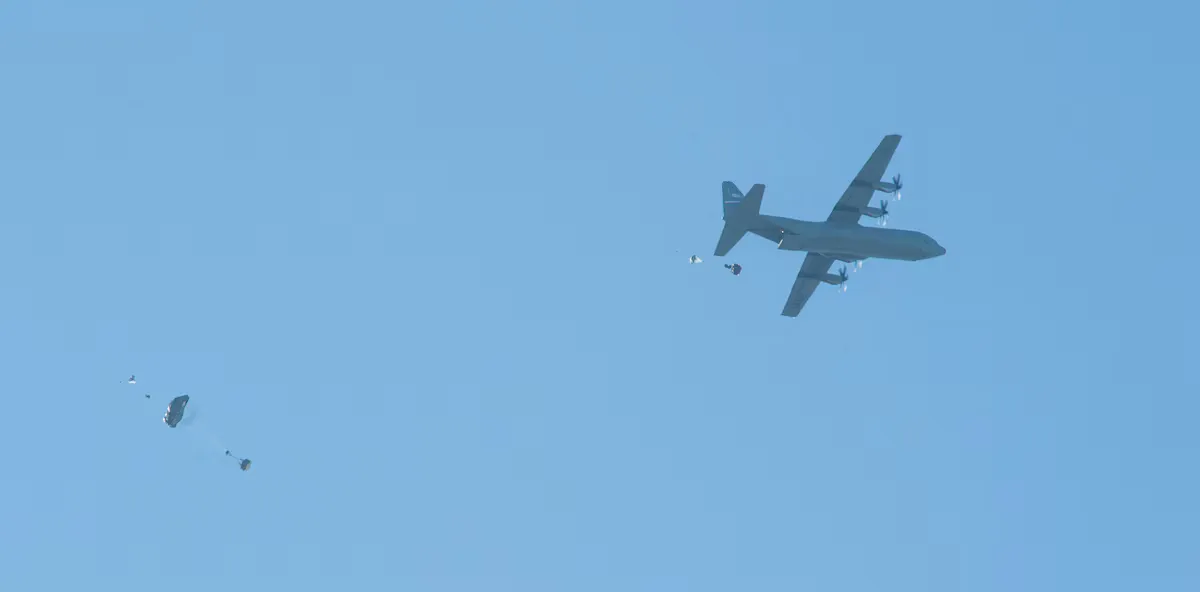
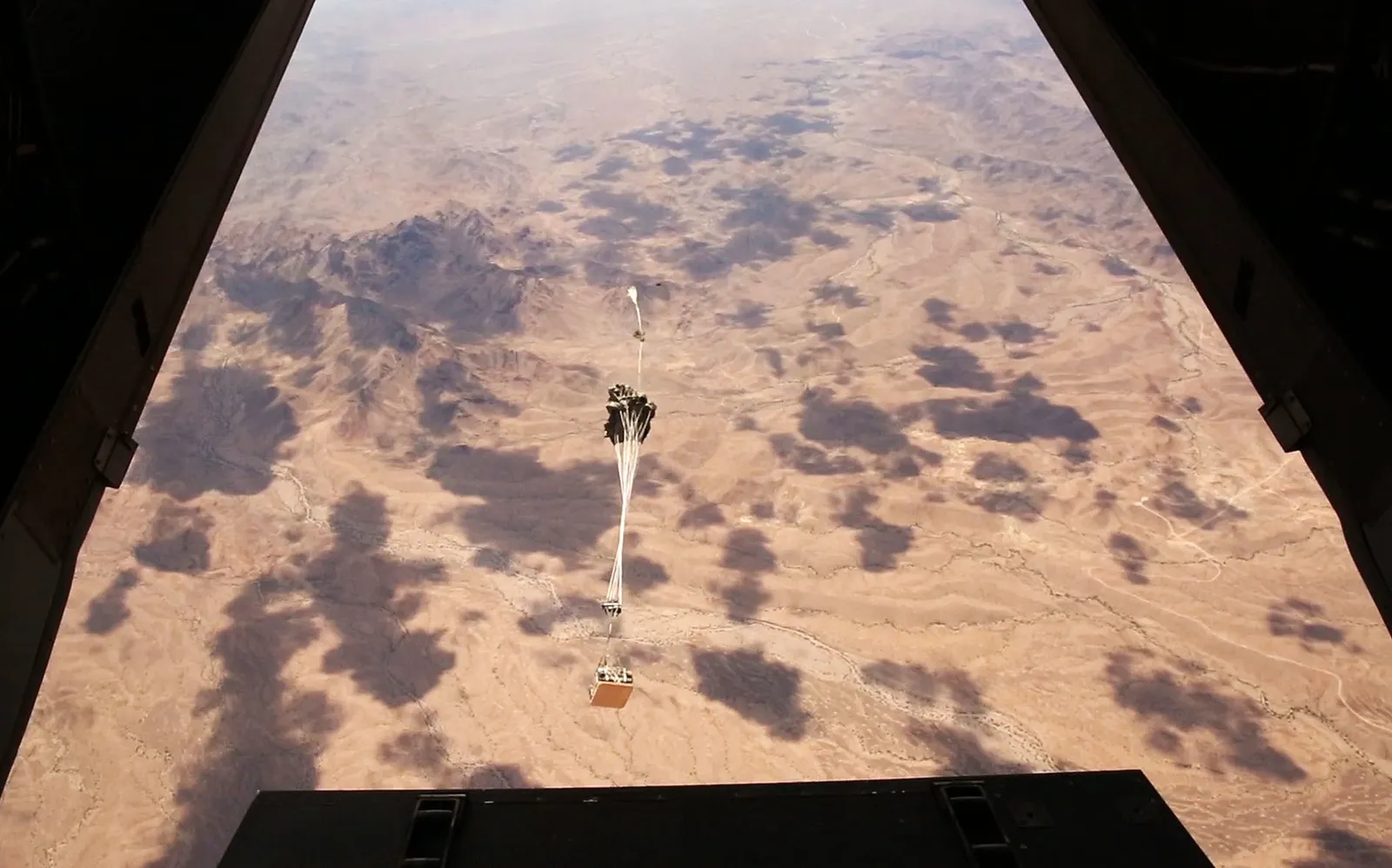
U.S. Air Force C-130 crews used JPADS in Afghanistan to deliver ammunition, water, food, and other supplies to ground troops from higher-altitude standoff airdrops.
Role detailsSupport Equipment
Joint Precision Air Drop System
Also known as
- Joint Precision Airdrop System
- Joint Precision Aerial Delivery System
- JPADS
- GPADS
- JPADS 2K
- JPADS 2KM
- JPADS 10K
- JPADS V3
- LR-JPADS
- Screamer 2K
- FireFly
- DragonFly
- FlyClops 2K
- AGU
- MAGU
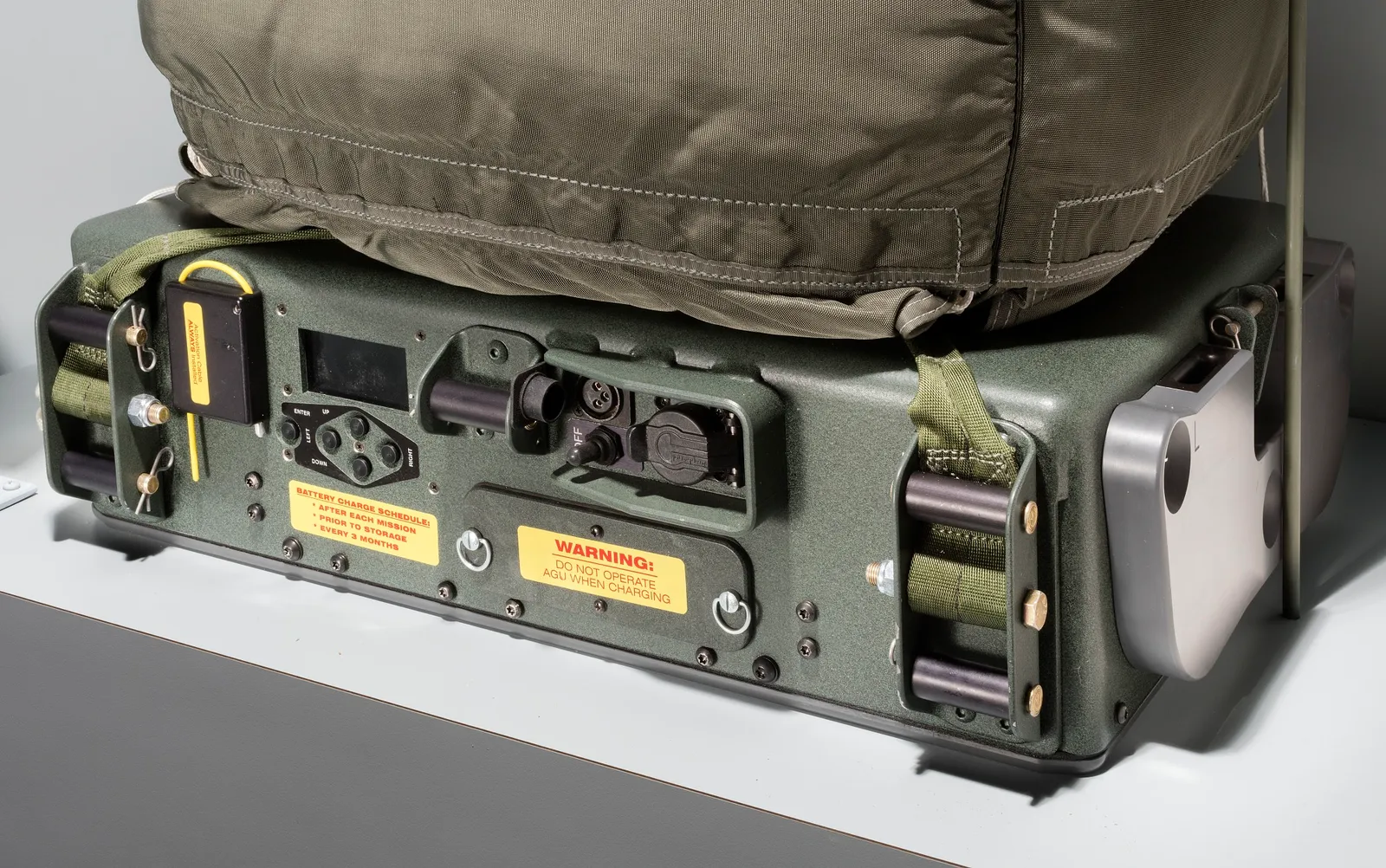
- Autonomous Guidance Unit
- Modular Autonomous Guidance Unit
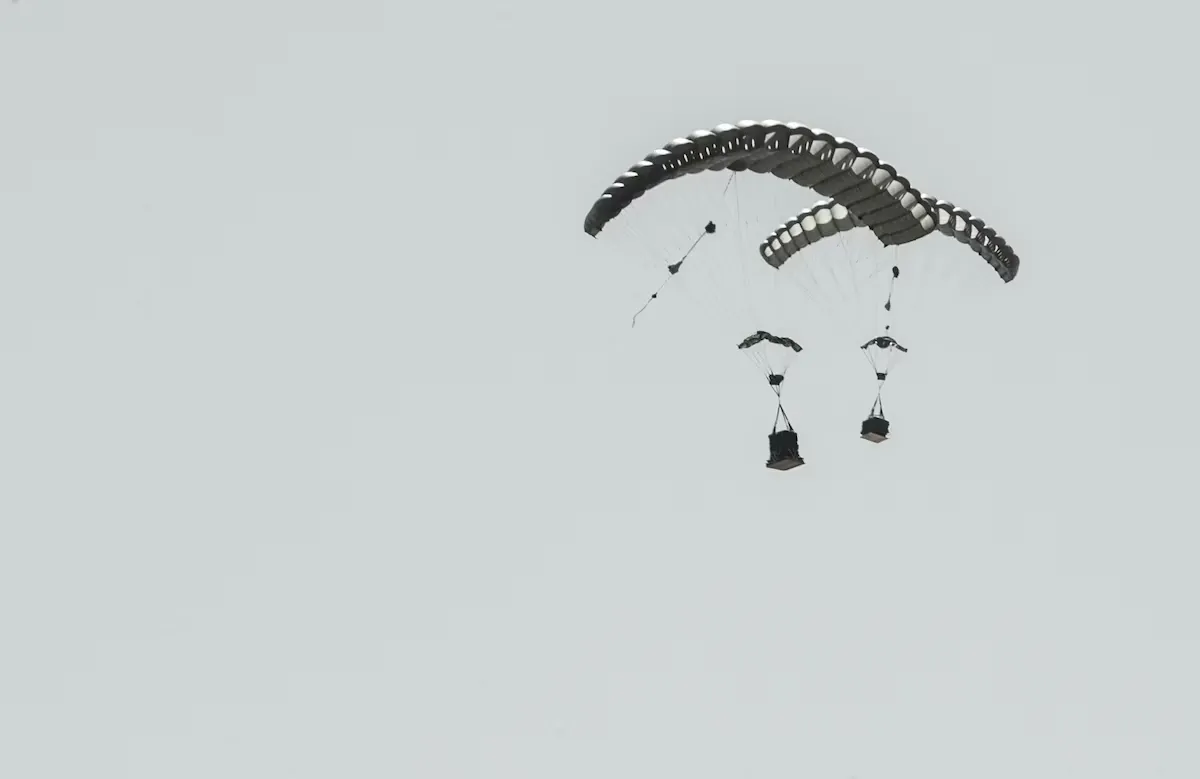
Joint Precision Air Drop System (JPADS) is a U.S. precision-aerial-delivery family that combines a steerable parafoil or other decelerator, an autonomous guidance unit, and mission-planning software to put cargo near a designated impact point from high-altitude standoff drops. Public Army and Marine Corps material separate the family into payload classes such as ultra-lightweight, 2K, and 10K, while Airborne Systems' related GPADS line maps those roles to products including FireFly, DragonFly, and one-time-use FlyClops 2K.
Role in Conflicts
A U.S. Air Force C-130 crew used JPADS mission-planning software with Improved Container Delivery System bundles over Iraq in February 2007 to resupply ground troops during Operation Iraqi Freedom.
Role detailsProfile / Specs
Profile
- Origin
- United States
- Built by
- Airborne Systems North America
- Type
- GPS-guided airdrop system with steerable parachute bundles
- Service note
- 2000s-present
Specifications
- Payload classes
- Marine Corps reporting lists ultra-lightweight JPADS at 250-699 lb, JPADS 2K at 900-2,200 lb, and JPADS 10K at 7,000-10,000 lb; Airborne Systems' broader GPADS line spans 25-10,000 lb.
- Guidance architecture
- Autonomous guidance unit with battery power, GPS receiver, guidance-navigation-control software, and steering-line hardware controlling a parafoil or decelerator.
- Navigation sensors
- Airborne Systems lists GPS or SAASM military GPS options, a three-axis inertial measurement unit, magnetometers, and barometric sensing for GPADS avionics.
- Mission planning
- USAF Mission Planner/CAT MPA and Airborne Systems jTrax planning tools support release-point calculation, system health monitoring, terrain simulation, and launch acceptability planning.
- Accuracy
- Army software reporting gives better than 150 m accuracy for JPADS 2K and better than 250 m for JPADS 10K; FireFly and FlyClops sheets list 80 percent of drops within 150 m, and DragonFly lists 80 percent within 250 m.
- Release and standoff
- Army reporting describes drops up to 24,500 ft MSL and up to 15 nautical miles of standoff; FireFly and FlyClops sheets list up to 25 km glide after release.
- Representative 2K specifications
- FireFly: 650-2,400 lb gross rigged weight, 162 lb system weight, 1,025 sq ft canopy, 3.5:1 no-wind glide ratio, 24,500 ft maximum release altitude.
- Representative 10K specifications
- DragonFly: 4,900-10,000 lb gross rigged weight, 508 lb system weight, 3,500 sq ft canopy, 3.5:1 no-wind glide ratio, 24,500 ft maximum C-130 release altitude.
Guidance And Mission Planning
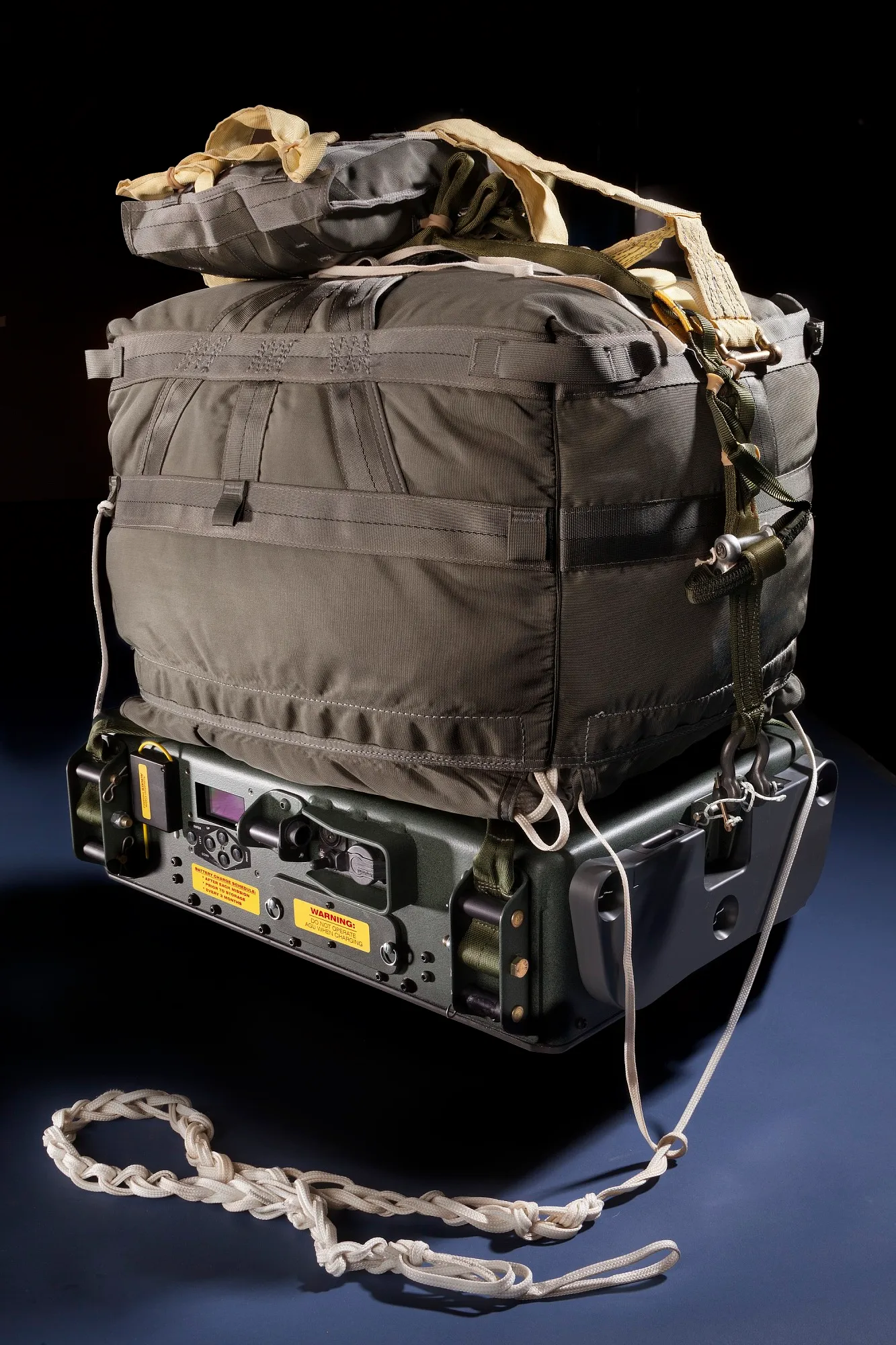
JPADS guidance is built around the autonomous guidance unit rather than the cargo load itself. Army software reporting describes the AGU as the battery, GPS receiver, guidance-navigation-control software, and steering-line hardware that flies the parafoil toward the programmed impact point.
Pre-drop inputs
Impact point, gross rigged weight, terrain-elevation data, canopy type, and impact-point elevation are loaded before deployment.
Aircrew planning
USAF Mission Planner/CAT MPA and Airborne Systems jTrax planning tools calculate release options and can use wind and terrain data before the drop.
Terminal control
Army reporting says the AGU can command a flare before landing, while manufacturer sheets describe into-wind or selected-azimuth landing logic for payload survivability.
Variants
JPADS is a program and payload-class family rather than one fixed parachute. Public sources link U.S. JPADS 2K and 10K classes with Airborne Systems' FireFly and DragonFly products, while earlier demonstrators and newer MAGU/V3 and long-range efforts address different delivery profiles.
| Variant | Configuration | Designation notes |
|---|---|---|
| JPADS 2K / FireFly | 2,000- to 2,400-pound guided airdrop class | Marine Corps Systems Command described the 2K class as handling 900-2,200 lb, while Airborne Systems lists FireFly with a 650-2,400 lb gross rigged weight, a 24,500 ft maximum release altitude, and 80 percent of drops within 150 m of the impact point. Sources: JPADS to make resupply airdrops more precise, safe for Marines, FireFly Guided Precision Aerial Delivery System |
| JPADS 10K / DragonFly | 10,000-pound guided airdrop class | Marine Corps acquisition material identifies JPADS 10K as a fielded GPS-guided cargo system with parachute and guidance components; Airborne Systems' DragonFly sheet gives a 4,900-10,000 lb gross rigged weight and 80 percent of drops within 250 m of the impact point. Sources: JPADS 10K Product Information Sheet, DragonFly Guided Precision Aerial Delivery System |
| Ultra-lightweight JPADS / MAGU | 250- to 699-pound Marine Corps class | Marine Corps reporting described an ultra-lightweight JPADS branch using a modular autonomous guidance unit, smaller payloads, and repurposed MC-5 canopies for selected drops. Sources: JPADS to make resupply airdrops more precise, safe for Marines |
| Screamer 2K | Early high-speed 2K demonstrator | Army Yuma reporting described Screamer 2K as a JPADS family system that made a fast GPS-guided descent before deploying another parachute for a soft cargo landing. |
| FlyClops 2K | One-time-use GPADS 2K system | Airborne Systems describes FlyClops 2K as a packed, one-time-use GPADS with a 700-2,200 lb gross rigged weight, up to 25 km of glide after release, and CAT MPA/jTrax mission-planner compatibility. Sources: FlyClops 2K One-Time Use Guided Precision Aerial Delivery System |
| Long-Range JPADS | Propulsion-kit development topic | The 2025 Army SBIR topic sought a fielded-configuration JPADS 2K prototype with add-on propulsion able to carry at least 700 lb for at least 250 nautical miles and scale toward JPADS 10K. Sources: Long-Range Joint Precision Airdrop System (LR-JPADS) |
Compatible Aircraft
Air Force and Marine Corps reports document JPADS drops from C-130-family aircraft, an MC-130J special-operations aircraft, C-17 strategic airlifters, and an MV-22 tiltrotor in training, test, and operational airdrop contexts.
| Compatible item | Item type | Compatibility evidence |
|---|---|---|
 | Tactical airlift transport aircraft | Air Force and AMC reporting document C-130 and C-130J crews airdropping supplies and JPADS bundles in Afghanistan, Iraq, and U.S. training events. Sources: JPADS continues 'revolution in air drop technology', Bagram C-130s drop high-tech cargo delivery system, First JPADS improved system airdrop over Iraq a success, 317th AG participates in first Big Country JPADS CAPEX |
 | Special-operations airlift aircraft | AMC reported that a Cannon AFB MC-130J joined C-130Js and C-17s in dropping JPADS bundles during the 2013 Big Country JPADS capabilities exercise. Sources: 317th AG participates in first Big Country JPADS CAPEX |
Timeline
Joint Precision Air Drop System Key Events
Army and Air Force joint development began
Army modernization reporting says the U.S. Army and Air Force began joint development in 1993 to improve airdrop accuracy, standoff delivery, and aircraft survivability.
Sources: Delivering the future: JPADS and the contested battlefield
JPADS mission planning used over Iraq
A U.S. Air Force crew used JPADS mission-planning software with Improved Container Delivery System bundles over Iraq, pairing a wind sonde and specialized laptop to compute a more accurate release point.
Sources: First JPADS improved system airdrop over Iraq a success
Yuma reported JPADS family fielding and testing
Army Yuma coverage said JPADS testing had produced limited theater fielding of Screamer, FireFly, and AGAS systems and described Screamer 2K as a fast GPS-guided descent system with a second parachute for soft landing.
Sources: Yuma Testing Systems for War on Terror
Initial JPADS version fielded
Army reporting identifies JPADS Version 1 as fielded in 2009.
Sources: Delivering the future: JPADS and the contested battlefield
Initial JPADS 10K full-rate production contract completed
Defense Industry Daily's acquisition chronology says Airborne Systems delivered the final JPADS 10K to the U.S. Army under the initial full-rate-production contract.
Sources: JPADS: Making Precision Air-Drops a Reality
JPADS V2 fielding began
Army reporting says JPADS V2 began fielding in 2015 and was fully deployed by 2020.
Sources: Delivering the future: JPADS and the contested battlefield
Marine Corps JPADS 10K listed as fielded
Marine Corps Systems Command's JPADS 10K product sheet listed the system as fielded, with an approved acquisition objective of ten systems and distribution to reconnaissance and Marine Raider units.
Sources: JPADS 10K Product Information Sheet
Army SBIR released long-range JPADS topic
The Army SBIR topic sought add-on propulsion for JPADS to extend delivery range from about 15 miles to 250 nautical miles for at least a 700 lb payload, with demonstration on JPADS 2K and scaling toward JPADS 10K.
Sources: Long-Range Joint Precision Airdrop System (LR-JPADS)
JPADS V3 fielding began
Army reporting says JPADS V3 began fielding in 2026 with daytime vision navigation for GPS-denied conditions.
Sources: Delivering the future: JPADS and the contested battlefield
Payload-Class Matrix
Public sources use both U.S. program names and Airborne Systems product names. The rows below keep those lanes separate while showing the best-supported links between them.
| Lane | Documented capacity | Design notes |
|---|---|---|
| JPADS 2K / FireFly | 900-2,200 lb in Marine Corps program reporting; 650-2,400 lb gross rigged weight on the FireFly sheet. | Reusable guided parafoil class with jTrax mission planning, CAT MPA compatibility through the family, and 80 percent of FireFly drops documented within 150 m of the impact point. |
| JPADS 10K / DragonFly | 7,000-10,000 lb in Marine Corps program reporting; 4,900-10,000 lb gross rigged weight on the DragonFly sheet. | Large-load class with separable canopy frame and AGU, extraction or gravity-drop rigging, and 80 percent of DragonFly drops documented within 250 m of the impact point. |
| Ultra-lightweight / MAGU | 250-699 lb in Marine Corps reporting. | Smaller MAGU-based branch intended to reduce guidance-unit weight and use selected existing canopies for smaller supply bundles. |
| Screamer 2K | 2K-class demonstrator in Army Yuma reporting. | High-speed GPS-guided descent profile followed by a second parachute for soft cargo landing. |
| Long-Range JPADS | SBIR prototype target: at least 700 lb for at least 250 nautical miles. | Propulsion add-on concept requested for a fielded JPADS 2K configuration, with a design path toward JPADS 10K. |
Media
Joint Precision Air Drop System Videos
Joint Precision Air Drop System Images
Related Weapon Systems


Sources
Guided Precision Aerial Delivery SystemsPublisher: Airborne Systems | Note: Supports the GPADS family overview, 25- to 10,000-pound family range, common GPS/inertial architecture, sensor set, jTrax and USAF CAT mission-planner compatibility, and Airborne Systems product context. | Accessed: 2026-07-03FireFly Guided Precision Aerial Delivery SystemPublisher: Airborne Systems North America | Note: Supports FireFly gross-rigged-weight range, system weight, canopy area, glide ratio, release altitude, 80-percent-within-150-m accuracy claim, jTrax terrain simulation, remote-control unit, and 25 km glide claim. | Accessed: 2026-07-03DragonFly Guided Precision Aerial Delivery SystemPublisher: Airborne Systems North America | Note: Supports DragonFly gross-rigged-weight range, system weight, canopy area, glide ratio, release-altitude limits, separable AGU/canopy frame, mission-planner requirements, and 80-percent-within-250-m accuracy claim. | Accessed: 2026-07-03FlyClops 2K One-Time Use Guided Precision Aerial Delivery SystemPublisher: Airborne Systems North America | Note: Supports FlyClops 2K as a packed one-time-use GPADS, gross-rigged-weight range, glide range, 150 m landing accuracy claim, and CAT MPA/jTrax compatibility. | Accessed: 2026-07-03Joint Precision Airdrop System (JPADS 2K), Autonomous Guidance Unit (AGU)Publisher: Smithsonian National Air and Space Museum | Note: Supports the JPADS 2K autonomous guidance unit identification, object context, and image provenance for the gallery photos. | Accessed: 2026-07-03Picatinny engineers ensure software reliability for precision airdrop systemPublisher: U.S. Army | Note: Supports AGU components, parafoil guidance, pre-drop programming inputs, launch-acceptability planning, 2K and 10K accuracy statements, 3:1 parafoil glide ratio, and flare-before-landing behavior. | Accessed: 2026-07-03JPADS to make resupply airdrops more precise, safe for MarinesPublisher: Marine Corps Systems Command | Note: Supports Marine Corps JPADS program history, ultra-lightweight, 2K, and 10K payload ranges, MAGU/GPS description, launch acceptability region explanation, standoff/release claims, and planned 2012 10K fielding decision context. | Accessed: 2026-07-03JPADS 10K Product Information SheetPublisher: Marine Corps Systems Command | Note: Supports JPADS 10K as a GPS-guided cargo system with parachute and guidance components, fielded status, approved acquisition objective, distribution concept, requirements documents, and logistics identifiers. | Accessed: 2026-07-03Delivering the future: JPADS and the contested battlefieldPublisher: U.S. Army | Note: Supports 1993 Army-Air Force development start, V1/V2/V3 fielding milestones, 10,000-pound and 100 m class performance summary, 24,500 ft and 15 nautical mile standoff claims, and GPS-denied V3/V4 modernization context. | Accessed: 2026-07-03Long-Range Joint Precision Airdrop System (LR-JPADS)Publisher: Army SBIR|STTR Program | Note: Supports the 2025 long-range JPADS topic, 250 nautical mile and 700 pound payload prototype goal, JPADS 2K demonstration requirement, JPADS 10K scalability goal, and TRL 9 fielded-unit characterization. | Accessed: 2026-07-03Yuma Testing Systems for War on TerrorPublisher: U.S. Army | Note: Supports JPADS family testing at Yuma, limited fielding of Screamer, FireFly, and AGAS, GPS-based guidance and mission-planning description, and Screamer 2K high-speed descent plus soft-landing parachute description. | Accessed: 2026-07-03JPADS: Making Precision Air-Drops a RealityPublisher: Defense Industry Daily | Note: Supports acquisition chronology for JPADS 10K full-rate production, the Airborne Systems DragonFly/JPADS 10K connection, and reported 2013 delivery completion under the initial full-rate-production contract. | Accessed: 2026-07-03JPADS continues 'revolution in air drop technology'Publisher: U.S. Air Force | Note: Supports C-130 Hercules compatibility with JPADS, the GPS-guided steerable parachute description, and JPADS used by U.S. forces in the 2001 War in Afghanistan. | Accessed: 2026-07-03Bagram C-130s drop high-tech cargo delivery systemPublisher: Air Mobility Command | Note: Supports JPADS used by U.S. C-130 crews in the 2001 War in Afghanistan to deliver ammunition, water, food, and other supplies to ground troops. | Accessed: 2026-07-03First JPADS improved system airdrop over Iraq a successPublisher: U.S. Air Force | Note: Supports JPADS mission-planning software used by U.S. forces in the 2003 Iraq War for an Operation Iraqi Freedom resupply airdrop over Iraq, and supports wind-sonde/laptop mission-planning details. | Accessed: 2026-07-03317th AG participates in first Big Country JPADS CAPEXPublisher: Air Mobility Command | Note: Supports JPADS drops by C-130J, C-17, and MC-130J aircraft during the Big Country capabilities exercise, plus Air Force image provenance for the added C-130J and JPADS glide photos. | Accessed: 2026-07-0362nd AW conducts first C-17 JPADS trainingPublisher: Air Mobility Command | Note: Supports C-17 Globemaster III use with JPADS and states that C-130 Hercules and C-17 airlift aircraft can guide JPADS bundles from higher altitude than traditional airdrops. | Accessed: 2026-07-03Corps completes final JPADS delivery to MarinesPublisher: Marine Corps Systems Command | Note: Supports Marine Corps JPADS 2K-M and Ultra Lightweight fielding context, standoff-drop description, and Marine Corps image provenance for the added MV-22 JPADS test photo. | Accessed: 2026-07-03