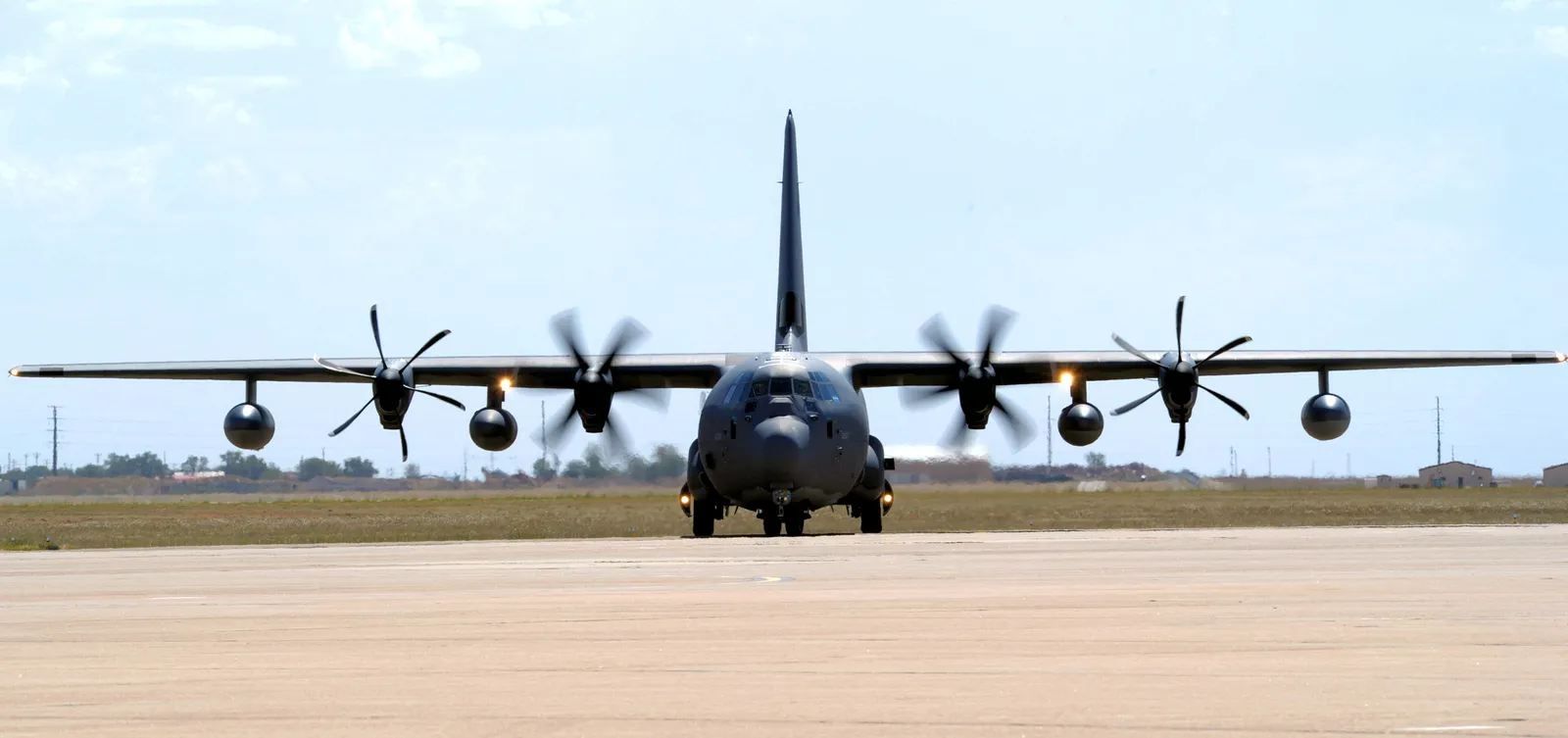


AFSOC documents a 67th Special Operations Squadron MC-130J crew flying a Jan. 5, 2016 resupply airdrop in Helmand Province under enemy fire; AFSOC also says the first MC-130J Afghanistan deployment supported more than 400 missions and moved 9.4 million pounds of cargo.
Role detailsAircraft & UAVs
MC-130J Commando II
Also known as
- MC-130J
- Commando II
- MC-130J Commando II
- Combat Shadow II
- Combat Talon III
The MC-130J Commando II is Lockheed Martin's U.S. special-operations transport and tanker for low-level infiltration, exfiltration, resupply, and air-refueling missions. Air Force sources document Afghanistan resupply missions, 2011 service entry, four Rolls-Royce AE 2100D3 turboprops, and the type's relationship to GBU-43/B MOAB airdrop training.
Role in Conflicts
Profile / Specs
Profile
- Origin
- United States
- Built by
- Lockheed Martin
- Type
- Special operations transport aircraft
- Service note
- 2011-2024 production; in service
- Unit cost
- $114.2M (FY22)
- Produced
- 2011-2024
- Developed from
- C-130J Super Hercules
Specifications
- Primary function
- Infiltration, exfiltration, resupply, and air refueling for special operations forces
- Power plant
- Four Rolls-Royce AE 2100D3 turboprops
- Thrust
- 4,591 shaft horsepower per engine
- Crew
- 2 pilots, 1 combat systems officer, and 2 special mission aviators
- Speed
- Around 300 knots
- Range
- About 3,000 miles
- Maximum takeoff weight
- 164,000 pounds
- Dimensions
- Length 97 feet 9 inches (29.3 meters); wingspan 132 feet 7 inches (39.7 meters); height 38 feet 10 inches (11.8 meters)
Special Operations Mission Systems
The Commando II is built around special-operations mobility rather than general tactical airlift. Air Force fact sheets emphasize night, low-visibility infiltration, exfiltration, resupply, helicopter and tiltrotor air refueling, and operations into politically sensitive or hostile areas.
Crew station and avionics
The MC-130J uses an advanced flight station, integrated digital avionics and navigation, and an added combat-systems officer station for special-mission work.
Refueling role
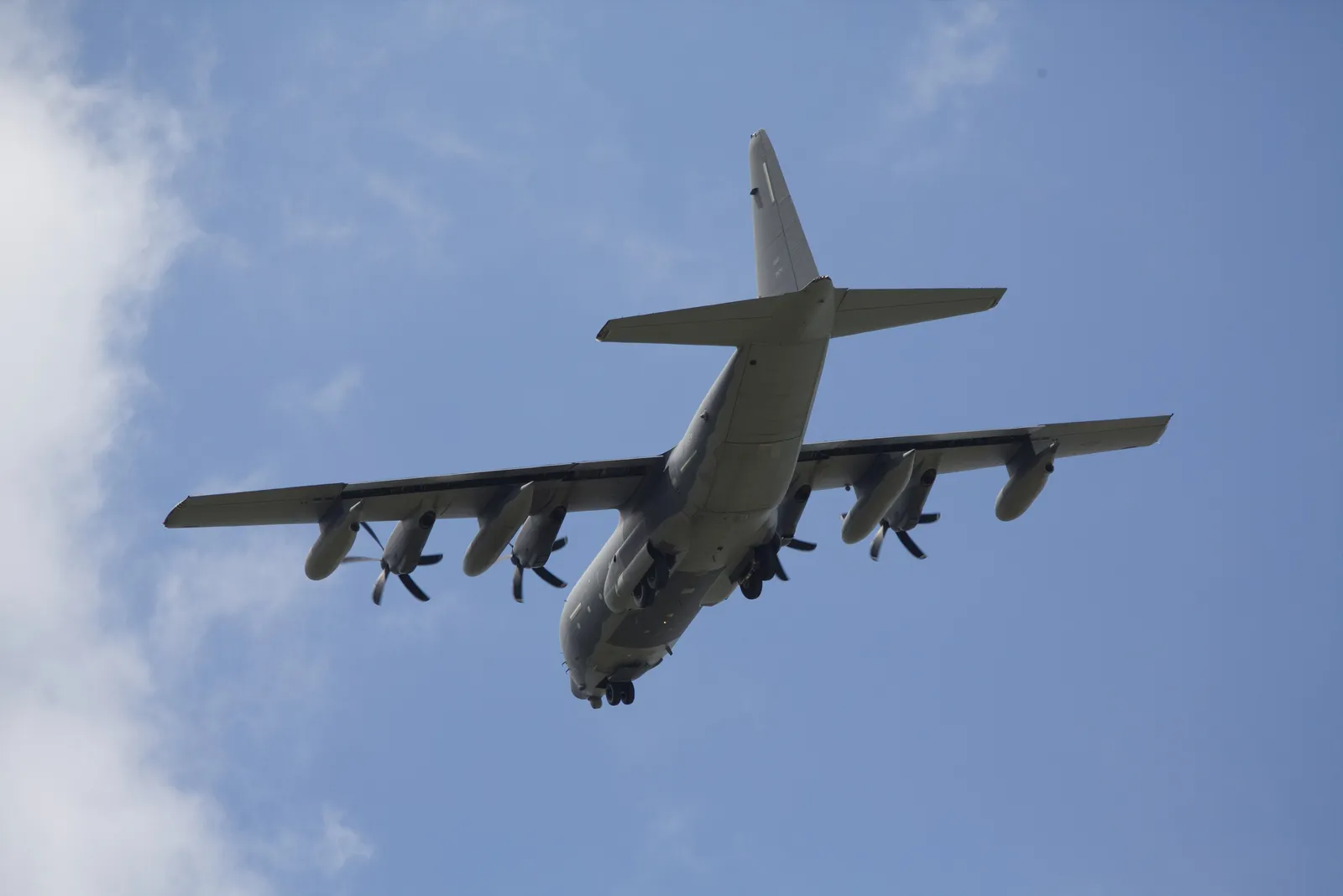
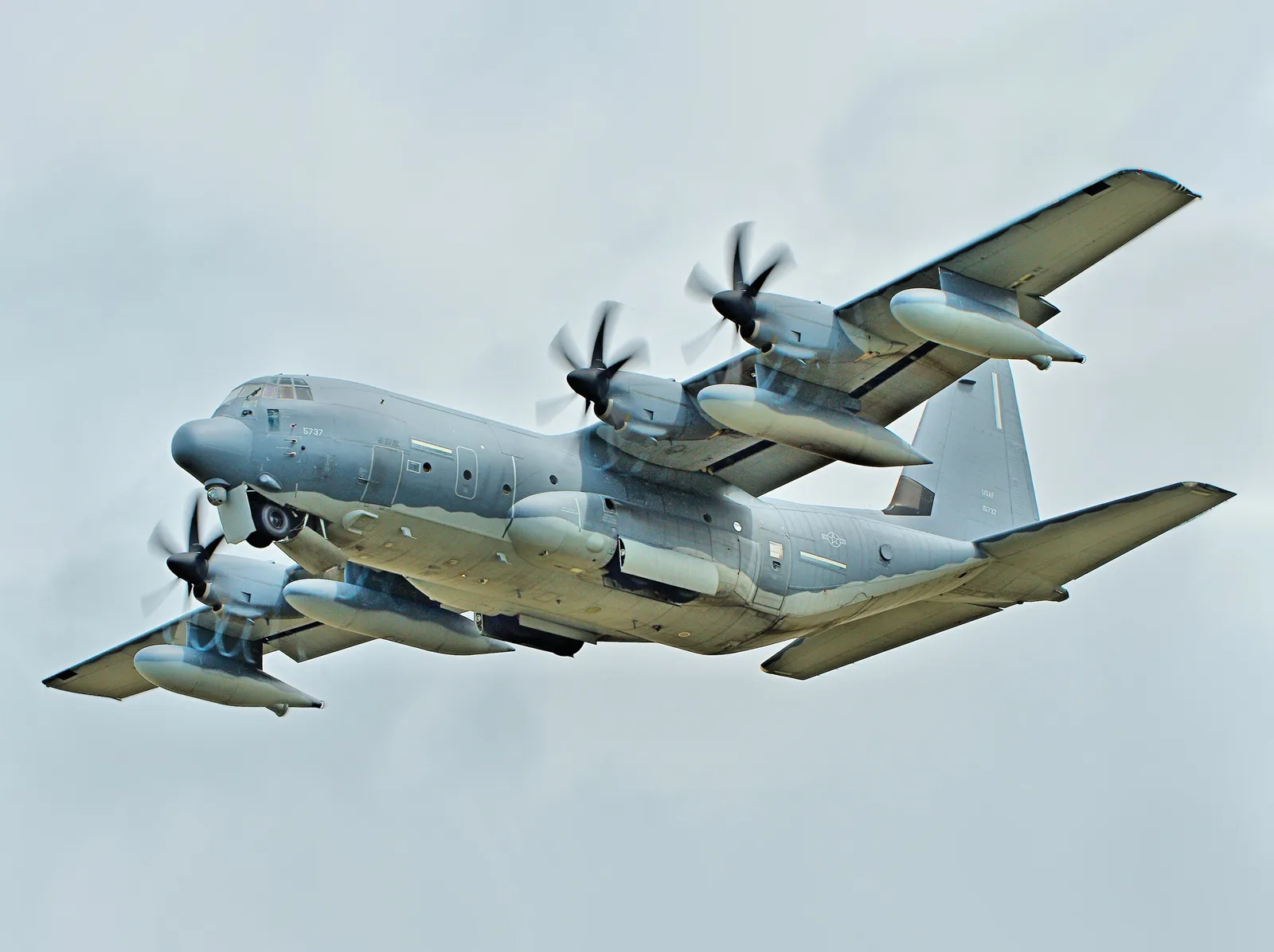
Wing-mounted external tanks and drogue pods let the aircraft refuel special-operations helicopters and tiltrotor aircraft while the MC-130J can also receive fuel in flight.
Combat Talon III upgrade
Air & Space Forces describes the Combat Talon III upgrade path as adding terrain-following/terrain-avoidance radar, radio-frequency countermeasures, and airborne mission networking.
Variants
The MC-130J started service under the Combat Shadow II popular name before AFSOC changed the name to Commando II in 2012. Air & Space Forces describes Combat Talon III as the upgraded MC-130J configuration with terrain-following/terrain-avoidance radar, radio-frequency countermeasures, and airborne mission networking.
| Variant | Configuration | Designation notes |
|---|---|---|
| MC-130J Combat Talon III | Modernized MC-130J configuration | Air & Space Forces identifies Combat Talon III as the upgraded MC-130J with TF/TA radar, radio-frequency countermeasures, and airborne mission networking for low-level penetration and threat response. Sources: MC-130J Commando II/COMBAT TALON III |
Airdropped Munitions
Air Force and DVIDS coverage ties the MC-130J Commando II to GBU-43/B MOAB airdrop training and test drops.
| Launched item | Item type | Launch evidence |
|---|---|---|
 | Massive ordnance air blast bomb | DVIDS coverage says the MC-130J Commando II is the first aircraft to ever drop the GBU-43/B MOAB, and the MC-130J training manual includes GBU-43 airdrop procedures. Sources: Behind the Boom, AFMAN 11-2MC-130J, Vol 1 |
Compatible Airdrop Systems
Air Force MC-130J manuals document Joint Precision Air Drop System procedures and certification events for Commando II crews.
| Compatible item | Item type | Compatibility evidence |
|---|---|---|
 | GPS-guided precision airdrop system | AFMAN 11-2MC-130J Vol. 1 lists JPADS/I-CDS as an instructor-certified MC-130J event, and Vol. 3 includes MC-130J JPADS procedures. |
Timeline
MC-130J Commando II Key Events
First MC-130J flight
Air & Space Forces lists April 20, 2011 as the MC-130J's first flight date.
Sources: MC-130J Commando II/COMBAT TALON III
First aircraft reaches Cannon AFB
Air Force reporting says the first MC-130J arrived at Cannon Air Force Base on September 29, 2011, beginning the type's operational transition.
Sources: Air Force changes name of MC-130J
Commando II name announced
AFSOC announced the popular-name change from Combat Shadow II to Commando II to reflect the aircraft's multi-mission special-operations role.
Sources: Air Force changes name of MC-130J
First Afghanistan deployment
AFSOC says the first deployed MC-130J went to Afghanistan in March 2013 and supported hundreds of mobility missions there.
Sources: AFSOC accepts final MC-130J
Final production handover ceremony
AFSOC marked the final MC-130J production handover at Marietta, Georgia, closing the production phase of the command's Commando II recapitalization effort.
Sources: AFSOC accepts final MC-130J
Related Weapon Systems


Sources
MC-130J Commando II (AFSOC)Publisher: U.S. Air Force | Note: Supports MC-130J background, special-operations transport and tanker role, crew, range, dimensions, power plant, speed, unit cost, service history, and the final aircraft acceptance context. | Accessed: 2026-07-02MC-130J Commando II | Lockheed MartinPublisher: Lockheed Martin | Note: Supports manufacturer context and the MC-130J's special-mission transport and aerial-refueling role. | Accessed: 2026-07-02AFSOC accepts final MC-130JPublisher: U.S. Air Force | Note: Supports the December 2024 final-handover milestone and directly documents the MC-130J's March 2013 Afghanistan deployment, mission count, flight hours, passenger movement, and cargo moved during the 2001 War in Afghanistan. | Accessed: 2026-07-02Distinguished Flying Cross awarded for heroism in actionPublisher: Air Force Special Operations Command | Note: Directly supports the 2001 War in Afghanistan conflict-use row by documenting an MC-130J Commando II crew conducting a Jan. 5, 2016 resupply airdrop for U.S. and coalition special operations forces in Helmand Province while under enemy fire. | Accessed: 2026-07-02Air Force changes name of MC-130JPublisher: U.S. Air Force | Note: Supports the Commando II name-change date, previous Combat Shadow II popular name, Cannon AFB arrival date, and special-operations mission framing. | Accessed: 2026-07-02MC-130J Commando II/COMBAT TALON IIIPublisher: Air & Space Forces Magazine | Note: Supports first-flight and IOC dates, Combat Talon III modernization context, refueling equipment, mission systems, and additional technical data. | Accessed: 2026-07-02Behind the BoomPublisher: Defense Visual Information Distribution Service | Note: Supports the MC-130J Commando II relationship to the GBU-43/B MOAB as the first aircraft to ever drop it. | Accessed: 2026-07-02AFMAN 11-2MC-130J, Vol 1Publisher: U.S. Air Force | Note: Supports MC-130J GBU-43 and JPADS/I-CDS airdrop procedures and training context. | Accessed: 2026-07-02AFMAN 11-2MC-130J, Vol 3Publisher: U.S. Air Force | Note: Supports MC-130J operational procedures for Joint Precision Air Drop System employment. | Accessed: 2026-07-02522d Special Operations Squadron - MC-130J Commando II.jpgPublisher: Wikimedia Commons | Note: Supports image provenance and licensing context for the primary MC-130J image. | Accessed: 2026-06-27Lockheed Martin MC-130J Commando II (34814595634).jpgPublisher: Wikimedia Commons | Note: Supports image provenance and licensing context for the gallery image showing the MC-130J in flight. | Accessed: 2026-06-27Lockheed Martin MC-130J Commando II (34846612943).jpgPublisher: Wikimedia Commons | Note: Supports image provenance and licensing context for the gallery image of the MC-130J on the ground. | Accessed: 2026-06-27MC-130J Commando II - RIAT 2016 (30359171162).jpgPublisher: Wikimedia Commons | Note: Supports image provenance and licensing context for the gallery image of the MC-130J during operations. | Accessed: 2026-06-27