

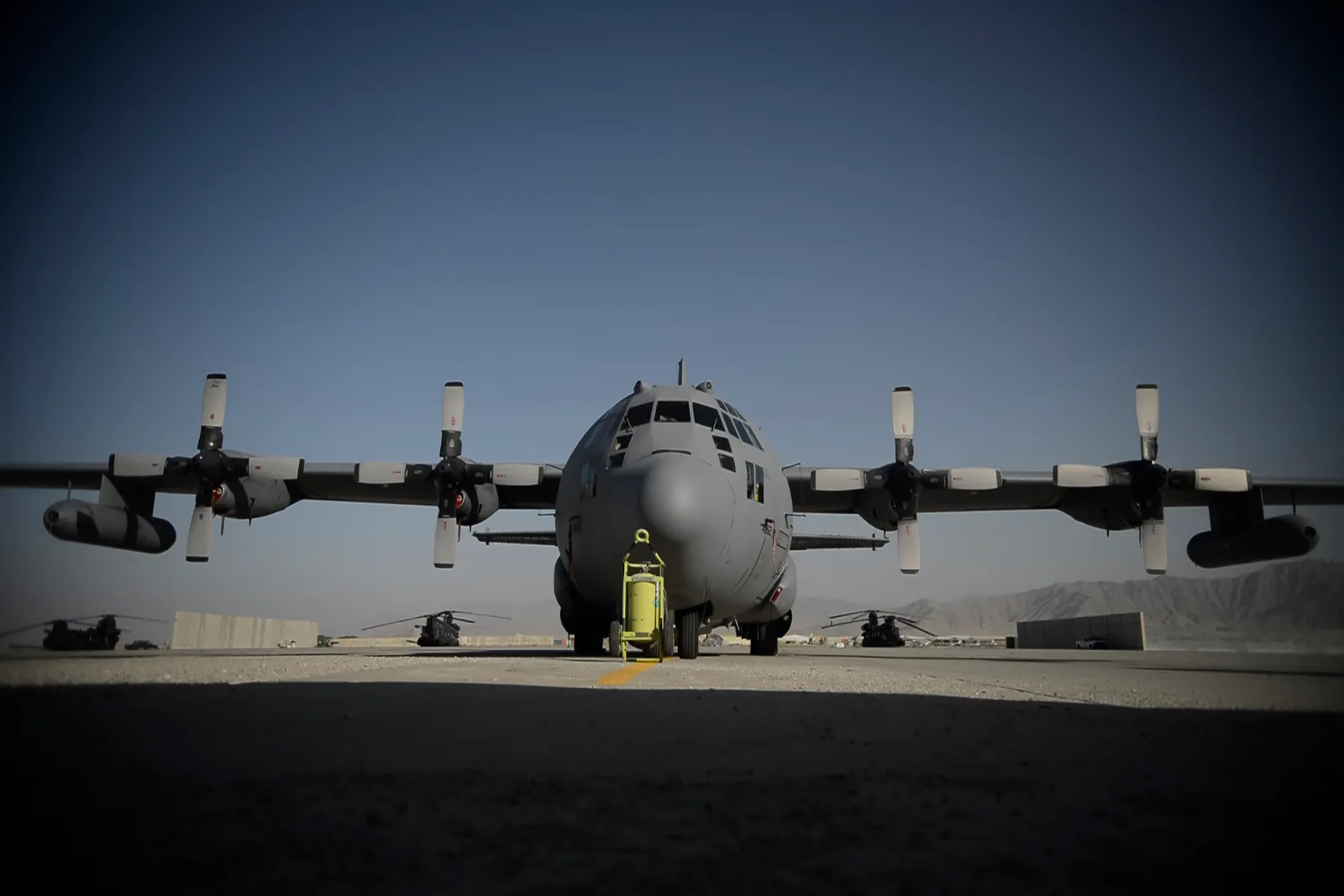
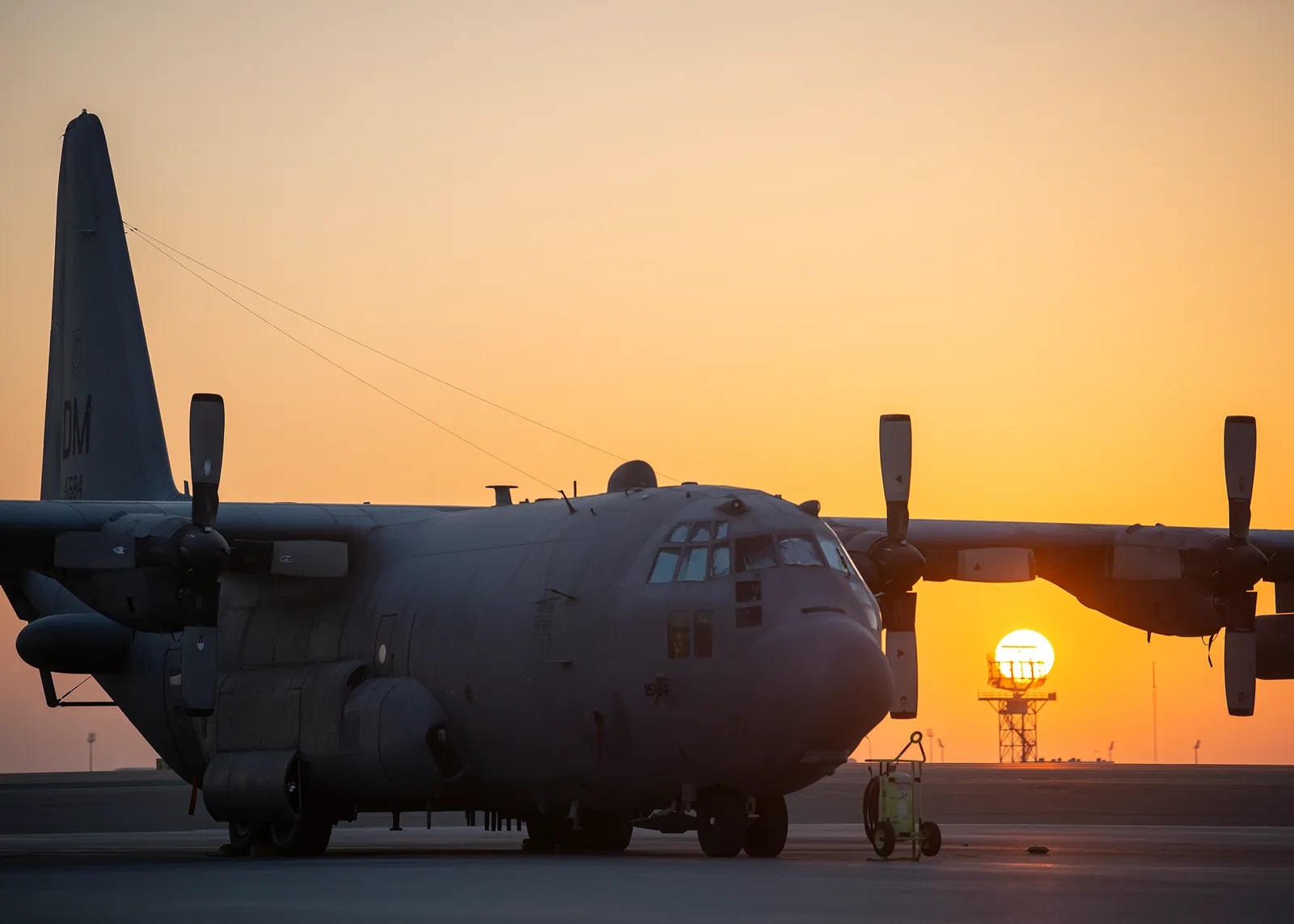
Used by U.S. Air Force crews at Bagram Airfield during Operation Freedom's Sentinel; DVIDS described an EC-130H Compass Call prepared for takeoff in support of the mission and its electronic attack role disrupting enemy command and control.
Role detailsAircraft & UAVs
EC-130H Compass Call
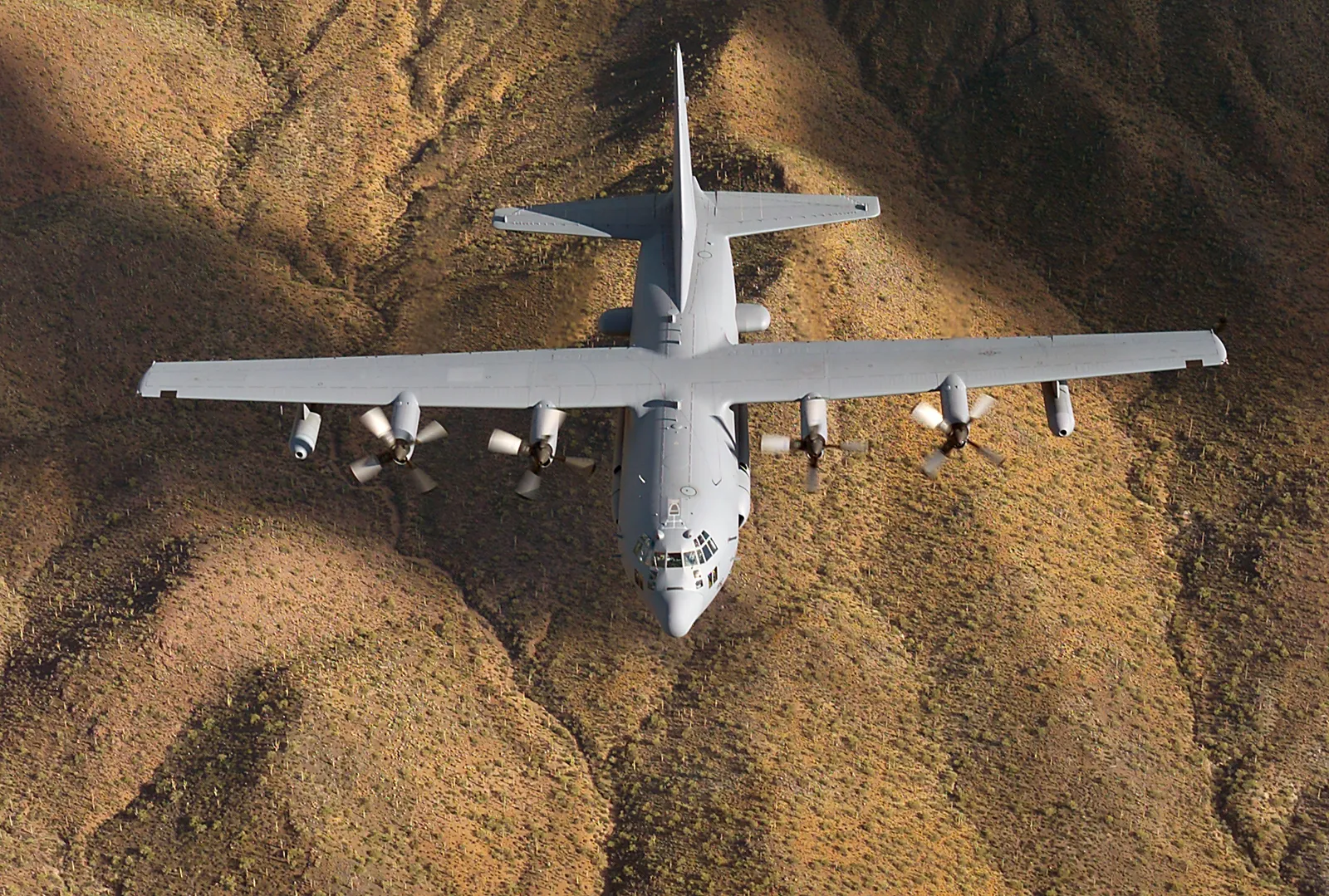
The EC-130H Compass Call is the U.S. Air Force's legacy airborne electronic-attack aircraft, a heavily modified C-130H that denies, degrades, and disrupts adversary command-and-control communications, radars, and navigation systems. Its mission crew operates permanently installed electronic-attack equipment for U.S. and coalition air, surface, maritime, and special-operations support, while the EC-130H fleet transitions to the EA-37B Compass Call successor.
Role in Conflicts
Used by the anti-ISIS coalition in Operation Inherent Resolve; DVIDS reported the 43rd Expeditionary Electronic Combat Squadron operating EC-130H Compass Call aircraft to degrade ISIS command and control.
Role details- Side
- United States
Used by the United States in the 2020 United States-Iran Conflict; CENTCOM listed the EC-130H Compass Call among U.S. assets employed in Operation Epic Fury against Iran.
Profile / Specs
Profile
- Origin
- United States
- Built in
- United StatesUnited Kingdom
- Type
- Airborne electronic attack aircraft
- Service note
- 1981-present
- Designer
- Lockheed Martin
- Designed
- Late 1970s
- Produced
- 1981-1983 conversions
- Number built
- 14
Specifications
- Mission
- Airborne tactical electronic attack against command-and-control communications, radars, and navigation systems
- Airframe
- Heavily modified C-130H Hercules
- Crew
- 13 total: 4 flight-deck crew and 9 electronic-attack mission crew
- Wingspan
- 132.6 ft
- Length
- 99 ft
- Height
- 38 ft
- Max takeoff weight
- 155,000 lb
- Powerplant
- Four Allison T56-A-15 turboprops, 4,910 shp each
- Speed
- 300 mph at 20,000 ft
- Unrefueled range
- 2,295 miles
- Normal endurance
- 7 hours; aerial refuelable
- Ceiling
- 25,000 ft
- Operator
- Air Combat Command, 55th Electronic Combat Group
Mission System And Upgrades
The EC-130H Compass Call centers on permanently installed electronic-attack mission equipment carried inside the C-130H cargo and mission compartment. The Air Force describes the aircraft as a flexible system for disrupting adversary command-and-control communications, while later configurations also added capability against early warning/acquisition radars and navigation systems.
Crew split
Four flight-deck crew fly and navigate the aircraft; nine mission crew operate the electronic-attack equipment.
Upgrade model
Spiral baseline upgrades added digital signal processing, reconfigurable clip-ins, improved external communications, expanded SATCOM, data links, and classified precision and attack-capacity changes.
Successor path
L3Harris says the legacy EC-130H mission system is being cross-decked to the Gulfstream G550-based Compass Call successor, later designated EA-37B.
Variants
Compass Call upgrades are described as spiral baseline configurations on the EC-130H airframe before the mission system is rehosted on the EA-37B.
| Variant | Configuration | Designation notes |
|---|---|---|
| Block 35 Baseline 1 | EC-130H mission-system baseline | Added higher effective radiated power, a broader frequency range, digital signal processing, and jamming against communications, early warning/acquisition radar, and navigation systems. |
| Baseline 2 | EC-130H mission-system baseline | Integrated clip-in capabilities with legacy functions, improved external communications, expanded SATCOM and data-link connectivity, and classified precision and attack-capacity upgrades. |
| Baseline 3 | Late EC-130H configuration | Air & Space Forces Magazine identifies Baseline 3 as the most recent EC-130H configuration and notes its Advanced Radar Countermeasure System and other capability enhancements. |
Carried Systems
Armada International identifies NOVA equipment inside the EC-130H Compass Call mission-equipment suite.
| Carried item | Item type | Carriage evidence |
|---|---|---|
 | IED-jamming subsystem | Armada International says the EC-130H Compass Call's NOVA equipment jams remote-controlled improvised explosive devices. Sources: Compass Call Upgrade |
Timeline
EC-130H Compass Call Key Events
First flight
The Compass Call had its first flight in 1981 as the U.S. Air Force began fielding the modified C-130H electronic-attack platform.
First modified aircraft arrives
The first specially modified EC-130H Compass Call, tail number 1587, arrived at Davis-Monthan Air Force Base.
Initial operating capability
Compass Call reached initial operating capability in 1983.
Block 35 fielded
Air & Space Forces Magazine lists Block 35 from 2011 and says all EC-130H aircraft were later retrofitted to the Block 35 standard.
First Compass Call aircraft retires
Tail number 1587 completed its final flight after 37 years conducting the Compass Call mission.
43rd ECS final EC-130H sortie
The 43rd Electronic Combat Squadron flew its final EC-130H Compass Call sortie as the Air Force shifted the squadron toward the EA-37B.
Media
EC-130H Compass Call Videos
Related Weapon Systems


Sources
U.S. Air Force EC-130H Compass Call Fact SheetPublisher: U.S. Air Force | Note: Supports EC-130H Compass Call background, mission, service history, baseline variants, and crew details. | Accessed: 2026-07-03Air & Space Forces EC-130H Compass Call ProfilePublisher: Air & Space Forces Magazine | Note: Supports EC-130H Compass Call contractors, first flight, delivery, inventory, dimensions, performance data, late baseline context, and 2024 operator transition. | Accessed: 2026-07-03Davis-Monthan EC-130H Compass Call Fact SheetPublisher: Davis-Monthan Air Force Base | Note: Supports current mission language, operating unit context, sortie-hour background, reconfigurable mission-system details, and upgraded communications and avionics context. | Accessed: 2026-07-03BAE Systems Compass Call Product PagePublisher: BAE Systems | Note: Supports Compass Call mission-system role, electromagnetic attack effects against command, control, communications, radars, and navigation systems, and BAE Systems mission-system prime-contractor role. | Accessed: 2026-07-03L3Harris EC-37B Cross Deck Data SheetPublisher: L3Harris | Note: Supports EC-130H mission-system migration to the EC-37B/EA-37B successor and the legacy fleet's electronic-warfare mission context. | Accessed: 2026-07-03Compass Call First Final FlightPublisher: Davis-Monthan Air Force Base | Note: Supports first modified EC-130H arrival date at Davis-Monthan and the January 2020 final flight of tail number 1587. | Accessed: 2026-07-0343rd ECS Transitions to EA-37BPublisher: Offutt Air Force Base | Note: Supports the February 2024 final EC-130H flight by the 43rd Electronic Combat Squadron and the phased transition to the EA-37B. | Accessed: 2026-07-03EC-130H Compass Call 060617Publisher: Wikimedia Commons | Note: Supports image provenance for the EC-130H Compass Call in-flight image used as the primary image. | Accessed: 2026-07-03EC-130H Compass Call (15147817100)Publisher: Wikimedia Commons | Note: Supports image provenance for the EC-130H Compass Call Bagram Airfield image used in the gallery. | Accessed: 2026-07-03EC-130H Compass Call at Al Dhafra Air BasePublisher: Wikimedia Commons | Note: Supports image provenance for the EC-130H Compass Call Al Dhafra Air Base image used in the gallery. | Accessed: 2026-07-03EC-130H Compass Call maintenance at Bagram AirfieldPublisher: Wikimedia Commons | Note: Supports image provenance for the EC-130H Compass Call Bagram maintenance image used in the gallery. | Accessed: 2026-07-03Operation Epic Fury Fact SheetPublisher: U.S. Central Command | Note: Supports 2020 United States-Iran Conflict direct use: EC-130H Compass Call used by CENTCOM as an electronic warfare aircraft in Operation Epic Fury against Iran. | Accessed: 2026-07-03EC-130H Supports Operation Freedom's SentinelPublisher: Defense Visual Information Distribution Service | Note: Supports 2001 War in Afghanistan direct use: EC-130H Compass Call used by U.S. Air Force crews at Bagram Airfield in support of Operation Freedom's Sentinel. | Accessed: 2026-07-03Compass Call Reshapes OIR Battlefield With Electronic Warfare DominationPublisher: Defense Visual Information Distribution Service | Note: Supports 2014 War Against the Islamic State direct conflict use under Operation Inherent Resolve: Supports 2014 Operation Inherent Resolve direct use: EC-130H Compass Call used by the 43rd Expeditionary Electronic Combat Squadron to support U.S. and coalition forces and degrade ISIS command and control. | Accessed: 2026-07-03Compass Call UpgradePublisher: Armada International | Note: Supports NOVA equipment carriage and the EC-130H Compass Call mission-equipment context. | Accessed: 2026-07-03