Munitions

Air-dropped bombs

Also known as
  • Aircraft bombs
  • Air-delivered bombs
  • Aerial bombs
  • General-purpose aircraft bombs
  • Free-fall bombs
  • Unguided bombs

Air-dropped bombs are aircraft-delivered explosive munitions documented here as a conflict-use class when sources identify bombing runs but not a specific model. The entry covers Philippine Air Force bombing during the 2017 Battle of Marawi and Colombian government air operations against FARC dissident bases, while separating those conflict claims from representative Mk-series bomb-body background.

Role in Conflicts

Side
Philippine government forces

Philippine Air Force aircraft dropped bombs during the 2017 Battle of Marawi, including OV-10 Bronco and FA-50PH strike missions against IS-aligned militant positions; public sources often identify the munition only as a bomb or unguided bomb rather than a specific model.

Profile / Specs

Profile

Origin
Various
Type
Aircraft-delivered general-purpose bomb class
Service note
Documented in post-2016 airstrikes in the Philippines and Colombia
Designer
Varies by bomb type
Designed
Varies by bomb type
Unit cost
Varies by bomb type and guidance configuration
Produced
Varies by bomb type
Number built
Not applicable to aggregate class

Specifications

Delivery method
Released from fixed-wing aircraft during attack or close-air-support sorties.
Marawi launch platforms
Public reporting identifies Philippine OV-10 Bronco and FA-50PH aircraft in Marawi bombing and strike missions.
Guidance
Marawi OV-10 reporting describes mostly unguided bombs, while Philippine aircraft also had limited precision-guided munition capability.
Representative bomb classes
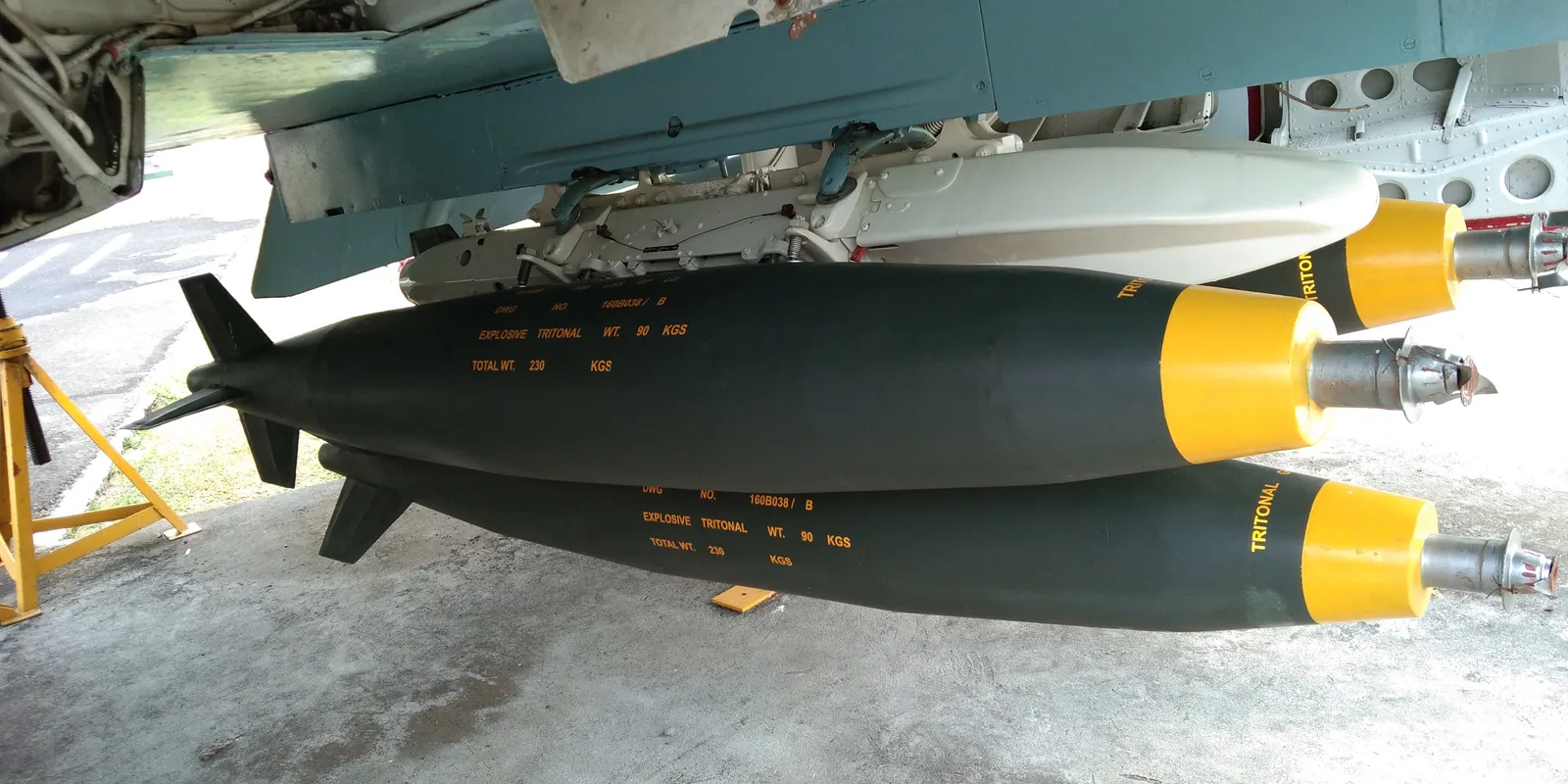
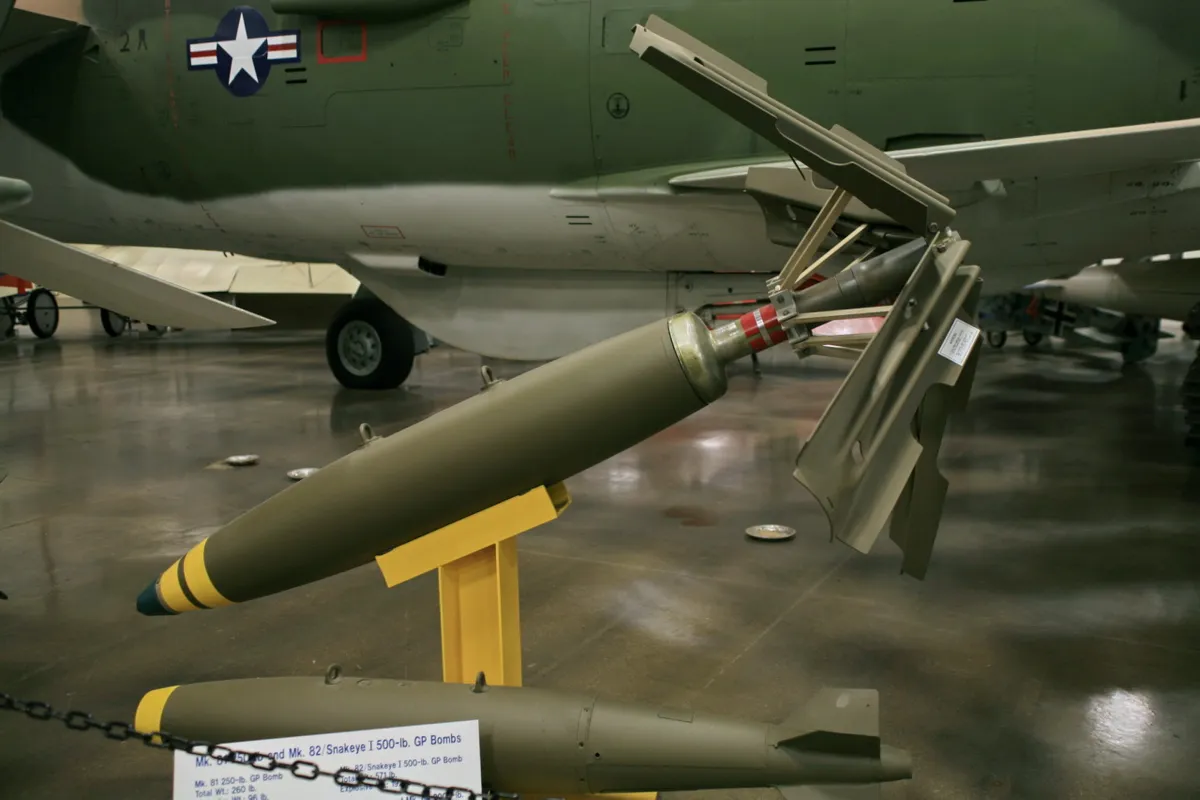
U.S. Army bomb-body data describes Mk 80-series 500- to 2,000-pound general-purpose bombs, BLU-110/111/117 variants, retarding-fin options, and laser/GPS guidance airfoil-kit compatibility; exact Marawi bomb models are not consistently identified in public sources.
Representative weights
U.S. general-purpose bomb references list Mk 80-series classes from 500 to 2,000 lb and smaller Mk 81-class 250 lb bombs; conflict rows here do not identify those exact models unless the source says so.
Effects
Blast and fragmentation against buildings, fighting positions, and urban target areas, with significant risk in dense terrain near friendly forces and civilians.
Class Boundaries

This page is scoped to aircraft-delivered bombs when conflict sources describe a bombing run or air-dropped bomb without naming a specific weapon model. Linked carrier aircraft and representative bomb-body sources explain what the class can include; the conflict rows stay limited to the direct public evidence for Marawi and Colombian FARC dissident operations.

Conflict evidence

Marawi reporting identifies Philippine aircraft dropping bombs, with OV-10 coverage emphasizing mostly unguided weapons and separate reporting describing an SF-260 bomb release in a friendly-fire incident.

Representative bodies

U.S. conventional-bomb references describe Mk 80-series and BLU general-purpose bomb bodies, penetrator bodies, practice bombs, fuzes, fins, lugs, and guidance-kit compatibility.

Model limit

A named Mk, BLU, GBU, or local bomb type should be cataloged separately when a source directly identifies that specific munition in a conflict.

Variants

This aggregate page covers aircraft-delivered bomb classes when public conflict reporting does not identify one exact model. Variant rows are representative configurations, not claims that every listed configuration appeared in each conflict row.

VariantConfigurationDesignation notes
Unguided/free-fall general-purpose bombsLow-drag bomb-body configuration

U.S. Army bomb-body guidance describes the Mk 80 series as 500- to 2,000-pound general-purpose bombs and notes that general-purpose bombs may use mechanical or electronic fuzes and conventional fins.

Sources: PL Joint Ammunition and Weapon Systems - Bombs

Retarded low-altitude bombsRetarding-fin configuration

The same U.S. Army reference says general-purpose bombs may use retarding fins, including 500-pound BLU-111/Mk 82-class bodies.

Sources: PL Joint Ammunition and Weapon Systems - Bombs

Precision-guided bomb configurationsBomb body fitted with laser, GPS, or INS guidance kits

U.S. Army bomb-body data describes laser/GPS guidance airfoil-kit compatibility for general-purpose bomb bodies and laser/GPS/INS guidance-kit compatibility for the BLU-129/B.

Sources: PL Joint Ammunition and Weapon Systems - Bombs

Carrier Aircraft

These aircraft pages document air-dropped bomb carriage in bomber and light-attack loadout references or conflict-use reporting.

CarrierCarrier typeCarriage evidence
OV-10 Bronco, Twin-turboprop light attack and observation aircraft, Aircraft & UAVsOV-10 BroncoLight attack and observation aircraft

Marawi reporting described Philippine OV-10 Broncos supporting the operation with mostly unguided bombs in close proximity to friendly forces.

Sources: Urban Counter-Insurgency Airstrikes On ISIS Targets In The Philippines Suited to Legacy OV-10 Bronco

SF-260, Trainer and light attack aircraft, Aircraft & UAVsSF-260Trainer and light attack aircraft

Philippine Daily Inquirer reporting on a Marawi friendly-fire incident identified an air-dropped bomb released by a Philippine SIAI-Marchetti SF-260 during a bombing run.

Sources: Airstrike kills 11 soldiers, wounds 7; AFP probe on

B-52 Stratofortress, Long-range heavy bomber, Aircraft & UAVsB-52 StratofortressStrategic bomber

The U.S. Air Force fact sheet says the B-52H Stratofortress can drop gravity bombs, documenting it as a carrier for air-dropped bombs.

Sources: B-52H Stratofortress

B-1B Lancer, Long-range, multi-role supersonic bomber, Aircraft & UAVsB-1B LancerLong-range bomber

The U.S. Air Force fact sheet describes the B-1B Lancer as carrying conventional bombs and missiles, documenting it as a carrier for air-dropped bombs.

Sources: B-1B Lancer

B-2 Spirit, Low-observable strategic heavy bomber, Aircraft & UAVsB-2 SpiritStealth bomber

The U.S. Air Force fact sheet describes the B-2 Spirit as capable of delivering conventional munitions, which includes air-dropped bombs in its strike role.

Sources: B-2 Spirit

A-29 Super Tucano, Turboprop light attack and armed reconnaissance aircraft, Aircraft & UAVsA-29 Super TucanoLight attack aircraft

Embraer's A-29 Super Tucano brochure lists MK-81 and MK-82 general-purpose bombs among the aircraft's weapon configurations.

Sources: A-29 Super Tucano brochure

FA-50PH, Supersonic light combat aircraft, Aircraft & UAVsFA-50PHLight combat aircraft

Korea Aerospace Industries' FA-50 brochure lists general bombs and MK-82 500-lb bombs among the aircraft's combat capabilities.

Sources: FA-50 ENG Brochure

Harbin H-5 bomber, Twin-jet light bomber, Aircraft & UAVsHarbin H-5 bomberLight bomber

The H-5 armament table lists 4 500kg bombs or 12 Type 1 250 kg bombs, documenting the Harbin H-5 as a carrier for air-dropped bombs.

Sources: H-5 China Aircraft Special Weapons Delivery Systems

Timeline

Air-dropped bombs Key Events

  1. Marawi battle begins

    IS-aligned militants seized central Marawi, leading Philippine forces to use aircraft-delivered bombs during the urban counteroffensive.

    Sources: Urban Counter-Insurgency Airstrikes On ISIS Targets In The Philippines Suited to Legacy OV-10 Bronco

  2. Friendly-fire bombing underscores urban risk

    A Philippine SF-260 bombing run in Marawi accidentally hit government troops during close combat, illustrating the risk of air-dropped bombs in dense urban fighting.

    Sources: Airstrike kills 11 soldiers, wounds 7; AFP probe on

  3. Colombian bombing reported at Calamar

    Reporting described a Colombian military bombing against a former FARC dissident base in Calamar, Guaviare, during the post-2016 dissident conflict.

    Sources: Colombia military operation kills 10 FARC dissidents

Media
Related Weapon Systems
Mortars, Infantry and artillery mortar class, ArtilleryArtilleryMortarsInfantry and artillery mortar classMortars are short-barreled, high-angle indirect-fire weapons used by infantry, artillery units, and armed groups for close support, harassment, and attacks on positions behind cover. The catalog entry treats mortars as a broad weapon class because the direct conflict sources usually document mortar use without identifying exact calibers or models, including Philippine government support fires at Marawi, Hezbollah fire at Mount Dov, jihadist attacks in Mali and Sinai, FARC dissident improvised mortars in Colombia, 2023 Sudan War battlefield use, and Cambodia-accused cross-border fire.
FAB-250, 250 kg general-purpose free-fall aviation bomb, MunitionsMunitionsFAB-250250 kg general-purpose free-fall aviation bombThe FAB-250 is a Soviet-origin 250 kg general-purpose aviation bomb family built around unguided free-fall bodies and later adapted in some wars through improvised carriers or glide-kit conversion. WeaponsSystems.net describes the FAB M62 series as a Soviet free-fall bomb family with a common 250 kg version produced by Bazalt, while direct conflict reporting links FAB-250-class bombs to Azerbaijan's converted An-2 aircraft in 2020 and to Russian and Ukrainian strike adaptations in the 2014 Russia-Ukraine War.
M16 rifle, Assault rifle, Infantry WeaponsInfantry WeaponsM16 rifleAssault rifleThe M16 is a U.S.-origin 5.56x45mm assault-rifle family that evolved from 1955 Vietnam War service into the M16A1, M16A2 and M16A4 lineage. Current Army and FN references describe the M16A4 as a gas-operated, shoulder-fired, 20-inch-barrel rifle with rail and optics compatibility, while conflict-specific sources document continued use from Marawi and Afghanistan to Israeli wartime response teams, Iraqi partner-force training and Colombian FARC dissident seizures.

Sources