- Side
- United States

During the 2025 Israel-Iran Conflict, CENTCOM said B-1 bombers took off in support of Operation Epic Fury and then struck deep inside Iran against ballistic-missile targets.
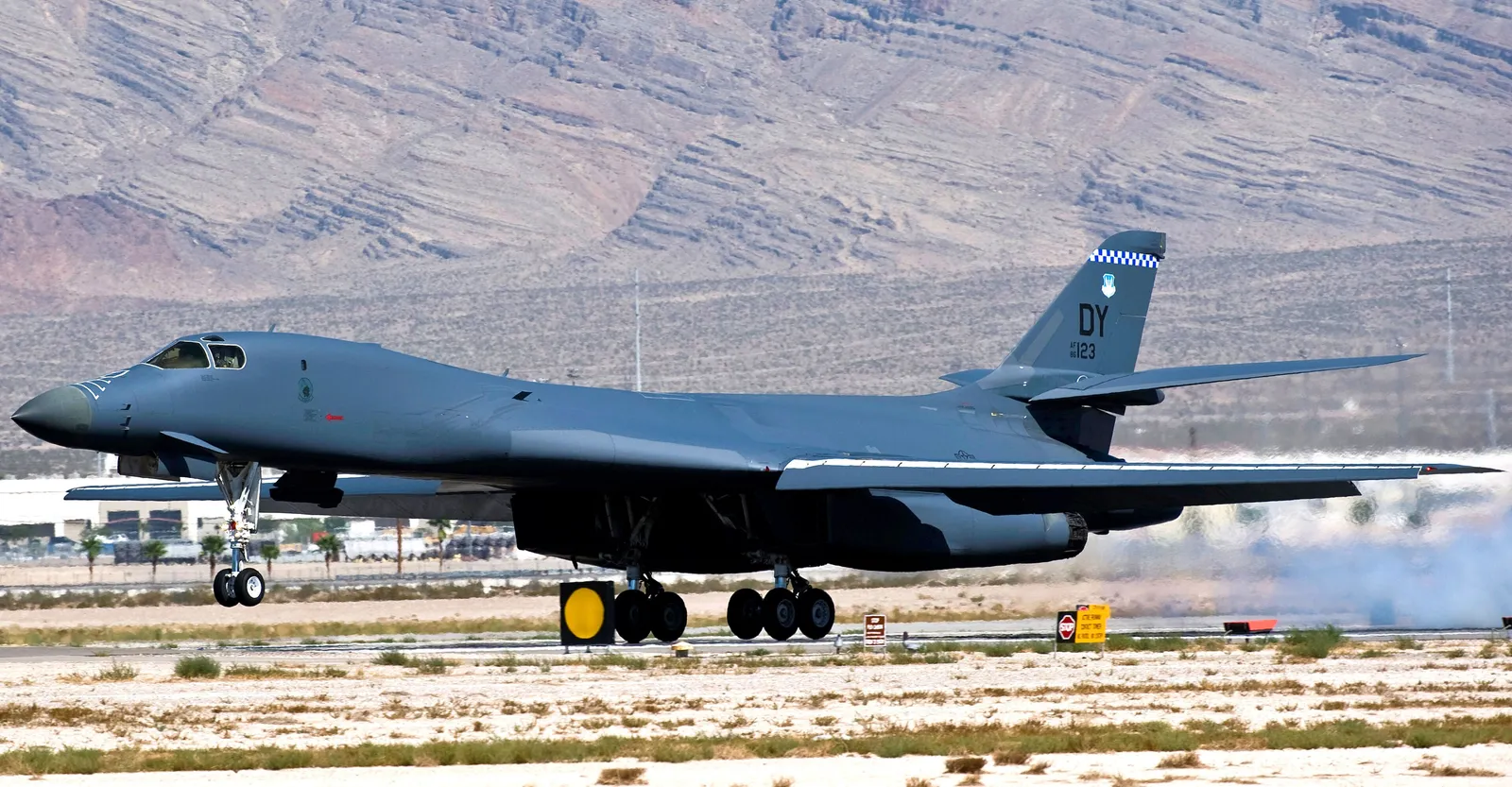
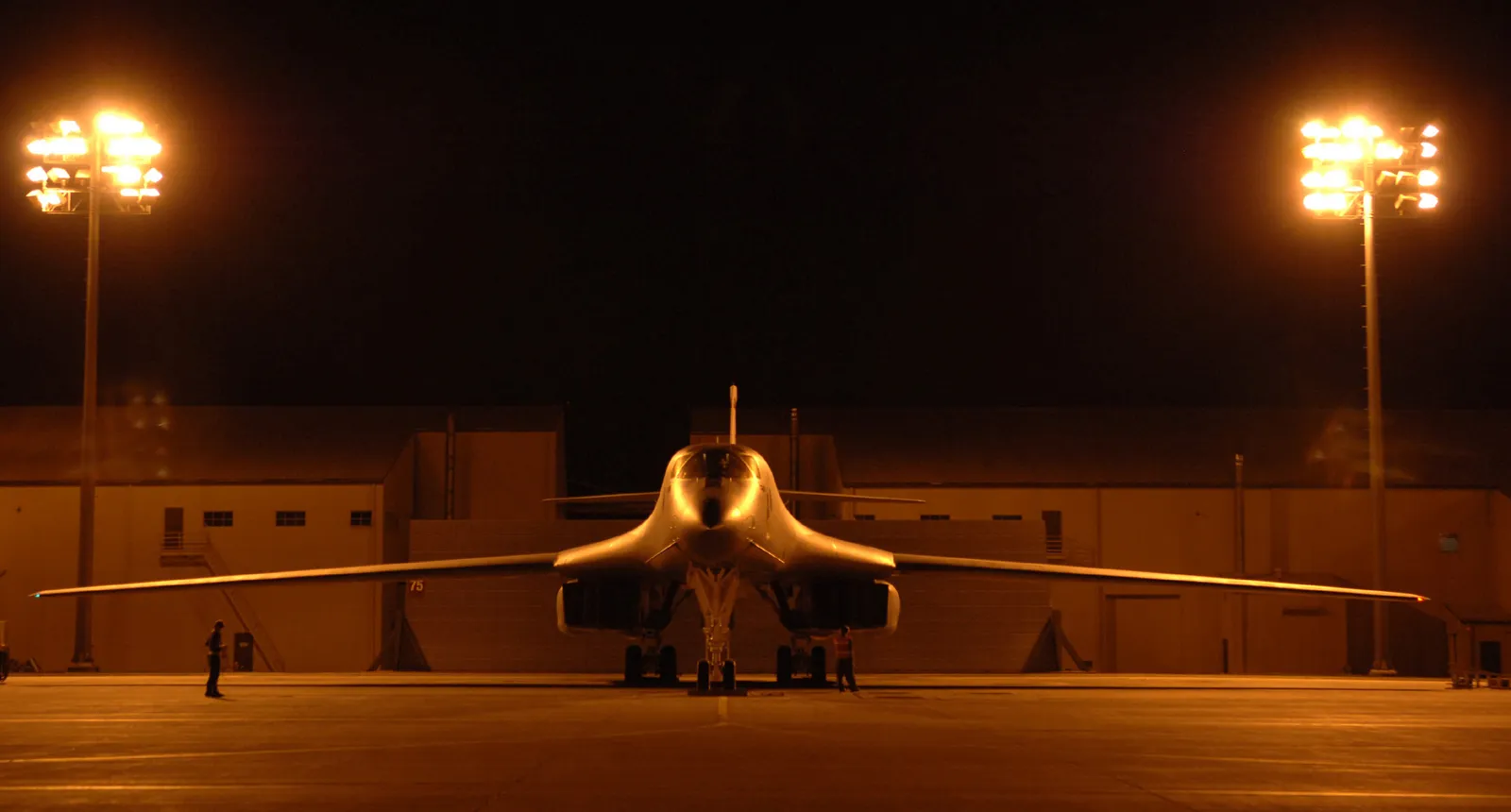
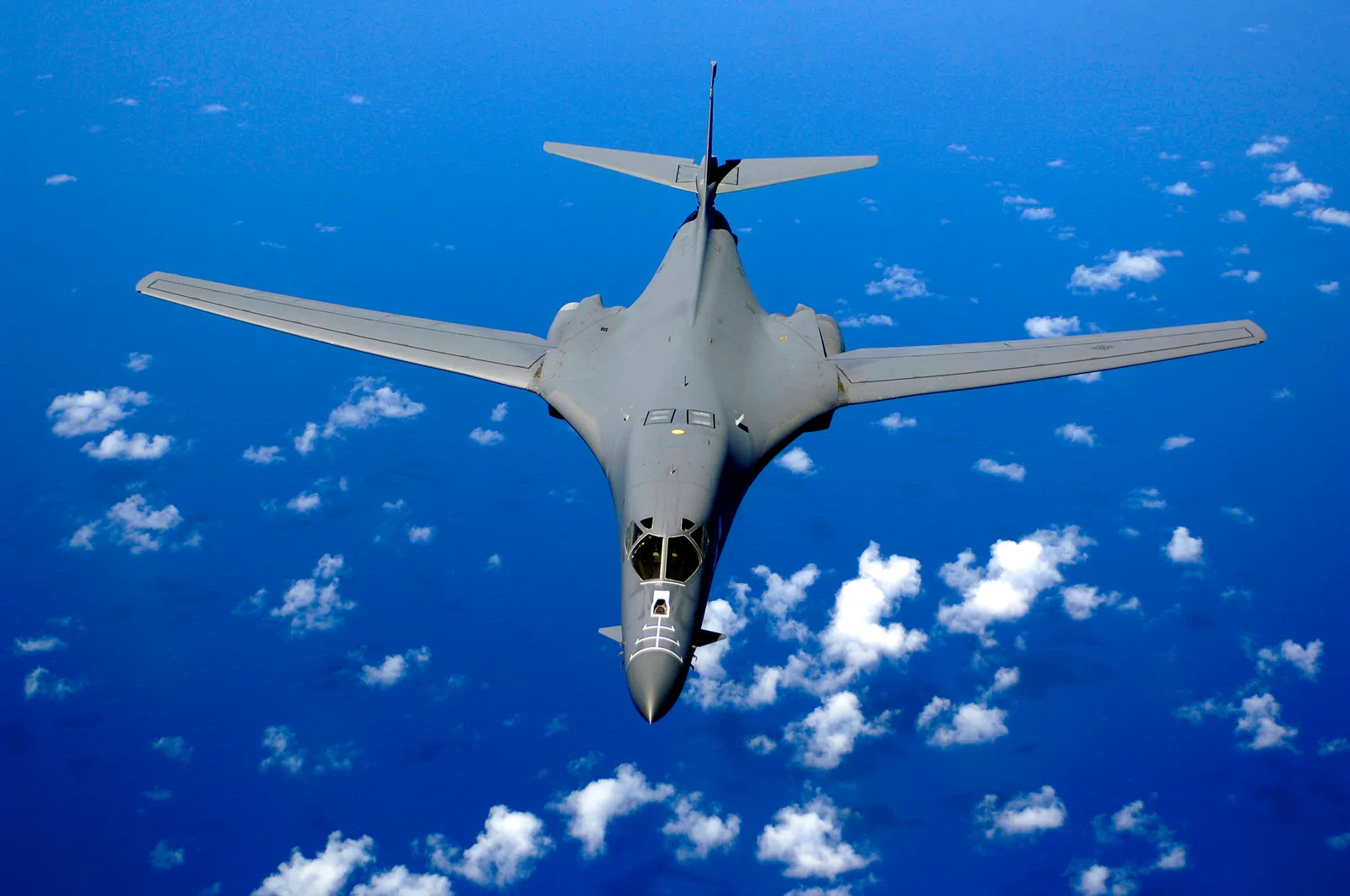
Role detailsThe B-1B Lancer is the U.S. Air Force's long-range, supersonic conventional bomber, built to deliver large payloads of guided and unguided weapons against distant, heavily defended targets. Recent open-source reporting ties the aircraft to 2014 Operation Inherent Resolve strikes, Afghan Taliban-target attacks, a U.S. show-of-force flight near Venezuela, and 2026 strikes deep inside Iran during the 2025 Israel-Iran Conflict.
During the 2025 Israel-Iran Conflict, CENTCOM said B-1 bombers took off in support of Operation Epic Fury and then struck deep inside Iran against ballistic-missile targets.
Role detailsIn April 2018, AFCENT said a 34th Expeditionary Bomb Squadron B-1B Lancer flew its first AFCENT-area combat mission since 2016 and would support Operation Inherent Resolve.
Role detailsDuring the January 3, 2026 Operation Absolute Resolve raid in Venezuela, Air & Space Forces reported B-1B Lancer bombers among U.S. aircraft airborne in support missions as the joint air component disabled Venezuelan air defenses.
In the 2001 War in Afghanistan, AFCENT reported that a B-1B Lancer from the 34th Expeditionary Bomb Squadron bombed Taliban narcotics production and storage facilities in Afghanistan in May 2018.
Role detailsThe B-1B is the production Lancer variant derived from the earlier B-1A prototype program; B-1R remained a proposed upgrade concept rather than a fielded bomber.
| Variant | Configuration | Designation notes |
|---|---|---|
| B-1A | Prototype strategic bomber | The Air Force fact sheet says four B-1A prototypes were developed and tested before the program was canceled in 1977 without production. Sources: Air Force B-1B Lancer Fact Sheet |
| B-1B | Production long-range conventional bomber | The Air Force identifies the B-1B as the improved variant initiated in 1981, with radar-cross-section reductions and structural changes for a larger payload. Sources: Air Force B-1B Lancer Fact Sheet |
| B-1R concept | Unbuilt regional-strike upgrade proposal | Air & Space Forces Magazine described Boeing's B-1R proposal as a Lancer upgrade concept with advanced radar, air-to-air missiles, F/A-22 engines, and higher speed at reduced range. Sources: Long-Range Strike in a Hurry |
Air Force weapon-load data documents JDAM-family guided bombs in B-1B armament configurations.
| Carried item | Item type | Carriage evidence |
|---|---|---|
 | 2,000-pound JDAM | The Air Force B-1B fact sheet lists up to 24 GBU-31 2,000-pound Joint Direct Attack Munitions in the bomber's armament. |
 | 500-pound JDAM | The Air Force B-1B fact sheet lists up to 15 GBU-38 500-pound Joint Direct Attack Munitions. |
 | 500-pound laser JDAM | The Air Force B-1B fact sheet lists up to 15 GBU-54 Laser Joint Direct Attack Munitions. Sources: B-1B Lancer GBU-54 load |
Service reporting documents the B-1B launching or being integrated with long-range standoff weapons.
| Launched item | Item type | Launch evidence |
|---|---|---|
 | Long-range cruise missile | Air Force reporting on a B-1 missile load says the bomber carried a full load of 24 AGM-158 JASSMs. Sources: B-1B Lancer JASSM load |
 | Air-launched guided glide bomb | NAVAIR says JSOW-C is compatible with B-1 aircraft, while the Air Force fact sheet lists JSOW integration on the B-1B. Sources: NAVAIR JSOW-C Full Rate Production, Air Force B-1B JSOW Integration |
 | Long-range anti-ship cruise missile | The Navy reported the first LRASM free-flight launch from a B-1B Lancer during flight testing. Sources: B-1B Lancer LRASM |
The Air Force fact sheet lists the B-1B's internal weapons-bay loads for general-purpose bombs, cluster munitions, Wind-Corrected Munitions Dispensers, and Quick Strike naval mines.
| Carried item | Item type | Carriage evidence |
|---|---|---|
 | 500-pound unguided bomb | The Air Force B-1B fact sheet lists up to 84 Mk-82 500-pound general purpose bombs in the bomber's internal weapons bays. Sources: B-1B Lancer Mk 82 load |
 | 2,000-pound unguided bomb | The Air Force B-1B fact sheet lists up to 24 Mk-84 2,000-pound general purpose bombs. Sources: B-1B Lancer Mk 84 load |
 | Wind-corrected munition dispenser | The B-1B fact sheet lists CBU-103, CBU-104, or CBU-105 Wind-Corrected Munitions Dispensers among the bomber's armament. Sources: B-1B Lancer CBU-105 load |
 | Cluster munition | The B-1B Lancer fact sheet says the bomber can carry CBU-87/89 cluster munitions in its internal weapons bays. Sources: Air Force B-1B Lancer Fact Sheet |
 | Wind-corrected munition dispenser | The B-1B Lancer fact sheet lists CBU-104 Wind-Corrected Munitions Dispensers in the bomber's armament. Sources: Air Force B-1B Lancer Fact Sheet |
 | Wind-corrected munition dispenser | The B-1B fact sheet lists CBU-103 Wind-Corrected Munitions Dispensers in the bomber's armament. Sources: Air Force B-1B Lancer Fact Sheet |
 | Cluster munition | The U.S. Air Force fact sheet says the bomber's internal bays can accommodate 30 CBU-87/89 cluster munitions or CBU-97 Sensor Fused Weapons. Sources: Air Force B-1B Lancer Fact Sheet |
 | 500-pound naval mine | The B-1B Lancer fact sheet lists up to 84 Mk-62 naval mines in the bomber's armament. Sources: Air Force B-1B Lancer Fact Sheet |
 | 2,000-pound naval mine | The B-1B Lancer fact sheet lists up to 8 Mk 65 Quick Strike naval mines in the bomber's armament. Sources: Air Force B-1B Lancer Fact Sheet |
The Air Force says the B-1A was developed as a B-52 replacement, with four high-speed prototypes tested before cancellation in 1977.
Sources: Air Force B-1B Lancer Fact Sheet
The Reagan administration restarted the bomber as the B-1B, trading some top speed for reduced radar signature, an improved radar, and a higher payload structure.
Sources: Air Force B-1B Lancer Fact Sheet
After the first production B-1 flew in October 1984 and the first B-1B was delivered in June 1985, the Air Force recorded initial operational capability on October 1, 1986.
Sources: Air Force B-1B Lancer Fact Sheet
The Air Force fact sheet states that the final B-1B was delivered on May 2, 1988, completing the 100-aircraft production run.
Sources: Air Force B-1B Lancer Fact Sheet
The United States eliminated the B-1 nuclear mission in 1994, setting up the aircraft's later conventional-only conversion.
Sources: Air Force B-1B Lancer Fact Sheet
The Air Force records the B-1B's first combat use during Operation Desert Fox against Iraq in December 1998.
Sources: Air Force B-1B Lancer Fact Sheet
Air & Space Forces Magazine reported Boeing's B-1R regional-bomber proposal as one of several prompt global strike options discussed in 2004.
Sources: Long-Range Strike in a Hurry
The Air Force says the B-1 conversion to conventional-only status began in November 2007 and was completed in March 2011 under New START.
Sources: Air Force B-1B Lancer Fact Sheet