Profile
- Origin
- United States
- Built by
- Multiple contractors
- Type
- 2,000-pound naval mine
- Service note
- 1983-present
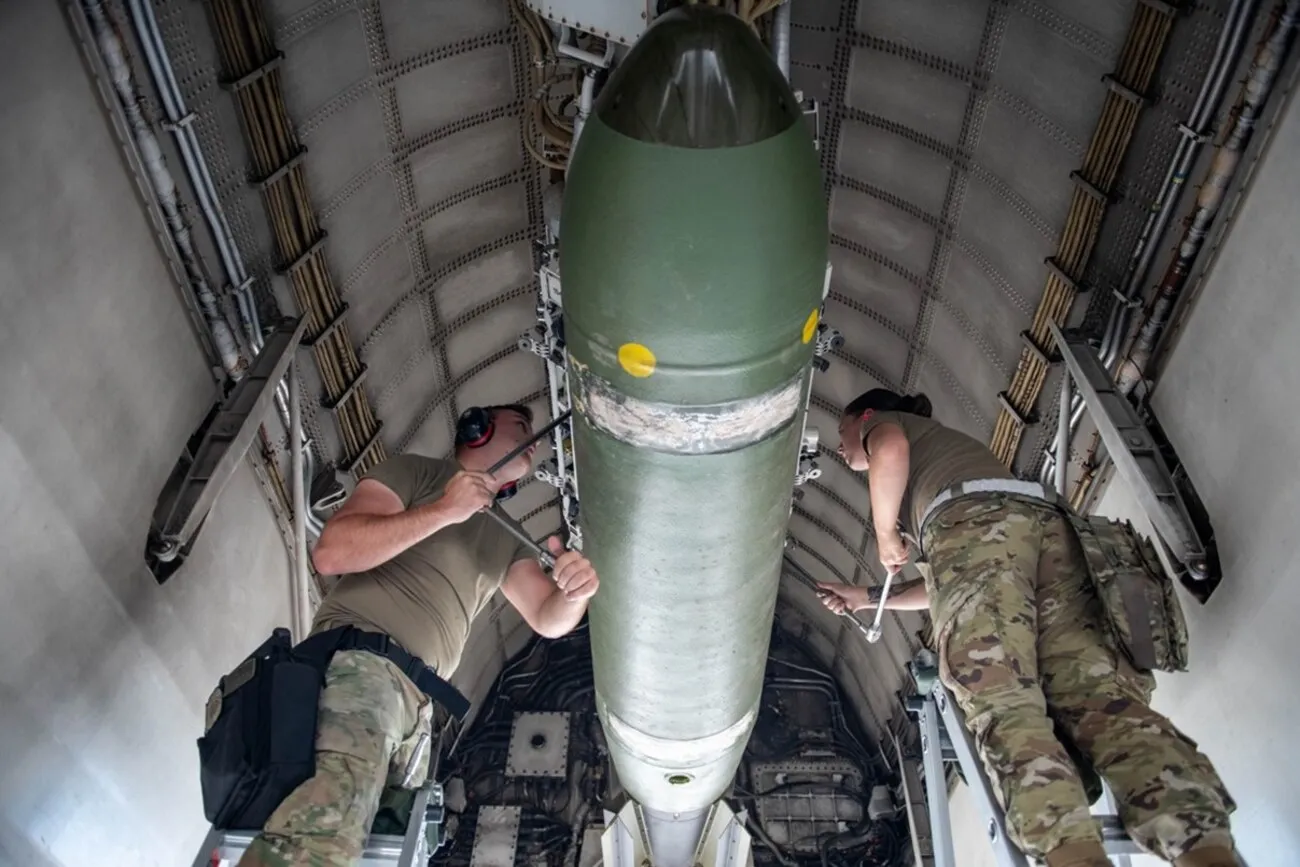
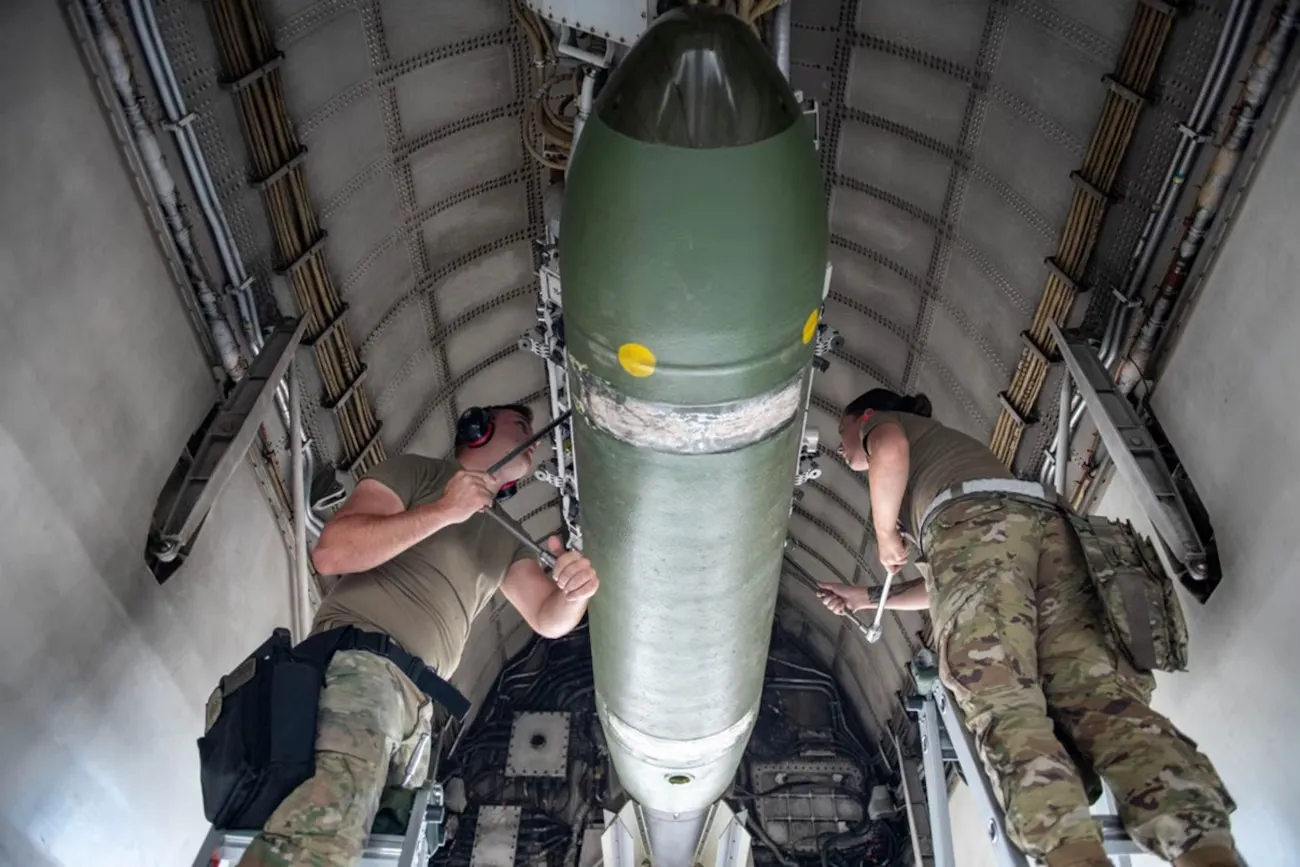
The Mk 65 Quick Strike naval mine is the 2,000-pound member of the U.S. Navy Quickstrike aircraft-laid mine family. Unlike the Mk 62 and Mk 63 conversions of general-purpose bomb bodies, the Navy identifies the Mk 65 as a thin-walled mine case for shallow-water attacks against surface and subsurface craft.
The Quickstrike family covers aircraft-laid naval mines in multiple weight classes; the Mk 65 is the purpose-built 2,000-pound thin-walled mine case within that family.
| Variant | Configuration | Designation notes |
|---|---|---|
 | 500-pound Quickstrike mine | The Navy fact file describes the Mk 62 as a 500-pound-class Quickstrike mine converted from a general-purpose bomb body. Sources: U.S. Navy Mines |
| Mk 63 Quickstrike naval mine | 1,000-pound Quickstrike mine | The Navy fact file places the Mk 63 in the Quickstrike family as a 1,000-pound mine converted from a general-purpose bomb body. Sources: U.S. Navy Mines |
Official exercise and fact-sheet coverage ties the Mk 65 to both maritime-patrol and bomber aircraft used for aircraft-laid mine warfare.
| Carrier | Carrier type | Carriage evidence |
|---|---|---|
 | Maritime-patrol aircraft | VP-8 MINEX coverage identifies the P-3C as a Mk 65-capable aircraft and reports a P-3C dropping two inert Mk 65 mines during a bilateral mine-warfare exercise. Sources: VP-8 and JMSDF MINEX |
 | Long-range bomber | DVIDS MINEX coverage lists the B-52H among aircraft that can employ Mk 65 Quickstrike mines. Sources: VP-8 and JMSDF MINEX |
 | Carrier-capable strike fighter | DVIDS MINEX coverage lists F/A-18A-D aircraft among the platforms able to employ Mk 65 Quickstrike mines. Sources: VP-8 and JMSDF MINEX |
 | Long-range bomber | The B-1B Lancer fact sheet lists up to 8 Mk 65 Quick Strike naval mines in the bomber's armament. Sources: B-1B Lancer |
Public sources document Mk 65 training, inventory, and platform compatibility; they do not identify direct conflict employment of the mine itself.
| Context | Documented detail | Operational meaning |
|---|---|---|
| Family role | The Navy fact file places Mk 65 in the Quickstrike family and identifies it as a 2,000-pound thin-walled mine case. | Mk 65 is not just a bomb-body conversion; it is the heavy Quickstrike mine case. |
| Carrier aircraft | DVIDS MINEX coverage lists the P-3C, B-52H, F/A-18A-D, and B-1B as aircraft able to employ Mk 65 mines. | The same mine can be tied to maritime-patrol aircraft, carrier aviation, and long-range bombers. |
| Documented training | VP-8 and Japan Maritime Self-Defense Force coverage describes two inert Mk 65 mines dropped from a P-3C during a 2012 exercise; Air Force coverage documents a 2022 B-1B live-fire mine exercise. | Public documentation is strongest for training and readiness events, not combat use. |
The Navy fact file lists the Mk 65 Quickstrike mine's deployment date as 1983.
Sources: U.S. Navy Mines
DVIDS coverage of a VP-8 and Japan Maritime Self-Defense Force mine exercise reports a P-3C dropping two inert Mk 65 mines for training.
Sources: VP-8 and JMSDF MINEX
Air Force Global Strike Command coverage documents B-1B Lancers working with U.S. Navy mine-warfare personnel during a live-fire Quickstrike mine exercise.
Sources: B-1B Lancers, U.S. Navy live-fire mine exercise