- Side
- United States

U.S. B-2 Spirit bombers dropped 14 GBU-57 Massive Ordnance Penetrator bombs against Fordow and Natanz nuclear target areas during Operation Midnight Hammer on June 22, 2025.
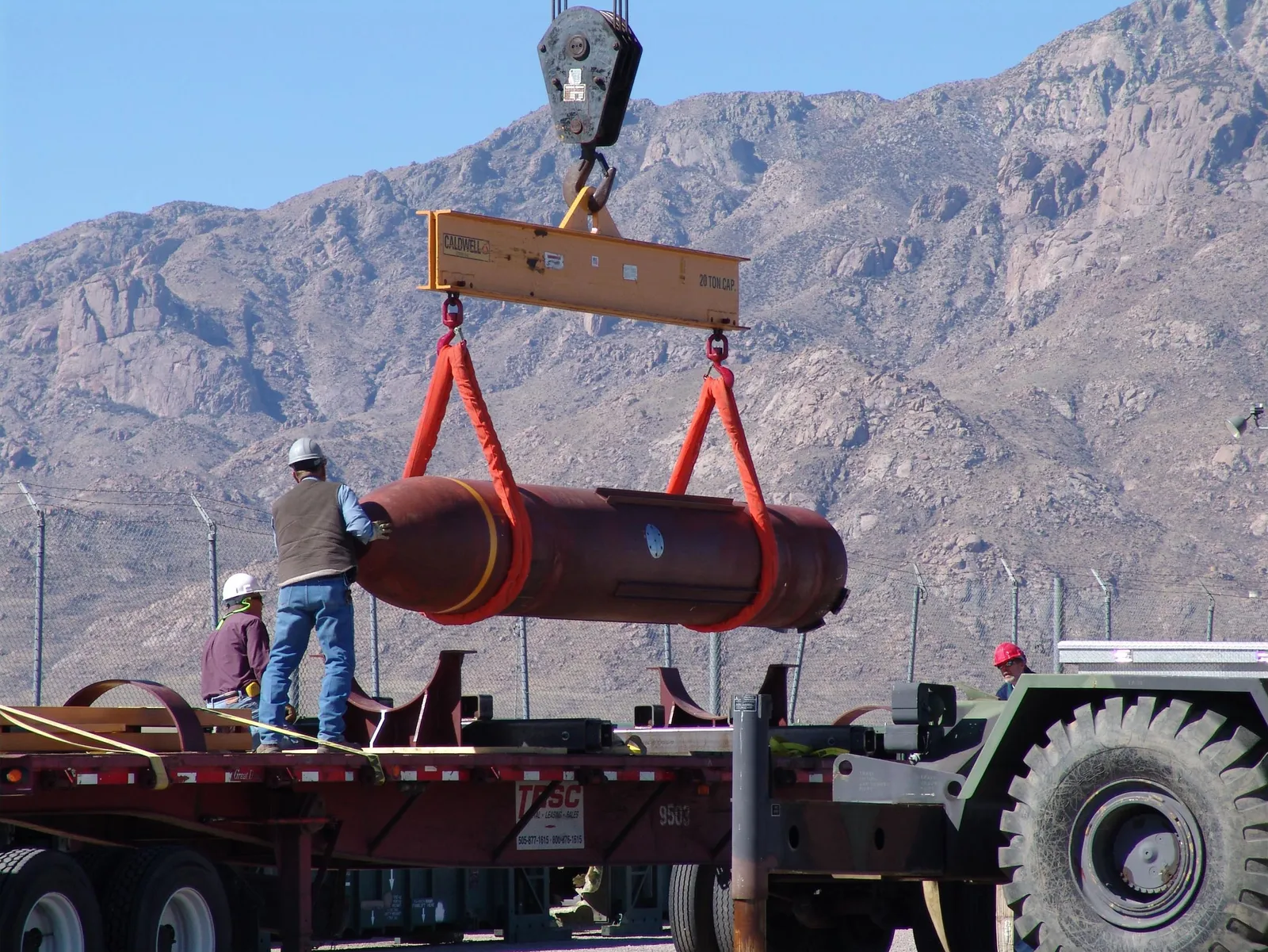
The GBU-57A/B Massive Ordnance Penetrator is a Boeing-built U.S. Air Force GPS-guided bunker-buster bomb for hardened and deeply buried facilities. Developed from a Defense Threat Reduction Agency technology demonstration and integrated for B-2 Spirit employment, it became operationally documented in June 2025 when U.S. B-2s used 14 weapons against Iranian nuclear target areas during Operation Midnight Hammer, an event tracked in both the catalog's U.S.-Iran and 2025 Israel-Iran conflict scopes.
U.S. B-2 Spirit bombers dropped 14 GBU-57 Massive Ordnance Penetrator bombs against Fordow and Natanz nuclear target areas during Operation Midnight Hammer on June 22, 2025.
During the June 2025 Israel-Iran conflict, U.S. B-2 Spirit bombers used 14 GBU-57 Massive Ordnance Penetrator bombs against the Fordow and Natanz nuclear target areas in Operation Midnight Hammer.
The MOP is a specialized hard-target munition rather than a general-purpose blast bomb. Public U.S. Air Force and DOD material emphasizes defeat of hardened and deeply buried facilities, B-2 operational carriage, and DTRA modeling, testing, and validation work before transition to Air Force control.
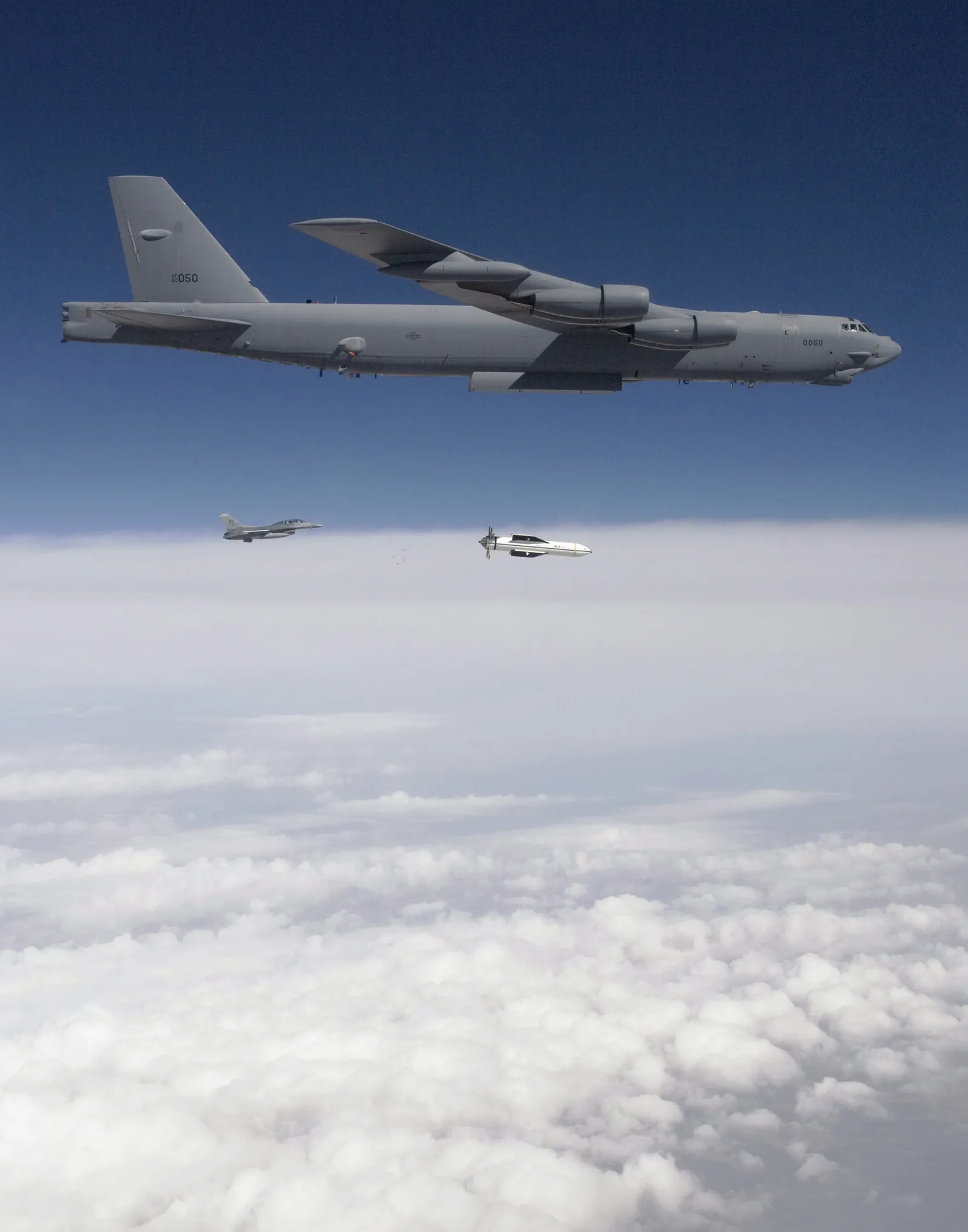
Public operational reporting ties combat release to B-2 Spirit bombers; earlier B-52 imagery documents test-release activity rather than operational carriage.
The system is intended for protected WMD-related facilities, tunnels, bunkers, and other hardened or deeply buried targets.
Open sources directly document Operation Midnight Hammer use in June 2025. The same strike is represented in this catalog under the direct U.S.-Iran conflict scope and the wider 2025 Israel-Iran conflict scope, where the United States is listed as a conflict side.
The public operational record ties GBU-57 combat employment to the B-2 Spirit; separate imagery documents B-52 test-release activity.
| Carrier | Carrier type | Carriage evidence |
|---|---|---|
 | Stealth bomber | DOT&E describes the B-2 as the only aircraft capable of employing MOP; Air National Guard reporting says B-2 Spirit bombers delivered 14 MOP bombs during Operation Midnight Hammer, and the Whiteman test article describes a B-2 three-ship loaded with two 30,000-pound GBU-57A/B weapons each. Sources: DOT&E FY2025 Annual Report - Massive Ordnance Penetrator Modification, Missouri Guard Airmen Play Critical Role in Iran Nuclear Strike Mission, B-2 three-ship satisfies test objectives |
 | Test aircraft | A public-domain U.S. military image caption identifies a B-52 releasing a test version of the MOP over White Sands Missile Range in 2009; this documents test-release activity, not operational GBU-57 carriage. |
The U.S. Air Force fact sheet says early MOP tests began in 2004 under a Defense Threat Reduction Agency technology-demonstration effort with the Air Force Research Laboratory.
Sources: Massive Ordnance Penetrator
Boeing-origin reporting archived by Deagel describes a Boeing-developed MOP static tunnel lethality test at DTRA's White Sands weapons tunnel complex.
Sources: Massive Ordnance Penetrator Static Lethality Test
The DTRA MOP technology-demonstration effort transitioned to the Air Force as a quick-reaction capability program in February 2010.
Sources: Massive Ordnance Penetrator
DOT&E says the Air Force established the MOP Modification quick-reaction capability in August 2018 after a July 2018 urgent operational need for the Large Penetrator Smart Fuze.
Sources: DOT&E FY2024 Annual Report - Massive Ordnance Penetrator Modification
DOT&E reported FY2024 subscale lethality testing, full-scale LPSF testing, and B-2 integration-issue testing as part of the MOP Modification program.
Sources: DOT&E FY2024 Annual Report - Massive Ordnance Penetrator Modification
U.S. officials said B-2s dropped 14 30,000-pound GBU-57 Massive Ordnance Penetrators against Iranian nuclear target areas during Operation Midnight Hammer, and DOT&E later said all 14 met release parameters, guided accurately, and functioned as intended.
Sources: Secretary of Defense Pete Hegseth and Chairman of the Joint Chiefs of Staff General Dan Caine Hold a Press Conference, DOT&E FY2025 Annual Report - Massive Ordnance Penetrator Modification, The Weapons of Operation Midnight Hammer: MOPs, Tomahawks, and More
After the June 2025 real-world employment, DOT&E reported that it removed the MOP Modification program from oversight in July 2025 while still recommending continued LPSF test-and-evaluation funding.
Sources: DOT&E FY2025 Annual Report - Massive Ordnance Penetrator Modification
The Defense Department announced a sole-source Boeing replenishment contract for GBU-57 weapon systems, KMU-612 E/B tail kits, fuze-system cable guides, separation nuts, and MOP containers.
Sources: Contracts for Feb. 24, 2026
Air & Space Forces Magazine reported that the Air Force designated the Next Generation Penetrator as GBU-76/B and was seeking sources for design, production, testing, and sustainment support for the MOP follow-on.
Sources: Air Force Reveals Designation for Next-Gen Bunker Buster
Public reporting after Operation Midnight Hammer shows the GBU-57 record moving in two directions at once: replenishment of the expended MOP inventory and planning for a lighter follow-on penetrator.
DOT&E reported that all 14 GBU-57 weapons in the June 2025 strike met release parameters, guided accurately to their aimpoints, and functioned as intended.
The February 2026 Boeing contract covered GBU-57 weapon systems plus tail kits, fuze-system cable guides, separation nuts, and containers.
The Air Force later identified the Next Generation Penetrator as GBU-76/B, a planned successor intended to continue the hard-target mission while potentially changing weight and carrier options.