Munitions

GBU-28 Paveway III

Also known as
  • GBU-28
  • Guided Bomb Unit-28
  • GBU-28/B
  • GBU-28B/B
  • GBU-28C/B
  • BLU-113 penetrator
  • Bunker Buster

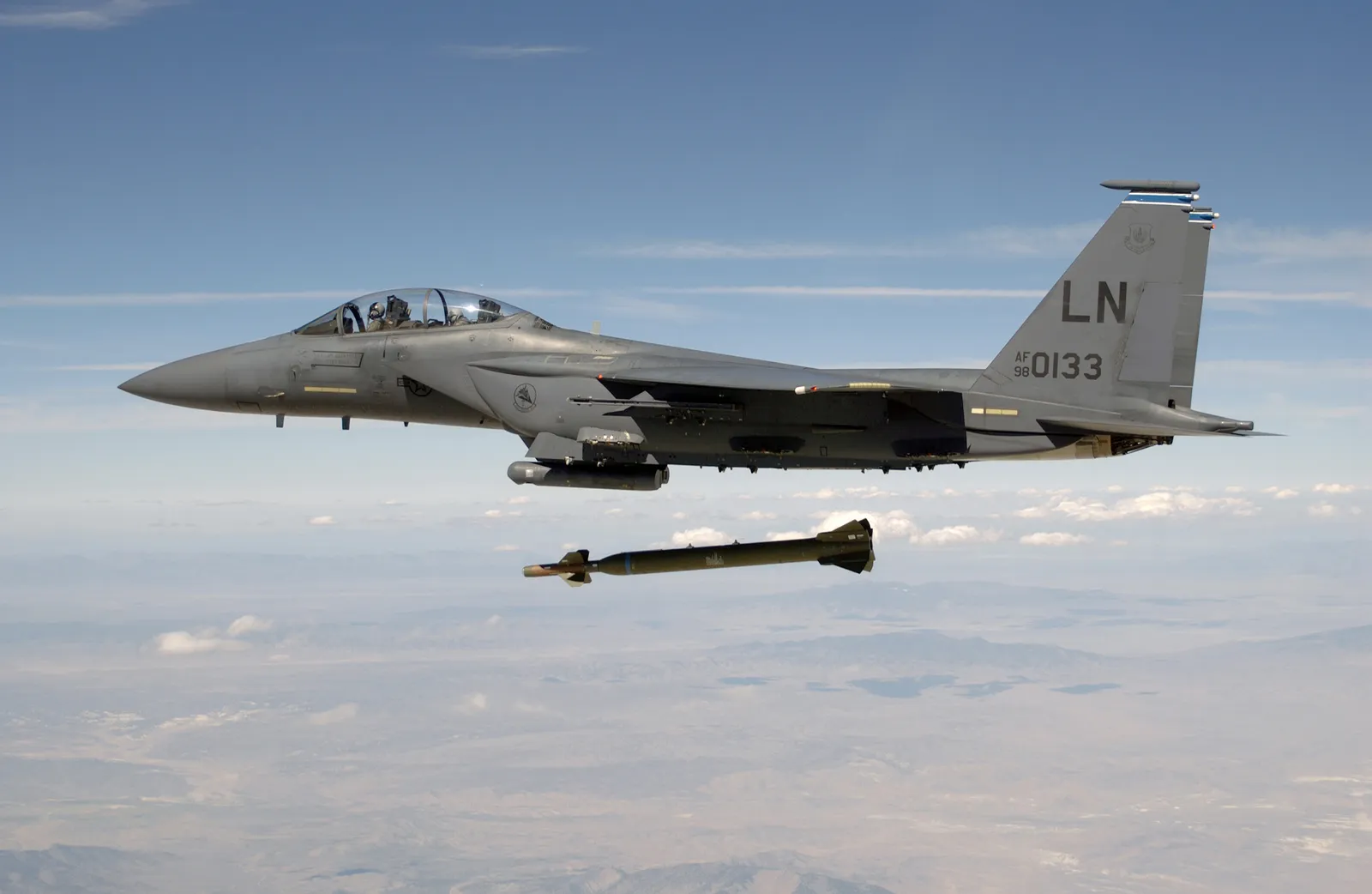
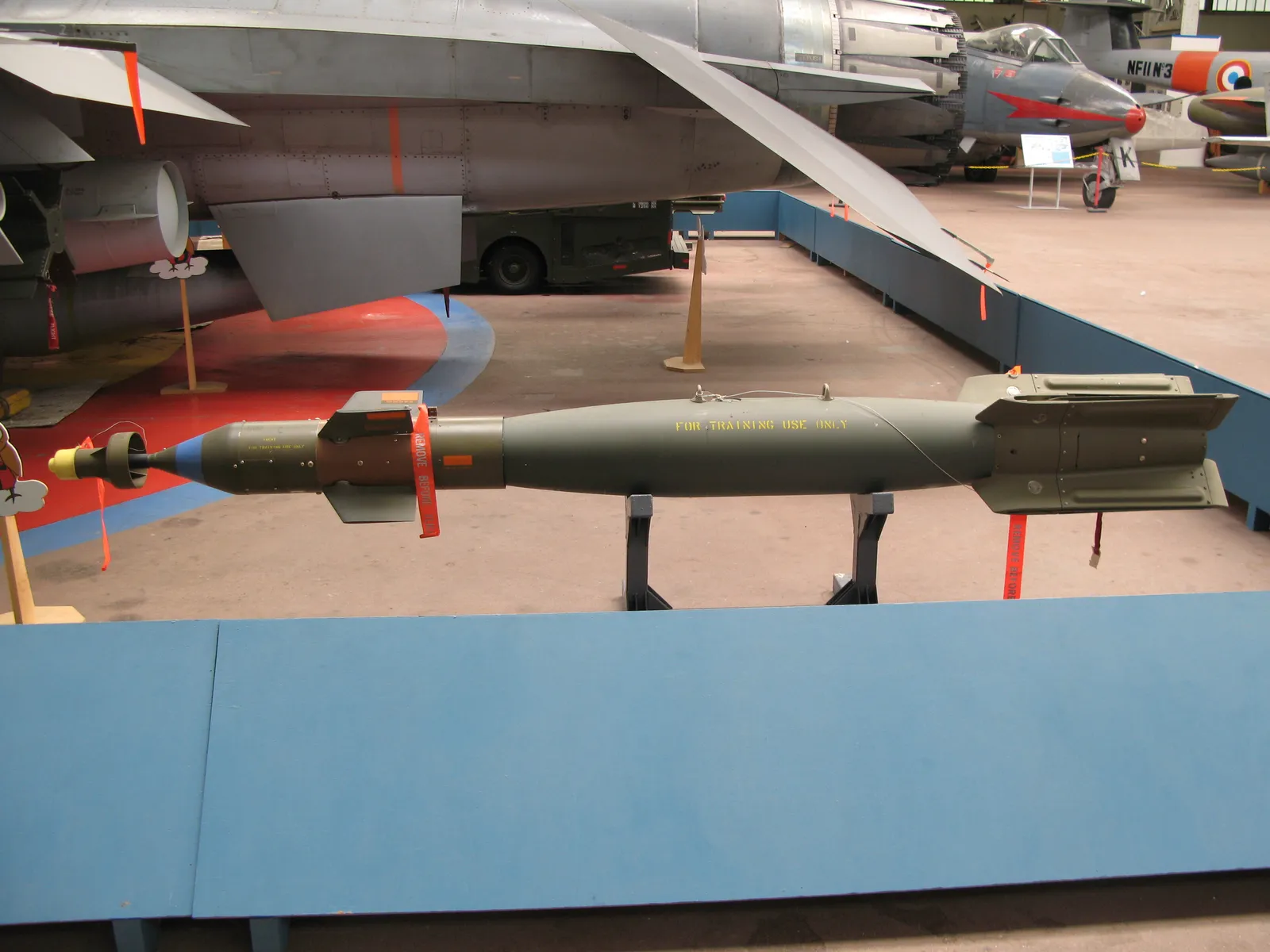
The GBU-28 Paveway III is a U.S. 5,000-pound-class hard-target penetrator bomb rushed into service for Operation Desert Storm and later retained as a specialized air-launched bunker-buster. GAO and Air & Space Forces sources describe a semi-active laser-guided weapon with a 4,400-pound-class penetrator warhead, while later GBU-28B/B and GBU-28C/B variants added GPS/INS guidance and the BLU-122 improved penetrator for all-weather hard-target attack.

Role in Conflicts

Hard-Target Employment

Documented GBU-28 employment is concentrated in U.S. and coalition hard-target attack, especially buried command, cave, and bunker targets, rather than routine close-air-support use.

ConflictDocumented contextSource basis
1990 Gulf WarEmergency Desert Storm penetrator; FAS records two F-111F drops.FAS and NASA NTRS direct-use records.
2001 War in AfghanistanRAND identifies GBU-28 use during the October 2001 air campaign.RAND Afghanistan air-power study.
2003 Iraq WarOne 5,000-pound GBU-28 listed in 2003 air-war munitions expenditure data.Human Rights Watch appendix citing USCENTAF data.
Profile / Specs

Profile

Origin
United States
Built by
Raytheon
Type
5,000-pound laser-guided penetrator bomb
Service note
Introduced during the 1991 1990 Gulf War; later GBU-28B/B and GBU-28C/B variants added GPS/INS guidance and improved penetrators
Unit cost
$145,600 production unit cost in 1995 GAO reporting
Produced
Initial limited production in 1991; GBU-28B/B entered production in 1999 and GBU-28C/B in 2005
Number built
125 listed in the 1995 GAO precision-guided munitions inventory review

Specifications

Guidance
Semi-active laser; GBU-28B/B and GBU-28C/B add GPS/INS guidance to the laser seeker
Warhead
4,400-pound penetrating warhead; GBU-28C/B uses the BLU-122 improved penetrator
Weight
5,000-pound class; FAS lists 4,637 pounds for the early bomb
Explosive fill
About 630 pounds in the early BLU-113 penetrator configuration
Range
More than 5.75 miles
Length
About 20 feet
Diameter
15 inches
Integration
F-15E, B-2A, and B-52 integration listed by Air & Space Forces; GAO also listed F-111F for the original weapon
Designation Notes

GBU-28 designations separate the original laser-guided Desert Storm penetrator from later Paveway III hard-target configurations with added inertial/GPS guidance and improved warheads.

DesignationConfigurationSupported distinction
GBU-28/BBaseline laser-guided penetrator5,000-pound fixed-hard-target munition with a 4,400-pound penetrating warhead.
GBU-28B/BLaser/GPS/INS guided penetratorAdded GPS/INS guidance to the existing laser seeker and entered production in 1999.
GBU-28C/BImproved BLU-122 penetratorCombined the enhanced guidance package with the BLU-122 penetrating warhead and entered production in 2005.
Carrier Aircraft

Published integration sources identify the GBU-28 with U.S. strike aircraft and bombers used for hard-target attack.

CarrierCarrier typeCarriage evidence
F-15E Strike Eagle, Dual-role strike fighter, Aircraft & UAVsF-15E Strike EagleStrike fighter

Air & Space Forces lists F-15E integration for GBU-28, and Boeing's Advanced F-15 weapons inventory lists GBU-28 in the aircraft's external carriage matrix.

Sources: GBU-24/28 Paveway III, Advanced F-15 Weapons Inventory

B-2 Spirit, Low-observable strategic heavy bomber, Aircraft & UAVsB-2 SpiritLow-observable strategic bomber

Air & Space Forces lists B-2A integration for GBU-28, making the B-2 a documented carrier for the later hard-target munition family.

Sources: GBU-24/28 Paveway III

B-52 Stratofortress, Long-range heavy bomber, Aircraft & UAVsB-52 StratofortressLong-range heavy bomber

Air & Space Forces lists B-52 integration for GBU-28, connecting the munition to U.S. heavy-bomber hard-target strike options.

Sources: GBU-24/28 Paveway III

Timeline

GBU-28 Paveway III Key Events

  1. Desert Storm emergency development and combat use

    FAS describes a rapid February 1991 development cycle that delivered the first operational GBU-28s to theater before two F-111F drops in Operation Desert Storm.

    Sources: FAS GBU-28 Bunker Buster, NASA NTRS GBU-28 Concept to Combat

  2. GAO inventories the GBU-28 program

    GAO listed the GBU-28 as an Air Force precision-guided munition with 125 units, F-15E and F-111F platforms, fixed-hard-target role, and 1991 first capability.

    Sources: GAO Precision Guided Munitions in Inventory

  3. GBU-28B/B production begins

    The GBU-28B/B added GPS/INS guidance to the laser seeker for all-weather targeting and entered production in 1999.

    Sources: GBU-24/28 Paveway III

  4. 2003 Iraq War air campaign expenditure

    Human Rights Watch's appendix based on USCENTAF munitions data records one GBU-28 expended during the 2003 Iraq War air campaign.

    Sources: HRW Off Target Appendix D

  5. GBU-28C/B production begins

    The GBU-28C/B combined the enhanced guidance package with the BLU-122 improved penetrator and entered production in 2005.

    Sources: GBU-24/28 Paveway III

Media

GBU-28 Paveway III Images

Related Weapon Systems
GBU-24 Paveway III, 2,000-pound-class laser-guided bomb, MunitionsMunitionsGBU-24 Paveway III2,000-pound-class laser-guided bombThe GBU-24 Paveway III is a U.S.-origin 2,000-pound-class laser-guided bomb family that combines a Paveway III guidance section and airfoil group with Mk 84, BLU-109, or related hard-target bomb bodies. Official and military-history sources document GBU-24 use in the Gulf War, Kosovo, Afghanistan, and the 2003 Iraq War, while Yemen rights-monitoring sources identify GBU-24 or Paveway III-series remnants from Saudi/UAE-led coalition airstrikes where fragmentary evidence can limit exact bomb-body identification.
GBU-31(V)3/B Joint Direct Attack Munition, 2,000-pound GPS/INS-guided hard-target penetrator bomb, MunitionsMunitionsGBU-31(V)3/B Joint Direct Attack Munition2,000-pound GPS/INS-guided hard-target penetrator bombThe GBU-31(V)3/B is the hard-target penetrator variant of the 2,000-pound Joint Direct Attack Munition, pairing a Boeing JDAM GPS/INS tail kit with the BLU-109 penetrator bomb body. Official U.S. sources describe its GPS/INS guidance, 2,115-pound launch-weight configuration, and 15-mile range class, while open-source munition and aviation reporting connect the BLU-109 GBU-31 JDAM lane to Israeli operations during the 2025 Israel-Iran Conflict.
GBU-57A/B Massive Ordnance Penetrator, Air-delivered deep-penetration guided bomb, MunitionsMunitionsGBU-57A/B Massive Ordnance PenetratorAir-delivered deep-penetration guided bombThe GBU-57A/B Massive Ordnance Penetrator is a Boeing-built U.S. Air Force GPS-guided bunker-buster bomb for hardened and deeply buried facilities. Developed from a Defense Threat Reduction Agency technology demonstration and integrated for B-2 Spirit employment, it became operationally documented in June 2025 when U.S. B-2s used 14 weapons against Iranian nuclear target areas during Operation Midnight Hammer, an event tracked in both the catalog's U.S.-Iran and 2025 Israel-Iran conflict scopes.
BLU-109 penetrator warhead, 2,000-pound hard-target penetrator warhead, MunitionsMunitionsBLU-109 penetrator warhead2,000-pound hard-target penetrator warheadThe BLU-109 is a U.S.-origin 2,000-pound hard-target penetrator warhead built around a thick forged-steel bomb body for defeating reinforced structures and buried targets. It appears as the bomb body inside guided weapons such as GBU-24 Paveway III and GBU-31 JDAM configurations, with source-backed conflict context ranging from Saudi-led coalition stocks in Yemen to Israeli JDAM-linked use and transfers in Gaza, Lebanon, and the 2025 Israel-Iran fighting.
Paveway laser-guided bomb, Laser-guided bomb guidance-kit family, MunitionsMunitionsPaveway laser-guided bombLaser-guided bomb guidance-kit familyPaveway is a U.S.-origin family of laser-guided bomb kits that turns conventional gravity bombs into precision air-to-surface weapons by adding a seeker, computer-control group, and airfoil surfaces. Raytheon traces production to 1968, while later Raytheon, Lockheed Martin, and Raytheon UK lines cover Paveway II, Paveway III, dual-mode Enhanced Paveway, Paveway IV, and Paveway II Plus kits documented in combat-use and transfer records from the Falklands and Gulf War through Afghanistan, Iraq, Libya, Ukraine, and Yemen.

Sources