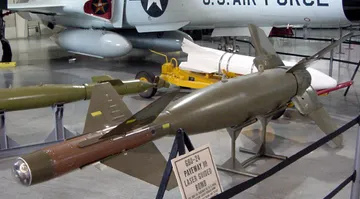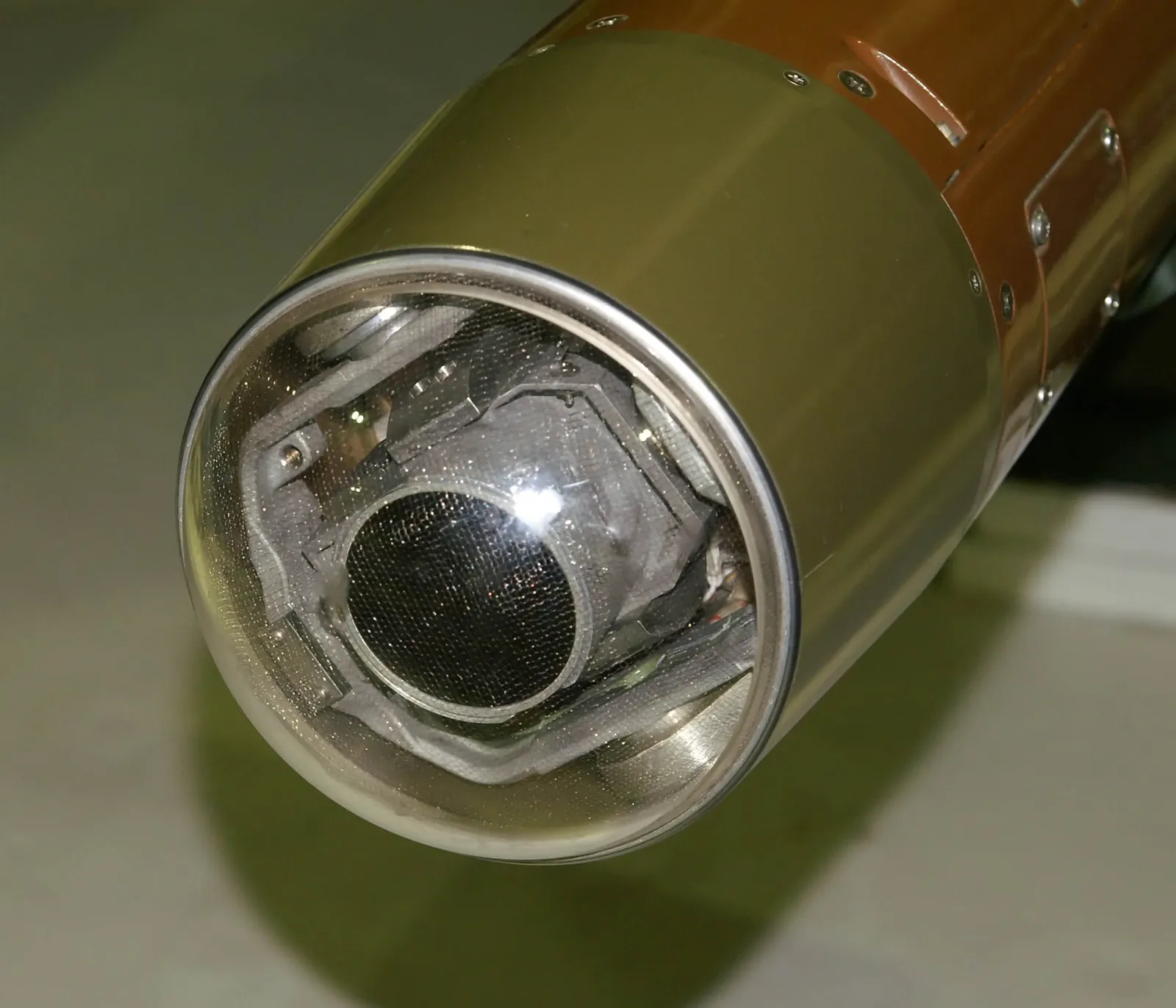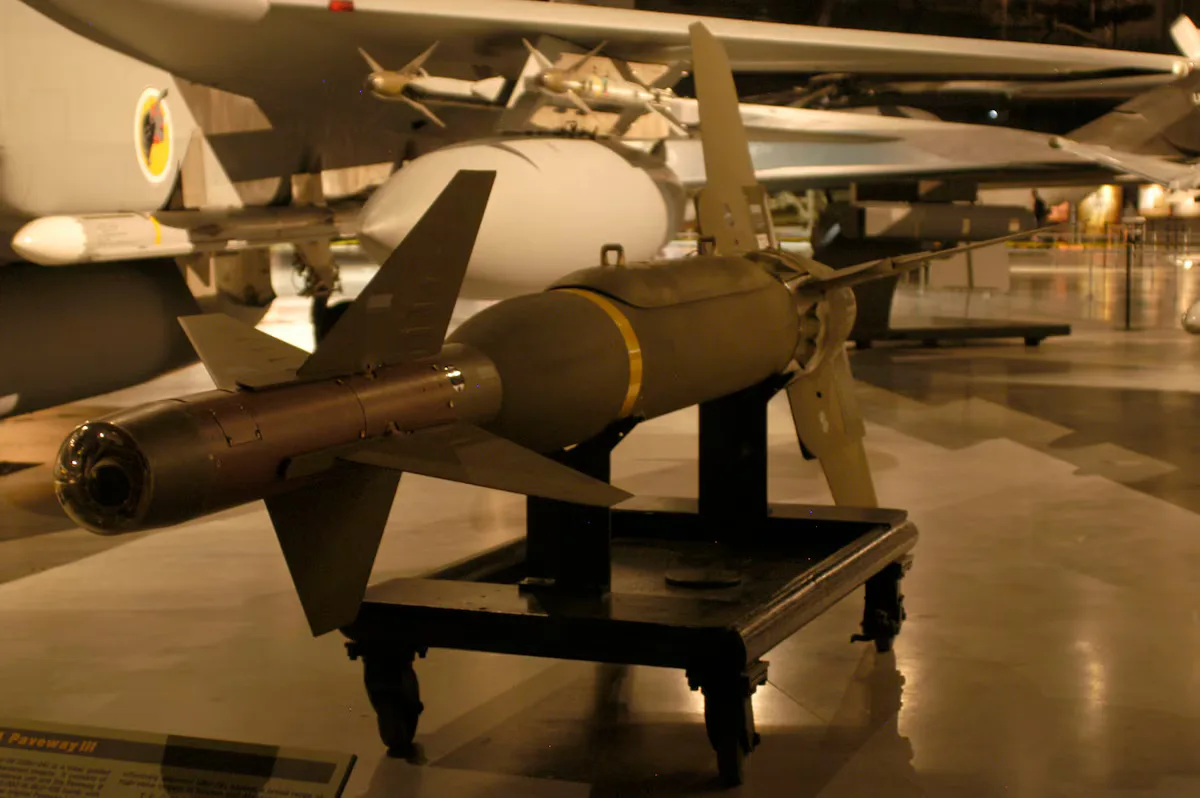
- Side
- Coalition forces

GAO's Desert Storm air-campaign review lists GBU-24 and GBU-24/109 laser-guided bombs among the munitions expended during Operation Desert Storm.
Role detailsThe GBU-24 Paveway III is a U.S.-origin 2,000-pound-class laser-guided bomb family that combines a Paveway III guidance section and airfoil group with Mk 84, BLU-109, or related hard-target bomb bodies. Official and military-history sources document GBU-24 use in the Gulf War, Kosovo, Afghanistan, and the 2003 Iraq War, while Yemen rights-monitoring sources identify GBU-24 or Paveway III-series remnants from Saudi/UAE-led coalition airstrikes where fragmentary evidence can limit exact bomb-body identification.
GAO's Desert Storm air-campaign review lists GBU-24 and GBU-24/109 laser-guided bombs among the munitions expended during Operation Desert Storm.
Role detailsThe National Museum of the U.S. Air Force states that F-15E and F-16 aircraft delivered GBU-24s against high-value targets in Kosovo.
The National Museum of the U.S. Air Force identifies Afghanistan as a theater where F-15E and F-16 aircraft delivered GBU-24s against high-value targets.
Role detailsThe U.S. Central Command Air Forces Operation Iraqi Freedom munitions summary lists 23 GBU-24 laser-guided bombs expended during the 2003 campaign.
Role detailsMwatana and OSMP document GBU-24 or Paveway III-series remnants from 2015 Saudi/UAE-led coalition airstrikes in Yemen, including a likely GBU-24 at a Sanaa residential strike; the sources identify coalition air use but do not always determine the exact bomb-body variant from remnants alone.
Role detailsGBU-24 designations mainly distinguish the 2,000-pound-class bomb body, guidance control unit, airfoil group, and fuze fitted to the Paveway III guidance package.
| Variant | Configuration | Designation notes |
|---|---|---|
| GBU-24/B | Mk 84 general-purpose bomb body | The baseline GBU-24/B designation covers a 2,000-pound Mk 84 warhead with a BSU-84 airfoil group and WGU-series Paveway III guidance. |
| GBU-24A/B | BLU-109 penetrator configuration | The USAF GBU-24A/B variant uses a BLU-109/B hard-target penetrator warhead in the GBU-24 family. Sources: Raytheon Paveway III Designation History, GBU-24 Paveway III Fact Sheet |
| GBU-24C/B | BLU-116 advanced penetrator configuration | Designation listings identify GBU-24C/B as a USAF BLU-116/B Advanced Unitary Penetrator configuration. |
| GBU-24E/B | Enhanced Paveway III configuration | The EGBU-24 grouping adds GPS/INS-aided guidance to the Paveway III laser-guided bomb family. Sources: Raytheon Paveway III Designation History, Paveway Bomb |
| GBU-24(V)/B | Export designation series | The GBU-24(V)/B export series uses WGU-43-series guidance control units, including enhanced GPS/INS export configurations. Sources: Raytheon Paveway III Designation History, Saudi Arabia Air-to-Ground Munitions Sale Notification |
| Carried item | Item type | Carriage evidence |
|---|---|---|
 | 2,000-pound hard-target penetrator warhead | The GBU-24 Paveway III fact sheet identifies BLU-109-class bomb-body configurations in the Paveway III family. Sources: GBU-24 Paveway III Fact Sheet |
| Compatible item | Item type | Compatibility evidence |
|---|---|---|
 | 2,000-pound general-purpose bomb body | The Saudi air-to-ground munitions sale notification states that GBU-24 Paveway III can utilize the MK-84 conventional warhead as well as the BLU-109 penetrating warhead. Sources: Saudi Arabia Air-to-Ground Munitions Sale Notification |
| Carrier | Carrier type | Carriage evidence |
|---|---|---|
 | Strike fighter | The National Museum of the U.S. Air Force says F-15E aircraft effectively delivered GBU-24s against high-value targets in Kosovo and Afghanistan. Sources: GBU-24 Paveway III Fact Sheet |
 | Fighter aircraft | The same museum fact sheet says F-16 aircraft effectively delivered GBU-24s against high-value targets in Kosovo and Afghanistan. Sources: GBU-24 Paveway III Fact Sheet |
 | Bomber | Air & Space Forces lists B-52 aircraft among the GBU-24 integration platforms in its Paveway III weapon entry. Sources: GBU-24/28 Paveway III |
Texas Instruments received the Paveway III low-level laser-guided bomb development contract after Paveway II limitations at low-level release became clear.
Sources: Raytheon Paveway III Designation History
Designation-system histories place Paveway III service entry in 1983, with the GBU-24/B becoming the operational 2,000-pound-class member of the family.
Sources: Raytheon Paveway III Designation History
GAO's review of Operation Desert Storm air-campaign data lists GBU-24 and GBU-24/109 laser-guided bombs among munitions expended.
Sources: Operation Desert Storm Air Campaign Evaluation
VFA-32's squadron history identifies Operation Desert Fox as the first U.S. Navy combat employment of GBU-24s and the first F-14 delivery of GBU-10/16/24 weapons.
Sources: VFA-32 Squadron History
The National Museum of the U.S. Air Force records F-15E and F-16 delivery of GBU-24s against high-value targets in Kosovo.
Sources: GBU-24 Paveway III Fact Sheet
The Operation Iraqi Freedom air-component munitions summary lists 23 GBU-24 laser-guided bombs expended in the early 2003 campaign.
Sources: Operation Iraqi Freedom By The Numbers
Mwatana and OSMP records identify GBU-24 or Paveway III-series remnants from Saudi/UAE-led coalition airstrikes in Yemen in September 2015.
Sources: Day of Judgment, Yemen Open Source Munitions Portal