- Side
- United Kingdom

Raytheon states that Paveway II first saw combat in the 1982 Falklands War when used by the United Kingdom's Royal Air Force.
Paveway is a U.S.-origin family of laser-guided bomb kits that turns conventional gravity bombs into precision air-to-surface weapons by adding a seeker, computer-control group, and airfoil surfaces. Raytheon traces production to 1968, while later Raytheon, Lockheed Martin, and Raytheon UK lines cover Paveway II, Paveway III, dual-mode Enhanced Paveway, Paveway IV, and Paveway II Plus kits documented in combat-use and transfer records from the Falklands and Gulf War through Afghanistan, Iraq, Libya, Ukraine, and Yemen.
Raytheon states that Paveway II first saw combat in the 1982 Falklands War when used by the United Kingdom's Royal Air Force.
Air Power Australia reports that Texas Instruments Paveway II-family GBU-10, GBU-12, and GBU-14 kits were the most numerous laser-guided bomb kits used in the Gulf War, supplemented by Paveway III GBU-24 and GBU-27 weapons.
Role detailsRTX identifies Paveway bombs among air-to-ground precision-guided weapons used in Operation Enduring Freedom, and Raytheon separately reported more than 500 UK Enhanced Paveways dropped in combat during that operation.
Role detailsRaytheon reported approximately 10,000 laser-guided bombs used during Operation Iraqi Freedom and described Paveway as the most widely used precision munition in that campaign.
Role detailsRTX says Paveway bombs made up more than half of the air-to-ground precision-guided weapons used in Unified Protector, the NATO air campaign tied to the 2011 Libya war.
A UK Ministry of Defence official confirmed to TWZ that Paveway IV bombs were included in the April 2024 package of 1,600 munitions announced for Ukraine; public reporting did not identify the delivery count, arrival date, aircraft integration, or verified combat release.
Role detailsHuman Rights Watch documented remnants of U.S.-made GBU-12 Paveway II laser-guided bombs after 2016 Saudi-led coalition airstrikes in Yemen, and OSMP indexes multiple Yemen remnants under Paveway kit records.
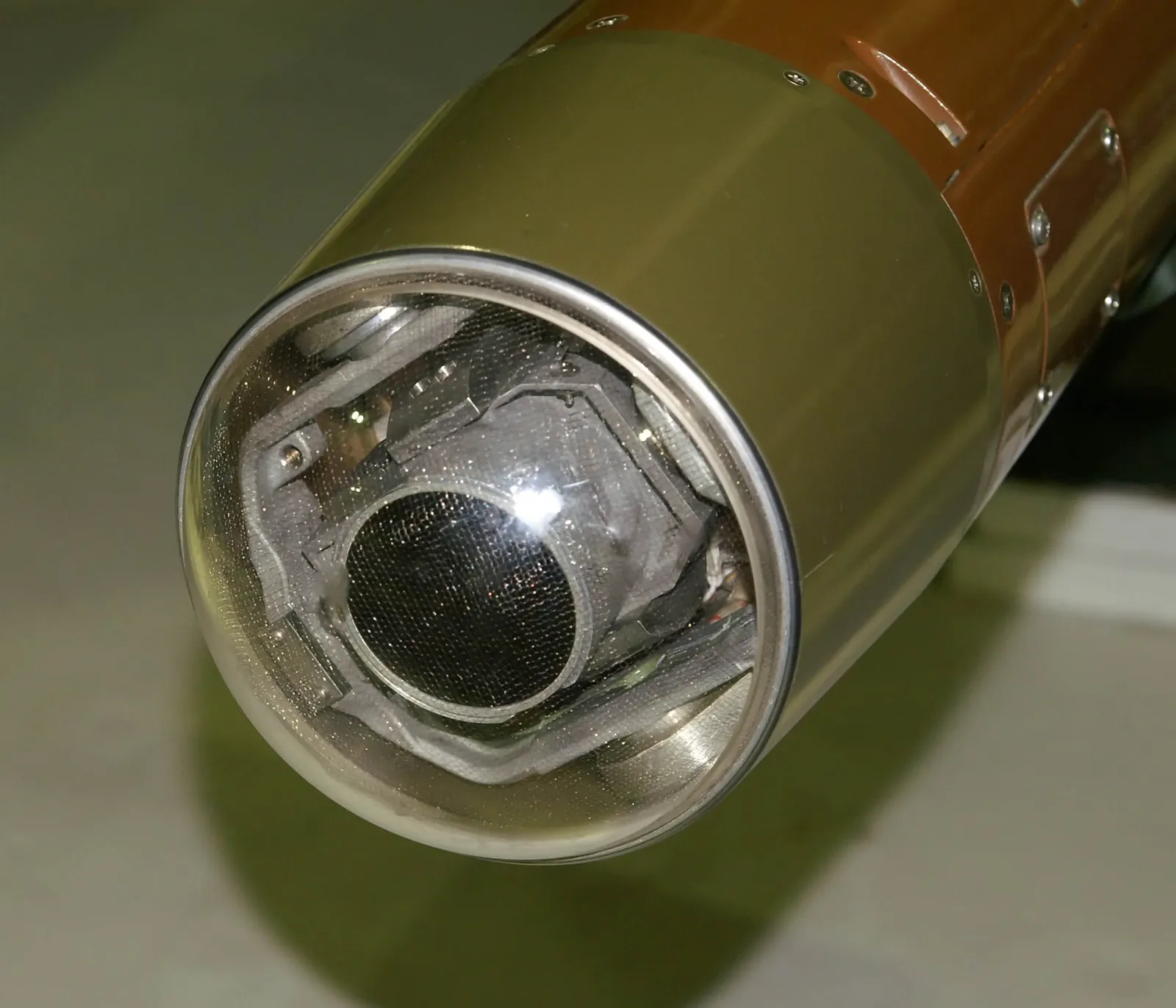
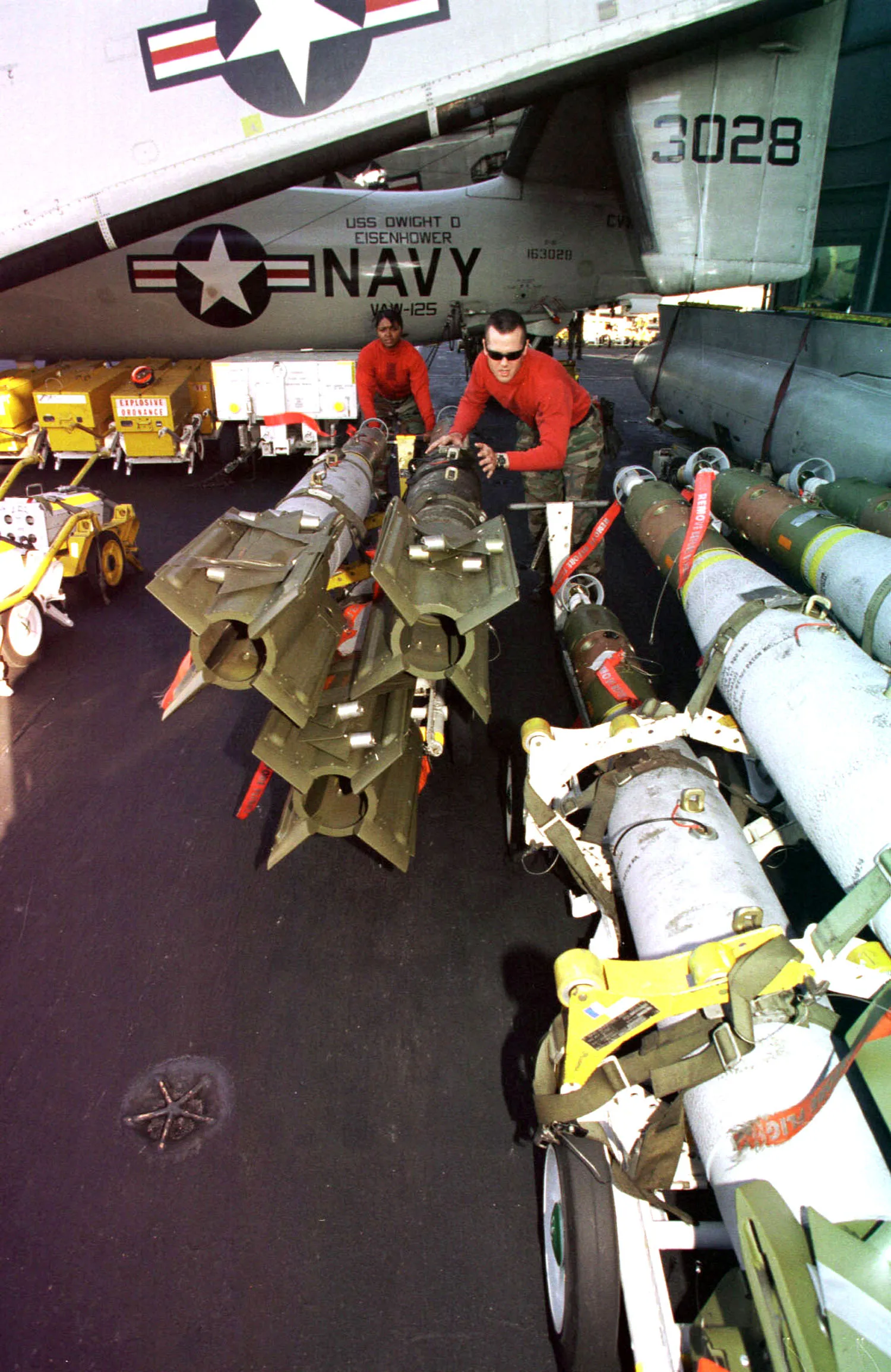
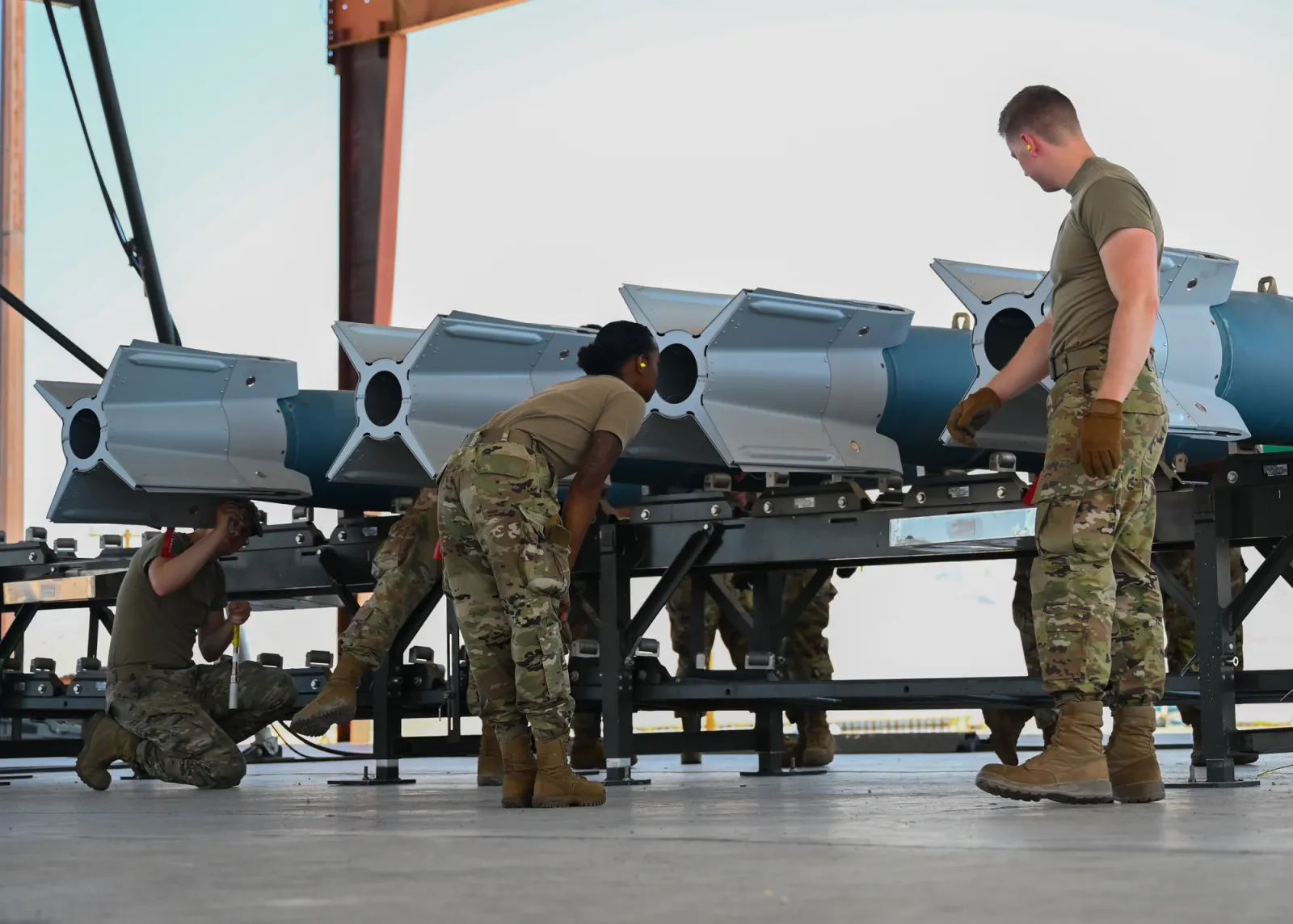
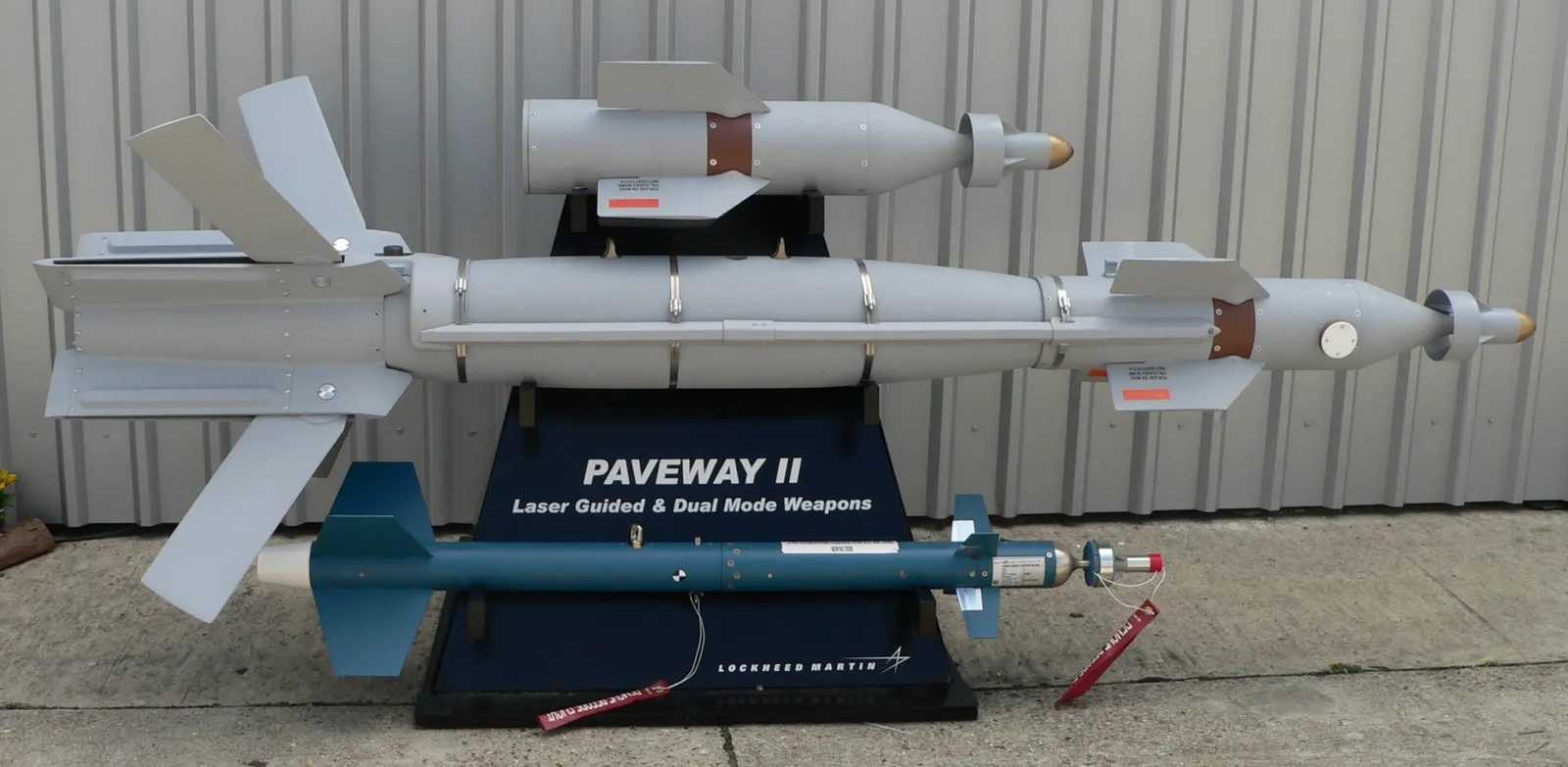
Role detailsPaveway records describe a modular air-delivered weapon rather than a single bomb body. The bomb body supplies the explosive effect, while the Paveway kit adds target sensing and flight control.
Laser-guided bomb units track a target illuminated by a laser designator; later Enhanced Paveway branches add GPS/INS guidance for poor-weather or fire-and-forget delivery.
Paveway II listings center on a computer-control group and an airfoil group fitted to Mk 80-series or BLU-series bomb bodies.
The same family logic spans 250-, 500-, 1,000-, and 2,000-pound classes, with separate GBU designations for the assembled weapons.
Paveway designations usually identify the guidance-kit generation and the bomb body or warhead fitted to it: GBU-10, GBU-12, GBU-16, and GBU-58 are Paveway II weight classes, while GBU-24, GBU-27, and GBU-28 sit in the Paveway III branch and Enhanced Paveway variants add GPS/INS-aided guidance.
| Variant | Configuration | Designation notes |
|---|---|---|
 | 2,000-pound Paveway II configuration | NAVAIR describes GBU-10 as the 2,000-pound general-purpose bomb configuration within the laser-guided bomb family. Sources: NAVAIR Direct Attack Weapons |
 | 1,000-pound Paveway II configuration | NAVAIR identifies GBU-16 as a 1,000-pound bomb modified with a common Paveway II laser guidance kit. Sources: NAVAIR Direct Attack Weapons |
 | 2,000-pound-class Paveway III configuration | NAVAIR lists GBU-24 as a 2,000-pound BLU-series hard-target penetrator configuration in the laser-guided bomb family. Sources: NAVAIR Direct Attack Weapons |
 | F-117-compatible Paveway III penetrator configuration | Designation-Systems places GBU-27 in the Paveway III family as an F-117-compatible derivative using BLU-109-class penetrator warheads. Sources: Raytheon Paveway III |
 | 5,000-pound-class Paveway III hard-target penetrator | Designation-Systems places GBU-28 in the Paveway III family as a larger hard-target weapon branch. Sources: Raytheon Paveway III |
 | 500-pound dual-mode Enhanced Paveway II configuration | Air & Space Forces Magazine lists GBU-49 as a 500-pound Paveway II active variant that adds GPS guidance for all-weather precision delivery. Sources: GBU-10/12/49 Paveway II |
 | 250-pound Paveway II configuration | Designation-Systems includes GBU-58/B in the Paveway II designation family. Sources: Raytheon Paveway II |
 | Lockheed Martin modernized Paveway II production line | Lockheed Martin describes Paveway II Plus as an advanced guidance system for converting conventional gravity bombs into precision-guided munitions. Sources: Paveway II Plus Laser Guided Bomb |
 | UK dual-mode Paveway branch | OSMP notes that Paveway IV is a Paveway guidance-kit variant compatible with Mk 82-class bombs and using laser guidance with GPS/INS features. Sources: OSMP Paveway Kit |
Paveway entries usually combine a guidance kit with a separate bomb body or penetrator warhead, so the same guidance family appears in several GBU designations.
| Compatible item | Item type | Compatibility evidence |
|---|---|---|
 | 250-pound general-purpose bomb body | Designation-Systems lists GBU-58/B as a Paveway II family member using the 250-pound Mk 81 bomb body. Sources: Raytheon Paveway II |
 | 500-pound general-purpose bomb body | NAVAIR identifies GBU-12 as a Paveway II laser-guided bomb using a 500-pound general-purpose warhead, and Designation-Systems lists Mk 82 and BLU-111 bodies for the GBU-12 branch. |
 | 2,000-pound general-purpose bomb body | NAVAIR describes GBU-10 as the 2,000-pound general-purpose bomb configuration, and Designation-Systems lists Mk 84 in the GBU-10 Paveway II branch. |
 | 2,000-pound hard-target penetrator warhead | Lockheed Martin says Paveway II Plus remains compatible with BLU-109 warheads, while Designation-Systems lists BLU-109/B in the GBU-10 branch. Sources: Paveway II Plus Laser Guided Bomb, Raytheon Paveway II |
Raytheon reported that Paveway kit deliveries began in 1968 and reached 250,000 kits by 2004.
Sources: Raytheon Delivers 250,000th Paveway
Designation-Systems traces Paveway II prototype guidance-kit testing to 1974, followed by production in 1977.
Sources: Raytheon Paveway II
Raytheon states that Paveway II first saw combat during the Falklands War in RAF service.
Sources: Raytheon Awarded Paveway Production
Raytheon announced delivery of its 250,000th Paveway laser-guided bomb kit and linked post-9/11 demand to increased production.
Sources: Raytheon Delivers 250,000th Paveway
Lockheed Martin's Paveway II Plus material describes a modernized guidance-kit line for Mk 80-series and BLU-109 warheads.
Sources: Paveway II Plus Laser Guided Bomb
TWZ reported that a UK Ministry of Defence official confirmed Paveway IV bombs were part of the April 2024 UK munitions package for Ukraine.
Sources: TWZ Paveway IV Ukraine