- Side
- Coalition forces

FAS reports that 219 GBU-16s were dropped during Operation Desert Storm, with virtually all of them released by U.S. Navy A-6E aircraft able to self-designate targets.
Role detailsThe GBU-16 Paveway II is the 1,000-pound member of the U.S.-origin Paveway II laser-guided bomb family, combining a Mk 83 or BLU-110-class bomb body with seeker, control, and airfoil kit components. It requires reflected laser energy from a designator rather than autonomous target search, and its documented record spans U.S. Navy carrier aviation, allied operators, and Saudi/UAE-led coalition airstrikes investigated in Yemen.
FAS reports that 219 GBU-16s were dropped during Operation Desert Storm, with virtually all of them released by U.S. Navy A-6E aircraft able to self-designate targets.
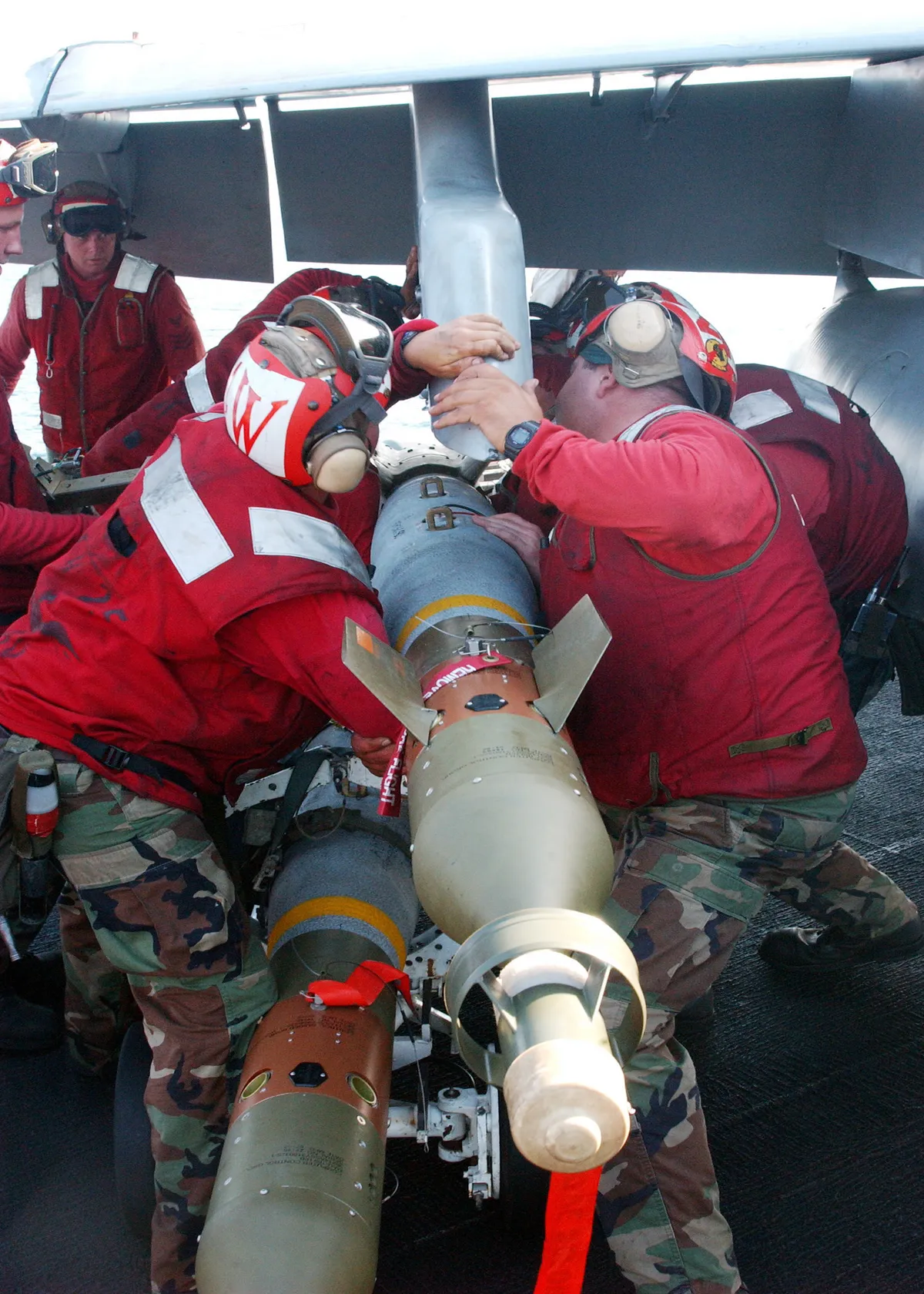
Role detailsU.S. Navy and DVIDS records document F/A-18 Hornets from USS Enterprise carrying and dropping GBU-16 laser-guided bombs against Iraq during Operation Desert Fox after Southern Watch no-fly-zone operations.
CENTAF's Operation Iraqi Freedom munitions accounting lists 1,233 GBU-16 laser-guided bombs expended during the March-April 2003 air campaign.
Role detailsRAND's account of Operation Unified Protector says Italian Tornado IDS strike aircraft carried laser-guided GBU-16 Paveway II bombs and that Italian Navy Harriers flew Libya attack sorties with GBU-16s among their loadouts.
Mwatana, the University Network for Human Rights, and PAX reported that Saudi/UAE-led coalition forces likely used GBU-16 Paveway II bombs with Mk 83 warheads in 2016 Yemen airstrikes, including attacks in Hudaydah governorate; OSMP separately indexes Yemen remnants as GBU-16 Paveway II-series air-delivered bombs.
Role details| Variant | Configuration | Designation notes |
|---|---|---|
| GBU-16A/B, GBU-16B/B, and GBU-16C/B | Component-designation variants | Designation-Systems groups these GBU-16 marks under the Paveway II 1,000-pound family, with kit and bomb-body combinations defining the subvariants. |
| GBU-16 with Mk 83 or BLU-110/B body | 1,000-pound-class bomb-body configurations | NAVAIR describes the GBU-16 as a Mk 83 1,000-pound bomb modified with a common Paveway II laser-guidance kit, while Designation-Systems also lists BLU-110/B-family body configurations. Sources: Direct Attack Weapons, Raytheon (Texas Instruments) Paveway II |
| GBU-48(V)1/B Enhanced Paveway II | GPS/INS-aided EGBU-16 derivative | Designation-Systems identifies GBU-48(V)1/B / EGBU-16 as an Enhanced Paveway II derivative of the 1,000-pound GBU-16 branch. |
 | Lockheed Martin modernized Paveway II production line | Lockheed Martin identifies GBU-16/MK-83 as the 1,000-pound configuration covered by its Paveway II Plus qualification and production material. Sources: U.S. Air Force Awards Lockheed Martin Paveway II Plus Contract |
The GBU-16 is defined by a 1,000-pound-class bomb body fitted with Paveway II guidance hardware, with later Lockheed Martin material placing the same configuration inside Paveway II Plus production coverage.
| Compatible item | Item type | Compatibility evidence |
|---|---|---|
 | Mk 83 / BLU-110 bomb-body class | NAVAIR describes the GBU-16 as a Mk 83 1,000-pound bomb fitted with a common Paveway II laser-guidance kit, while Designation-Systems lists Mk 83 and BLU-110/B-family bodies in GBU-16 configurations. Sources: Direct Attack Weapons, Raytheon (Texas Instruments) Paveway II |
| Modernized Paveway II guidance-kit line | Lockheed Martin's Paveway II Plus production release identifies GBU-16/MK-83 as the 1,000-pound Mk 80-series configuration covered by its qualified kit line. Sources: U.S. Air Force Awards Lockheed Martin Paveway II Plus Contract |
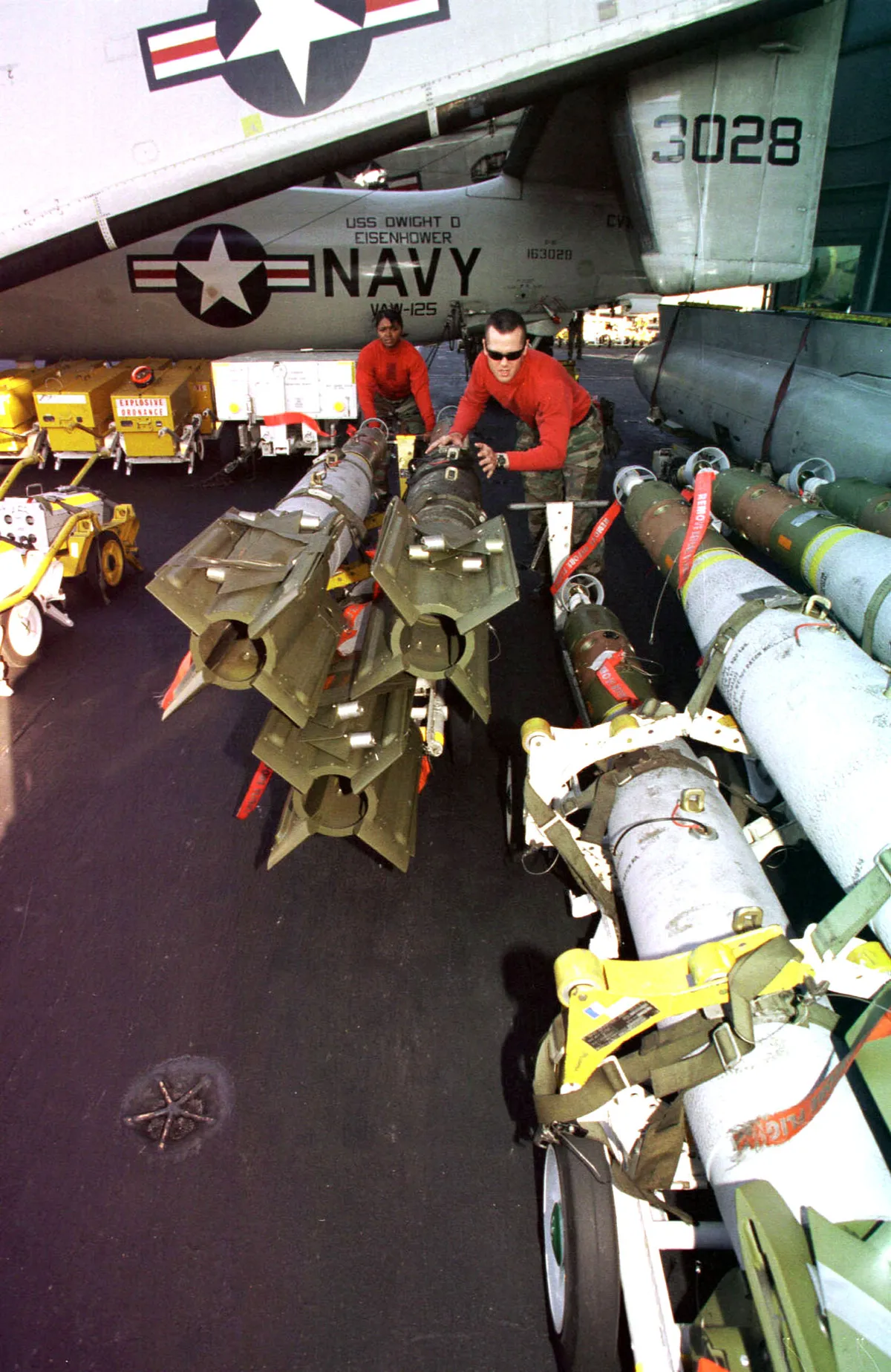
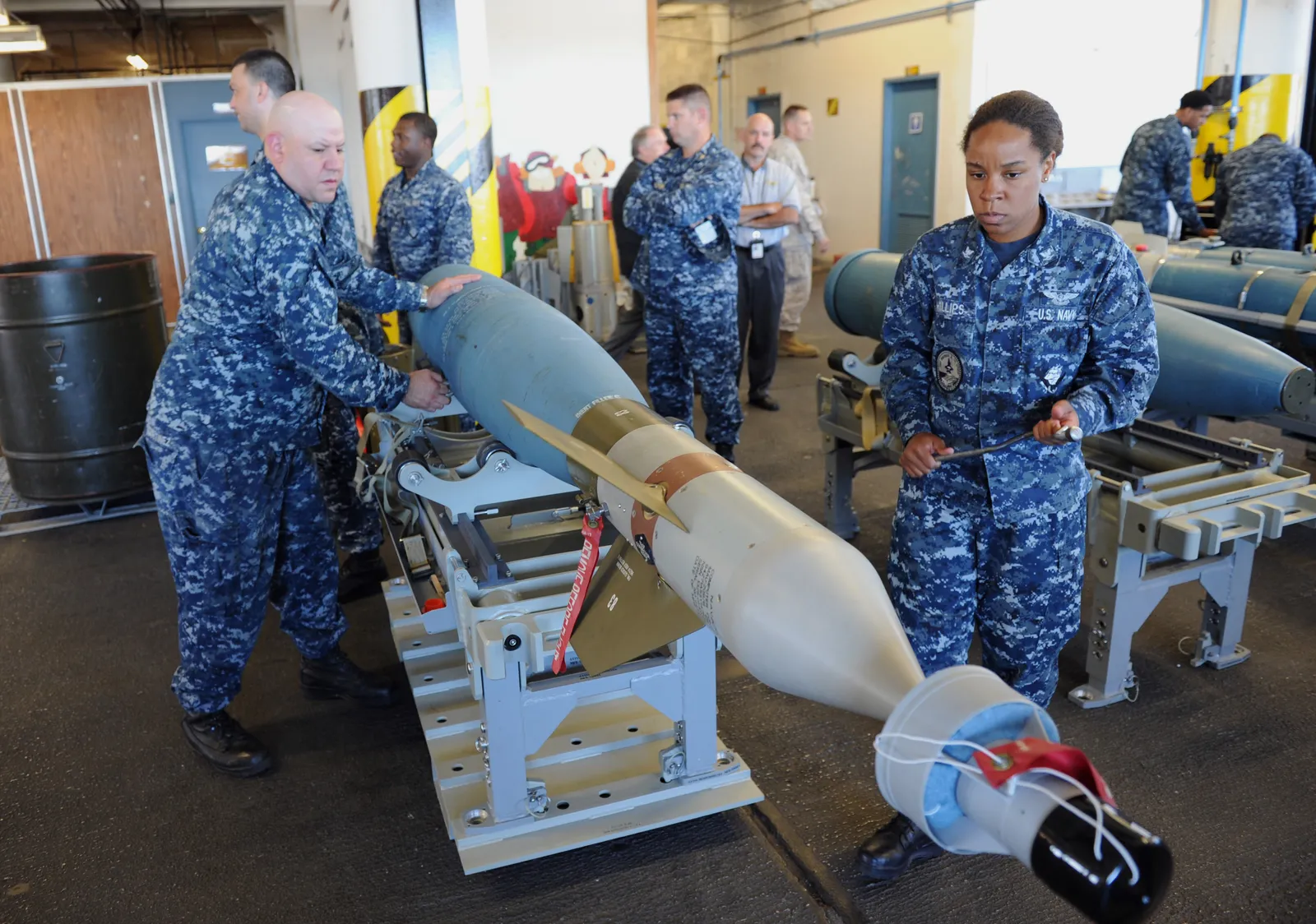
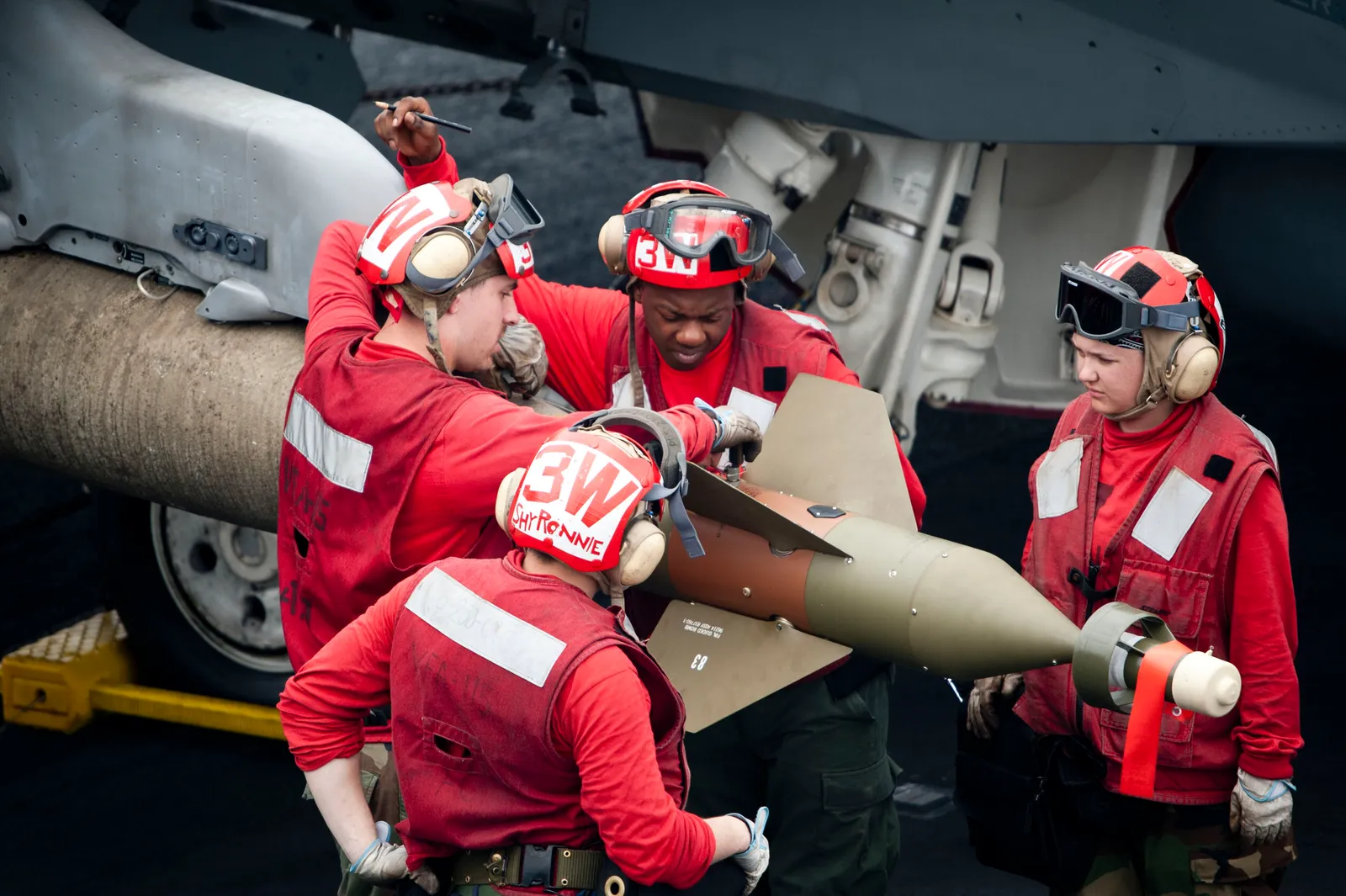
Public Navy records and imagery document GBU-16 carriage on U.S. carrier and expeditionary strike aircraft.
| Carrier | Carrier type | Carriage evidence |
|---|---|---|
 | Carrier-capable multirole strike fighter | DVIDS documents a GBU-16 loaded on an F/A-18 Hornet aboard USS Enterprise for Operation Desert Fox, and a U.S. Naval Institute account describes four strike F/A-18s each loaded with two GBU-16s. Sources: Aviation Ordnancemen Load F-18 Hornet with GBU-16 Laser Guided Bomb, Desert Fox: The Third Night |
 | Carrier-capable multirole strike fighter | DVIDS documents VFA-115 ordnancemen arming a GBU-16 Paveway II on an F/A-18E aboard USS George Washington. Sources: USS George Washington sailors arm a GBU-16 Paveway II |
 | V/STOL light attack aircraft | The NHHC AV-8B fact file lists GBU-16 among Harrier II compatible air-to-ground munitions. Sources: NHHC AV-8B PDF Fact File |
Air & Space Forces Magazine lists 1976 as initial operational capability for the Paveway II laser-guided bomb family that includes the GBU-16 active variant.
Sources: GBU-10/12/49 Paveway II
FAS reports that Navy A-6E aircraft dropped 219 GBU-16s during Operation Desert Storm, with self-designation capability central to that employment.
Sources: GBU-16 Paveway II
A DVIDS archive caption documents ordnancemen loading a GBU-16 laser-guided bomb on an F/A-18 Hornet aboard USS Enterprise during Operation Desert Fox strikes against Iraq.
Sources: Aviation Ordnancemen Load F-18 Hornet with GBU-16 Laser Guided Bomb
Lockheed Martin announced a Paveway II Plus follow-on production contract and identified the GBU-16 Mk 83 1,000-pound configuration among covered laser-guided bomb kits.
Sources: U.S. Air Force Awards Lockheed Martin Paveway II Plus Contract
Human-rights and munitions investigators reported likely GBU-16 Paveway II bombs with Mk 83 warheads in Saudi/UAE-led coalition airstrike cases in Yemen.
Sources: Day of Judgment: The Role of the US and Europe in Civilian Death, Destruction, and Trauma in Yemen