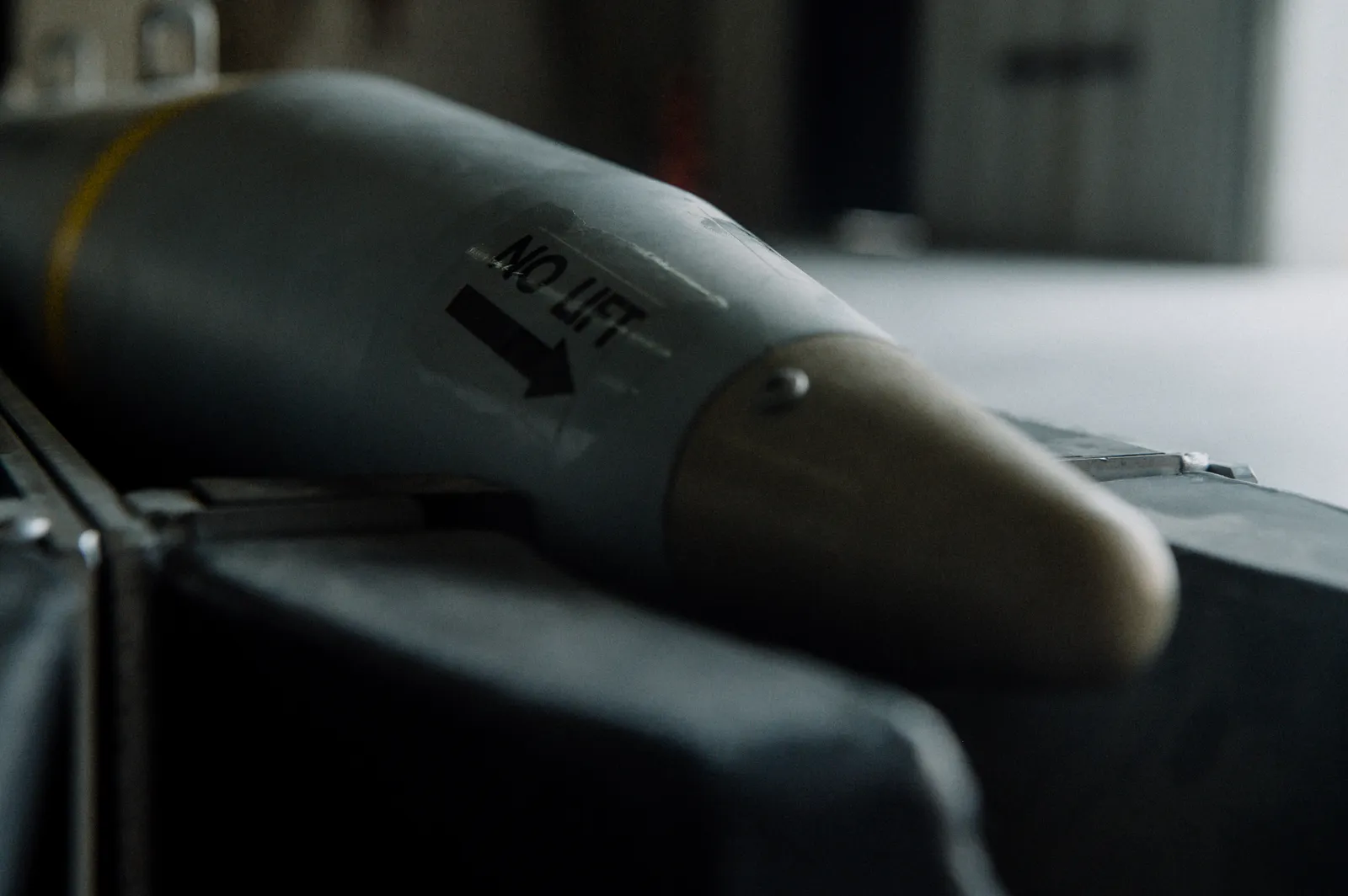

The Air Force said F-15E Strike Eagles first used the GBU-39 in combat over Iraq on Oct. 5, 2006.
Role detailsMunitions
GBU-39/B Small Diameter Bomb I
Also known as
- GBU-39
- GBU-39/B
- SDB
- SDB I
- Small Diameter Bomb I
- Small Diameter Bomb
The GBU-39/B Small Diameter Bomb I is a U.S.-built 250-pound GPS/INS-guided glide bomb for standoff precision strikes from aircraft that can carry multiple weapons per rack. Boeing and Air Force sources tie the SDB I to F-15E, F-16, F-22, F-35A, AC-130, bomber, and later MQ-9 integration paths, while direct conflict reporting documents combat use in Iraq, Afghanistan, Operation Inherent Resolve, Ukraine, and Gaza.
Role in Conflicts


The Air Force said F-15E Strike Eagles dropped GBU-39 Small Diameter Bombs on enemy small-arms positions near Qurya, Afghanistan, on Feb. 24, 2007.
The Air Force said AC-130W Stinger II gunships carried GBU-39 bombs in the Precision Strike Package during 2014 Operation Inherent Resolve.
- Side
- Ukraine

TWZ reported that a U.S. official confirmed Ukrainian combat use of air-launched GBU-39 Small Diameter Bombs in May 2024.
Role details- Side
- Israel

AP reported Israeli forces used likely GBU-39 small-diameter bombs in the May 26, 2024 Rafah airstrike.
Role detailsDesign Notes
The GBU-39 was built to give tactical aircraft more precision shots per sortie without giving up standoff range.
Compact size
Official sources describe a 250-pound class GPS/INS-guided glide bomb.
Loadout density
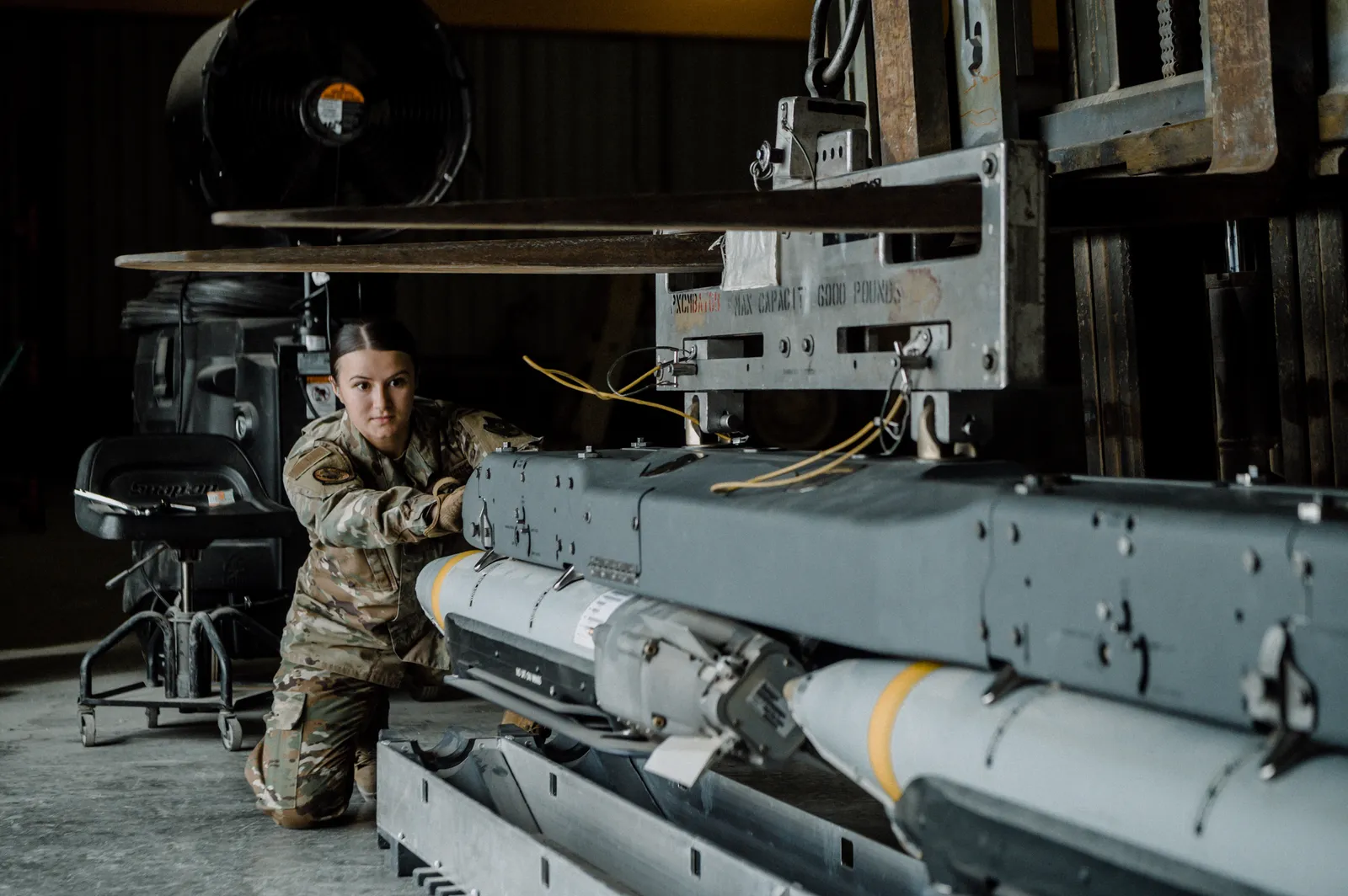
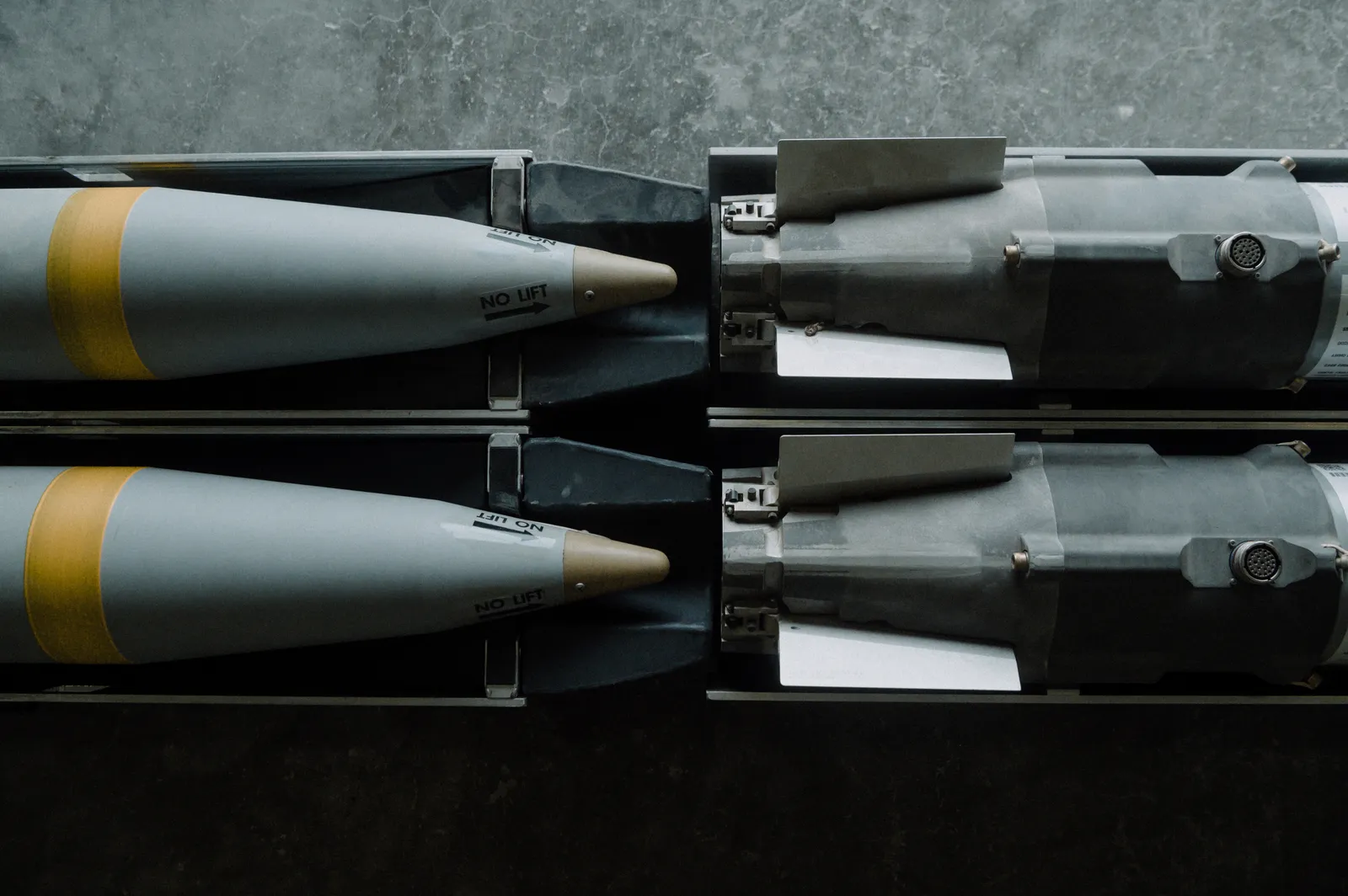
Air & Space Forces reports that one BRU-61/A rack can carry four GBU-39s.
Carrier fit
Air Force procurement material lists integrated fighters, gunships, and planned objective aircraft, while AFSOC documents MQ-9 carriage through the BRU-78 system.
Profile / Specs
Profile
- Origin
- United States
- Built by
- Boeing
- Type
- 250-pound GPS/INS-guided glide bomb
- Service note
- 2006-present
- Designer
- Boeing Integrated Defense Systems
- Designed
- 2001-2003
- Unit cost
- About $40,000
- Produced
- 2005-present
- Number built
- Not publicly stated
Specifications
- Weight
- 268 lb (122 kg)
- Length
- 70.8 in (1.8 m)
- Range
- Greater than 60 nautical miles in Boeing product material; Air Force fact sheet lists more than 40 nautical miles
- Guidance
- GPS-aided inertial navigation with anti-jam GPS and SAASM
- Warhead
- 250-pound class penetrating blast-fragmentation
- Carriage
- BRU-61/A carriage holds four SDB I weapons per 1760 store location; MQ-9 integration uses the BRU-78 Dual Carriage System
- Targets
- Fixed or stationary targets such as fuel depots and bunkers
Variants
Public sources use SDB I and GBU-39/B for the original GPS/INS Small Diameter Bomb family; related designations distinguish warhead or guidance changes rather than a separate page for each configuration.
| Variant | Configuration | Designation notes |
|---|---|---|
| GBU-39A/B | Focused Lethality Munition | Air Force procurement material lists the GBU-39A/B as the Focused Lethality Munition configuration within the SDB I family. |
| GBU-39B/B | Laser SDB | Air Force procurement material identifies the GBU-39B/B as the Laser SDB configuration. |
Carrier Aircraft
Official Air Force and Boeing sources document the bomb on fighters, gunships, stealth aircraft, and MQ-9 integration; these are the most specific public examples.
| Carrier | Carrier type | Carriage evidence |
|---|---|---|
 | Strike fighter | Boeing's Advanced F-15 weapons inventory lists GBU-39 Small Diameter Bomb among the aircraft's external carriage options. Sources: Advanced F-15 Weapons Inventory |
 | Strike fighter | The Air Force said F-15E Strike Eagle crews first used the GBU-39 in combat over Iraq in October 2006. |
 | Stealth fighter | Air Force procurement material lists the F-22A among integrated SDB I platforms. |
 | Multirole fighter | Air Force procurement material lists F-16C/D Block 30/40/50 aircraft among integrated SDB I platforms. |
 | Strike fighter | Air Force procurement material lists the F-35A among integrated SDB I platforms. |
 | Gunship | Air Force sources list AC-130W/J integration, and AFSOC says the AC-130 can carry up to eight GBU-39B bombs on wing-mounted stations. Sources: FY22 DAF Missile Procurement Justification Book, AFSOC GBU-39B MQ-9 Service Entry |
 | Unmanned combat aerial vehicle | DVIDS documented GBU-39 loading on an MQ-9 Reaper, and AFSOC said the 27th Special Operations Wing added GBU-39B to MQ-9 operations through the BRU-78 Dual Carriage System in spring 2026. Sources: DVIDS MQ-9 GBU-39 loading video, AFSOC GBU-39B MQ-9 Service Entry |
Compatible Aircraft
| Compatible item | Item type | Compatibility evidence |
|---|---|---|
 | Future platform | The Air Force said the B-2 Spirit was among future platforms for the GBU-39/B Small Diameter Bomb. Sources: ACC declares small diameter bomb initially operational |
Timeline
GBU-39/B Small Diameter Bomb I Key Events
Development work begins
Air & Space Forces reports that the Small Diameter Bomb effort began as an Air Combat Command response to the need for a smaller precision weapon with reduced collateral damage.
Sources: GBU-39 Small Diameter Bomb I
First flight
The same report says Boeing was selected to develop and produce the weapon in 2003 and that the bomb first flew on May 23, 2003.
Sources: GBU-39 Small Diameter Bomb I
Low-rate initial production
Air & Space Forces reports that low-rate initial production began in 2005.
Sources: GBU-39 Small Diameter Bomb I
Air Combat Command declares IOC
The Air Force fact sheet says Air Combat Command declared initial operational capability for the GBU-39/B on Oct. 2, 2006.
Sources: GBU-39B Small Diameter Bomb Weapon System
First combat use
The Air Force said F-15E Strike Eagles first used the GBU-39 in combat over Iraq on Oct. 5, 2006.
Sources: USAFE unit debuts small diameter bomb in combat
Afghanistan strike reported
An Air Force airpower summary said F-15E Strike Eagles dropped GBU-39 Small Diameter Bombs on enemy small-arms positions near Qurya, Afghanistan.
Sources: Feb. 25 airpower F-16s provide watch
Ukraine air-launched use confirmed
TWZ reported U.S. confirmation that Ukraine was using the air-launched GBU-39 Small Diameter Bomb in combat.
Sources: TWZ Ukraine air-launched GBU-39 report
MQ-9 loading event documented
DVIDS published public-domain video of two GBU-39 Small Diameter Bombs loaded on an MQ-9 Reaper with a Dual Carriage System at Creech Air Force Base.
Sources: DVIDS MQ-9 GBU-39 loading video
AFSOC reports MQ-9 service entry
Air Force Special Operations Command reported that 27th Special Operations Wing MQ-9 Reapers at Cannon had added the GBU-39B Small Diameter Bomb Weapon System to their operational arsenal.
Sources: AFSOC GBU-39B MQ-9 Service Entry
Media
GBU-39/B Small Diameter Bomb I Videos
GBU-39/B Small Diameter Bomb I Images
Related Weapon Systems


Related News
Sources
Small Diameter Bomb Product CardPublisher: Boeing | Note: Supports Boeing's official product background, technical specifications, and the F/A-22, F-35, fighter, and bomber compatibility claims. | Accessed: 2026-07-08GBU-39B Small Diameter Bomb Weapon SystemPublisher: U.S. Air Force | Note: Supports GBU-39/B background, Air Combat Command initial operational capability, unit cost, performance, and public-domain image context for the gallery images. | Accessed: 2026-07-08201128-Z-OK775-012Publisher: U.S. Air Force | Note: Supports public-domain image provenance for the primary gallery image of a GBU-39 at Al Udeid Air Base on Nov. 27, 2020. | Accessed: 2026-07-08201128-Z-OK775-025Publisher: U.S. Air Force | Note: Supports public-domain image provenance for the gallery image of a bomb rack unit with four GBU-39 bombs at Al Udeid Air Base on Nov. 27, 2020. | Accessed: 2026-07-08201128-Z-OK775-008Publisher: U.S. Air Force | Note: Supports public-domain image provenance for the gallery image of four GBU-39 bombs in the munitions storage area at Al Udeid Air Base on Nov. 27, 2020. | Accessed: 2026-07-08ACC declares small diameter bomb initially operationalPublisher: U.S. Air Force | Note: Supports B-2 Spirit among future platforms for the GBU-39/B Small Diameter Bomb. | Accessed: 2026-07-08AFSOC AC-130J Ghostrider Fact SheetPublisher: U.S. Air Force Special Operations Command | Note: Supports AC-130J Ghostrider carriage of the GBU-39/B Small Diameter Bomb I in the aircraft's standoff precision-guided munitions loadout. | Accessed: 2026-07-08Air Force AC-130J Ghostrider Fact SheetPublisher: U.S. Air Force | Note: Supports AC-130J Ghostrider carriage of the GBU-39/B Small Diameter Bomb I in the aircraft's standoff precision-guided munitions loadout. | Accessed: 2026-07-08Advanced F-15 Weapons InventoryPublisher: Boeing | Note: Supports F-15 family carriage of GBU-39 Small Diameter Bomb in Boeing's external carriage matrix. | Accessed: 2026-07-08AP Rafah GBU-39 reportPublisher: Associated Press | Note: Supports direct conflict use in the 2023 Israel-Hamas War; AP reported Israeli forces used likely GBU-39 small-diameter bombs in the May 26, 2024 Rafah airstrike. | Accessed: 2026-07-08AC-130W Stinger IIPublisher: U.S. Air Force | Note: Supports 2014 War Against the Islamic State direct conflict use under Operation Inherent Resolve: Supports direct conflict use in 2014 Operation Inherent Resolve; the U.S. Air Force said AC-130W gunships carried GBU-39 bombs as part of the Precision Strike Package. | Accessed: 2026-07-08GBU-39 Small Diameter Bomb IPublisher: Air & Space Forces Magazine | Note: Supports development timeline, first flight, low-rate initial production, BRU-61/A four-bomb carriage, and fighter/bomber compatibility context. | Accessed: 2026-07-08FY22 DAF Missile Procurement Justification BookPublisher: U.S. Air Force | Note: Supports SDB I platform integration details, GBU-39A/B Focused Lethality Munition, and GBU-39B/B Laser SDB variant descriptions. | Accessed: 2026-07-08USAFE unit debuts small diameter bomb in combatPublisher: U.S. Air Force | Note: Supports direct conflict use in the 2003 Iraq War; the Air Force said F-15E Strike Eagles first used the GBU-39 in combat over Iraq in October 2006. | Accessed: 2026-07-08Feb. 25 airpower F-16s provide watchPublisher: U.S. Air Force | Note: Supports direct conflict use in the 2001 War in Afghanistan; the Air Force said F-15E Strike Eagles dropped GBU-39 Small Diameter Bombs during a February 2007 strike near Qurya, Afghanistan. | Accessed: 2026-07-08TWZ Ukraine air-launched GBU-39 reportPublisher: The War Zone | Note: Supports direct conflict use in the 2014 Russia-Ukraine War; TWZ reported U.S. confirmation that Ukraine used air-launched GBU-39 Small Diameter Bombs in combat. | Accessed: 2026-07-08DVIDS MQ-9 GBU-39 loading videoPublisher: Defense Visual Information Distribution Service | Note: Supports MQ-9 Reaper loading and Dual Carriage System integration context for two GBU-39 Small Diameter Bombs at Creech Air Force Base; DVIDS identifies the work as public domain. | Accessed: 2026-07-08AFSOC GBU-39B MQ-9 Service EntryPublisher: Air Force Special Operations Command | Note: Supports GBU-39B service entry on 27th Special Operations Wing MQ-9 Reapers, BRU-78 carriage, Cannon Air Force Base integration context, and AC-130 carriage capacity. | Accessed: 2026-07-08