Aircraft & UAVs

Harbin H-5 bomber

Also known as
  • Harbin H-5
  • H-5 Hongzhaji
  • Hong-5
  • B-5
  • H-5A
  • HJ-5
  • HZ-5
  • HD-5
  • Il-28 Beagle

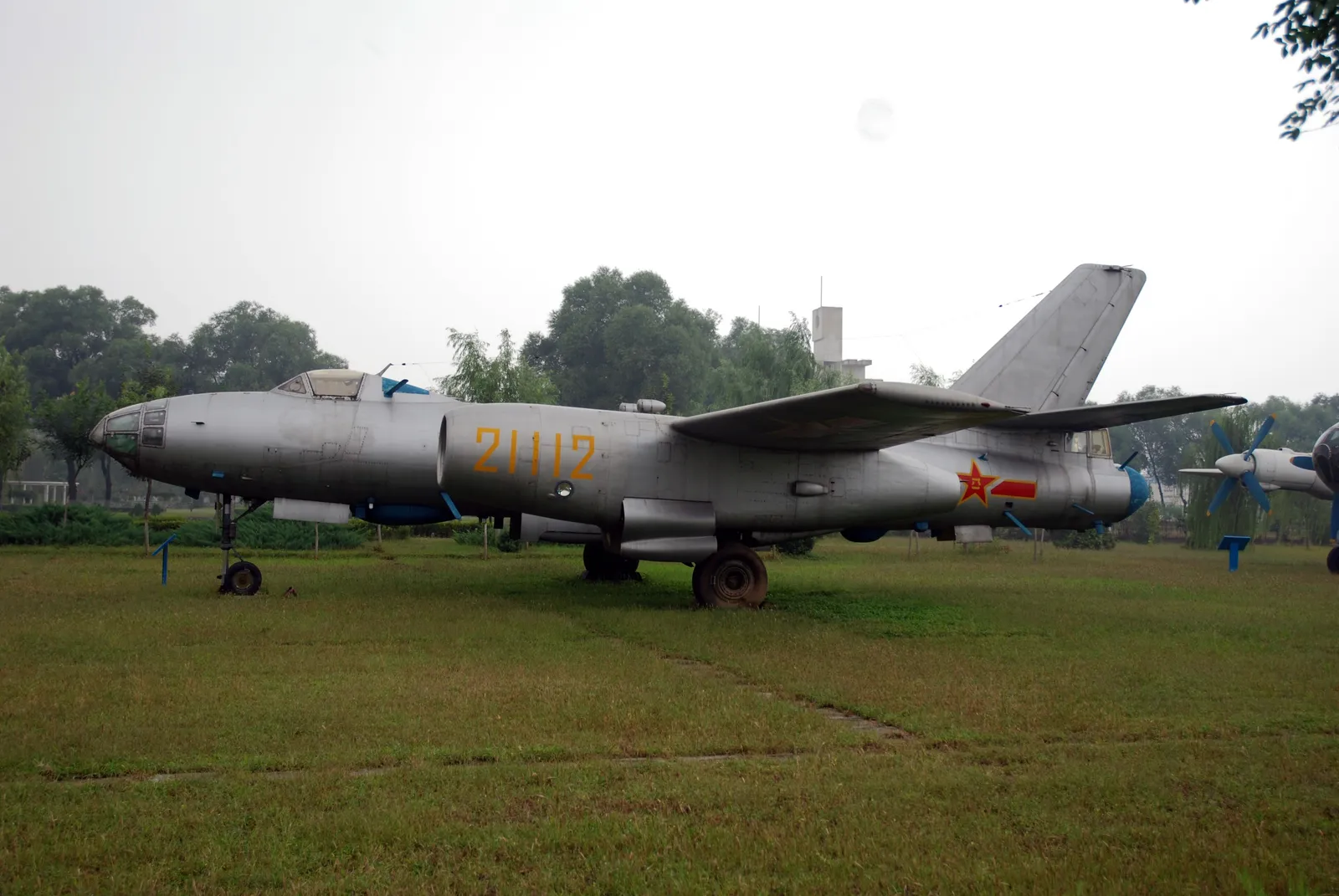
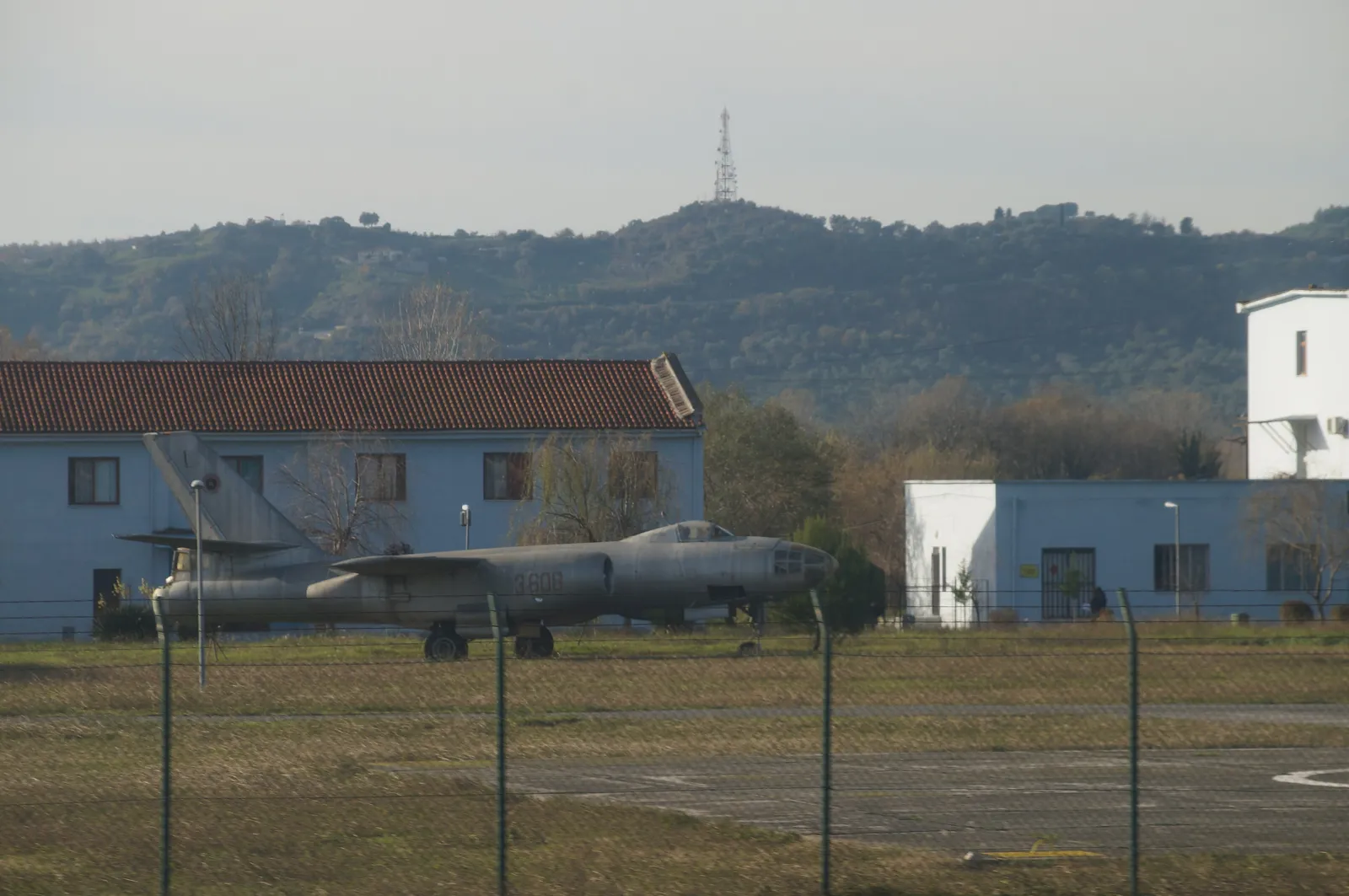
The Harbin H-5 is a Chinese-built derivative of the Soviet Ilyushin Il-28, produced by Harbin Aircraft Factory as a twin-jet tactical light bomber with a three-person crew and a 3,000 kg maximum bomb load. Chinese state-industry history describes the H-5 as heavily reworked for local production, with a redesigned wing, shared H-6 equipment, bomber-trainer, reconnaissance, electronic-warfare, torpedo, and nuclear-test variants, and Chinese service lasting until the early 2010s.

Role in Conflicts

Profile / Specs

Profile

Origin
China
Type
Twin-jet light bomber
Service note
Cold War Chinese bomber with post-Cold War legacy service
Designer
Ilyushin
Designed
1963 trial-production approval; first flight on 1966-09-25
Produced
1967-1984
Number built
507 H-5 aircraft delivered by 1984; 186 HJ-5 trainers reported by GlobalSecurity

Specifications

Crew
3 (pilot, bombardier, gunner)
Powerplant
2 × WP-5A turbojets, each rated at about 2,700 kg thrust in SASTIND data
Maximum speed
902 km/h
Service ceiling
12,500 m in SASTIND data; FAS lists 12,300 m
Range
FAS lists 1,175 nautical miles cruise range
Dimensions
17.768 m length, 21.45 m wingspan, 6.2 m height
Weights
12,890 kg empty weight and 18,400 kg normal takeoff weight
Armament
Two fixed forward 23 mm cannon, two tail-turret 23 mm cannon, and up to 3,000 kg of bombs or torpedoes
Maximum bomb load
3,000 kg
Chinese Redesign And Roles

The H-5 program began from Soviet Il-28 repair and manufacturing experience, but Chinese sources describe substantial adaptation rather than simple assembly. SASTIND says Chinese drawings accounted for about 40 percent of the aircraft, including a redesigned wing and domestic components; GlobalSecurity adds that the H-5 adopted H-6-related equipment, a different tail turret, improved radar and sighting equipment, and larger ammunition capacity.

Local production basis

Harbin Aircraft Factory moved from Il-28 repair and parts manufacture into H-5 prototype production after Soviet support ended.

Variant breadth

The family included bomber, nuclear-carrier, torpedo, reconnaissance, trainer, electronic-warfare, and ejection-test adaptations.

Conflict evidence limit

The Cambodia row is supported as Khmer Rouge fielding, reported loss, and captured-equipment context; the cited sources do not confirm H-5 bombing sorties or target sets.
Variants

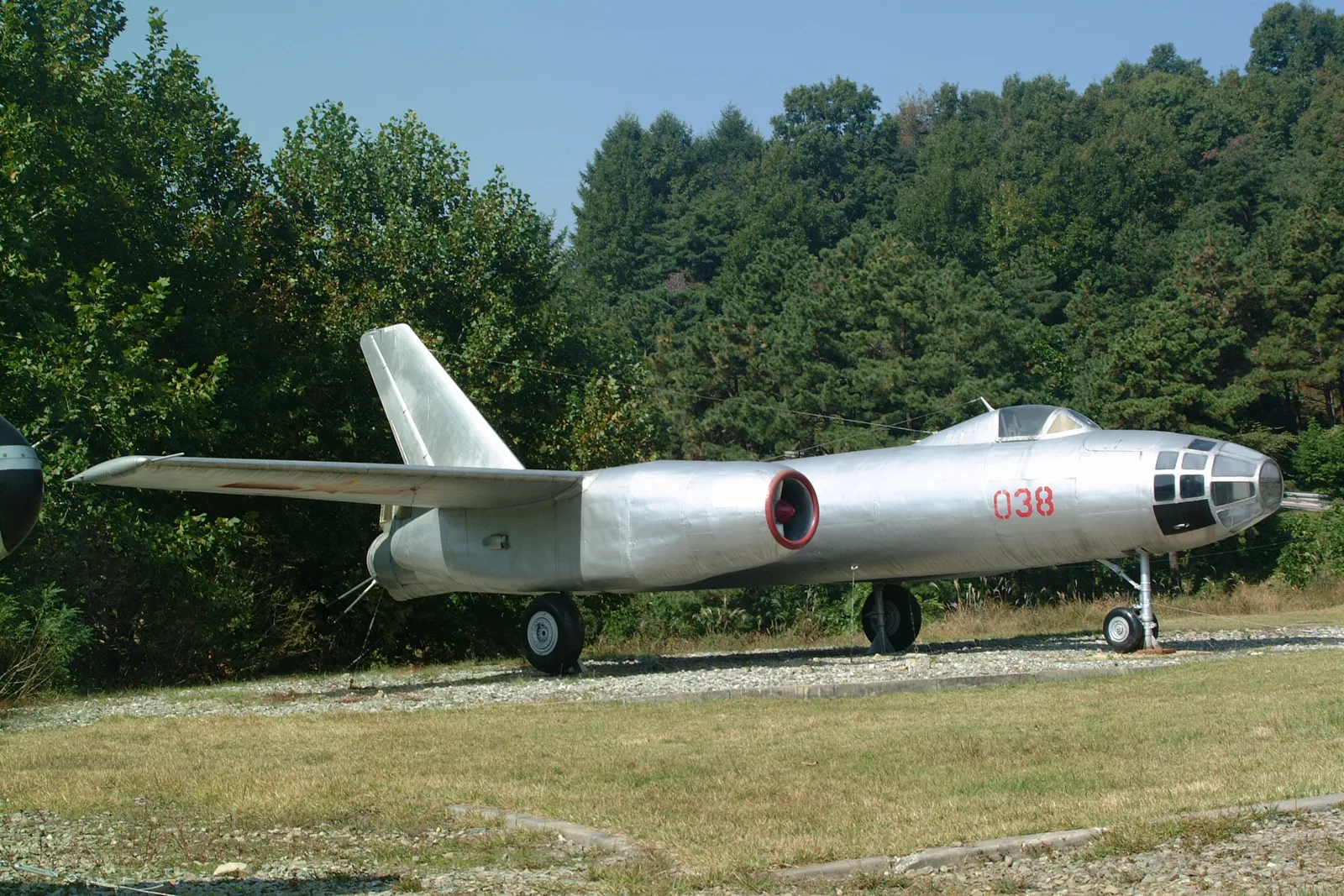
Chinese references treat the H-5 as more than a straight Il-28 copy: the baseline bomber led to nuclear-carrier, torpedo, reconnaissance, trainer, electronic-warfare, and test-aircraft adaptations.

VariantConfigurationDesignation notes
H-5 bomberBaseline tactical light bomber

The standard H-5 entered production in April 1967 after a September 1966 first flight and state testing.

Sources: SASTIND H-5 history, GlobalSecurity H-5 page

H-5A nuclear carrierNuclear-test and operational nuclear-delivery adaptation

GlobalSecurity and SASTIND both describe a late-1960s H-5 nuclear-carrier conversion used in China's December 27, 1968 nuclear airdrop test.

Sources: GlobalSecurity H-5 page, SASTIND H-5 history

HJ-5Bomber-trainer

GlobalSecurity says HJ-5 development began in the mid-1960s, the prototype first flew on December 12, 1970, certification followed in April 1972, and 186 examples were produced.

Sources: GlobalSecurity H-5 page

HZ-5Photographic reconnaissance aircraft

GlobalSecurity describes the HZ-5 as an H-5 prototype conversion with camera equipment in the bomb bay and extra fuel, certified in 1977.

Sources: GlobalSecurity H-5 page

HD-5Electronic-warfare and ELINT version

Designation-Systems lists HD-5 as the H-5 electronic-warfare/ELINT version within the Chinese H-series bomber designation family.

Sources: Chinese Aircraft Designations

Carried Munitions

CMO-DB lists the H-5 Beagle [Il-28 Copy] with FAB-3000M-46 GPB, FAB-1500M-54 GPB, FAB-500M-54 GPB, FAB-250M-54 GPB, and FAB-100M-62 GPB loadout options.

Carried itemItem typeCarriage evidence
Air-dropped bombs, Aircraft-delivered general-purpose bomb class, MunitionsAir-dropped bombsBomb payload

The H-5 armament table lists 4 500kg bombs or 12 Type 1 250 kg bombs, documenting it as a carrier for air-dropped bombs.

Sources: H-5 China Aircraft Special Weapons Delivery Systems

FAB-3000M-46 GPB, 3,000 kg general-purpose bomb, MunitionsFAB-3000M-46 GPB3,000 kg general-purpose bomb

CMO-DB's H-5 Beagle [Il-28 Copy] loadout includes one FAB-3000M-46 GPB bomb.

Sources: CMO-DB H-5 loadout

FAB-250 bomb, 250 kg general-purpose bomb, MunitionsFAB-250 bombGeneral-purpose bomb

CMO-DB lists the H-5 Beagle [Il-28 Copy] with twelve FAB-250M-54 GPB bombs in its loadout table.

Sources: CMO-DB H-5 loadout

FAB-1500M-54 GPB, 1,500 kg general-purpose bomb, MunitionsFAB-1500M-54 GPB1,500 kg general-purpose bomb

CMO-DB lists the H-5 Beagle [Il-28 Copy] loadout with one FAB-1500M-54 GPB.

Sources: CMO-DB H-5 loadout

FAB-100M-62 GPB, 100 kg general-purpose bomb, MunitionsFAB-100M-62 GPB100 kg general-purpose bomb

CMO-DB lists sixteen FAB-100M-62 GPB bombs in the H-5 Beagle [Il-28 Copy] loadout table.

Sources: CMO-DB H-5 loadout

FAB-500M-54 GPB, 500 kg general-purpose bomb, MunitionsFAB-500M-54 GPB500 kg general-purpose bomb

CMO-DB lists the H-5 Beagle [Il-28 Copy] with four FAB-500M-54 GPB bombs in its loadout table.

Sources: CMO-DB H-5 loadout

Timeline

Harbin H-5 bomber Key Events

  1. Trial-production plan approved

    China's Third Ministry of Machine Building approved the H-5 trial-production plan after Harbin's Il-28 repair experience and Soviet contract rupture pushed the program toward local redesign.

    Sources: SASTIND H-5 history

  2. First flight

    The second H-5 prototype completed final inspection in September 1966 and flew successfully at Harbin on September 25.

    Sources: SASTIND H-5 history, GlobalSecurity H-5 page

  3. Production begins

    The H-5 entered formal production in April 1967 after prototype work and factory preparation.

    Sources: GlobalSecurity H-5 page

  4. Nuclear-carrier test

    An H-5 nuclear-carrier conversion was used in a Chinese nuclear airdrop test after a rapid retrofit effort at Harbin Aircraft Factory.

    Sources: GlobalSecurity H-5 page, SASTIND H-5 history

  5. HJ-5 trainer first flight

    The HJ-5 bomber-trainer prototype first flew on December 12, 1970, before April 1972 certification.

    Sources: GlobalSecurity H-5 page

  6. HZ-5 reconnaissance variant certified

    The HZ-5 reconnaissance conversion received certification in 1977 with camera equipment in the bomb bay and additional fuel for longer range and endurance.

    Sources: GlobalSecurity H-5 page

  7. Production ends

    SASTIND states that H-5 production and delivery ended in 1984 after 507 aircraft.

    Sources: SASTIND H-5 history

  8. Chinese retirement complete

    The China Aerospace Studies Institute's PLAAF bomber-organization study states that Harbin-produced H-5 aircraft were retired from Chinese service by 2011.

    Sources: CASI PLAAF Bomber Organization

Media
Related Weapon Systems
Aero L-29 Delfin, Jet trainer and light attack aircraft, Aircraft & UAVsAircraft & UAVsAero L-29 DelfinJet trainer and light attack aircraftThe Aero L-29 Delfin is a Czechoslovak two-seat jet trainer built by Aero Vodochody and Let Kunovice for Warsaw Pact and export air forces. Its simple, rugged design was optimized for basic, intermediate, and weapons training, with underwing stores for gun pods, light bombs, or unguided rockets. Azerbaijani forces pressed L-29s into ground-attack service during the 1988 First Nagorno-Karabakh War, where the lightly protected trainers suffered repeated losses to Armenian air defenses.
Nanchang Q-5 / A-5, Ground-attack aircraft, Aircraft & UAVsAircraft & UAVsNanchang Q-5 / A-5Ground-attack aircraftThe Nanchang Q-5, exported as the A-5 Fantan, is a Chinese single-seat, twin-engine ground-attack aircraft built by Nanchang Aircraft Company from the MiG-19/J-6 lineage. Its redesign moved the intakes to the fuselage sides, emphasized low-altitude attack, and paired 23 mm cannon with bombs, rocket pods, and short-range air-to-air missiles. Export A-5 variants added customer-specific avionics and weapons fits for operators including Pakistan, Bangladesh, Myanmar, and Sudan.

Sources