- Side
- People's Republic of China

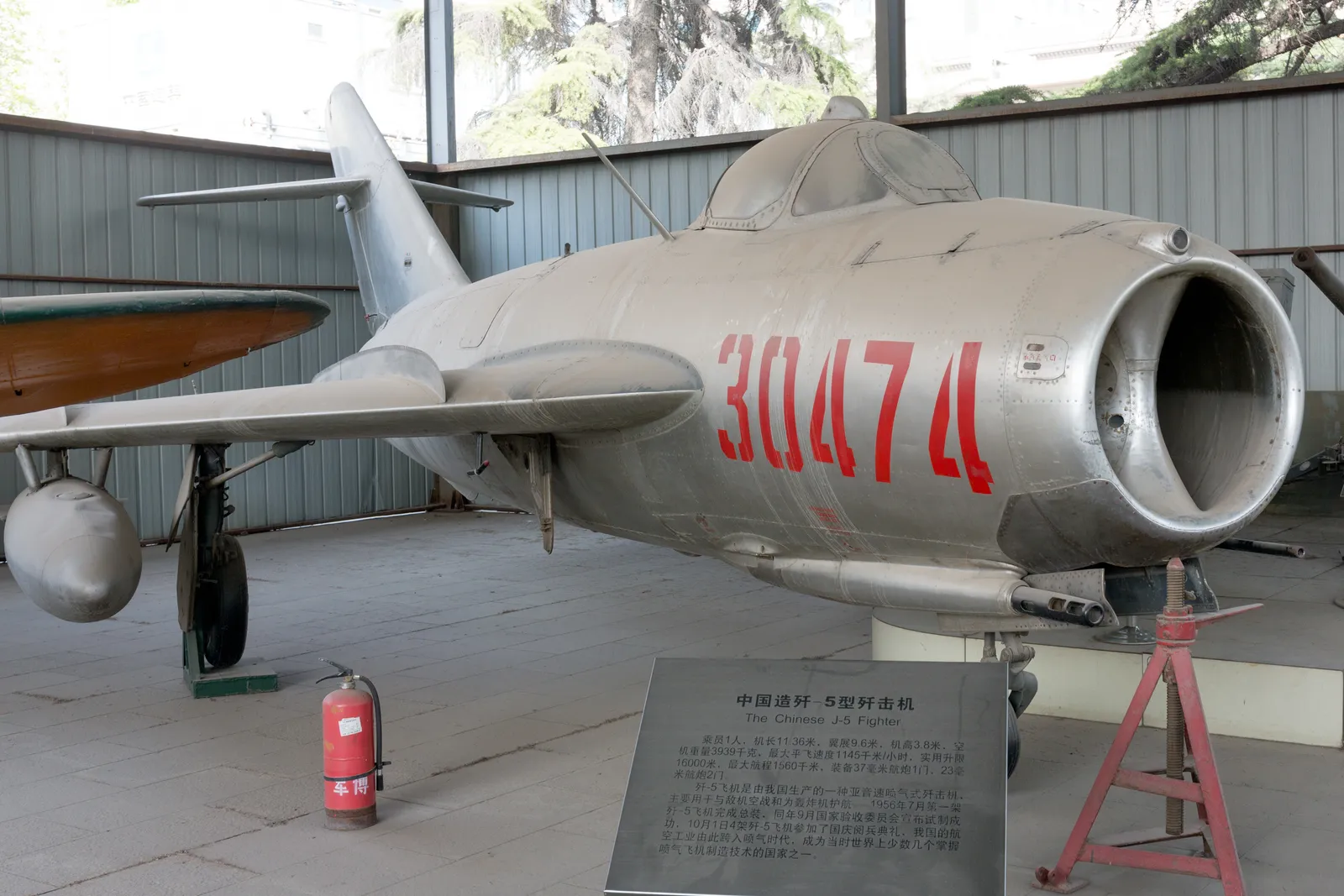
People's Liberation Army Air Force MiG-17-series fighters, the Soviet type copied as the J-5, fought Republic of China F-86s during the 1958 Taiwan Strait air battles.
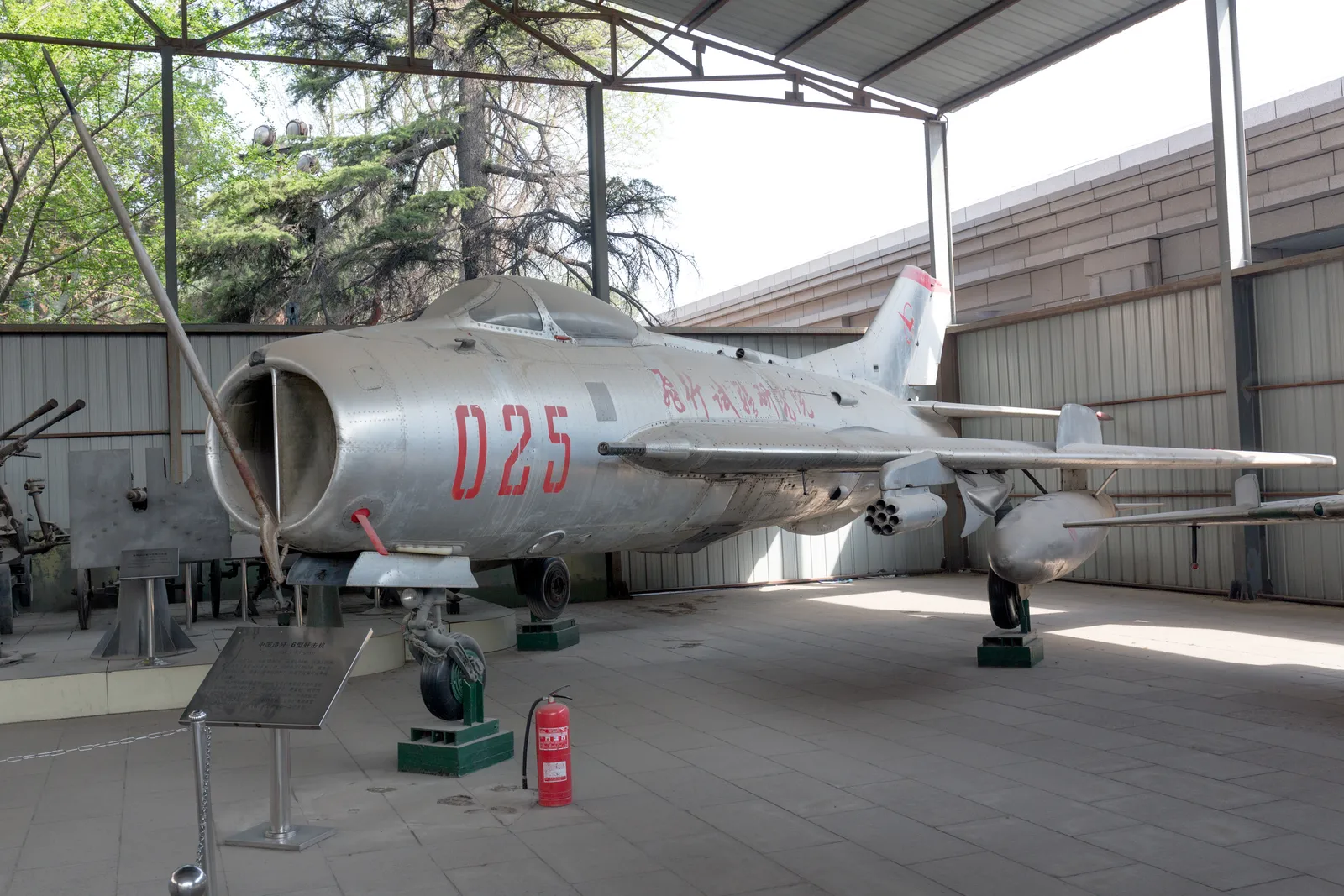
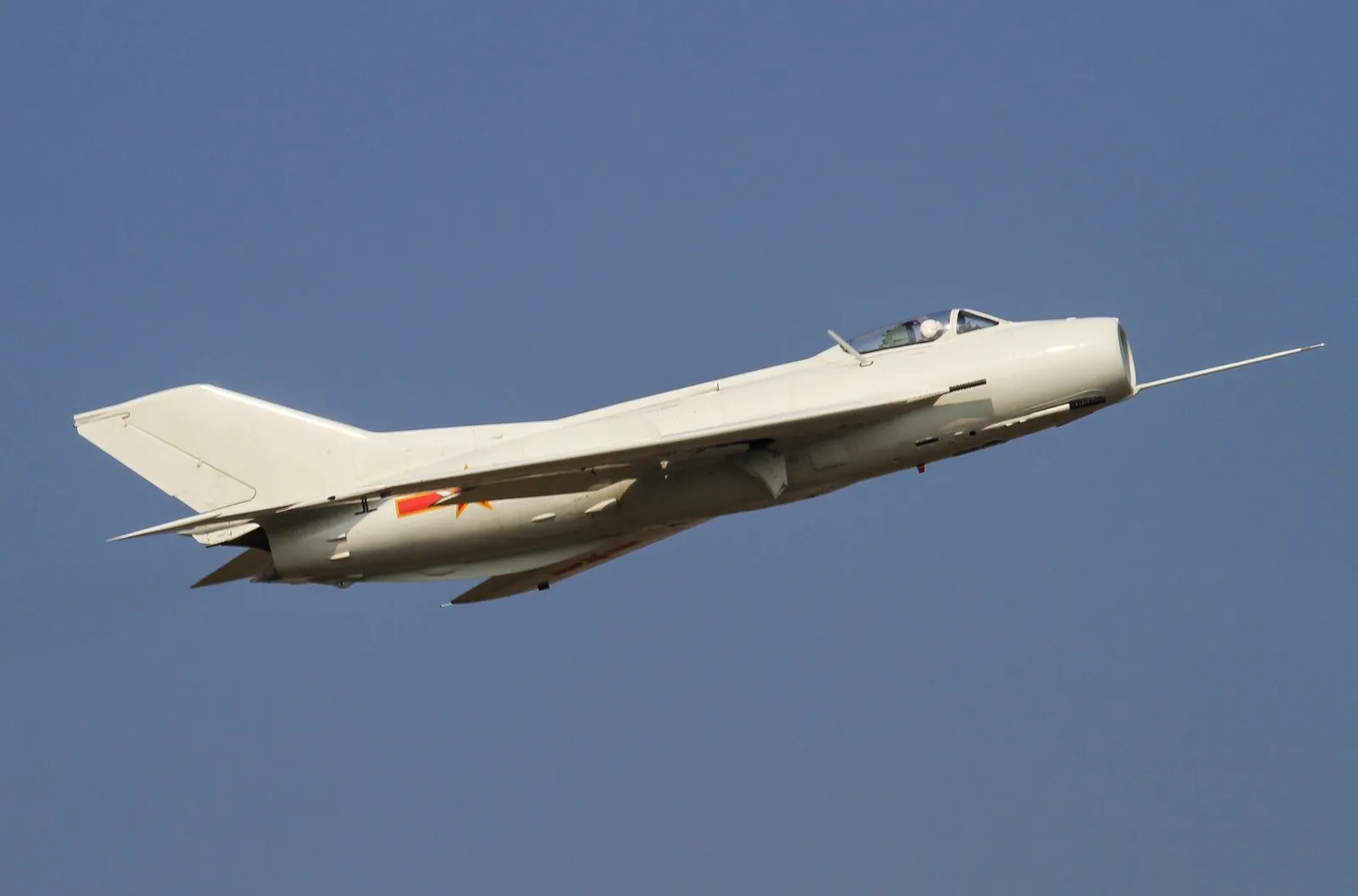
Shenyang J-5/J-6 covers two Chinese-built fighter lines derived from Soviet designs: the J-5/F-5 from the MiG-17 and the J-6/F-6 from the MiG-19. The J-5 gave China a mass-produced jet fighter, while the J-6 became a supersonic export family used for air defense, training, reconnaissance, and tactical attack.
People's Liberation Army Air Force MiG-17-series fighters, the Soviet type copied as the J-5, fought Republic of China F-86s during the 1958 Taiwan Strait air battles.
The Vietnam People's Air Force flew Chinese-built MiG-17s called J-5s, and later received J-6/MiG-19 fighters for Linebacker-era air-defense combat.
Pakistan Air Force F-6 squadrons flew air-defense, close-air-support, and armed-reconnaissance sorties during the 1971 war, including heavy use over the Shakargarh sector.
Reference accounts identify Chinese-supplied Khmer Rouge J-6s as taking part in Kampuchea-Vietnamese border clashes for ground-attack missions before Vietnamese forces captured surviving aircraft.
Somalia began receiving Chinese F-6C/FT-6 aircraft around 1980-1981, and reference accounts report Somali F-6 use in 1981 border skirmishes with Ethiopia.
Reference accounts report Somali F-6C combat use during the Somali Rebellion in the late 1980s and through the collapse of the Siad Barre government in 1991.
The family was most useful where operators needed short-range point defense or daylight tactical attack. The J-5 emphasized maneuverable subsonic interception with heavy cannon armament, while the J-6 added supersonic performance, twin engines, and three 30 mm cannons at the cost of range and maintenance complexity.
Taiwan Strait, Vietnam, and Pakistan rows are documented primarily as fighter or interceptor employment.
Pakistan, Cambodia, and Somalia rows are documented or reported with close-air-support, armed-reconnaissance, or ground-attack use.
Cambodia and Somalia use remains source-limited to reference accounts; the notes avoid unsupported sortie or loss details.
The page groups two Chinese production families because Cold War combat accounts often identify them by Soviet lineage, Chinese service designation, or export designation. The J-5/F-5 was the Chinese MiG-17 line; the J-6/F-6 was the Chinese MiG-19 line.
| Line | Lineage | Combat pattern |
|---|---|---|
| J-5 / F-5 | MiG-17-derived Fresco family | Single-engine interceptor used in air-defense combat, including Vietnam People's Air Force service. |
| J-6 / F-6 | MiG-19-derived Farmer family | Twin-engine supersonic fighter exported for air-defense, close-air-support, and armed-reconnaissance roles. |
| Q-5 / A-5 | J-6-derived attack aircraft | Separate ground-attack derivative with its own catalog entry where direct conflict use is tracked. |
Chinese designations split the page into two related Soviet-derived fighter lines: the J-5/F-5 from the MiG-17 and the J-6/F-6 from the MiG-19, with trainer and export designations used by foreign operators.
| Variant | Configuration | Designation notes |
|---|---|---|
| J-5 / F-5 | Single-seat MiG-17-derived day fighter | Chinese-built MiG-17 family aircraft used one VK-1/Wopen WP-5 class turbojet and mixed 37 mm/23 mm cannon armament. |
| JJ-5 / FT-5 | Two-seat trainer | Trainer designations covered Chinese-built two-seat aircraft associated with the J-5/F-5 line. Sources: Shenyang J-5 |
| J-6 / F-6 | MiG-19-derived supersonic fighter and export fighter | The J-6/F-6 line used two Wopen-6A turbojets and three 30 mm cannons, with later export aircraft adapted by operators such as Pakistan. Sources: Pima Air & Space Museum: Shenyang J-6A, F-6s at War |
| J-6A | Radar-equipped MiG-19PF derivative | Museum records identify the J-6A as the Chinese-built version of the radar-equipped MiG-19PF. |
| JJ-6 / FT-6 | Two-seat J-6 trainer and export trainer | The two-seat trainer family accompanied the J-6/F-6 export and service line. Sources: Shenyang J-6 |
 | Ground-attack derivative | The Q-5/A-5 was developed from the J-6 airframe into a dedicated Chinese attack aircraft. Sources: Shenyang J-6, GlobalSecurity: J-6 Production |
Chinese production of the MiG-17-derived J-5/F-5 line began in the mid-1950s, giving the PLAAF a domestic Fresco-family fighter.
Sources: Shenyang J-5, NDU China Strategic Perspectives No. 4
Pima Air & Space Museum records the first Chinese-built J-6 aircraft as rolling off the assembly line in 1958, followed by service-entry delays caused by early quality problems.
Sources: Pima Air & Space Museum: Shenyang J-6A
A U.S. Air Force historical study records major air combat between Republic of China F-86s and Communist MiG-17s during the Second Taiwan Strait Crisis.
Sources: National Security Archive: Air Operations in the Taiwan Crisis of 1958
The first Chinese-built J-6 batch was not accepted for operational service until 1963 after early production-quality problems were addressed.
Sources: Pima Air & Space Museum: Shenyang J-6A, GlobalSecurity: J-6 Development
Reference histories describe the VPAF 925th Fighter Regiment as operating Chinese-supplied J-6/MiG-19 fighters during the later Vietnam air war.
Sources: Shenyang J-6
Pakistan Air Force F-6 units flew air-defense and tactical air-support sorties during the 1971 Indo-Pakistani War.
Sources: F-6s at War
Pakistan retired the single-seat F-6 after decades of service, while trainer aircraft remained in limited use for longer.
Sources: F-6s at War