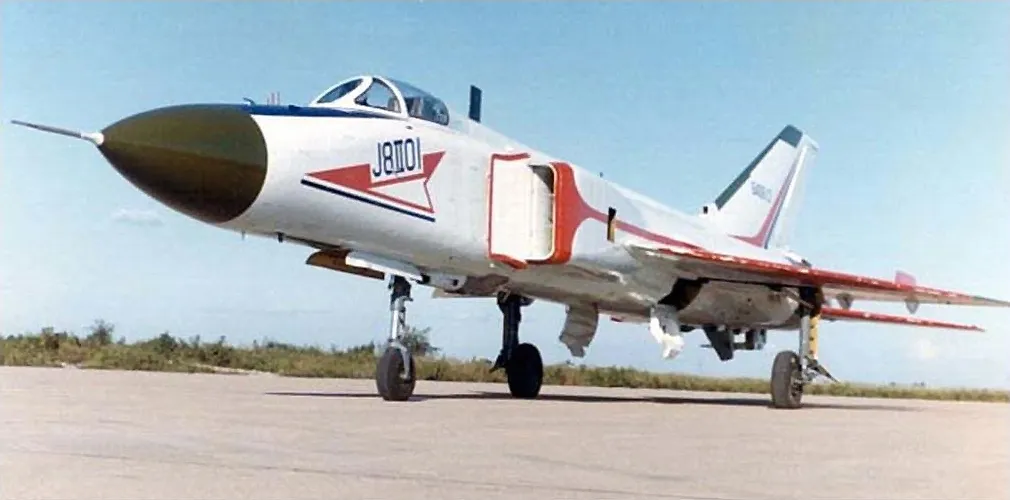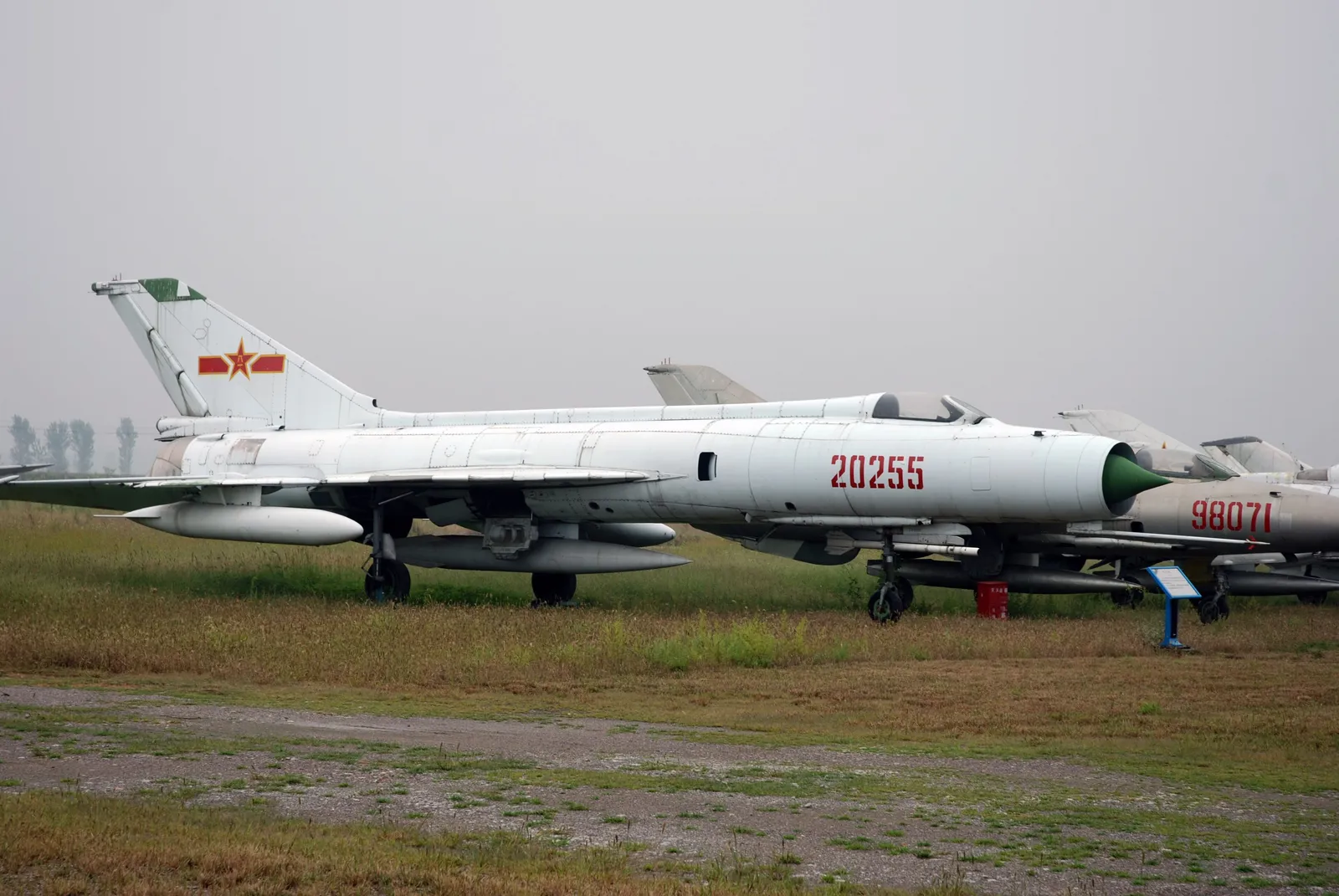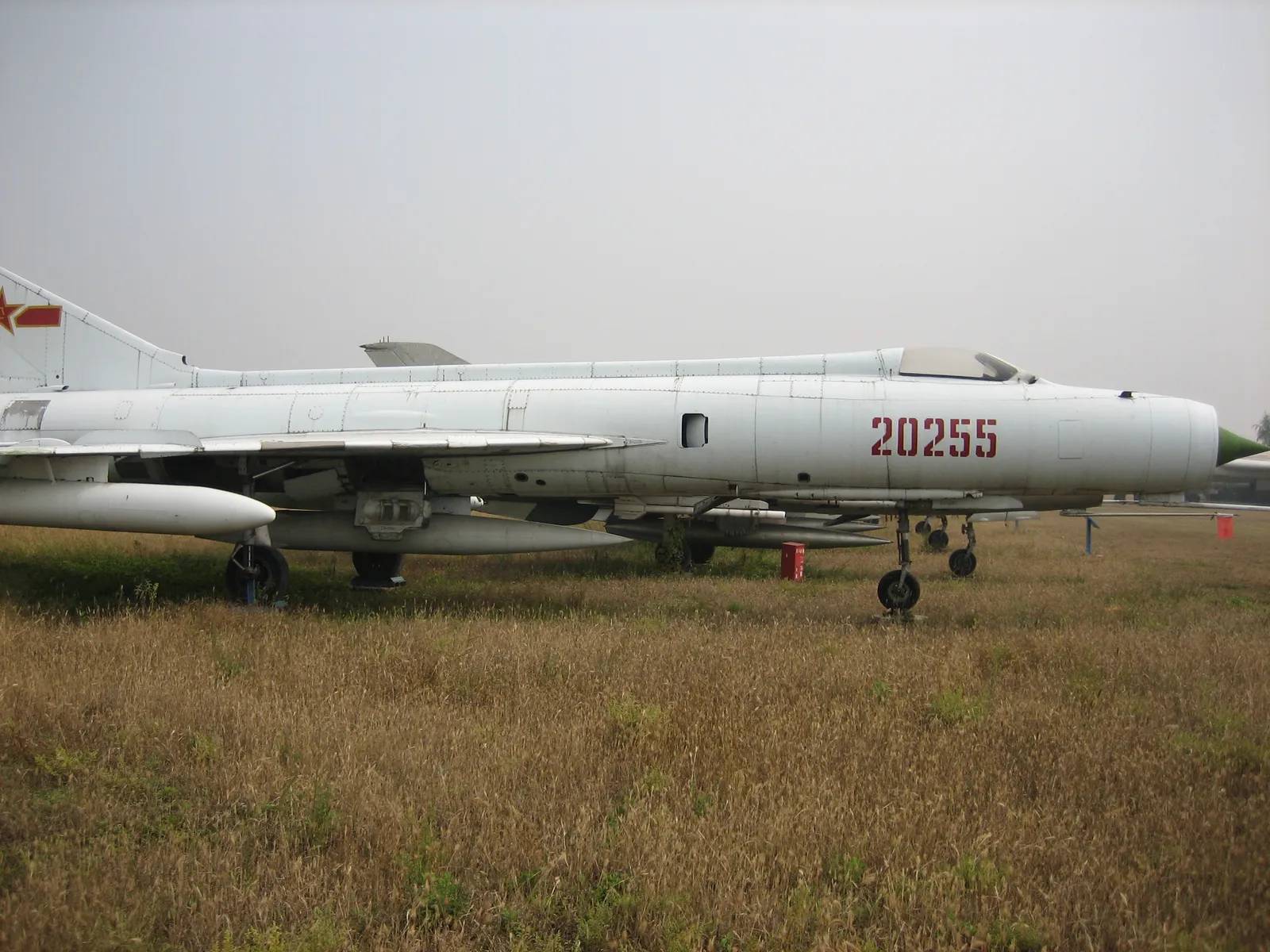
- Side
- People's Republic of China

A People's Liberation Army Naval Aviation J-8II was one of two interceptors that approached a U.S. Navy EP-3E near Hainan on April 1, 2001; one J-8II collided with the EP-3E, was lost, and its pilot was not recovered.
The Shenyang J-8 is a Chinese twin-engine interceptor family developed by the 601 Institute and built by Shenyang Aircraft Corporation for high-altitude air-defense missions. The original nose-intake J-8 entered service in 1980, while the redesigned J-8II/J-8B moved to side intakes and a nose radome for improved radar and weapons integration; a PLANAF J-8II was directly involved in the 2001 Hainan Island EP-3 collision.
A People's Liberation Army Naval Aviation J-8II was one of two interceptors that approached a U.S. Navy EP-3E near Hainan on April 1, 2001; one J-8II collided with the EP-3E, was lost, and its pilot was not recovered.
The J-8 began as a lower-risk enlargement of the J-7/MiG-21 pattern for longer-range, high-altitude interception. The later J-8II was much more than a minor update: sources describe a new radome and side-intake arrangement, more powerful engines, expanded hardpoints, and radar-driven weapons growth.
People's Liberation Army Air Force and People's Liberation Army Naval Air Force.
Sources identify the 2001 collision aircraft as a Chinese Navy/PLANAF J-8II/F-8II interceptor.
J-8F and JZ-8F variants kept the airframe relevant for beyond-visual-range missile carriage and tactical reconnaissance rather than pure gun-and-heat-seeker interception.
The family is usually split between the original nose-intake Finback-A line and the extensively redesigned side-intake J-8II/Finback-B line.
| Variant | Configuration | Designation notes |
|---|---|---|
| J-8 / Finback-A | Initial interceptor | Original single-seat, twin-engine interceptor with a nose intake, radar rangefinder, two 30 mm cannon, and three hardpoints. Sources: Shenyang J-8 - Wikipedia, Shenyang J-8 fighter: A history of evolution |
| J-8A / J-8I | Improved early-series interceptor | Updated early J-8 with SR-4 radar and air-to-air missile capability; open references describe roughly 100 early J-8/J-8I aircraft before production ended. Sources: Shenyang J-8 - Wikipedia, Shenyang Aircraft Corporation Forecast |
| J-8B / J-8II / Finback-B | Redesigned all-weather interceptor | Major redesign with side intakes, a nose radome, Type 208 radar, WP-13A-II turbojets, seven hardpoints, and a single twin-barrel 23 mm cannon. Sources: Shenyang J-8 - Wikipedia, The Hainan Island Incident 25 Years Later |
| J-8D | In-flight-refueling-capable naval and air force variant | Added a fixed refueling probe and extended combat radius, with China Defence Today describing limited PLAAF and PLANAF deployment. |
| J-8F | Late multirole interceptor | Mature early-2000s variant with Type 1492/JL-10-class radar, PL-12 integration, glass-cockpit updates, in-flight refueling, and WP-13BII engines. |
| JZ-8 / JZ-8F | Tactical reconnaissance variants | Reconnaissance variants used camera installations or pods; ODIN identifies the JZ-8F as a tactical reconnaissance aircraft derived from the J-8 line. Sources: JZ-8F Chinese Reconnaissance Fighter Aircraft - ODIN, Shenyang J-8 fighter: A history of evolution |
| F-8IIM | Export-focused demonstrator | Shenyang's privately funded export upgrade paired the J-8II airframe with Russian radar and weapons options, but it did not secure a buyer. |
Chinese fighter-development histories place the J-8 requirement in the mid-1960s as China sought a longer-range, higher-altitude interceptor than the J-7.
Sources: Shenyang J-8 - Wikipedia, Shenyang J-8 fighter: A history of evolution
Reference histories describe the original J-8 entering service in 1980 after a long development cycle.
Sources: Shenyang J-8 - Wikipedia, Shenyang J-8 fighter: A history of evolution
The J-8II redesign first flew in 1984 and moved the family toward the more recognizable radome-and-side-intake layout.
Sources: Shenyang J-8 - Wikipedia
A PLANAF J-8II collided with a U.S. Navy EP-3E near Hainan Island during an intercept; the J-8II was lost and the damaged EP-3E landed at Lingshui.
Sources: Chinese National Security Decisionmaking Under Stress, China-U.S. Aircraft Collision Incident of April 2001, The Hainan Island Incident 25 Years Later
China Defence Today reports that the J-8F achieved a successful PL-12 medium-range air-to-air missile test in spring 2004.
Sources: Shenyang J-8 fighter: A history of evolution