Munitions

C-601 / YJ-6

Also known as
  • YJ-6
  • C-601
  • CAS-1 Kraken
  • CH-AS-1 Kraken
  • Kraken
  • Air-launched Silkworm

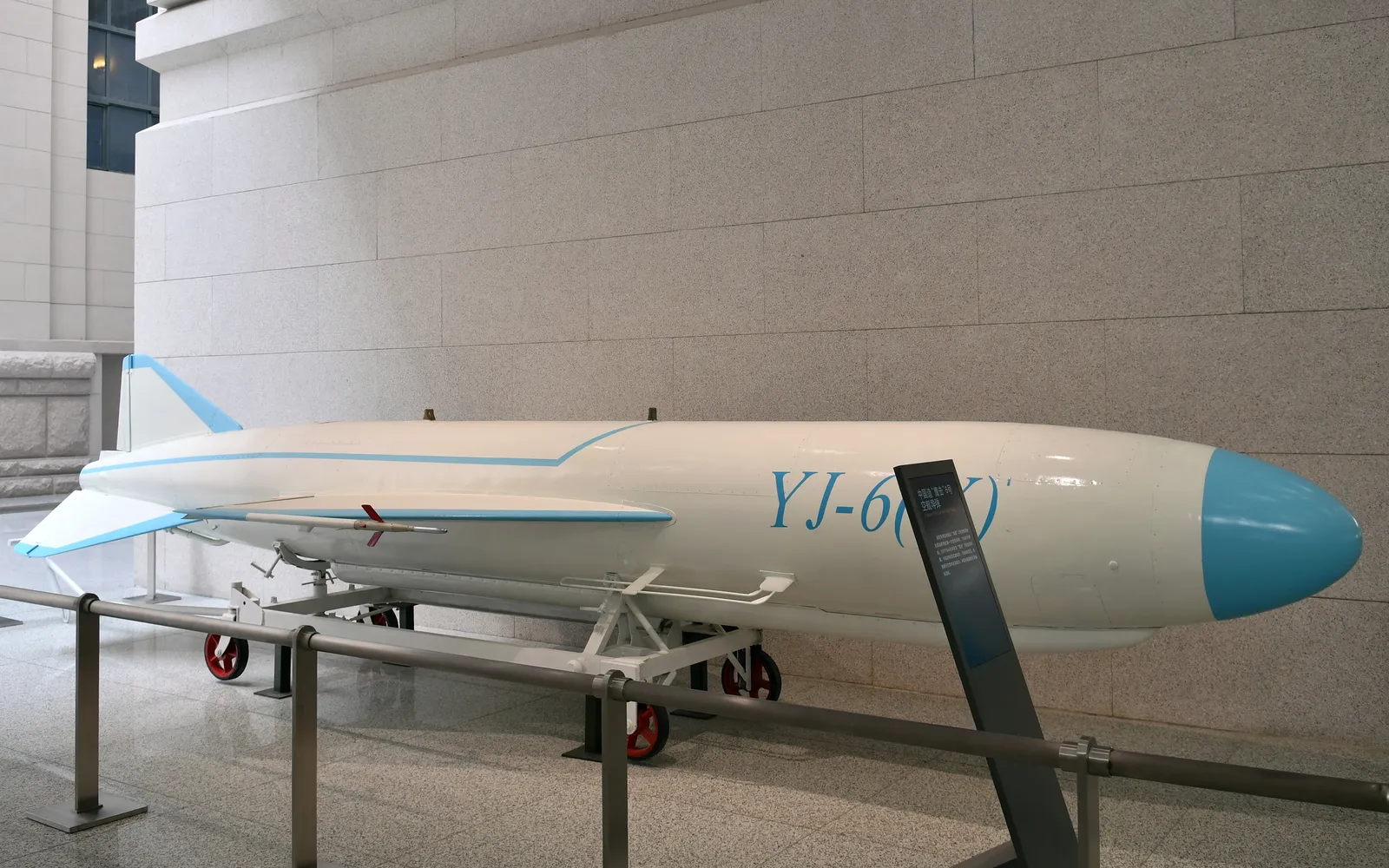
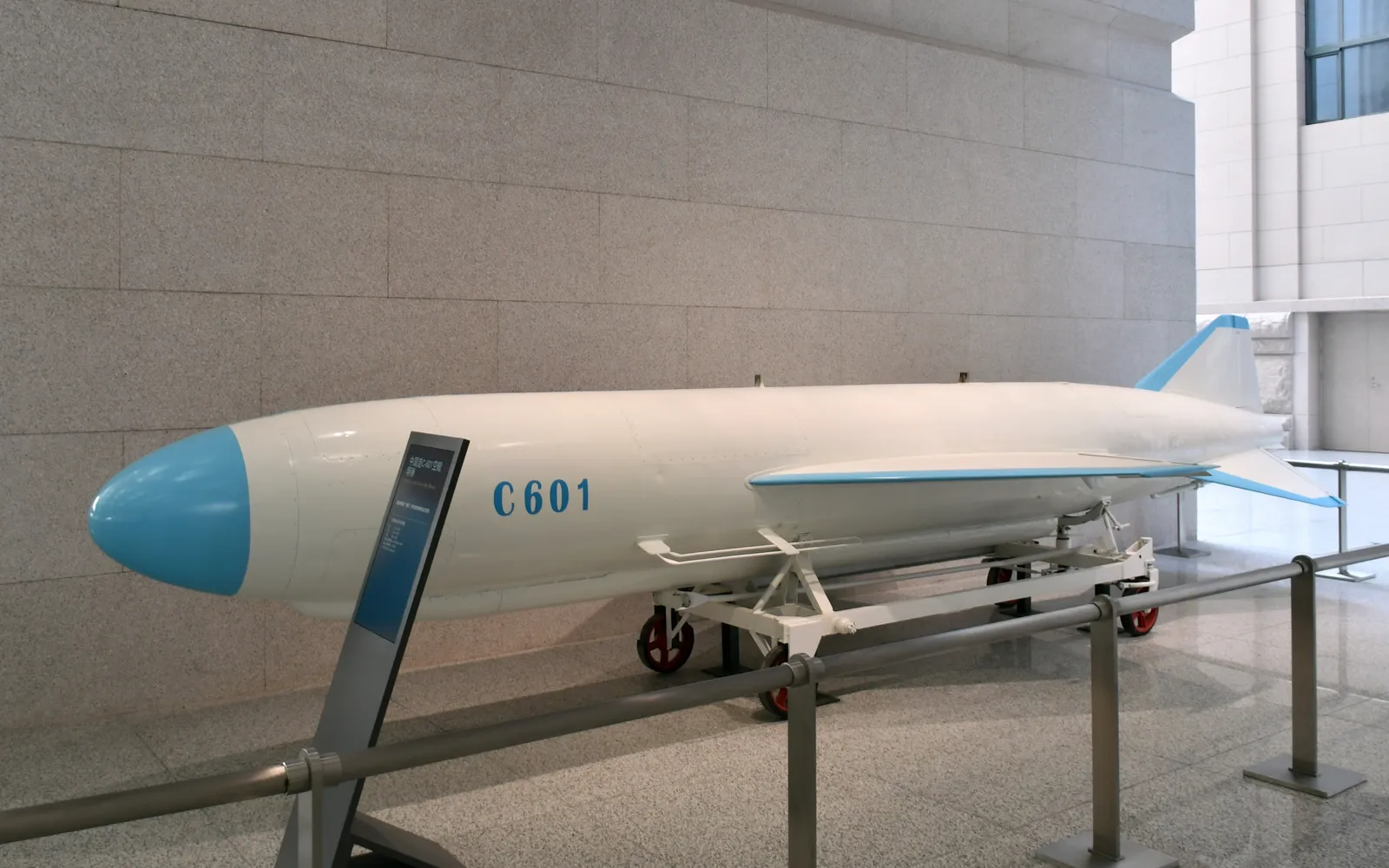
The C-601, known in Chinese service as the YJ-6 and to NATO as CAS-1 Kraken, is a Chinese air-launched anti-ship cruise missile adapted from the HY-2/Silkworm family for H-6D bomber carriage. It gave Iraqi H-6D bombers a heavy standoff maritime-strike weapon during the 1988 Tanker War phase of the 1980 Iran-Iraq War.

Role in Conflicts

Side
Iraq

Iraqi H-6D bombers used Chinese-exported C-601 anti-ship missiles in the 1988 Tanker War phase; the Iranian bulk freighter Entekhab was hit on 5 February 1988, and later tanker or bulk-carrier attacks were attributed to Iraqi C-601s, though sources disagree on which strikes used Silkworm-family missiles.

Profile / Specs

Profile

Origin
China
Type
Air-launched anti-ship cruise missile
Service note
1980s-present
Designer
China Haiying Electro-Mechanical Technology Academy / CASIC Third Academy
Designed
Mid-1960s concept work; formal approval in September 1975; flight-test program completed in 1984
Produced
Serial production from the mid-1980s
Developed from
HY-2 / Silkworm anti-ship missile family
Developed into
YJ-61 / C-611 extended-range branch; later open sources sometimes separate the YJ-62 / C-602 lineage from the older Silkworm-derived branch

Specifications

Launch platform
H-6D / Hong-6D bomber
Range
About 100-110 km in NDU and CRS reporting
Warhead
513 kg-class payload
Guidance
Programmed or inertial midcourse flight with active-radar terminal guidance
Flight profile
Selectable level-flight altitudes of 500 m, 70 m, or 50 m in GlobalSecurity's description
Carriage
Two missiles under H-6D wing pylons
Design Context

The C-601/YJ-6 translated the older HY-2/Silkworm anti-ship missile family into an aircraft-carried maritime-strike weapon. Public sources describe the missile as retaining the large 513 kg-class payload and active-radar terminal attack concept while deleting the surface-launch booster and adding H-6D carriage provisions.

Air-launched branch

CRS identifies the YJ-6/C-601 as the air-launched version of the HY-2, launched from the H-6D bomber.

Supported by CRS and GlobalSecurity.

Heavy anti-ship payload

NDU and CRS list a 513 kg-class warhead, making the missile a large anti-ship weapon for tanker and transport targets.

Supported by NDU and CRS specification tables.

Follow-on branch

C-611/YJ-61 reporting describes a longer-range modification, but no separate public catalog record exists for that branch yet.

Supported by GlobalSecurity, NDU, and CRS.
Variants

Open references use YJ-6 for the Chinese-service missile and C-601 for the export air-launched anti-ship missile; YJ-61/C-611 is treated as the longer-range modification of the same branch, while later YJ-62/C-602 reporting is less consistent across sources.

VariantConfigurationDesignation notes
YJ-6Chinese-service missile

NDU lists YJ-6 as the air-launched member of the YJ-6 series, with CAS-1 and C-601 as associated NATO and export designations.

Sources: A Low-Visibility Force Multiplier

C-601Export designation

GlobalSecurity identifies C-601 as the export/Western-designated air-to-ship missile carried by Hong-6D/H-6D bombers.

Sources: C-601 / YJ-6

YJ-61 / C-611Extended-range follow-on

NDU, CRS, and GlobalSecurity describe the C-611/YJ-61 branch as the longer-range modification of the C-601/YJ-6 family.

Sources: A Low-Visibility Force Multiplier, C-601 / YJ-6, China: Ballistic and Cruise Missiles

Carrier Aircraft

The missile was built around H-6D bomber carriage for maritime strike.

CarrierCarrier typeCarriage evidence
Xi'an H-6, Strategic / maritime strike bomber family, Aircraft & UAVsXi'an H-6Maritime strike bomber

GlobalSecurity says the C-601 was carried by the Hong-6D/H-6D, and NDU describes PLAN H-6D bombers as equipped with YJ-6 anti-ship cruise missiles for missile attack.

Sources: C-601 / YJ-6, A Low-Visibility Force Multiplier

Timeline

C-601 / YJ-6 Key Events

  1. Development approval

    GlobalSecurity says formal development work on the C-601 air-to-ship missile system was approved in September 1975.

    Sources: C-601 / YJ-6

  2. Design tests completed

    GlobalSecurity says design formulation flight tests for the weapon system were completed in 1984.

    Sources: C-601 / YJ-6

  3. Deployment and export period

    NDU notes that China began deploying the air-launched YJ-6/C-601 in 1987, while National Interest reports Iraqi receipt of H-6Ds and C-601s that year.

    Sources: A Low-Visibility Force Multiplier, China's H-6 Bomber

  4. First documented tanker strike

    National Interest identifies the Iranian bulk freighter Entekhab as the first ship hit by a C-601 on 5 February 1988.

    Sources: China's H-6 Bomber

Media
Related Weapon Systems
C-801 anti-ship missile, Anti-ship cruise missile, MunitionsMunitionsC-801 anti-ship missileAnti-ship cruise missileThe C-801 is the export designation of China's YJ-8 family, a solid-propellant, sea-skimming anti-ship missile built by CASIC's Third Academy. Open references place the surface-launched YJ-8/C-801 in 1987 service with a 42 km range and 165 kg warhead, while later YJ-81/C-801K and YJ-82 members carried the same short-range family into air- and submarine-launched roles. Yemen's pre-war C-801 stocks and the C-801/C-802 identification caveat make the missile relevant to Houthi anti-ship attacks in the 2014 Yemen Civil War.
Iranian anti-aircraft artillery, Gun-based short-range air defense artillery, Air DefenseAir DefenseIranian anti-aircraft artilleryGun-based short-range air defense artilleryIranian anti-aircraft artillery is an aggregate category for gun-based air-defense systems in Iranian service, including ZU-23-2 and Mesbah 23 mm weapons, Oerlikon-derived 35 mm Samavat guns, and older heavy-caliber systems. The record is most directly documented in the 1988 Tanker War phase of the 1980 Iran-Iraq War, where a Sassan platform 23 mm gun mount engaged U.S. forces, and in the 2020 United States-Iran Conflict, where ZU-23-2-type guns appeared as low-altitude point-defense threats and strike targets.

Sources