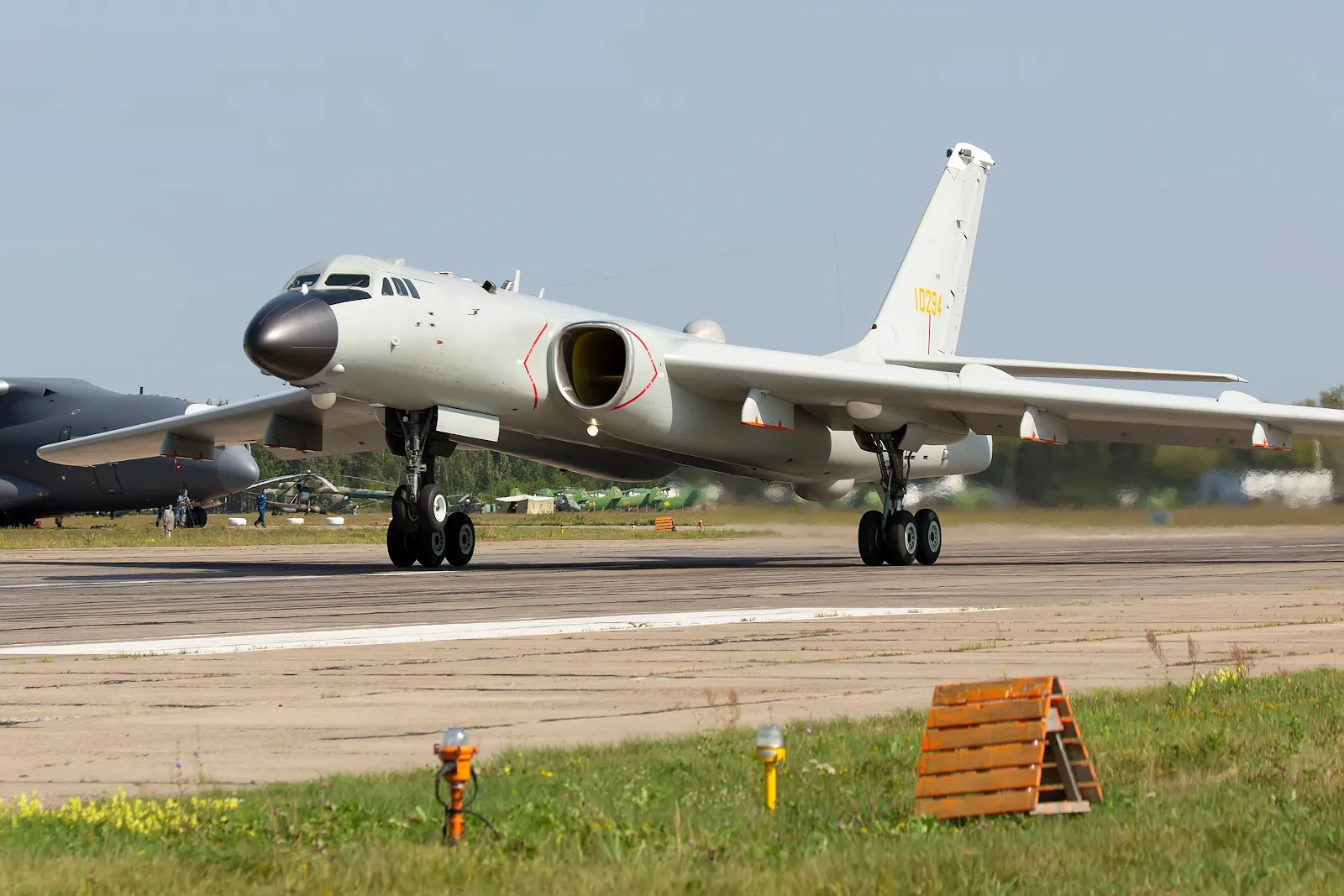
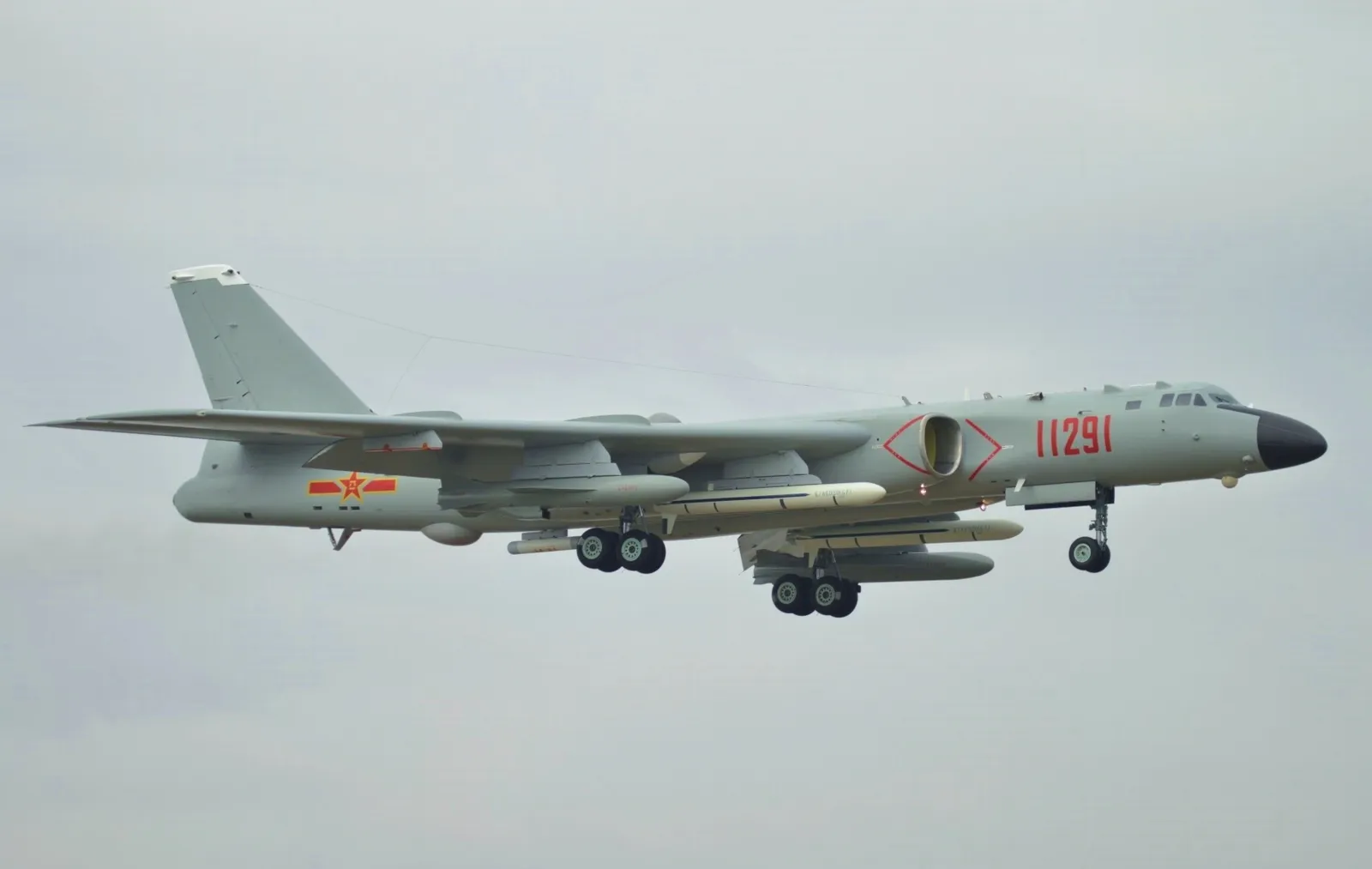
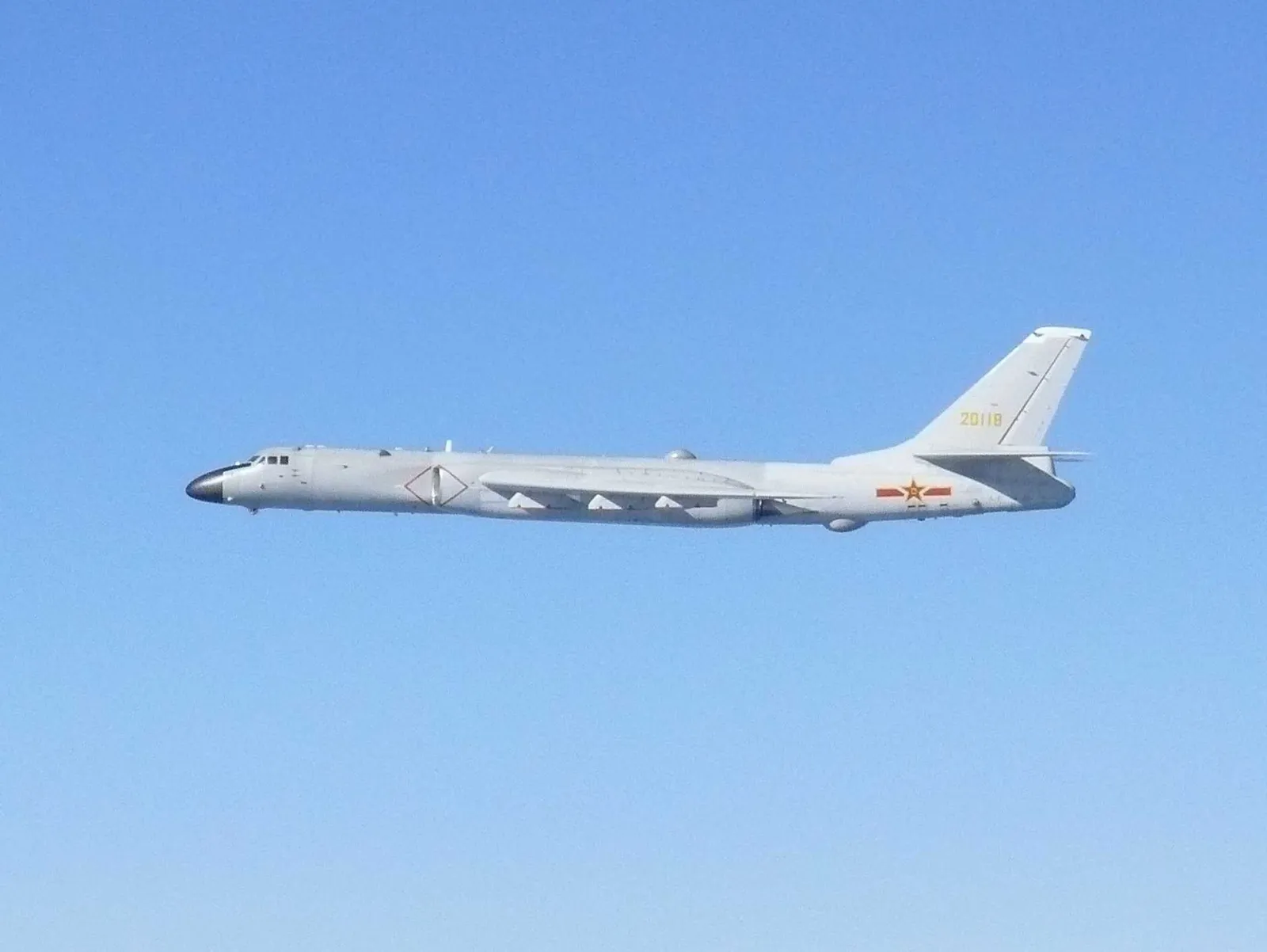
Iraq used Chinese H-6D/B-6D maritime-strike bombers with C-601/Silkworm anti-ship missiles during the Tanker War phase, including the 5 February 1988 hit on the Iranian bulk freighter Entekhab and further attributed tanker or bulk-carrier attacks.
Xi'an H-6
- H-6
- Hong-6
- Xian H-6
- B-6D
- H-6D
- H-6K
- H-6N
- Tu-16 Badger
The Xi'an H-6 is China's domestically produced Tu-16-derived bomber family, built around the Soviet Badger design and repeatedly adapted for nuclear delivery, maritime strike, tanker, cruise-missile, and modern standoff roles. Iraqi H-6D/B-6D aircraft armed with C-601 anti-ship missiles used the family in combat during the 1980 Iran-Iraq War's Tanker War phase.
Role in Conflicts
Profile / Specs
Profile
- Origin
- China
- Type
- Strategic / maritime strike bomber family
- Service note
- 1959-present
- Designer
- Tupolev / Xi'an Aircraft Industrial Corporation
- Designed
- Chinese Tu-16 assembly began in 1959; first fully Chinese-produced H-6 flew in December 1968
- Produced
- 1959-present family; modernized variants remain in service
- Developed from
- Tupolev Tu-16
Specifications
- Crew
- 4
- Length
- 114.2 ft / 34.8 m
- Wingspan
- 108.3 ft / 33.0 m
- Height
- 34.0 ft / 10.4 m
- Maximum speed
- 570 kt / about 1,055 km/h
- Maximum range
- 3,200 nmi / about 5,930 km
- Power plant
- 2 x Xian WP-8 in legacy H-6 technical data; H-6K uses more efficient turbofan engines in DoD reporting
- Maximum takeoff weight
- 174,165 lb / about 79,000 kg
- Legacy payload
- About 20,000 lb / 9,000 kg weapons payload in GlobalSecurity's H-6 overview
- H-6D maritime armament
- Two underwing C-601/YJ-6 anti-ship missiles
- Modern standoff load
- H-6K can carry six land-attack cruise missiles or six YJ-12 anti-ship cruise missiles in DoD reporting
Variant Evolution
The H-6 family is best read as a long-running airframe adapted to different weapon and support roles rather than a single static bomber model.
| Branch | Role | Source-backed distinction |
|---|---|---|
| H-6D / B-6D | Maritime strike | Added a chin radome, maritime-search/fire-control equipment, and two underwing C-601/YJ-6 missiles; Iraq received the export combination in the late 1980s. |
| H-6H / H-6M | Cruise-missile carrier | Moved the family toward external standoff missile carriage with fewer legacy gun or bomb-delivery constraints. |
| H-6K | Modern standoff strike | DoD describes a turbofan-powered H-6 variant carrying six land-attack cruise missiles and six YJ-12 anti-ship cruise missiles. |
| H-6N | Refuelable long-range strike | DoD describes a refuelable H-6K derivative with fuselage changes for external ALBM carriage and a role in China's nascent nuclear triad. |
| H-6U / HY-6 | Aerial refueling | Tanker conversions extended the bomber-family role into support of other Chinese combat aircraft. |
Variants
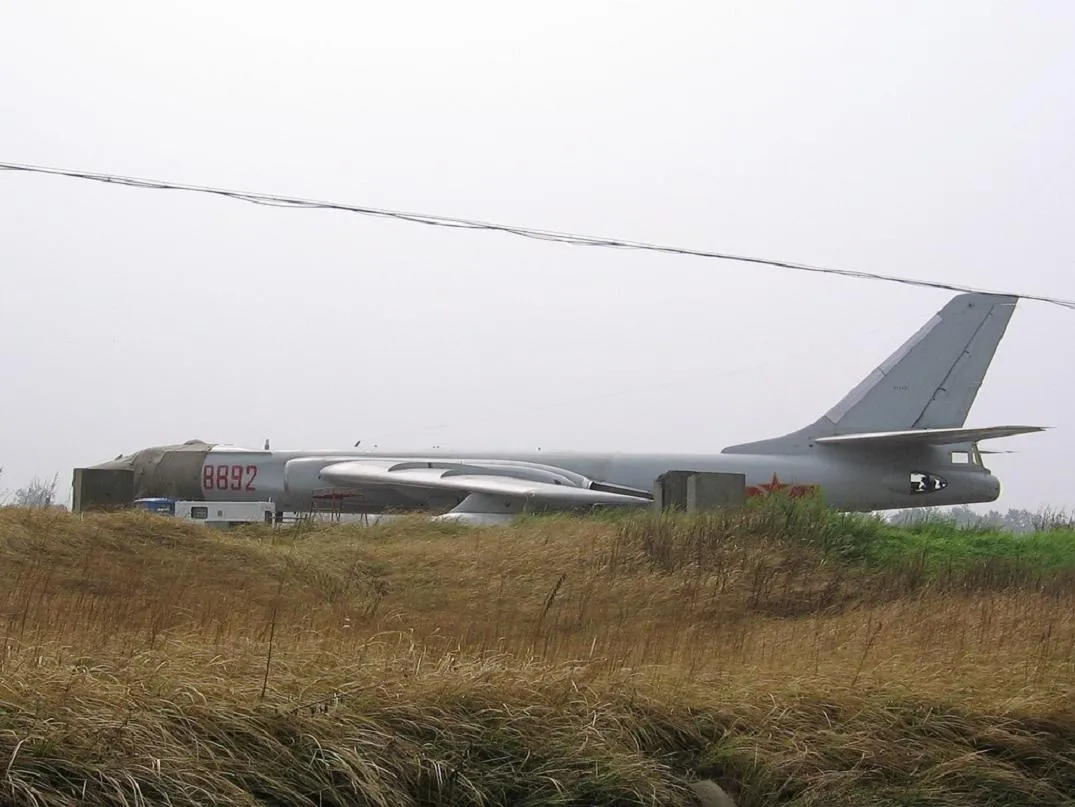
The H-6 family began as a Chinese-built Tu-16/Badger bomber and evolved through nuclear, maritime-strike, tanker, and standoff-missile variants. Open sources vary on some late-variant details, so the rows below emphasize widely documented roles.
| Variant | Configuration | Designation notes |
|---|---|---|
| H-6A | Early nuclear-capable bomber | Early H-6 family bomber branch associated with China's nuclear-delivery role after the original Chinese Badger production line matured. |
| H-6D / B-6D | Maritime strike bomber | H-6A derivative fitted with maritime-search/fire-control equipment and two underwing C-601/YJ-6 anti-ship missiles; four H-6 bombers with C-601 missiles were sold to Iraq in the late 1980s. Sources: H-6D Bomber, Xian H-6 Badger |
| H-6H / H-6M | Cruise-missile carrier | Later missile-carrier branches removed or deemphasized legacy gun/bombing arrangements and added external pylons for standoff missiles. |
| H-6K | Modern standoff bomber | DoD reporting describes the H-6K as a modernized H-6 with more efficient turbofans, standoff weapons, six land-attack cruise missiles, and YJ-12 anti-ship missile carriage. Sources: 2024 China Military Power Report, PLA Air Force Bomber Force Organization |
| H-6J | Naval aviation maritime-strike variant | Open reporting treats the H-6J as a naval aviation maritime-strike branch associated with modern anti-ship missile carriage. Sources: 2024 China Military Power Report, H-6 Technical Data |
| H-6N | Refuelable long-range strike / nuclear-triad platform | DoD describes the H-6N as an H-6K derivative with aerial refueling and external air-launched ballistic missile carriage, operationally fielded for the PRC's nuclear-triad air component. Sources: 2024 China Military Power Report, China Unveils New Long-Range Strategic Bombers |
| H-6U / HY-6 | Aerial refueling tanker | Tanker conversion branch used for probe-and-drogue aerial refueling support. Sources: PLA Air Force Bomber Force Organization, Xian H-6 Badger |
Carried Munitions
The family spans gravity-bomb, anti-ship, land-attack cruise-missile, and modern standoff payloads; the linked munition below is the directly cataloged Tanker War weapon.
| Carried item | Item type | Carriage evidence |
|---|---|---|
![]() | Air-launched anti-ship cruise missile | The H-6D/B-6D maritime-strike variant carried two C-601/YJ-6 missiles underwing; Iraqi H-6Ds used that missile combination during the Tanker War phase of the 1980 Iran-Iraq War. Sources: H-6D Bomber, China's H-6 Bomber |
Timeline
Xi'an H-6 Key Events
Chinese Tu-16 assembly begins
China received Soviet Tu-16 bombers in 1959 and began the production line that became the H-6 family.
First Chinese H-6 flight
GlobalSecurity says the first Chinese H-6 Badger took off in December 1968.
H-6D first flight
GlobalSecurity says the H-6D maritime-strike prototype first flew on 29 August 1981.
H-6D design certified
GlobalSecurity says the H-6D design was certified in December 1985 after testing with C-601/YJ-6 missile carriage.
Tanker War strike
Iraqi H-6D/B-6D bombers armed with C-601 anti-ship missiles entered the Tanker War record with the 5 February 1988 Entekhab hit.
H-6N public debut
China publicly displayed H-6N and H-6K bombers during the 1 October 2019 National Day parade.
Related Weapon Systems