Air Defense

HQ-16 / LY-80

Also known as
  • Hong Qi-16
  • Hongqi-16
  • Red Flag-16
  • Red Banner-16

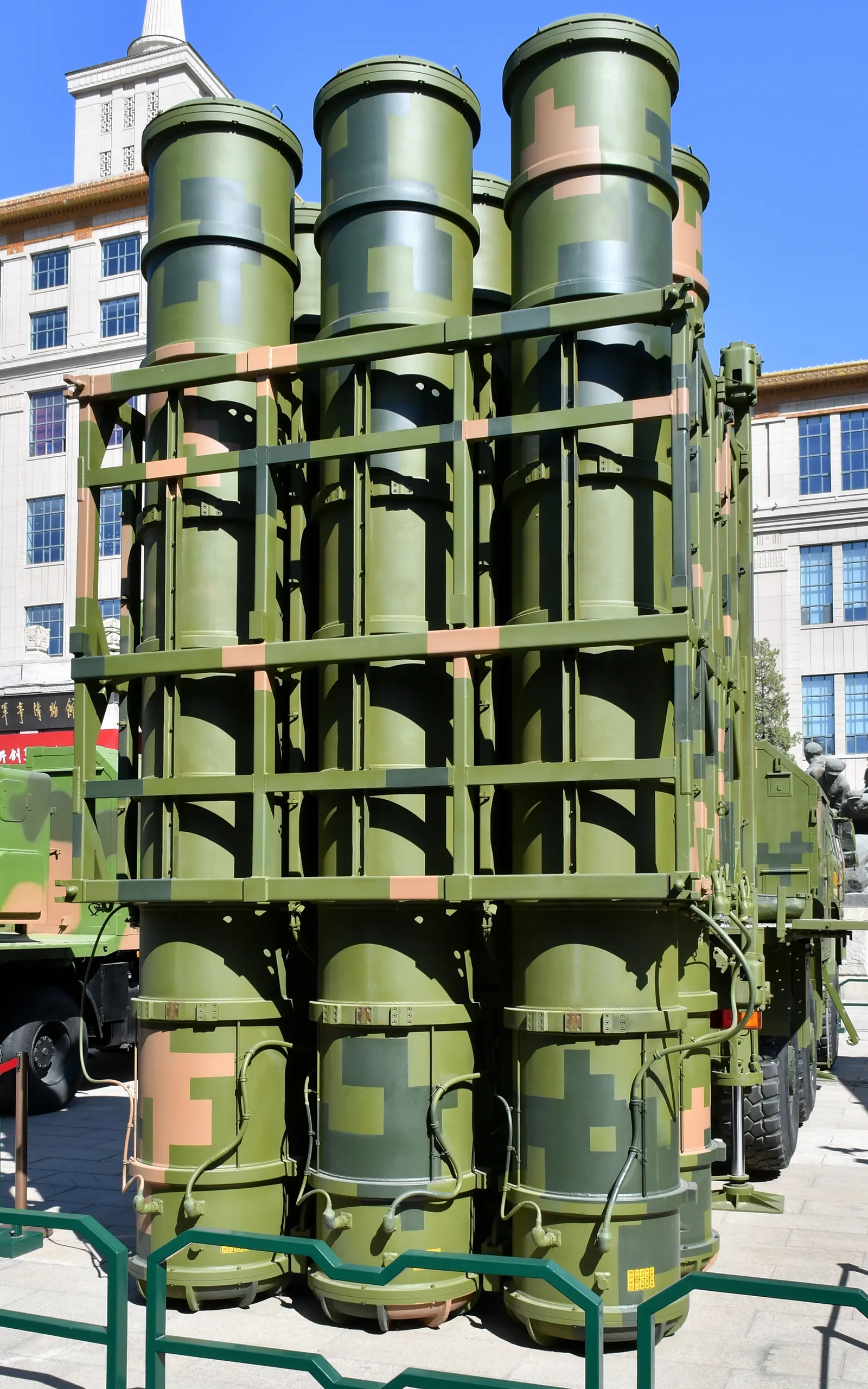
The HQ-16, exported as the LY-80 family, is a Chinese medium-range surface-to-air missile system spanning road-mobile land batteries and the ship-launched HHQ-16 branch. It fills the layer between short-range point defenses and long-range strategic SAMs, with six-canister land launchers, radar and command vehicles, and a naval VLS fit on Type 054A-family frigates. In the 2025 India-Pakistan Conflict, Indian government and Indian press reporting identified Pakistan as relying on imported HQ-16 systems during Operation Sindoor, making it a documented part of Pakistan's contested air-defense picture.

Role in Conflicts

Side
Pakistan

Pakistan fielded imported HQ-16/LY-80-family air-defense systems as part of its Chinese-supplied air-defense network during Operation Sindoor; public reporting on their performance is largely based on Indian government claims and should be treated as disputed.

Profile / Specs

Profile

Origin
China
Type
Medium-range surface-to-air missile system
Service note
Entered Chinese service in the early 2010s; exported to Pakistan as the LY-80 family
Designer
Shanghai Academy of Spaceflight Technology, with reported Russian Buk-family design influence
Designed
Development reported from the mid-2000s
Unit cost
Pakistan reportedly ordered six LY-80 systems for $373 million between 2014 and 2015
Produced
2010s-present
Number built
Not publicly confirmed

Specifications

Role
Ground-based and shipborne medium-range air defense for troops, critical assets, and fleet air defense
Range
About 40 km for baseline HQ-16/HQ-16A-family references; about 70 km for HQ-16B/C in public references; HQ-16FE is reported separately at up to 160 km against aircraft
Guidance
Baseline family references describe semi-active radar homing; HQ-16FE reporting adds SARH plus active radar homing in the final stage
Targets
Aircraft, UAVs, cruise missiles, air-to-ground missiles, low-flying aircraft, and reported short- or medium-range ballistic-missile threats depending on variant/source
Launcher
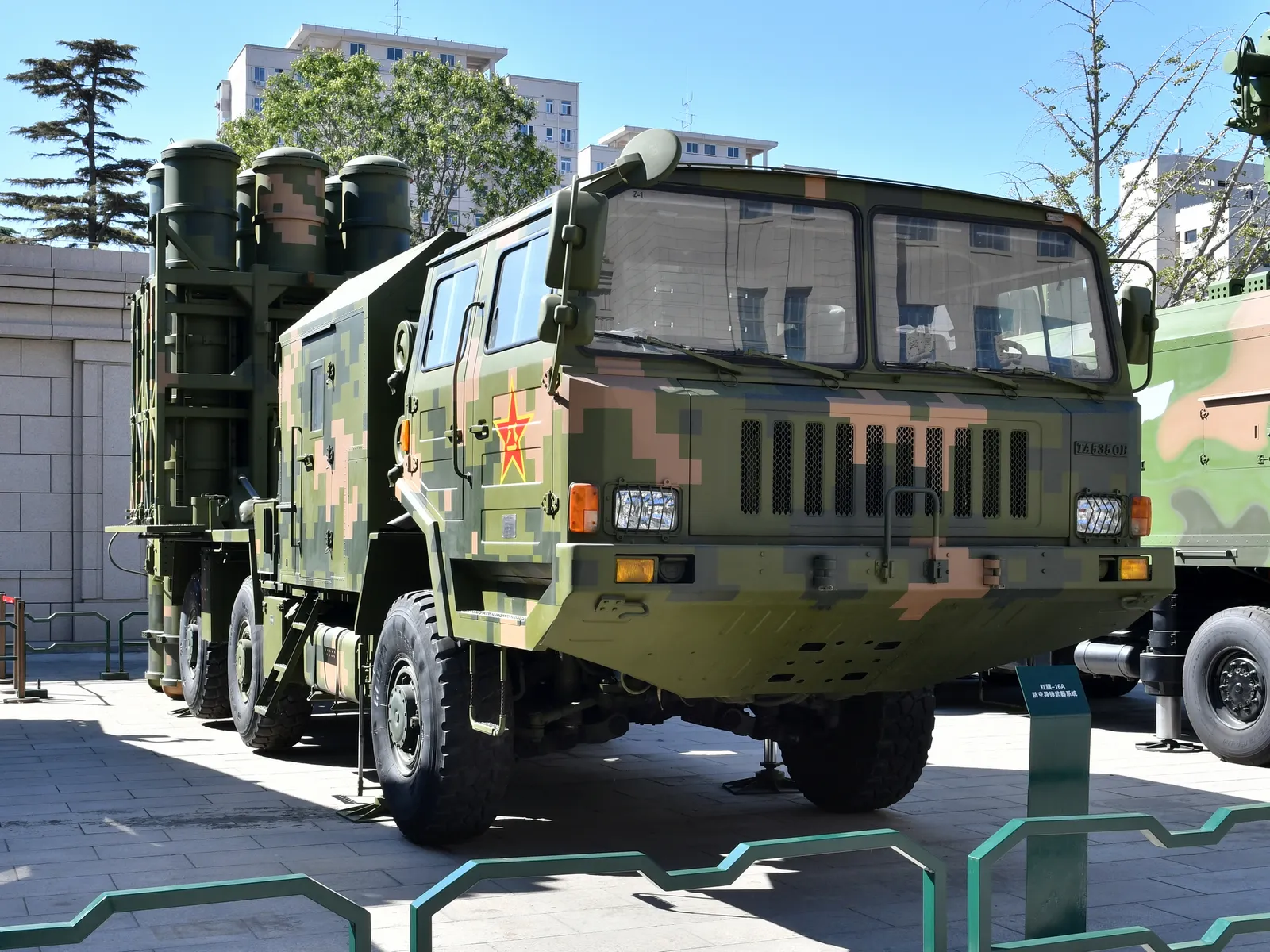
Road-mobile vertical-launch land launcher with six missile canisters; LY-80N is a shipboard missile-in-canister system with shipborne and support equipment
Battery
Typically described with launch vehicles, command-and-control, radar vehicles, power supply, and support equipment
Naval integration
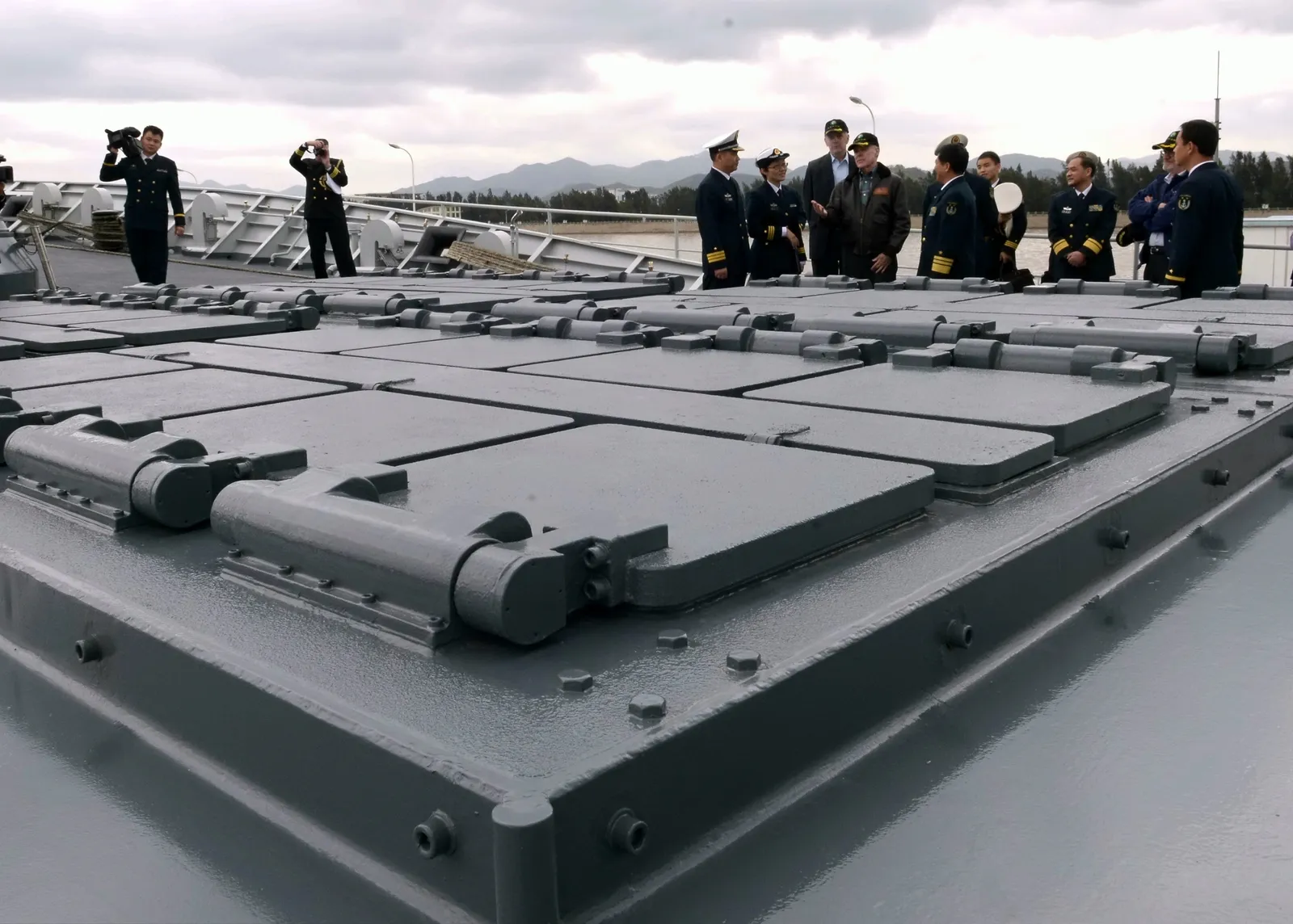
HHQ-16 / Red Flag-16 is documented as a 32-cell vertical-launch ship-to-air missile fit on Type 054A-family frigates
Variants

HQ-16 family designations mix domestic land variants, naval HHQ-16/LY-80N shipboard systems, and export labels. Public sources support LY-80 as an export land-system label, but they do not consistently map every LY-80 reference to one domestic HQ-16A, HQ-16B, or HQ-16BE block.

VariantConfigurationDesignation notes
HQ-16ABaseline land-based system

The U.S. Army ODIN entry identifies the HQ-16/HQ-16A as the Chinese 6x6 medium-range SAM system, while DSIAC identifies Pakistan's 2017 LY-80 induction as the HQ-16A in Chinese service.

Sources: HQ-16 (HQ-16A) Chinese 6x6 Medium-Range Surface-to-Air Missile System, Pakistan Strengthens Low-to-Medium Altitude Air Defense

HQ-16BExtended-range land variant

Missile Defense Advocacy Alliance lists HQ-16B as a follow-on variant and places HQ-16B/HQ-16C in the roughly 70 km range class.

Sources: HQ-16

HQ-16CLater extended-range branch

Missile Defense Advocacy Alliance describes HQ-16C as a later development in the same family, with public details more limited than the HQ-16A/B branch.

Sources: HQ-16

HHQ-16Naval ship-launched variant

Reference sources identify HHQ-16 as the naval branch, and GlobalSecurity identifies Type 054A frigates as using a 32-cell Red Flag-16 / HQ-16 ship-to-air missile launcher.

Sources: HQ-16, Jiangkai Type 054 Frigate

LY-80Export land-system label

SAST markets LY-80 as a medium-range export air-defense weapon system; DSIAC identifies Pakistan's inducted LY-80 as known in China as HQ-16A, while SAST's current product page also pairs LY-80 with the HQ-16BE designation.

Sources: SAST: LY Series, SAST: LY-80 (HQ-16BE) Medium Range Surface-to-Air Missile Weapon System, Pakistan Strengthens Low-to-Medium Altitude Air Defense

LY-80NExport ship-to-air system

SAST identifies LY-80N as a ship-to-air missile weapon system and labels the current product page HQ-16E; Dawn reported a Pakistan Navy LY-80(N) live firing from a vertical launch system in January 2026.

Sources: SAST: LY Series, SAST: LY-80N (HQ-16E) Ship-to-Air Missile Weapon System, Dawn: Pakistan Navy Successfully Tests Surface-to-Air Missile at Sea

HQ-16FENewer export-oriented branch

Defense-show reporting identifies HQ-16FE as a SAST-presented HQ-16 variant at Airshow China 2022; Al Jundi reports a larger advertised engagement envelope and SARH plus active-radar final-stage guidance.

Sources: Army Recognition: Zhuhai Airshow 2022 HQ-16FE, Al Jundi: China Unveils Modern Air Defence System

Shipboard Launch Platforms

The HQ-16 family includes a naval branch used from vertical-launch cells on Type 054A-family frigates.

CarrierCarrier typeCarriage evidence
Type 054A / Jiangkai II-class frigate, Chinese People's Liberation Army Navy multi-role frigate class, Naval SystemsType 054A / Jiangkai II-class frigateFrigate-mounted VLS platform

GlobalSecurity identifies the Type 054A as carrying a 32-cell Red Flag-16 / HQ-16 ship-to-air missile launcher, and the Commons image source shows HQ-16 VLS launchers on Xuzhou, a Type 054A frigate.

Sources: Jiangkai Type 054 Frigate, HQ-16 VLS SAM Launchers

Designation Split

The HQ-16 family uses overlapping domestic, naval, and export labels rather than a clean single sequence. LY-80 should be treated as an export land-system label unless a source identifies the exact domestic block.

Land branch

HQ-16A is the baseline land system; HQ-16B and HQ-16C are public extended-range family labels.

Export land label

LY-80 appears in sources as Pakistan's inducted system and in SAST marketing as LY-80 (HQ-16BE).

Do not treat every LY-80 reference as the same range block.

Naval labels

HHQ-16 is the Chinese naval family label; SAST markets LY-80N as HQ-16E for shipboard use.

HQ-16FE

HQ-16FE was reported at Airshow China 2022 with a much larger advertised engagement envelope.

Layered Air-Defense Context

HQ-9 appears alongside HQ-16 in source-backed reporting on Pakistan's Chinese-supplied air-defense network during Operation Sindoor. This is an operational-context link for Pakistan's layered air-defense picture, not a technical launch or compatibility relationship.

Sources: Akashteer: The Unseen Force Behind India's New War Capability; How Pakistan's Imported HQ-9 and HQ-16 Failed but India's Indigenous Akashteer Proved Its Mettle.

Timeline

HQ-16 / LY-80 Key Events

  1. Development reported

    Open-source references place HQ-16 development in the mid-2000s, with the system later emerging as a Chinese medium-range air and missile defense layer.

    Sources: Army Recognition: Zhuhai Airshow 2022 HQ-16FE

  2. Chinese service baseline

    Reference data places initial HQ-16 operational service in the early 2010s, with HQ-16A, HQ-16B, and HHQ-16 forming the active family branches identified in public airpower tracking.

    Sources: Army Recognition: Zhuhai Airshow 2022 HQ-16FE, HQ-16 Technical Data

  3. HQ-16B extended-range branch reported

    Public reporting identified HQ-16B as an upgraded branch with revised missile features and an approximately 70 km range class.

    Sources: HQ-16, Army Recognition: Zhuhai Airshow 2022 HQ-16FE

  4. Pakistan inducts LY-80

    Pakistan inducted the Chinese-made LY-80 low-to-medium-altitude air-defense system, adding the HQ-16A export branch to its ground-based air-defense network.

    Sources: Dawn: Army Inducts Chinese-Built Air Defence System to Its Arsenal, Pakistan Strengthens Low-to-Medium Altitude Air Defense

  5. HQ-16FE displayed at Zhuhai

    Chinese media later described the HQ-16FE as an export-oriented advanced air-defense system displayed at Airshow China 2022, with a stronger anti-deception and longer-range branch than earlier variants.

    Sources: Army Recognition: Zhuhai Airshow 2022 HQ-16FE, Al Jundi: China Unveils Modern Air Defence System

  6. Operation Sindoor reporting names HQ-16

    Indian government and Indian press reporting identified Pakistan's imported HQ-16 systems in the Operation Sindoor air-defense contest, while performance claims remained disputed and source-limited.

    Sources: Akashteer: The Unseen Force Behind India's New War Capability, How Pakistan's Imported HQ-9 and HQ-16 Failed but India's Indigenous Akashteer Proved Its Mettle

  7. Pakistan Navy LY-80(N) live fire reported

    Dawn reported an ISPR statement that Pakistan Navy fired an LY-80(N) surface-to-air missile from a vertical launch system during a North Arabian Sea exercise.

    Sources: Dawn: Pakistan Navy Successfully Tests Surface-to-Air Missile at Sea

Media
Related Weapon Systems
HQ-9, Long-range surface-to-air missile system, Air DefenseAir DefenseHQ-9Long-range surface-to-air missile systemThe HQ-9 is a Chinese road-mobile long-range surface-to-air missile family associated with CASIC and CPMIEC export marketing. Four-canister 8x8 launchers, HT-233-family fire-control radars, naval HHQ-9 and FD-2000 export designations make it a layered air-defense system rather than a single missile round; public conflict coverage now centers on Chinese island deployments in the South China Sea and Pakistan's HQ-9/P/HQ-9BE layer in the 2025 India-Pakistan conflict.
Type 054A / Jiangkai II-class frigate, Chinese People's Liberation Army Navy multi-role frigate class, Naval SystemsNaval SystemsType 054A / Jiangkai II-class frigateChinese People's Liberation Army Navy multi-role frigate classThe Type 054A / Jiangkai II-class frigate is a Chinese multi-role guided-missile frigate class that developed the two-ship Type 054 design into a serial PLAN escort with medium-range vertical-launch air defense, anti-ship missiles, anti-submarine weapons, and helicopter facilities. Later batches and export derivatives kept the same basic escort concept while changing sensors, close-in defenses, aviation support, and customer-specific weapons.

Sources