Air Defense

HQ-9

Also known as
  • Hongqi-9
  • Hong Qi 9
  • HQ-9A
  • HQ-9B
  • HQ-9C
  • HHQ-9
  • HHQ-9A
  • HHQ-9B
  • HQ-9/P
  • HQ-9BE
  • FD-2000
  • FD-2000B
  • FT-2000

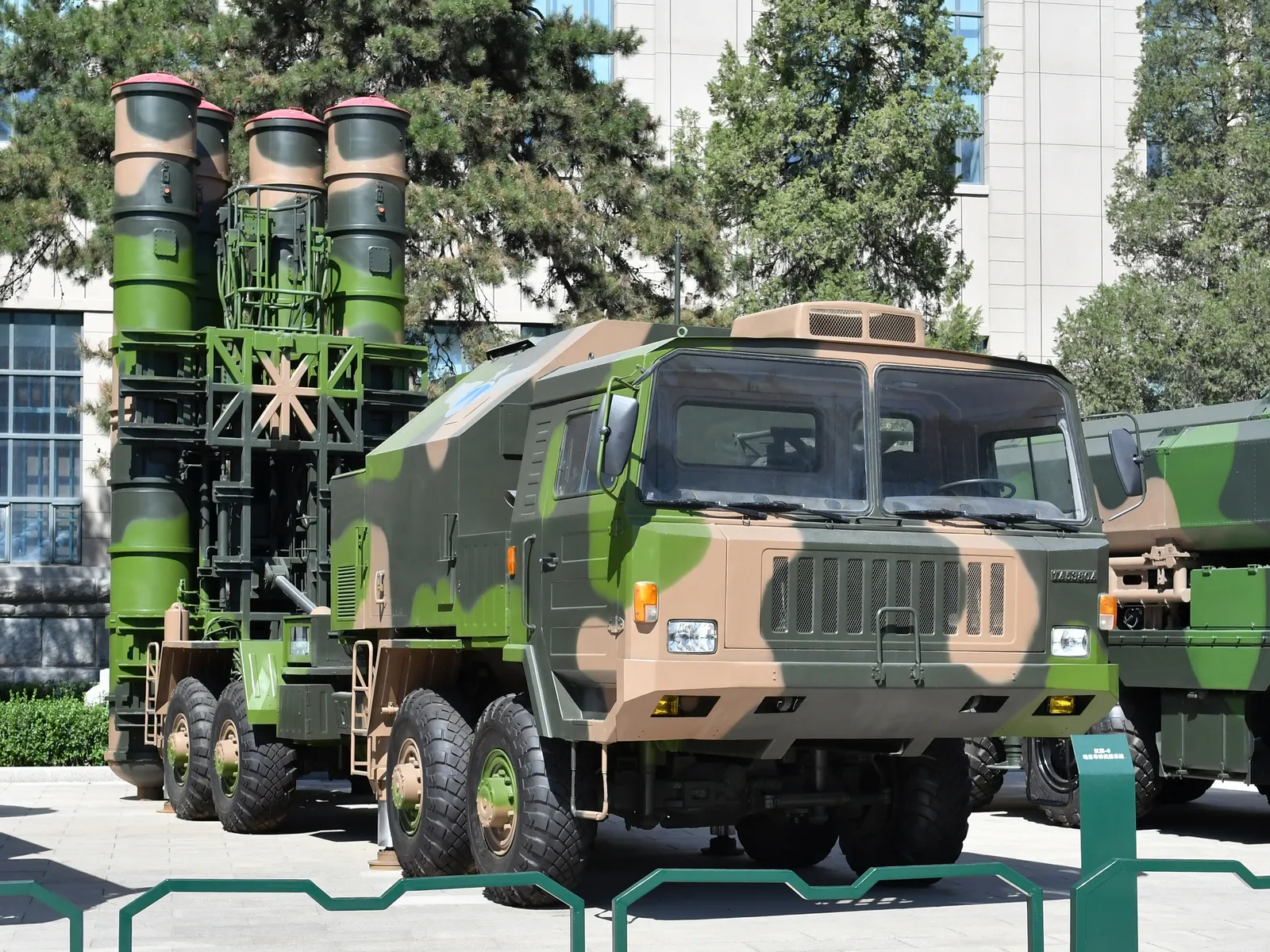
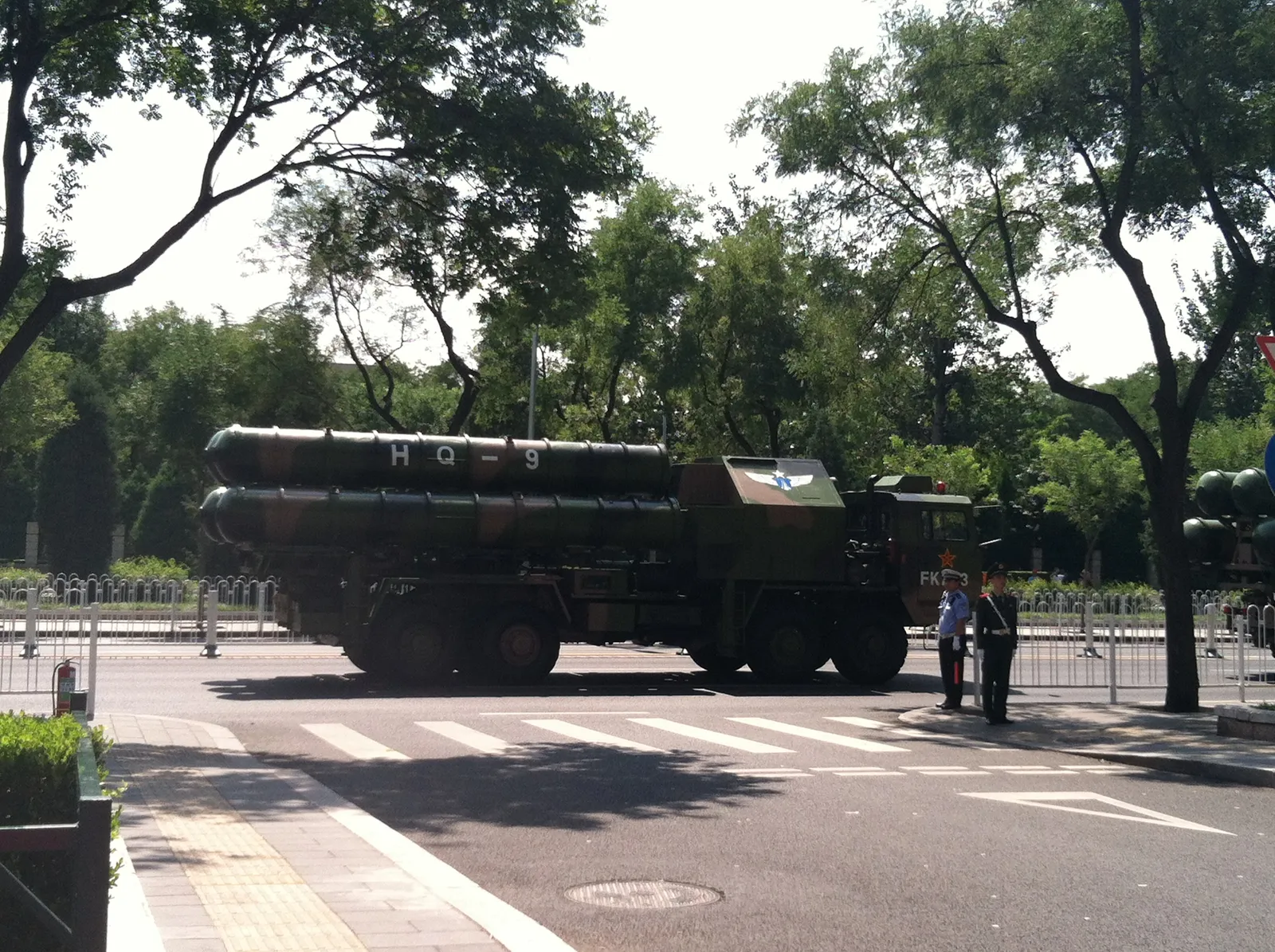
The HQ-9 is a Chinese road-mobile long-range surface-to-air missile family associated with CASIC and CPMIEC export marketing. Four-canister 8x8 launchers, HT-233-family fire-control radars, naval HHQ-9 and FD-2000 export designations make it a layered air-defense system rather than a single missile round; public conflict coverage now centers on Chinese island deployments in the South China Sea and Pakistan's HQ-9/P/HQ-9BE layer in the 2025 India-Pakistan conflict.

Role in Conflicts

Side
Pakistan

Pakistan fielded HQ-9/P and HQ-9BE systems as part of its long-range air-defense layer during the May 2025 India-Pakistan conflict; Indian official claims about HQ-9 performance and the Lahore air-defense strike remain one-sided or do not always identify the exact system.

Profile / Specs

Profile

Origin
China
Type
Long-range surface-to-air missile system
Service note
Development and service reported from the late 1990s; Pakistan's HQ-9/P entered service in 2021
Designer
China Aerospace Science and Industry Corporation (CASIC)
Designed
1997
Unit cost
Not publicly disclosed
Produced
1997-present
Number built
Not publicly disclosed

Specifications

Role
Ground-based, road-mobile long-range air and missile defense; naval HHQ variants serve as shipboard area-air-defense missiles
Engagement range
Published figures vary by variant and target type: baseline/HQ-9 family sources cluster around 120-200 km, HQ-9B and enhanced export reporting reaches the 250-300 km class, and Pakistan's HQ-9/P is reported at about 125 km against aircraft and about 25 km against cruise missiles
Targets
Aircraft, helicopters, UAVs, guided bombs, air-to-ground missiles, cruise missiles, and tactical ballistic missiles
Launcher
Normally four canisterized missiles on a Taian/TAS5380-class 8x8 transporter-erector-launcher; public HQ-9B reporting shows an eight-smaller-missile load option on the same TEL class
Guidance
Track-via-missile architecture using inertial guidance, mid-course uplink, and terminal radar guidance; later HQ-9B/HQ-9C/HQ-9BE reporting describes seeker changes including active radar homing or passive infrared additions
Representative radar set
FD-2000/HQ-9 export descriptions list HT-233 target-acquisition or engagement radar, Type 120 low-altitude radar, Type 305A/305B search radars, and optional YLC-20 passive radar
Missile dimensions
About 6.8 m long and roughly 2,000 kg, with 700 mm first-stage and 560 mm second-stage diameters in open technical summaries
Warhead
About 180 kg
Launcher And Export Architecture

The HQ-9 page is best read as a missile-system family: a battery combines launch vehicles, command vehicles, engagement and search radars, and reload/support equipment rather than only a missile round.

Land system

Baseline HQ-9 and FD-2000 descriptions center on four-round vertical TELs and HT-233-family radar support.

Export labels

FD-2000 is the standard export designation, while FD-2000B and HQ-9BE mark longer-range enhanced export configurations in current open reporting.

Pakistan service

HQ-9/P is described in Pakistan Army service as HIMADS and as part of the wider Comprehensive Layered Integrated Air Defence network.

Variants

Public sources treat HQ-9 as a Chinese long-range SAM family with domestic land-based variants, HHQ naval variants, Pakistan-specific HQ-9/P service, and FD-2000/HQ-9BE export designations. Exact seeker and range claims vary by source, so variant notes distinguish baseline, extended-range, naval, and export designations without treating every label as identical.

VariantConfigurationDesignation notes
HQ-9AImproved domestic variant

Reported as an upgraded HQ-9 version first tested in 1999 and entering service in 2001.

Sources: HQ-9 Air Defense Missile System, HQ-9

HQ-9BExtended-range domestic variant

Janes describes the HQ-9B as an improved HQ-9/HQ-9A variant with at least 200 km engagement range and possible dual-mode seeker features; Chinese reporting also showed an HQ-9B launcher carrying eight smaller missiles alongside the older four-missile arrangement.

Sources: China deploys upgraded HQ-9B surface-to-air missile

HQ-9CActive-radar-homing development branch

Open sources describe HQ-9C as a development variant intended to use active radar homing.

Sources: HQ-9 Air Defense Missile System, HQ-9

HHQ-9Naval VLS variant

Open references identify HHQ-9 as the naval version of the HQ-9 family.

Sources: HQ-9 Air Defense Missile System

HHQ-9ANaval HQ-9A variant

Public variant summaries identify HHQ-9A as the naval counterpart to HQ-9A.

Sources: HQ-9 Air Defense Missile System

HHQ-9BNaval HQ-9B variant

Public variant summaries identify HHQ-9B as the naval counterpart to HQ-9B.

Sources: HQ-9 Air Defense Missile System

HQ-9/PPakistan Army HIMADS variant

Pakistan Army service designation for the Chinese-made HQ-9 variant inducted at Army Air Defence Centre Karachi on 14 October 2021; Janes reports more than 100 km range against aircraft and a much shorter estimated cruise-missile range of about 25 km.

Sources: Pakistan Army commissions HQ-9/P air-defence system

HQ-9BEEnhanced export variant in Pakistan reporting

Quwa distinguishes the PAF's HQ-9BE from the Army's HQ-9/P and reports a longer 260-280 km range class.

Sources: HQ-9 Long-Range Air Defence System

FD-2000Baseline export designation

The FD-2000 is the standard export designation for the HQ-9 family, with four-container TELs, HT-233-family radar support, and a 125 km class range in Army Recognition and Quwa summaries.

Sources: FD-2000 Long-Range Air Defense Missile System, HQ-9 Long-Range Air Defence System

FD-2000BEnhanced export designation

Army Recognition and Quwa describe FD-2000B as an improved export version with longer range and an added passive infrared seeker.

Sources: FD-2000 Long-Range Air Defense Missile System, HQ-9 Long-Range Air Defence System

FT-2000Passive-homing derivative

Army Recognition lists FT-2000 as a passive-homing HQ-9-family derivative tied to passive surveillance support.

Sources: FD-2000 Long-Range Air Defense Missile System

Timeline

HQ-9 Key Events

  1. HQ-9 reaches initial operational capacity

    Open technical references place HQ-9 initial operational capacity in 1997.

    Sources: HQ-9, HQ-9 Air Defense Missile System

  2. HQ-9A first tested

    Public variant summaries identify HQ-9A as first tested in 1999 before entering service in 2001.

    Sources: HQ-9 Air Defense Missile System

  3. HQ-9A enters service

    Public variant summaries report HQ-9A entering service in 2001 with upgraded electronics and software.

    Sources: HQ-9 Air Defense Missile System

  4. HQ-9 deployed on Woody Island

    CSIS AMTI and RAND analysis documented Chinese HQ-9 surface-to-air missiles on Woody Island in the disputed Paracels.

    Sources: Seeing the Forest through the SAMs on Woody Island, Beijing Ups the Ante in South China Sea Dispute with HQ-9 Deployment

  5. Pakistan inducts HQ-9/P

    Pakistan Army air-defense forces inducted the Chinese-made HQ-9/P in a Karachi ceremony on 14 October 2021.

    Sources: Pakistan Army commissions HQ-9/P air-defence system, High-tech systems induction to make Pakistan air defence impenetrable

  6. HQ-9B shown at Airshow China

    Janes reported that China unveiled an upgraded HQ-9B at Airshow China 2022 and later showed PLA footage of the system in Central Theater Command service.

    Sources: China deploys upgraded HQ-9B surface-to-air missile

Media
Related Weapon Systems
HQ-16 / LY-80, Medium-range surface-to-air missile system, Air DefenseAir DefenseHQ-16 / LY-80Medium-range surface-to-air missile systemThe HQ-16, exported as the LY-80 family, is a Chinese medium-range surface-to-air missile system spanning road-mobile land batteries and the ship-launched HHQ-16 branch. It fills the layer between short-range point defenses and long-range strategic SAMs, with six-canister land launchers, radar and command vehicles, and a naval VLS fit on Type 054A-family frigates. In the 2025 India-Pakistan Conflict, Indian government and Indian press reporting identified Pakistan as relying on imported HQ-16 systems during Operation Sindoor, making it a documented part of Pakistan's contested air-defense picture.
Type 053H3 / Jiangwei II-class frigate, Chinese guided-missile frigate class, Naval SystemsNaval SystemsType 053H3 / Jiangwei II-class frigateChinese guided-missile frigate classThe Type 053H3 / Jiangwei II-class frigate is a Chinese guided-missile frigate class built as the improved Jiangwei follow-on for the People's Liberation Army Navy. Open naval references describe ten ships produced from 1996 to 2005, a CODAD machinery plant, YJ-83 or export anti-ship missiles, HHQ-7 short-range air defense, anti-piracy escort deployments off Somalia, South China Sea shadowing activity, Taiwan Strait presence, and later transfer of two ex-PLAN hulls into Bangladesh Navy service.
Type 075 / Yushen-class landing helicopter dock, Chinese People's Liberation Army Navy amphibious assault ship or landing helicopter dock class, Naval SystemsNaval SystemsType 075 / Yushen-class landing helicopter dockChinese People's Liberation Army Navy amphibious assault ship or landing helicopter dock classThe Type 075, also known as the Yushen-class, is a Chinese People's Liberation Army Navy landing helicopter dock class that gives China a large-deck amphibious aviation platform above the earlier Type 071 transport dock. Hudong-Zhonghua-built ships in the class combine helicopter spots, aircraft elevators, a hangar, vehicle space, and a well deck for landing craft, with source-backed dispute-context deployments and training in the South China Sea.
Harpoon Coastal Defense System (HCDS), Mobile coastal anti-ship missile system, Naval SystemsNaval SystemsHarpoon Coastal Defense System (HCDS)Mobile coastal anti-ship missile systemHarpoon Coastal Defense System (HCDS) is a land-based Harpoon launch-system package built around mobile launcher transporter units, radar trucks, command-and-launch equipment, and RGM-84L-4 Harpoon Block II missiles. U.S. records identify Boeing as the principal contractor for Taiwan's HCDS sale, document follow-on launcher and missile-package contracts, and separately record two Harpoon coastal defense systems funded for Ukraine after Russia's full-scale invasion.

Sources