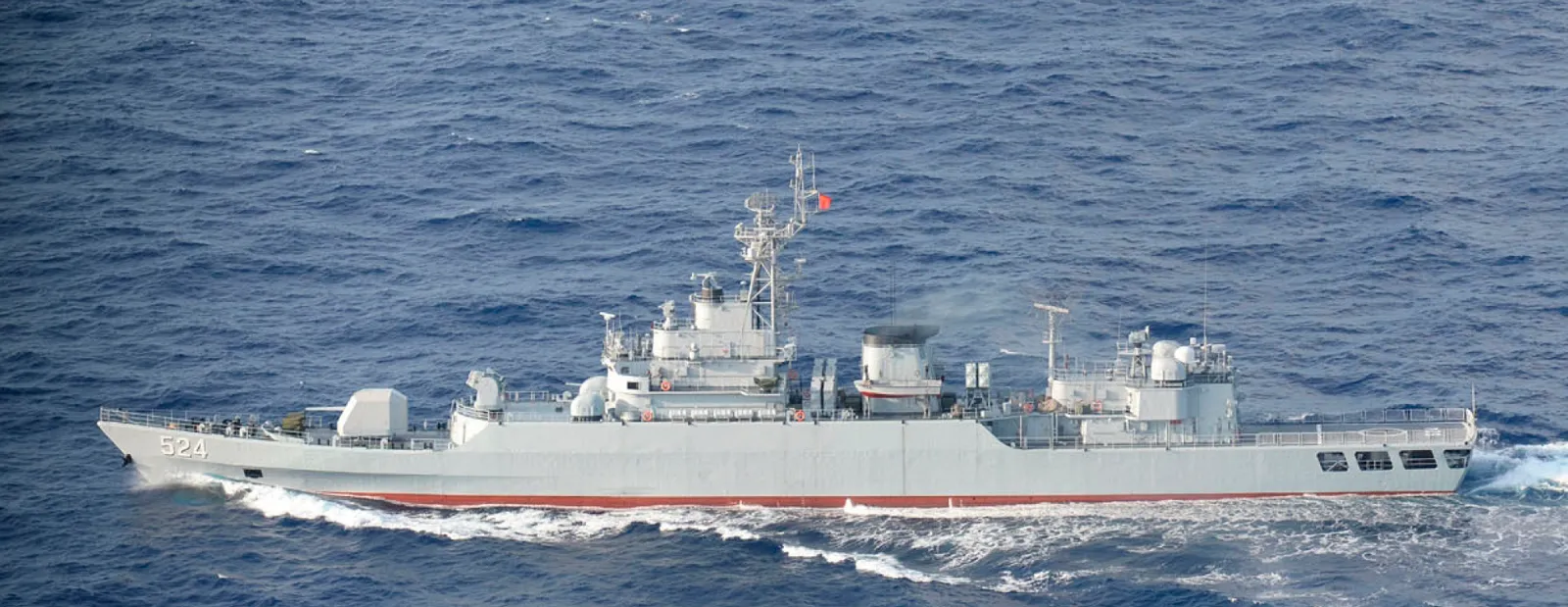


Type 053H3 frigates including Mianyang and Luoyang were documented in Chinese Gulf of Aden and Somali waters anti-piracy escort task force deployments protecting merchant shipping.
Naval Systems
Type 053H3 / Jiangwei II-class frigate
Also known as
- Jiangwei II
- Jiangwei II class
- Type 053H3
- Type 053H3 frigate
- Type 053H3 / Jiangwei II class frigate
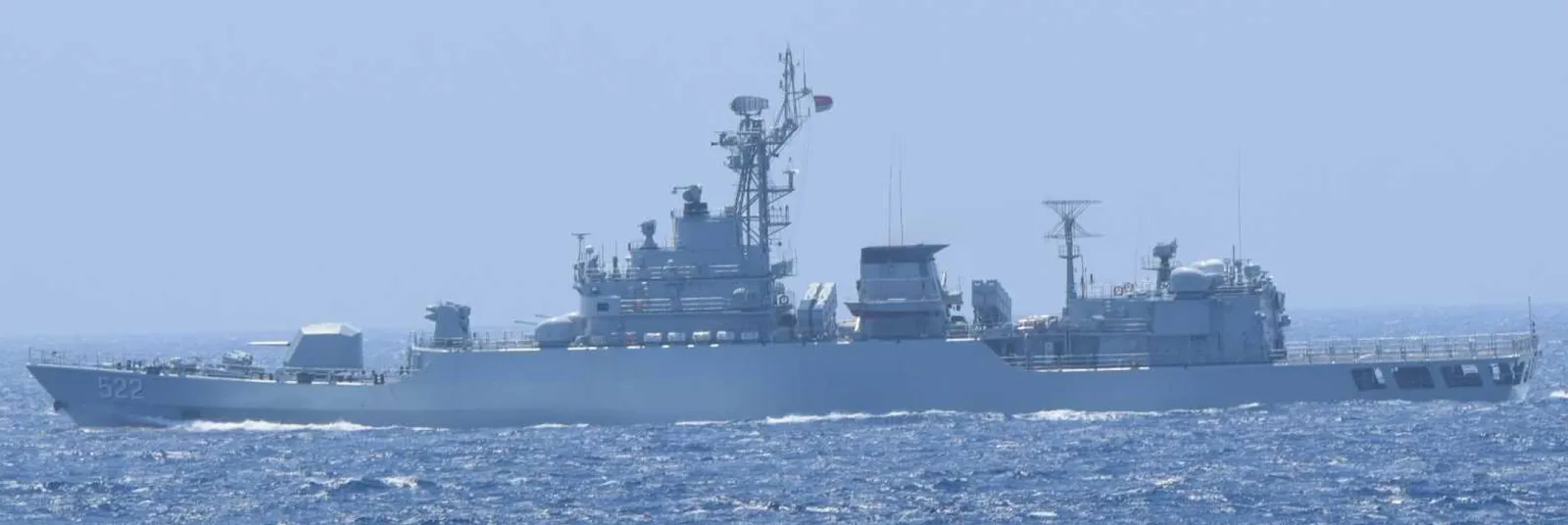
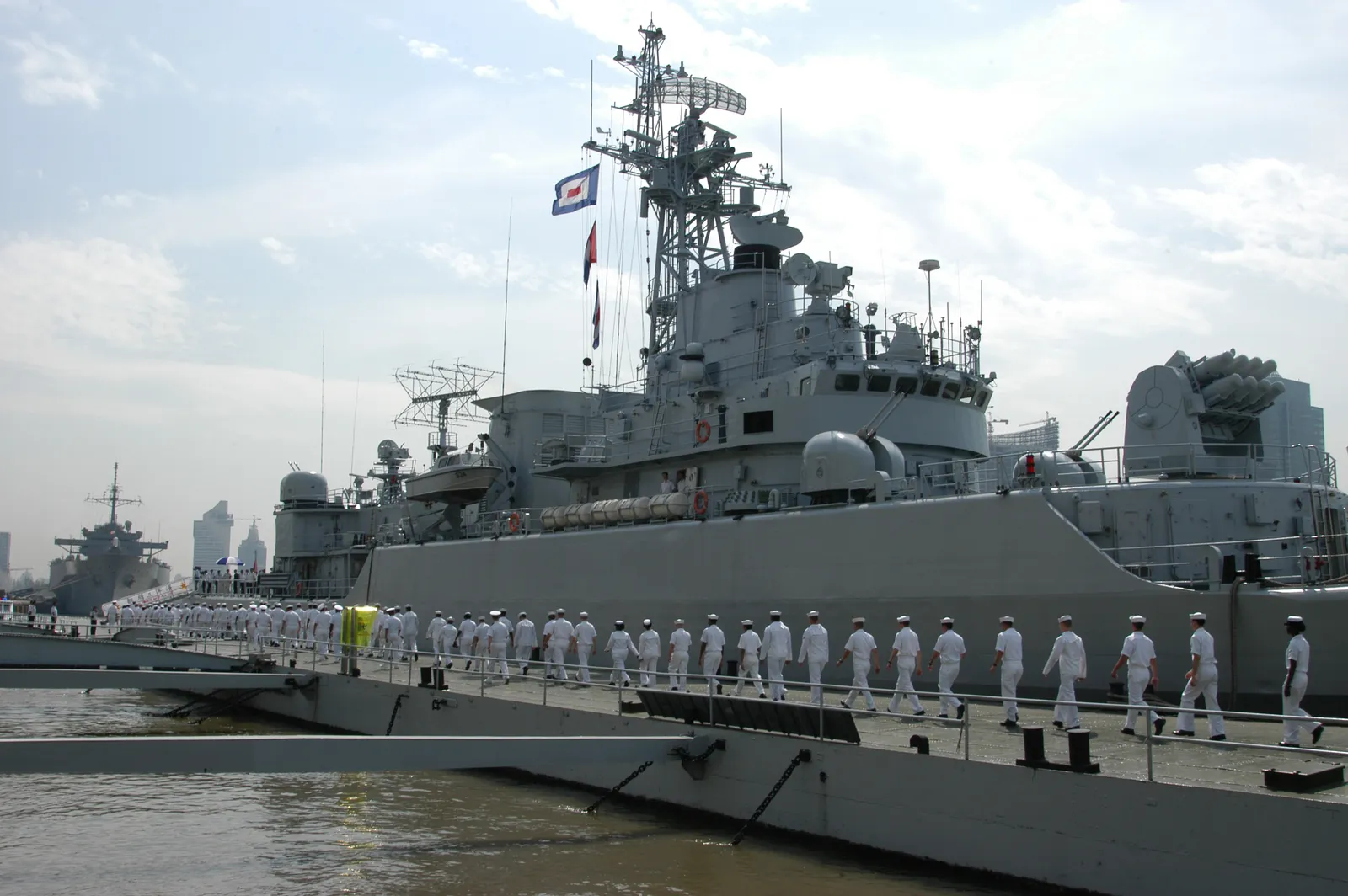
The Type 053H3 / Jiangwei II-class frigate is a Chinese guided-missile frigate class built as the improved Jiangwei follow-on for the People's Liberation Army Navy. Open naval references describe ten ships produced from 1996 to 2005, a CODAD machinery plant, YJ-83 or export anti-ship missiles, HHQ-7 short-range air defense, anti-piracy escort deployments off Somalia, South China Sea shadowing activity, Taiwan Strait presence, and later transfer of two ex-PLAN hulls into Bangladesh Navy service.
Role in Conflicts
- Side
- People's Republic of China

USNI News reported that PLAN Type 053H3 frigate CNS Luoyang (527) shadowed HMCS Montreal during a Spratly Islands transit in the South China Sea in August 2024.
- Side
- People's Republic of China
Taipei Times reported that Chinese Type 053H3 Jiangwei-class frigate activity had been entering Taiwanese waters since early August 2022, during the post-Pelosi Taiwan Strait crisis period.
Profile / Specs
Profile
- Origin
- People's Republic of China
- Type
- Chinese guided-missile frigate class
- Service note
- 1996-2005
- Produced
- 1996-2005
- Number built
- 10
- Developed from
- Type 053H2G / Jiangwei I-class frigate
- Developed into
- Pakistan Navy F-22P / Zulfiquar-class frigate
Specifications
- Displacement
- About 2,250 tons standard; 2,393 tons full load
- Length
- 112 m
- Beam
- 12.4 m
- Draft
- 4.3 m
- Propulsion
- CODAD, two shafts, with 18E390VA and MTU diesels
- Speed
- About 28 knots
- Range
- About 5,000 nautical miles at 15 knots
- Crew
- About 168-170
- Anti-ship missiles
- Two quadruple launchers for YJ-83 or related export missiles
- Air defense
- One eight-cell HHQ-7 short-range SAM launcher; later PLAN upgrades reported with HHQ-10
- Aviation
- Hangar and landing spot for one Z-9C helicopter
Class Overview
The Type 053H3 kept the compact Jiangwei frigate layout but moved the class toward a fuller escort fit: anti-ship missiles, point air defense, a twin 100 mm gun, close-range gun mounts, ASW rockets, decoys, and a helicopter facility.
Build run
Ten ships, produced from 1996 to 2005.
WeaponSystems.net lists Hudong Shipyard in Shanghai and Huangpu Shipyard in Guangzhou as producers.
Lineage
Improved Type 053H2G/Jiangwei derivative.
The main cited distinction is the change from HQ-61B on the earlier class to HHQ-7 on Type 053H3.
Operators
PLAN service with two ex-PLAN ships transferred to Bangladesh.
Janes and Baird Maritime identify the Bangladesh ships as former PLAN Type 053H3 hulls.
Variants
The entry covers the Chinese Type 053H3/Jiangwei II class; closely related rows explain the immediate predecessor and export-derived family.
| Variant | Configuration | Designation notes |
|---|---|---|
 | Predecessor Jiangwei design | The Type 053H3 is described as an improved derivative of the Type 053H2G, replacing the earlier HQ-61B fit with an HHQ-7 naval SAM system. Sources: Type-053H3 class |
| Pakistan Navy F-22P / Zulfiquar-class frigate | Export-derived frigate family | GlobalSecurity describes the F-22P export class for Pakistan as based on the Jiangwei-II/Type 053H3 hull and machinery but modified with Pakistan-specific weapons, sensors, and command systems. Sources: Jiangwei-II Type 057 / Type 053H3 |
Launched Missiles
Open naval references identify container-launched anti-ship missiles as the class's main surface-strike battery, with source wording varying between PLAN YJ-83 and C-802 or export C-802A context.
| Launched item | Item type | Launch evidence |
|---|---|---|
 | PLAN anti-ship missile | Janes describes the PLAN fit on the transferred ships as eight YJ-83 anti-ship missiles in slant-mounted container launchers, while WeaponSystems.net lists two quadruple YJ-83 launchers on later ships in the class. Sources: China hands over two ex-PLAN frigates to Bangladesh Navy, Type-053H3 class |
 | Export anti-ship missile family | GlobalSecurity lists the Jiangwei-II fit as eight C-802 surface-to-surface missiles, while Janes noted that the Bangladesh-transfer ships may have received missiles aligned with the C-802A export version. Sources: GlobalSecurity Jiangwei specifications, China hands over two ex-PLAN frigates to Bangladesh Navy |
Bangladesh Transfer
Two decommissioned PLAN Type 053H3 frigates were overhauled in Shanghai and handed to the Bangladesh Navy in December 2019. Janes identified them as former Jiaxing and Lianyungang, while Baird Maritime later reported BNS Umar Farooq and BNS Abu Ubaidah entering Bangladesh Navy service on 5 November 2020.
Timeline
Type 053H3 / Jiangwei II-class frigate Key Events
Improved Jiangwei construction begins
GlobalSecurity places Hudong Shipyard's start of improved Jiangwei II construction in 1996, after the earlier Jiangwei series.
Class enters service
WeaponSystems.net lists 1998 as the Type 053H3 class service-entry year.
Ten-ship production run completed
Open reference sources list ten Type 053H3 frigates produced by Hudong and Huangpu yards between 1996 and 2005.
Two ex-PLAN hulls handed to Bangladesh
Janes reported that the ex-PLAN Type 053H3 frigates Jiaxing and Lianyungang were handed over to the Bangladesh Navy at Shanghai after overhaul.
Bangladesh commissions transferred frigates
Baird Maritime reported BNS Umar Farooq and BNS Abu Ubaidah entering Bangladesh Navy service as ex-PLAN Type 053H3 ships.
Media
Type 053H3 / Jiangwei II-class frigate Images
Related Weapon Systems


Sources
Jiangwei-II Type 057 / Type 053H3Publisher: GlobalSecurity.org | Note: Supports the Type 053H3 class background, successor relationship to the Type 053H2G, general armament context, export-derived F-22P relationship, and modernization context. | Accessed: 2026-07-03GlobalSecurity Jiangwei specificationsPublisher: GlobalSecurity.org | Note: Supports the Jiangwei-II armament list, including C-802 missiles, HQ-7 SAM, guns, torpedo tubes, Z-9 aircraft, radars, and baseline dimensions. | Accessed: 2026-07-03Type 053H3 / Jiangwei II Class FrigatesPublisher: Naval Technology | Note: Supports the class designation, coastal patrol role, and the anti-air and anti-submarine mission set described for the class. | Accessed: 2026-07-03Type-053H3 classPublisher: WeaponSystems.net | Note: Supports production years, producer yards, service-entry year, specifications, main armament, helicopter facility, and Type 053H2G derivative relationship. | Accessed: 2026-07-03China hands over two ex-PLAN frigates to Bangladesh NavyPublisher: Janes | Note: Supports the December 2019 handover of two ex-PLAN Type 053H3 frigates to Bangladesh and the reported PLAN missile and gun fit. | Accessed: 2026-07-03Five Bangladesh Navy ships commissioned into servicePublisher: Baird Maritime | Note: Supports the November 2020 commissioning of BNS Umar Farooq and BNS Abu Ubaidah as ex-PLAN Type 053H3 frigates. | Accessed: 2026-07-03China Maritime Report No. 44: Dirty But Preparing to FightPublisher: U.S. Naval War College / GovInfo | Note: Supports conflictUsage:2008 Somali Piracy / Operation Atalanta by documenting Type 053H3 frigate Luoyang in the 16th PLAN escort task force and its Gulf of Aden ship-protection duties. | Accessed: 2026-07-03Djibouti: China's First Overseas Strategic StrongpointPublisher: U.S. Naval War College China Maritime Studies Institute | Note: Supports conflictUsage:2008 Somali Piracy / Operation Atalanta by listing Type 053H3 frigates Mianyang and Luoyang in PLAN anti-piracy escort task force port-call records. | Accessed: 2026-07-03Escort Task Group of the Chinese Navy visits Cape TownPublisher: The Diplomatic Society | Note: Supports conflictUsage:2008 Somali Piracy / Operation Atalanta by identifying Type 053H3 frigate FFG-527 Luoyang in the 16th Escort Task Group after Gulf of Aden and Somali waters escort operations. | Accessed: 2026-07-03From the Great White North to the South China SeaPublisher: USNI News | Note: Supports conflictUsage:South China Sea Disputes by reporting PLAN Type 053H3 frigate CNS Luoyang shadowing HMCS Montreal during a Spratly Islands patrol transit. | Accessed: 2026-07-03Overhauled frigate project unveiledPublisher: Taipei Times | Note: Supports conflictUsage:2022 Fourth Taiwan Strait Crisis by reporting Chinese Type 053H3 Jiangwei-class frigate activity entering Taiwanese waters since early August 2022. | Accessed: 2026-07-03Category:Type 053H3 frigatePublisher: Wikimedia Commons | Note: Supports the ship-class identification, People's Liberation Army Navy operator, and Type 053H3 class metadata. | Accessed: 2026-07-03PLANS Sanming (FFG-524) 20150612.jpgPublisher: Wikimedia Commons | Note: Supports primary image provenance for a Type 053H3 frigate photo. | Accessed: 2026-07-03PLANS Lianyungang (FFG-522) 20160407.jpgPublisher: Wikimedia Commons | Note: Supports gallery image provenance for a Type 053H3 frigate photo. | Accessed: 2026-07-03Jiangwei class frigate -Sanming-.jpgPublisher: Wikimedia Commons | Note: Supports gallery image provenance for a Type 053H3 frigate photo. | Accessed: 2026-07-03