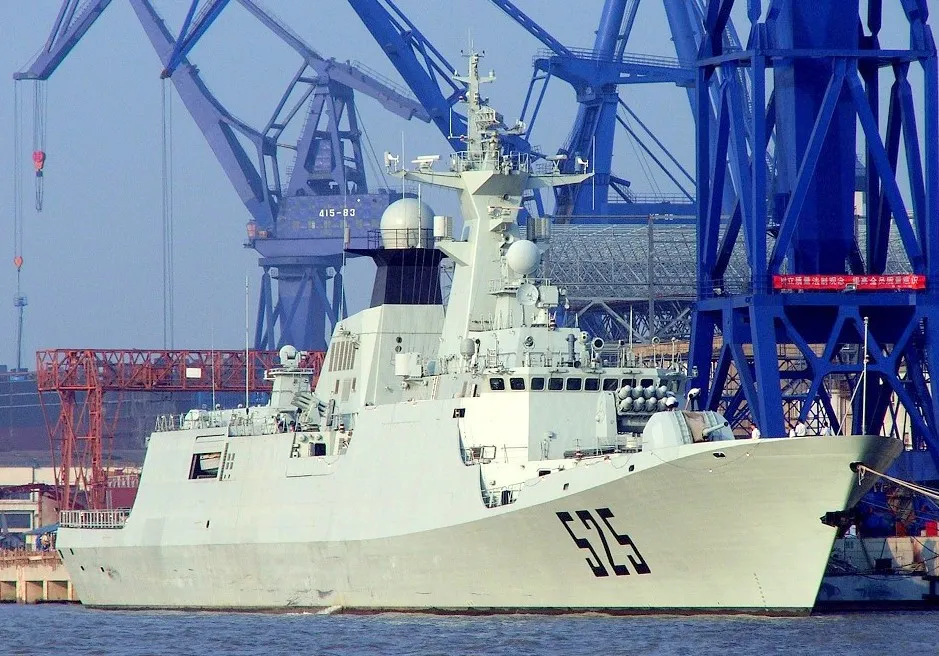


Type 054 frigates Ma'anshan and Wenzhou deployed in Chinese Gulf of Aden and Somali-waters escort task forces, with Ma'anshan later escorting a World Food Programme vessel off Somalia.
Naval Systems
Type 054 / Jiangkai I-class frigate
Also known as
- 054 class
- FFG-525 Ma'anshan
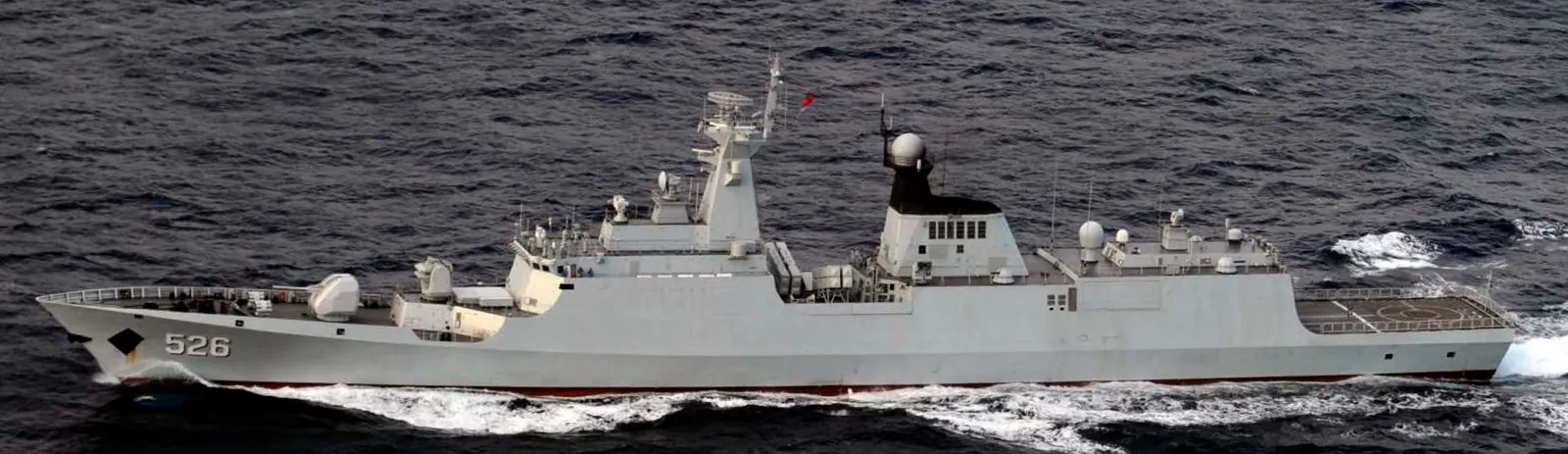
- FFG-526 Wenzhou
- Jiangkai I
- Jiangkai I class
- Ma'anshan-class frigate
- Type 054
- Type 054 frigate
- Type 054 / Jiangkai I class frigate
The Type 054 / Jiangkai I-class frigate is the two-ship first generation of China's Jiangkai guided-missile frigate family, built at Shanghai and Guangzhou for the People's Liberation Army Navy before production shifted to the more capable Type 054A. Public sources identify Ma'anshan and Wenzhou as 2005-commissioned ships with YJ-83 anti-ship missiles, HQ-7 point air defense, AK-630 close-in guns, light torpedo tubes, and helicopter facilities; both hulls are documented in Chinese counter-piracy escort deployments in the Gulf of Aden and Somali waters.
Role in Conflicts
Profile / Specs
Profile
- Origin
- People's Republic of China
- Type
- Chinese People's Liberation Army Navy guided-missile frigate class
- Service note
- 2003-2005
- Produced
- 2003-2005
- Number built
- 2
Specifications
- Displacement
- About 3,400-3,900 tons full load in public references
- Length
- 134 m
- Beam
- 16 m
- Draft
- 5 m
- Propulsion
- CODAD with four SEMT Pielstick/PA6 STC-family diesel engines
- Speed
- About 27 knots
- Range
- About 8,000 nautical miles in public references
- Crew
- About 180-190
- Armament
- YJ-83/C-803 anti-ship missiles, HQ-7 point air defense, 100 mm gun, AK-630 CIWS, and 324 mm Yu-7 torpedoes
- Aviation
- Flight deck and hangar for one Ka-28 or Harbin Z-9C-class helicopter
- Sensors
- Type 363S air/surface search radar, Type 345 and Type 347G fire-control radars, MR-36A surface-search radar, MGK-335 sonar, and combat-data/link equipment in public references
Class Overview
Type 054 was a two-hull bridge between older Jiangwei frigates and the larger Type 054A production run. Public references place one ship at Hudong-Zhonghua in Shanghai and the other at Huangpu in Guangzhou.
Ships
Ma'anshan (525) and Wenzhou (526) are the only completed Type 054 frigates identified in the class.
Builders
Hudong-Zhonghua built Ma'anshan; Huangpu built Wenzhou.
Follow-on design
Type 054A followed with improved sensors and a vertical-launch air-defense fit, turning the Jiangkai family into a much larger PLAN frigate program.
Sources: Type 054 Jiangkai I class Missile Frigate PLAN Navy China; The Type 054/054A Frigate Series; Type-054A class.
Variants
The Type 054 was the short Jiangkai I production run. Type 054A kept the broad frigate form but added a much stronger sensor and vertical-launch air-defense package.
| Variant | Configuration | Designation notes |
|---|---|---|
 | Follow-on frigate class | China SignPost describes Type 054A as the higher-capability successor after only two Type 054 ships, and Weaponsystems.net describes it as a further development using the same hull with improved weapons and sensors. |
Carried Anti-Ship Missile
The Type 054's surface-strike fit centered on deck-mounted YJ-83-family anti-ship missiles.
| Carried item | Item type | Carriage evidence |
|---|---|---|
 | Anti-ship missile | GlobalSecurity and Deagel list the Type 054 with two four-cell YJ-83 or C-803 anti-ship missile launchers. Sources: Jiangkai Type 054 Frigate, Type 054 |
Weapons And Sensors
Open references describe the original Type 054 as a compact surface combatant with anti-ship missiles, point air defense, close-in guns, torpedoes, and an embarked helicopter rather than the Type 054A's later vertical-launch HQ-16 arrangement.
| Area | Reported fit | Operational meaning |
|---|---|---|
| Surface strike | YJ-83/C-803 | Two four-cell launchers gave the frigate a dedicated anti-ship missile battery. |
| Air defense | HQ-7 point-defense launcher | The original air-defense fit was short-ranged, one reason Type 054A moved to a much stronger vertical-launch missile arrangement. |
| Close defense | 100 mm gun and AK-630 CIWS | Gun and close-in weapon systems covered warning, surface, and last-ditch air-defense tasks. |
| Anti-submarine | Yu-7 torpedoes, sonar, and helicopter facilities | Light torpedo tubes, sonar, and a stern deck/hangar supported escort and anti-submarine patrol roles. |
| Sensors | Type 363S, Type 345, Type 347G, MR-36A, and MGK-335 | GlobalSecurity lists a mixed air/surface-search, fire-control, navigation, combat-data, and sonar suite for the class. |
Sources: Jiangkai Type 054 Frigate; Type 054; The Type 054/054A Frigate Series.
Timeline
Type 054 / Jiangkai I-class frigate Key Events
Ma'anshan launched
SeaForces lists Ma'anshan, hull 525, as launched by Hudong-Zhonghua Shipbuilding in September 2003.
Sources: Type 054 Jiangkai I class Missile Frigate PLAN Navy China
Lead ship commissioned
Ma'anshan entered PLAN service in 2005, establishing the two-hull Type 054 class.
Sources: Type 054 Jiangkai I class Missile Frigate PLAN Navy China, Type 054
Wenzhou commissioned
SeaForces lists Wenzhou, hull 526, as a Huangpu-built ship commissioned later in 2005.
Sources: Type 054 Jiangkai I class Missile Frigate PLAN Navy China
Fourth Gulf of Aden escort deployment begins
China Daily reported that Ma'anshan and Wenzhou departed for Gulf of Aden and Somali-waters escort duty as China's fourth anti-piracy task force.
Sources: China sends new naval flotilla to Somali waters
Ma'anshan escorts WFP shipping
gCaptain reported that Ma'anshan escorted the World Food Programme vessel Amina between Somali ports in March 2011.
Sources: Chinese Navy Sails to Another First Off Somalia
Media
Type 054 / Jiangkai I-class frigate Videos
Type 054 / Jiangkai I-class frigate Images
Related Weapon Systems


Sources
Category:Type 054 frigatePublisher: Wikimedia Commons | Note: Supports the Type 054 class identity, People's Liberation Army Navy operator, Hudong-Zhonghua Shipbuilding manufacturer, two completed ships, and follow-on Type 054A relationship. | Accessed: 2026-07-03Jiangkai Type 054 FrigatePublisher: GlobalSecurity.org | Note: Supports Type 054 background, construction at Shanghai and Guangzhou, hull numbers 525 and 526, propulsion context, weapons, sensors, aviation facilities, and general class specifications. | Accessed: 2026-07-03Type 054 Jiangkai I class Missile Frigate PLAN Navy ChinaPublisher: SeaForces Online | Note: Supports the Type 054 ship list, hull numbers, builders, launch and commissioning dates, active status, dimensions, propulsion, weapons, complement, and aviation facilities. | Accessed: 2026-07-03Type 054Publisher: Deagel | Note: Supports Type 054 class overview, contractors, two-ship production, Ma'anshan and Wenzhou listing, YJ-83/HQ-7/AK-630/helicopter fit, and specification cross-checks. | Accessed: 2026-07-03The Type 054/054A Frigate SeriesPublisher: China SignPost | Note: Supports the two-hull Type 054 production context, Type 054A follow-on design, and the capability differences between Type 054 and Type 054A. | Accessed: 2026-07-03Type-054A classPublisher: Weaponsystems.net | Note: Supports Type 054A as a further development of Type 054 using the same hull with significantly improved weapons and sensors. | Accessed: 2026-07-03China sends new naval flotilla to Somali watersPublisher: China Daily / Xinhua | Note: Supports 2008 Somali Piracy / Operation Atalanta direct use: Ma'anshan and Wenzhou deployed to the Gulf of Aden and waters off Somalia to protect merchant vessels from pirates as China's fourth naval escort task force. | Accessed: 2026-07-03Chinese flotillas meet for joint escort missionPublisher: China Daily / Xinhua | Note: Supports 2008 Somali Piracy / Operation Atalanta direct use: identifies Wenzhou and Ma'anshan in the eighth Chinese naval escort flotilla for Gulf of Aden commercial-ship protection from pirate attacks. | Accessed: 2026-07-03Latest naval escort fleet leaves for Somali watersPublisher: China Daily / Xinhua | Note: Supports 2008 Somali Piracy / Operation Atalanta direct use: identifies Ma'anshan and Wenzhou as the two missile frigates in China's eighth escort fleet departing for Gulf of Aden and Somali-waters merchant-ship protection from piracy. | Accessed: 2026-07-03Chinese warship escorts World Food Programme ship to SomaliaPublisher: DefenceWeb | Note: Supports 2008 Somali Piracy / Operation Atalanta direct use: Ma'anshan served with Task Force 526 in the Gulf of Aden alongside Wenzhou and Qiandaohu to protect shipping from piracy. | Accessed: 2026-07-03Chinese Navy Sails to Another First Off SomaliaPublisher: gCaptain | Note: Supports 2008 Somali Piracy / Operation Atalanta direct use: reports Ma'anshan escorting the World Food Programme vessel Amina off Somalia and provides Type 054 weapons context. | Accessed: 2026-07-03An Overseas Naval Presence without Overseas BasesPublisher: Journal of Current Chinese Affairs | Note: Supports 2008 Somali Piracy / Operation Atalanta direct use: lists Ma'anshan and Wenzhou as Type 054 frigates in Chinese counter-piracy task forces and explains the Gulf of Aden escort mission. | Accessed: 2026-07-03CNS Ma'anshan (FFG-525).jpgPublisher: Wikimedia Commons | Note: Supports primary image provenance for a Type 054 frigate photo. | Accessed: 2026-07-03PLANS Wenzhou (FFG-526) 20151213.jpgPublisher: Wikimedia Commons | Note: Supports gallery image provenance for a Type 054 frigate photo. | Accessed: 2026-07-03