- Side
- People's Republic of China

PLA JH-7 fighter-bombers appeared in Taiwan Strait ADIZ and median-line activity during the August 2022 crisis, including two JH-7s crossing the northern end of the median line on August 25.
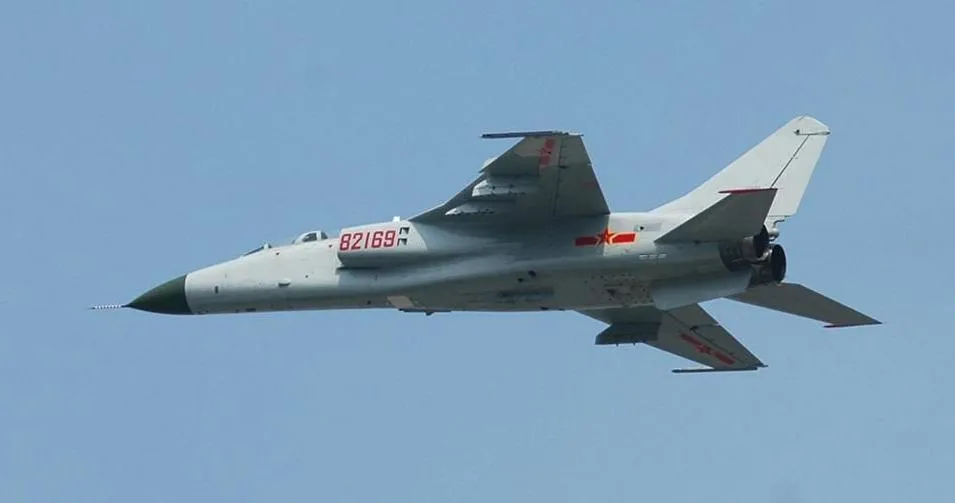
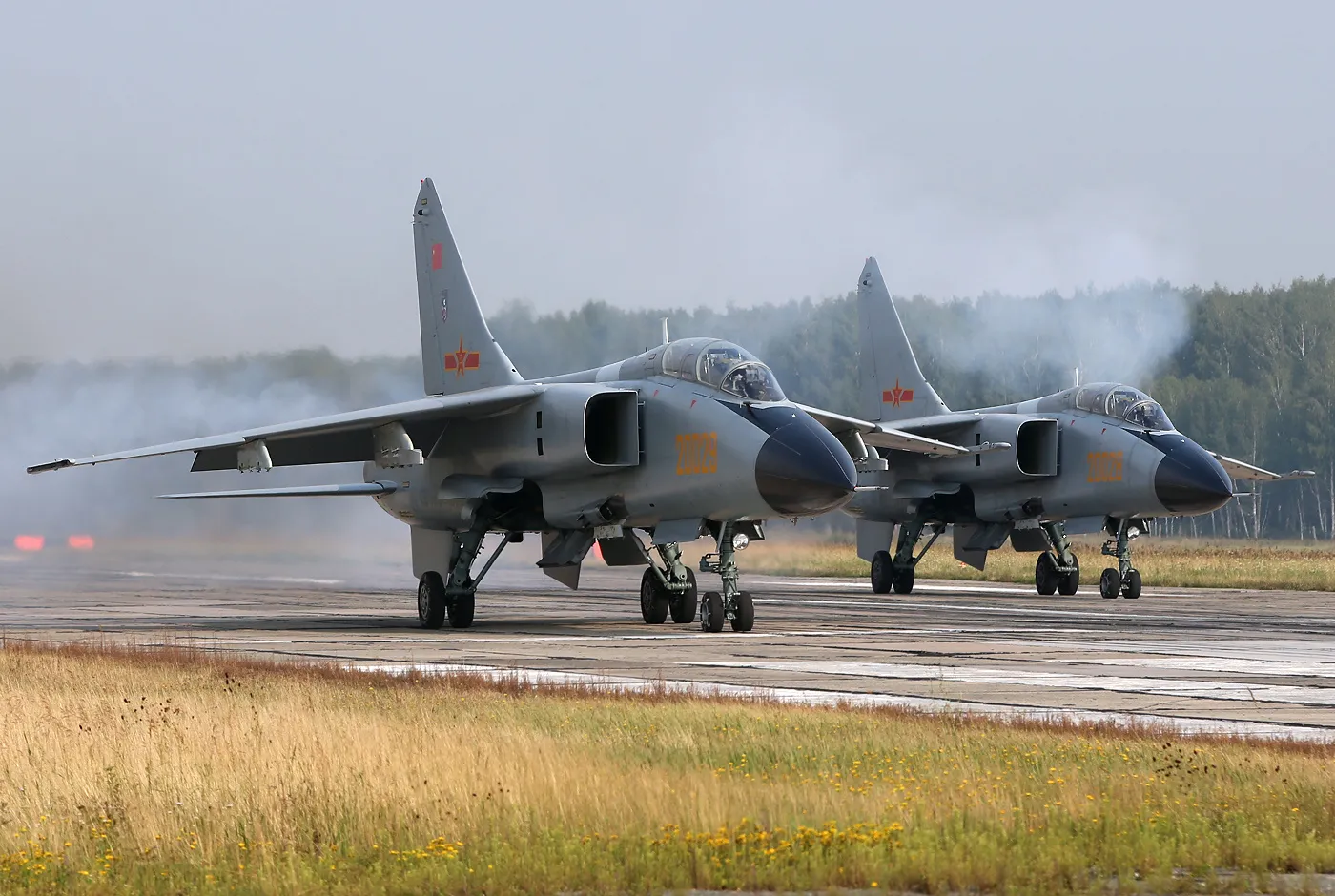
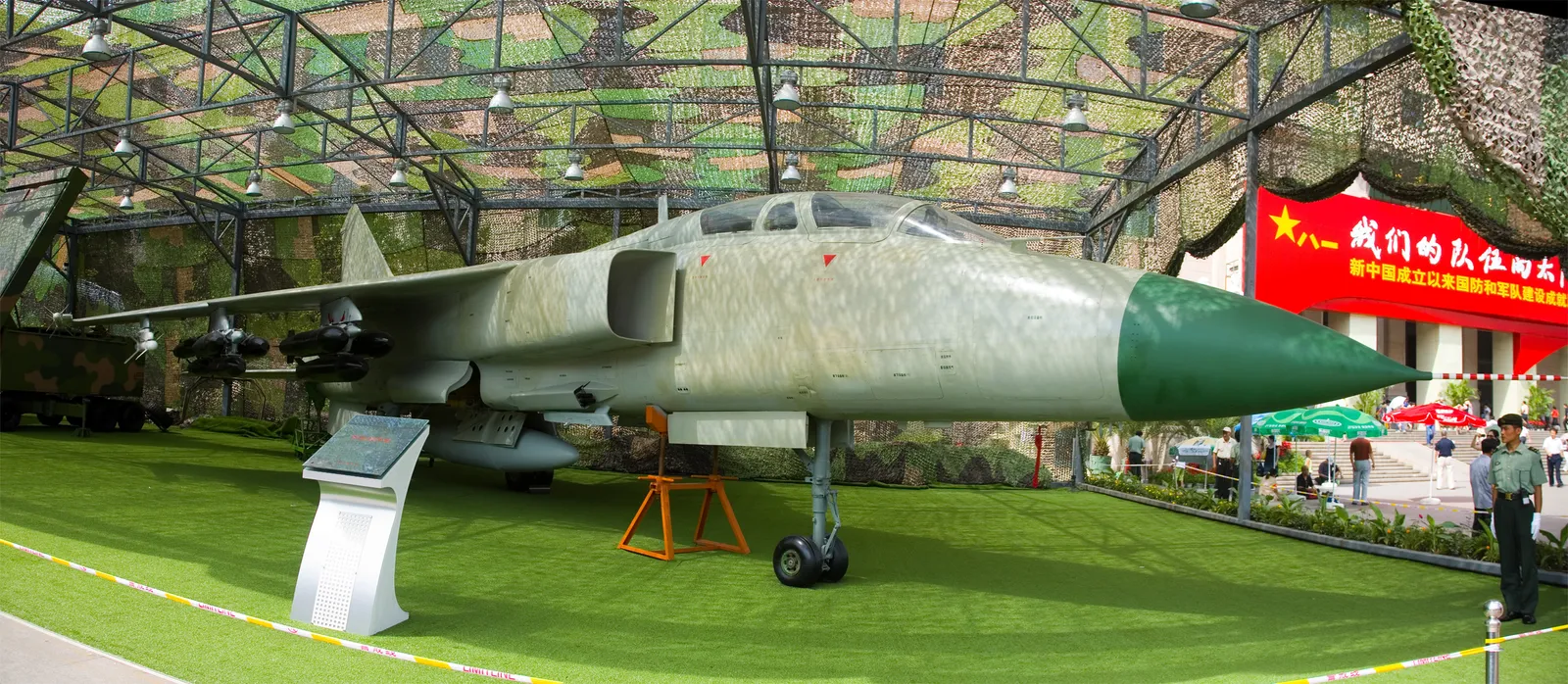
The Xi'an JH-7 is a Chinese twin-engine, two-seat fighter-bomber family built for maritime strike and long-range air-to-surface attack. Known as Feibao or Flying Leopard, it was developed by Xi'an Aircraft Industry Corporation with the 603 Institute, remains represented by active JH-7A variants, and appeared in PLA crisis-response air activity during the 2022 Fourth Taiwan Strait Crisis.
PLA JH-7 fighter-bombers appeared in Taiwan Strait ADIZ and median-line activity during the August 2022 crisis, including two JH-7s crossing the northern end of the median line on August 25.
The JH-7 family was shaped around Chinese requirements for a twin-engine fighter-bomber able to attack maritime and ground targets at range. Its open-source record is strongest for design, service, and training context; direct conflict evidence currently supports the Taiwan Strait crisis row as coercive crisis-response activity rather than combat weapons release.
GlobalSecurity attributes development to Xi'an Aircraft Industry Corporation with the 603 Research Institute, and its specifications page names Chen Yijian as chief designer.
Janes and NDU Press connect JH-7/JH-7A aircraft to YJ-83K or YJ-8/C-801-family anti-ship missiles, keeping the aircraft's naval strike role central to its identity.
Janes reported the JH-7AII/JH-7A2 in 2019-2021 coverage, with public display of electronic-warfare pods, a targeting pod, and improved ground-attack stores.
Public sources use overlapping JH-7, JH-7A, JH-7AII/JH-7A2, FBC-1, and JH-7E labels. The rows below separate baseline service aircraft, upgraded Chinese variants, and the export-marketed JH-7E.
| Variant | Configuration | Designation notes |
|---|---|---|
| JH-7 | Baseline fighter-bomber | GlobalSecurity describes the baseline JH-7 as a twin-engine, two-seat aircraft developed for Chinese naval and air force strike requirements, with typical maritime-attack loads including C-801-family anti-ship missiles. Sources: Chinese Aircraft - JH-7 Fighter-Bomber, JH-7 specifications |
| JH-7A | Improved service variant | Mitchell lists JH-7A as the active variant, while GlobalSecurity describes the JH-7A as using new materials plus updated radar and avionics. Sources: JH-7 - Mitchell Institute for Aerospace Studies, Chinese Aircraft - JH-7 Fighter-Bomber |
| JH-7A2 / JH-7AII | Upgraded variant | Janes reported the JH-7AII in PLAAF service at Aviadarts 2019 and identified the publicly displayed Airshow China 2021 aircraft as JH-7A2, with extra ground-attack stores and electronic-warfare pods. Sources: Upgraded JH-7 fighter-bomber in service with PLAAF, Airshow China 2021: Chinese air force displays upgraded JH-7A fighter-bomber |
| JH-7E | Export product | AVIC describes the JH-7E as a dual-seat, all-weather supersonic fighter-bomber for long-range air-to-surface and stand-off maritime or ground attack. Sources: JH-7E | AVIC English, China National Aero-Technology Import & Export Corporation |
Open U.S. and industry references identify the JH-7 family as a carrier for Chinese air-launched anti-ship cruise missiles.
| Carried item | Item type | Carriage evidence |
|---|---|---|
 | Air-launched anti-ship cruise missile | Janes identifies the YJ-83K as the standard PLA Naval Air Force anti-ship missile carried by JH-7 and JH-7A fighter-bombers, and NDU Press says the air-launched YJ-83K has been seen on JH-7/A aircraft. Sources: Images show PLAAF J-16 armed with YJ-83K anti-ship missile, A Potent Vector: Assessing Chinese Cruise Missile Developments |
 | Legacy air-launched anti-ship missile | NDU Press links the YJ-8/C-801 family to JH-7/A fighters as an air-launched anti-ship weapon, and GlobalSecurity lists C-801K/803 carriage points in JH-7A specifications. Sources: A Low-Visibility Force Multiplier, JH-7 specifications |
GlobalSecurity describes JH-7 research and development beginning in the 1970s, with Xi'an Aircraft Industry Corporation and the 603 Research Institute tied to the program.
Sources: Chinese Aircraft - JH-7 Fighter-Bomber
GlobalSecurity's specifications page lists December 14, 1988 as the prototype first-flight date.
Sources: JH-7 specifications
Mitchell Institute lists a 1992 IOC for the JH-7 and identifies the aircraft as an active PLAAF fighter-bomber entry.
Sources: JH-7 - Mitchell Institute for Aerospace Studies
GlobalSecurity states the JH-7 was first publicly displayed at the Zhuhai Air Show in 1998.
Sources: Chinese Aircraft - JH-7 Fighter-Bomber
Janes reported an upgraded JH-7AII variant in PLAAF service during the Aviadarts 2019 competition, while noting that external differences from JH-7A were not obvious.
Sources: Upgraded JH-7 fighter-bomber in service with PLAAF
Janes identified the Airshow China 2021 aircraft as JH-7A2, also spelled JH-7AII, and described publicly displayed pods plus improved ground-attack capability.
Sources: Airshow China 2021: Chinese air force displays upgraded JH-7A fighter-bomber
CSIS and Global Taiwan Institute tracked JH-7 fighter-bomber activity in PLA ADIZ and median-line operations during the August 2022 Fourth Taiwan Strait Crisis.
Sources: Tracking the Fourth Taiwan Strait Crisis, The PLA Air Force Erases the Taiwan Strait Centerline