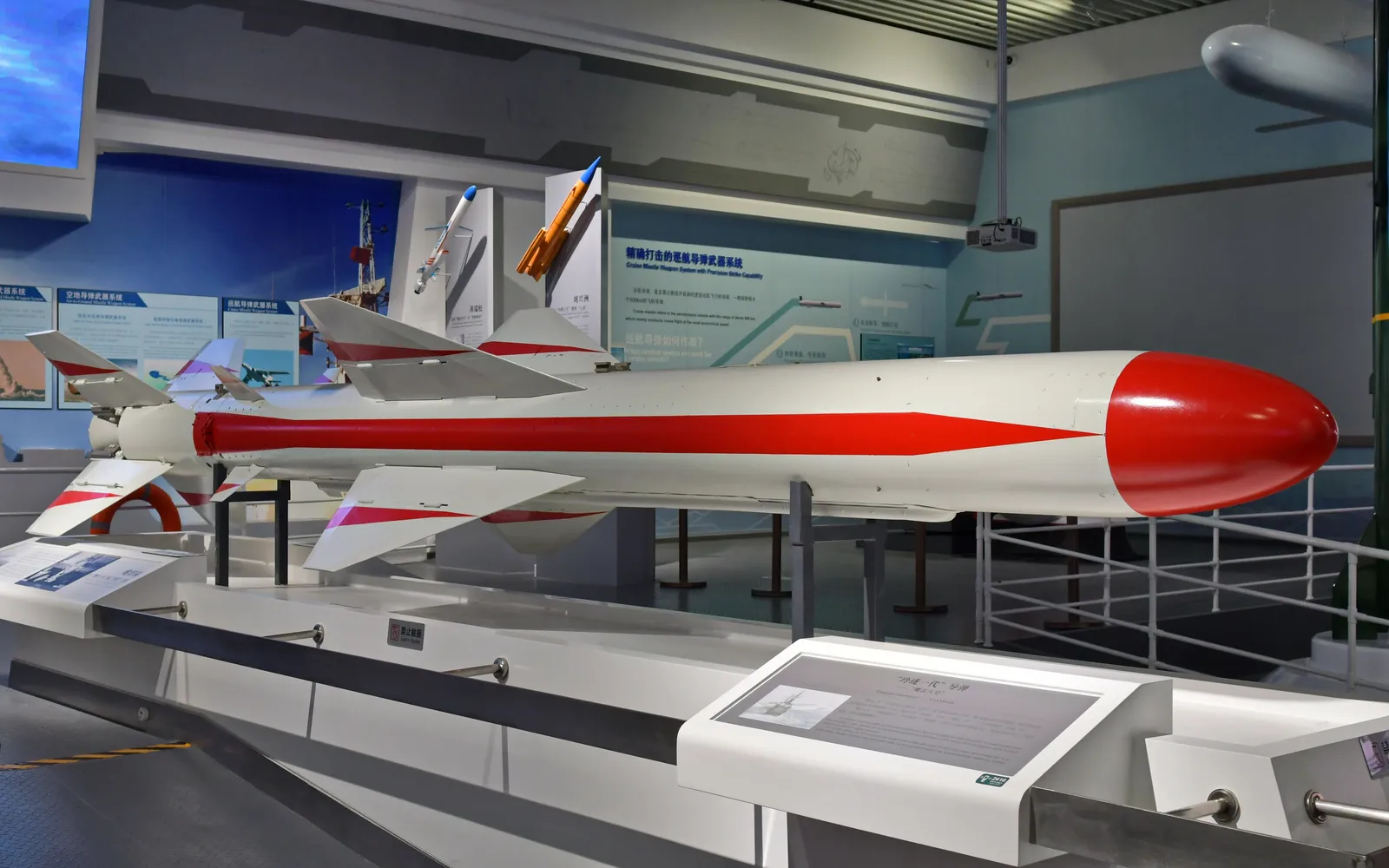

Houthi-aligned forces used C-801/C-802-family coastal anti-ship missiles around Bab el-Mandab in October 2016, damaging HSV-2 Swift and threatening USS Mason/Ponce; CSIS assesses the Swift missile as most likely a radar-guided C-801 or C-802 and notes Yemen's pre-war C-801 stocks.
Role detailsMunitions
C-801 anti-ship missile
Also known as
- CSS-N-4 Sardine
- YJ-8
- YJ-8A
- YJ-81
- C-801K
- YJ-82
- Ying Ji-8
- Yingji-8
- Eagle Strike-8
- C801
The C-801 is the export designation of China's YJ-8 family, a solid-propellant, sea-skimming anti-ship missile built by CASIC's Third Academy. Open references place the surface-launched YJ-8/C-801 in 1987 service with a 42 km range and 165 kg warhead, while later YJ-81/C-801K and YJ-82 members carried the same short-range family into air- and submarine-launched roles. Yemen's pre-war C-801 stocks and the C-801/C-802 identification caveat make the missile relevant to Houthi anti-ship attacks in the 2014 Yemen Civil War.
Role in Conflicts
Yemen Identification Notes
Yemen evidence is strongest at the C-801/C-802-family level. CSIS traces pre-war C-801 stocks to Yemen's 1995 Chinese procurement and says several missiles fell into Houthi hands in 2015, but it also cautions that al-Mandab-1 imagery does not cleanly separate C-801 from visually similar C-802-family weapons.
Documented stock path
Pre-war Yemen procured C-801 missiles from China in 1995, and CSIS reports that some stocks passed to Houthi forces after Yemeni navy defections.
2016 attack evidence
The October 2016 Swift and USS Mason/Ponce incidents are treated as C-801/C-802-family anti-ship missile use from Yemen's coast.
Variant caveat
Sources differ between C-801, C-802, Noor-derived, and al-Mandab-1 labels; this page keeps the conflict row caveated instead of claiming a confirmed single variant.
Profile / Specs
Profile
- Origin
- China
- Built by
- China Aerospace Science and Industry CorporationChina Haiying Electro-Mechanical Technology Academy
- Type
- Anti-ship cruise missile
- Service note
- Late 1980s export service; documented in the 2014 Yemen Civil War
- Designer
- China Haiying Electro-Mechanical Technology Academy (CASIC Third Academy)
- Designed
- 1976-1985
- Unit cost
- Estimated at about $0.78 million in WeaponSystems.net data
- Developed into
- C-802/Noor anti-ship cruise missile
Specifications
- Range
- 42 km for YJ-8/YJ-8A surface-launched versions; Carlson lists about 50 km for YJ-81 and about 30-34 km estimated for YJ-82
- Warhead
- 165 kg semi-armor-piercing or high-explosive warhead in open references
- Launch weight
- 815 kg for YJ-8/YJ-8A; about 610 kg for YJ-81/YJ-82 in Carlson's family table
- Length
- 5.81 m for YJ-8/YJ-8A; 4.65 m for YJ-81; 4.57 m for YJ-82 in Carlson's family table
- Diameter
- 0.36 m
- Wingspan
- About 1.22 m
- Speed
- About Mach 0.9
- Flight profile
- About 20 m cruise altitude and 5-7 m terminal sea-skimming altitude
- Propulsion
- Solid rocket motor; surface versions use a separate jettisonable booster
- Guidance
- Inertial navigation with active radar terminal homing
Designation And Family Boundaries
The C-801 record is best read as the export-facing branch of the Chinese YJ-8 family, not as a synonym for every later Eagle Strike missile. Carlson's designation review treats YJ-8/C-801 as the correctly matched baseline pair, separates YJ-81/C-801K as the air-launched member, and cautions that common labels such as C-801A, YJ-8K, and YJ-82/C-802 pairings can be misleading.
Baseline missile
YJ-8/C-801 used a solid rocket motor, separate booster, active radar terminal homing, and a short sea-skimming profile.
Folding-wing branch
YJ-8A introduced folding wings and smaller launch containers while remaining in the same 42 km surface-launched class.
Later family
C-802 and YJ-83 belong to the later turbojet branch derived from the YJ-8 line; they are linked as successors rather than collapsed into the C-801 entry.
Sources: A Low-Visibility Force Multiplier; Eagle Strike-Eight designation articles; YJ-8 - WeaponSystems.net.
Variants
Open sources use C-801 for the export YJ-8 family, but several common YJ/C-800 pairings are disputed. These rows separate the fixed-wing surface missile, folding-wing surface missile, air-launched member, submarine-launched member, and later turbojet successor family.
| Variant | Configuration | Designation notes |
|---|---|---|
| YJ-8 / C-801 | Baseline surface-launched missile | Carlson identifies YJ-8 as the PLAN designation and C-801 as the export designation; the baseline missile used fixed wings and externally ribbed launch containers. |
| YJ-8A | Folding-wing surface-launched missile | NDU and WeaponSystems.net describe YJ-8A as a folding-wing surface variant that used smaller launch containers while keeping the same short-range missile class. Sources: A Low-Visibility Force Multiplier, YJ-8 - WeaponSystems.net |
| YJ-81 / C-801K | Air-launched missile | Carlson describes YJ-81 as the air-launched rocket-propelled YJ-8 without the ship-launch booster and says it was marketed for export as C-801K. |
| YJ-82 | Submarine-launched missile | NDU identifies YJ-82 as the submarine-launched member of the YJ-8 series; Carlson cautions that YJ-82 should not be collapsed into the turbojet C-802. Sources: A Low-Visibility Force Multiplier, Eagle Strike-Eight: YJ-81, YJ-82, and C802 |
 | Later turbojet family | NDU describes C-802/YJ-83 as derived from the YJ-8 line but using a turbojet and longer range, so it is linked as a successor family rather than treated as a C-801 variant. Sources: A Low-Visibility Force Multiplier |
 | Later YJ-8 lineage missile | NDU places YJ-83 in the evolutionary line after YJ-8/YJ-8A and the exported C-802, with longer range and updated propulsion. Sources: A Low-Visibility Force Multiplier |
Launch Platforms
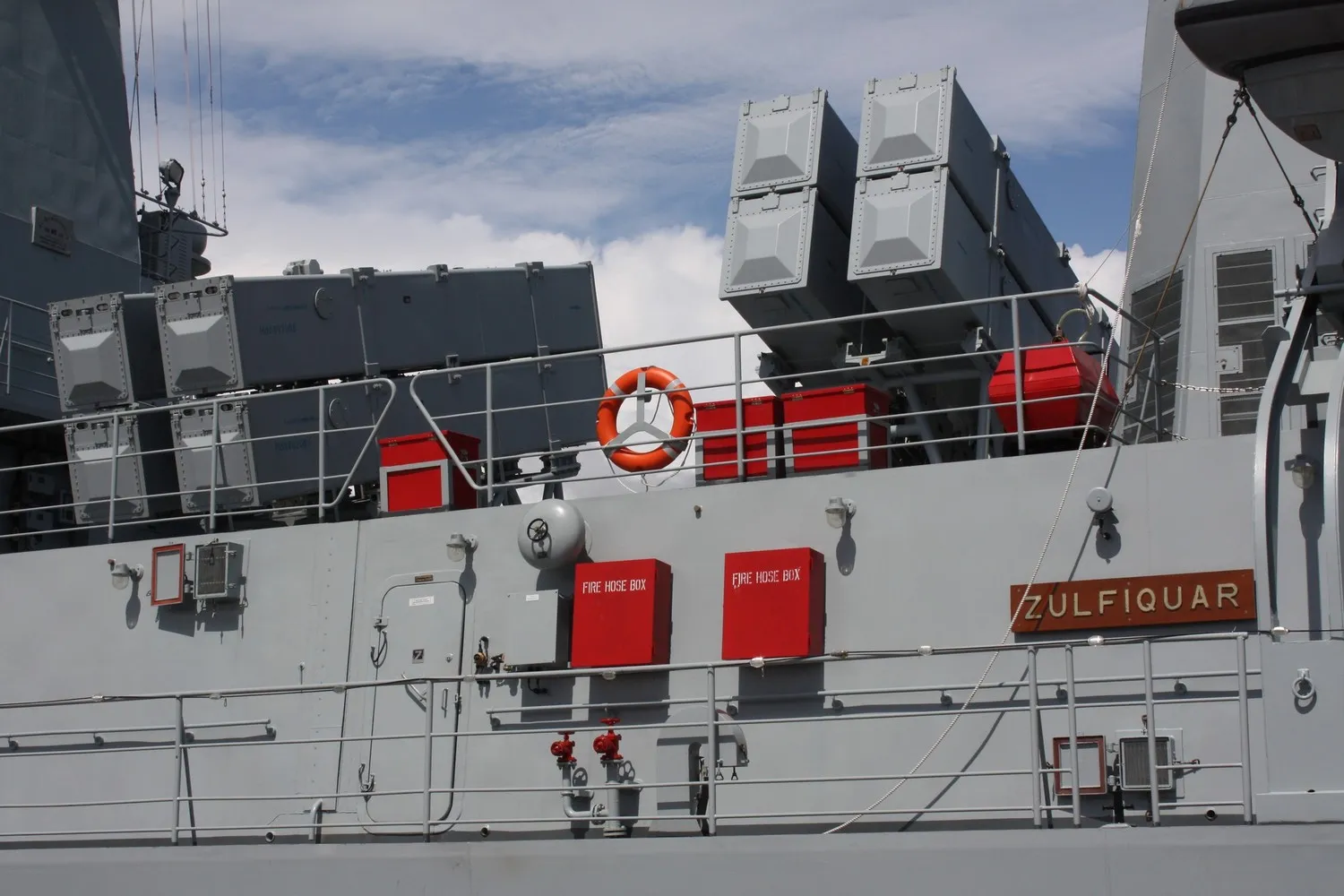
Open sources describe the YJ-8/C-801 family as ship-, submarine-, and air-launched, with PLAN surface combatants, Chinese strike aircraft, a Song-class submarine branch and Iranian F-4 test carriage appearing in the public record.
| Launcher | Launcher type | Launch evidence |
|---|---|---|
 | Strike fighter | The NDU source says the YJ-8/C-801 family is used by the PLAAF's JH-7/A fighter as an air-launched antiship weapon. Sources: A Low-Visibility Force Multiplier |
 | Aircraft launcher | GlobalSecurity reports that Iran tested Chinese-built C-801 air-launched cruise missiles from an F-4 fighter in June 1997. |
 | Diesel-electric submarine | The NDU source also says the YJ-8/C-801 family is used by the PLAN's Song-class submarine as a submarine-launched antiship weapon. Sources: A Low-Visibility Force Multiplier |
 | Missile boat launcher | WeaponSystems.net lists the Type 037-II class with YJ-8A missiles, and the catalog's Type 037IG missile boat record links the class to C-801/YJ-8-family armament. Sources: YJ-8 - WeaponSystems.net |
 | Frigate launcher | WeaponSystems.net identifies the Type 053H2G class as fitted with two triple YJ-8A launchers. Sources: YJ-8 - WeaponSystems.net |
 | Frigate launcher | WeaponSystems.net identifies the Type 053H3 class with two triple YJ-8A launchers on earlier ships, with later ships fitted with YJ-83. Sources: YJ-8 - WeaponSystems.net |
Timeline
C-801 anti-ship missile Key Events
YJ-8 development approved
Carlson says China's Central Military Commission approved development of a small rocket-powered anti-ship cruise missile in September 1976.
Sources: Eagle Strike-Eight: Designation Confusion
Flight testing completed
Carlson cites Chinese aerospace reporting that YJ-8 propulsion development began in 1978 and flight testing was completed by 1985.
Sources: Eagle Strike-Eight: Designation Confusion
Service entry listed
NDU lists the YJ-8/CSS-N-4 Sardine/C-801 series as a CASIC Third Academy missile in the ship, submarine and air-launched family, while Carlson places YJ-8 IOC in 1987.
Sources: A Low-Visibility Force Multiplier, Eagle Strike-Eight: Designation Confusion
YJ-8 wins national technology award
China Daily says the YJ-8 anti-ship cruise missile was the CASIC Third Academy's first National Science and Technology Advancement Award recipient in 1988.
Sources: Anti-ship cruise missile wins award
YJ-81 air-launched member enters service
Carlson reports that the YJ-81 began flight testing in the mid-1980s, reached initial operational capability in 1989 and was marketed for export as C-801K.
Sources: Eagle Strike-Eight: YJ-81, YJ-82, and C802
YJ-8A folding-wing version enters service
WeaponSystems.net lists 1992 for YJ-8A service, while Carlson gives a 1992 or 1993 IOC window for the folding-wing surface variant.
Sources: YJ-8 - WeaponSystems.net, Eagle Strike-Eight: Designation Confusion
Yemen procures missiles
CSIS cites SIPRI for a 1995 Chinese sale of 25 C-801 anti-ship missiles to pre-war Yemen.
Sources: The Missile War in Yemen
C-801 stocks fall into Houthi hands
CSIS says several C-801 missiles fell into Houthi hands in 2015 after the defection of three Yemeni navy Type 021 missile boats.
Sources: The Missile War in Yemen
HSV-2 Swift damaged near Bab el-Mandab
CSIS assesses that Houthi fighters most likely fired a radar-guided C-801 or C-802 from the coastline at the UAE-operated logistics vessel HSV-2 Swift.
Sources: The Missile War in Yemen, Houthi Antishipping Attacks in the Bab al-Mandab Strait
USS Mason and USS Ponce targeted
CSIS says USS Mason detected two incoming missiles, likely also C-801 or C-802-family weapons, while operating with USS Ponce near Bab el-Mandab.
Sources: The Missile War in Yemen, USS Mason Fired 3 Missiles to Defend From Yemen Cruise Missiles Attack
U.S. strikes radar sites after missile threats
The U.S. Navy said U.S. forces struck radar sites in Houthi-controlled territory on Yemen's Red Sea coast that were involved in missile launches threatening USS Mason and other vessels.
Sources: US Military Strikes Radar Sites in Yemen
Media
C-801 anti-ship missile Images
Related Weapon Systems


Sources
A Low-Visibility Force MultiplierPublisher: National Defense University Press | Note: Supports the YJ-8/C-801 family lineage, the CSS-N-4 Sardine designation, CASIC Third Academy manufacture, launch-platform context, family variants, and core specifications. | Accessed: 2026-07-05The Missile War in YemenPublisher: CSIS Missile Defense Project | Note: 2014 Yemen Civil War: Houthi-aligned forces used C-801/C-802-family missiles in attacks near Yemen's coastline, including 2016 USS Mason incidents; supports the 1995 Yemen C-801 procurement, 2015 Houthi acquisition context, specifications, and the C-801/C-802 identification caveat. | Accessed: 2026-07-05YJ-8 Missile 20220203.jpgPublisher: Wikimedia Commons | Note: Supports image provenance and licensing; this CC BY-SA 4.0 file depicts the YJ-8/C-801 family. | Accessed: 2026-07-05C-802 anti ship missile.JPGPublisher: Wikimedia Commons | Note: Supports gallery image provenance for a C-802 launcher photo; Commons identifies it as the upgraded export version of the YJ-8 family. | Accessed: 2026-07-05YJ-8 - WeaponSystems.netPublisher: WeaponSystems.net | Note: Supports YJ-8/YJ-8A/C-801 identity, CASIC producer, late-1980s and YJ-8A service timing, estimated unit cost, specifications, flight profile, and Type 037-II, Type 053H2G and Type 053H3 launch-platform context. | Accessed: 2026-07-05Eagle Strike-Eight: Designation ConfusionPublisher: Defense Media Network | Note: Supports YJ-8 development chronology, 1987 IOC, C-801 export designation, YJ-8A folding-wing IOC window, and designation-confusion caveats around C-801A and YJ-8 naming. | Accessed: 2026-07-05Eagle Strike-Eight: YJ-81, YJ-82, and C802Publisher: Defense Media Network | Note: Supports YJ-81/C-801K air-launched identity, YJ-82 submarine-launched identity, family table dimensions and range notes, and the caveat that YJ-82 is not the same missile as C-802. | Accessed: 2026-07-05Eagle Strike-Eight: YJ-83, C803, and the Family TreePublisher: Defense Media Network | Note: Supports family boundaries among YJ-8/YJ-8A/C-801, YJ-81/C-801K, YJ-82, C-802, YJ-83 and C-802A, including comparison-table specifications and designation caveats. | Accessed: 2026-07-05C-801 YJ-1 / YJ-8 / YJ-83 / CSS-N-4 SardinePublisher: GlobalSecurity.org | Note: Supports C-801 family background, semi-armor-piercing warhead context, platform context, and reported Iranian F-4 C-801 air-launch testing. | Accessed: 2026-07-05Anti-ship cruise missile wins awardPublisher: China Daily | Note: Supports CASIC Third Academy background and the YJ-8 missile's 1988 National Science and Technology Advancement Award context. | Accessed: 2026-07-05Houthi Antishipping Attacks in the Bab al-Mandab StraitPublisher: The Washington Institute for Near East Policy | Note: 2014 Yemen Civil War: supports the October 2016 HSV-2 Swift attack from Yemen's coast and the anti-ship missile assessment context, while caveating C-801/C-802-family identification. | Accessed: 2026-07-05USS Mason Fired 3 Missiles to Defend From Yemen Cruise Missiles AttackPublisher: USNI News | Note: 2014 Yemen Civil War: supports the October 2016 USS Mason and USS Ponce missile-threat context off Yemen and public reporting around likely cruise-missile attacks. | Accessed: 2026-07-05US Military Strikes Radar Sites in YemenPublisher: U.S. Navy | Note: 2014 Yemen Civil War: supports U.S. strikes on radar sites in Houthi-controlled Red Sea coast territory that were involved in missile launches threatening USS Mason and other vessels. | Accessed: 2026-07-05