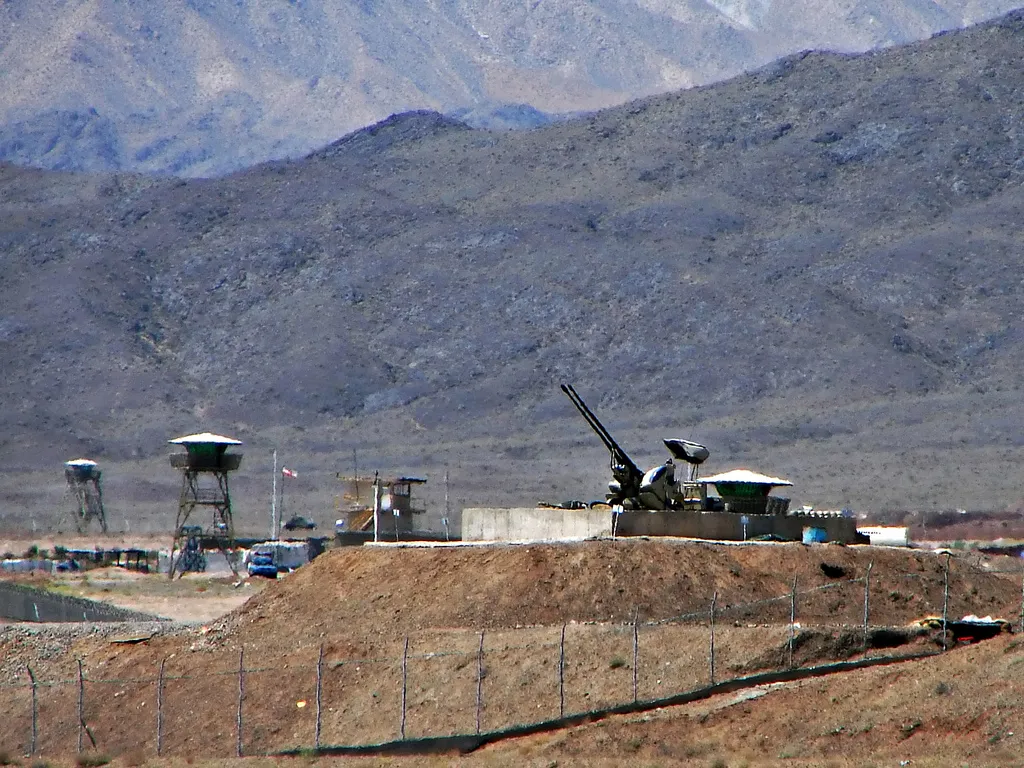
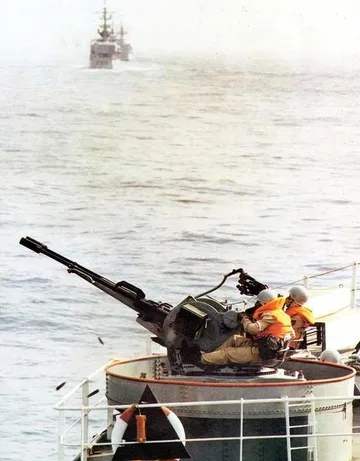
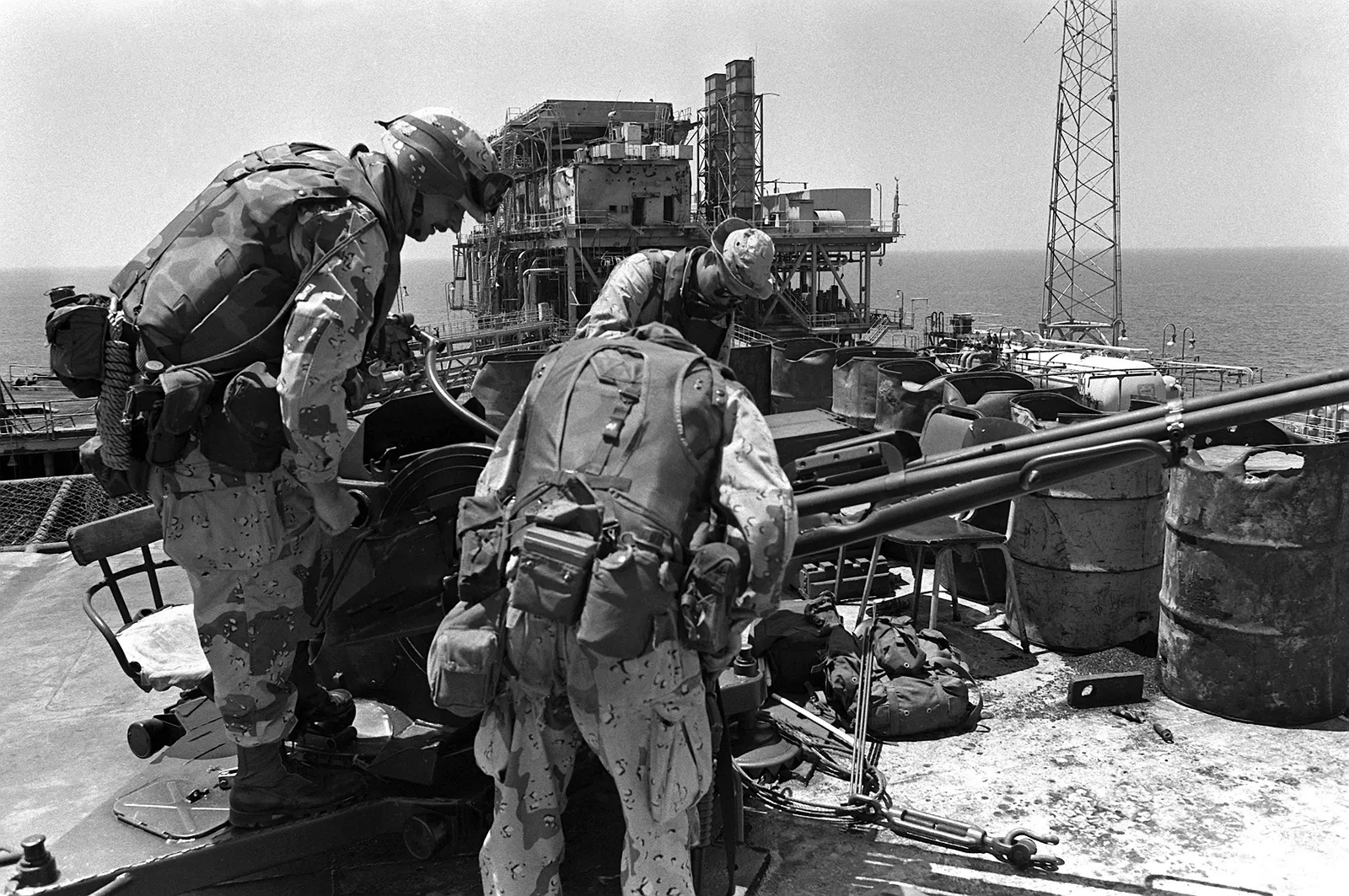
Iranian anti-aircraft artillery is an aggregate category for gun-based air-defense systems in Iranian service, including ZU-23-2 and Mesbah 23 mm weapons, Oerlikon-derived 35 mm Samavat guns, and older heavy-caliber systems. The record is most directly documented in the 1988 Tanker War phase of the 1980 Iran-Iraq War, where a Sassan platform 23 mm gun mount engaged U.S. forces, and in the 2020 United States-Iran Conflict, where ZU-23-2-type guns appeared as low-altitude point-defense threats and strike targets.
Short-range point defense and low-altitude air threat
Iranian gun-based air defenses, including ZU-23-2-type autocannons, appeared in Operation Epic Fury reporting as short-range threats and strike targets; separate reporting described Iran-backed PMF fighters attempting to use a ZU-23-2 against a U.S. A-10 in Iraq.
Oil-platform point defense during the Tanker War phase
During Operation Praying Mantis on 1988-04-18, Iranian personnel on the Sassan oil platform manned and fired a 23 mm gun mount before U.S. naval gunfire silenced it; USNI context places the action inside the maritime Tanker War phase of the 1980 Iran-Iraq War.
Profile / SpecsShowHide
Profile
Origin
Iran, with Soviet/Russian and Swiss-origin gun lineages
Cold War-origin guns with Iranian upgrades and local production through the 2020s
Designer
Multiple designers; Iranian adaptations of imported and legacy gun systems
Designed
1950s-present, depending on gun family
Unit cost
Not publicly reported for the aggregate family
Produced
Legacy imports and local production/adaptation through the 2000s-2020s
Number built
Not publicly reported for the aggregate Iranian inventory
Specifications
Representative calibers
14.5 mm, 23 mm, 35 mm, 57 mm, and 100 mm gun systems are reported in Iranian anti-aircraft artillery holdings.
ZU-23-2 engagement range
About 2.5 km against low-flying aircraft and helicopters, with about 2 km ground-target utility.
Samavat armament
Twin 35 mm autocannon on a towed trailer, integrated with Skyguard-derived radar and fire-control equipment.
Samavat effective envelope
About 4 km effective cannon range and about 3 km effective altitude, according to Army Recognition technical data.
Primary role
Point defense of bases, nuclear and military facilities, troop positions, and other fixed or mobile targets against low-altitude aircraft, helicopters, cruise missiles, and UAVs.
Gun Families In Iranian ServiceShowHide
Iranian gun-based air defense mixes imported Cold War weapons, pre-revolution Western 35 mm equipment, and Iranian production or modernization efforts. The table separates the main catalog-linked families from Iranian local adaptation names.
Common Soviet/Russian-lineage 23 mm twin gun; Iran is listed among users and Operation Praying Mantis evidence places a 23 mm gun on the Sassan platform.
Close point defense against low aircraft, helicopters, UAVs, and light ground targets.
Mesbah 1
Iranian low-altitude gun system announced in 2010 with radar and optical guidance.
Short-range defense against fighters, helicopters, cruise missiles, UAVs, and other low-altitude objects.
Army Recognition lists Iran among ZU-23-2 users and describes the system as a short-range twin 23 mm anti-aircraft gun for low-flying aircraft, helicopters, and ground targets.
Army Recognition describes Samavat as an Iranian-manufactured twin 35 mm system based on the Oerlikon GDF-001/GDF-002 lineage and coupled with Skyguard-derived radar and fire-control equipment.
DIA describes IRGC Ground Force air-defense groups as mainly using Soviet-origin mobile antiaircraft artillery, which fits the older tracked gun family represented in the catalog by the ZSU-23-4 Shilka.
Sassan platform 23 mm gun fires during Operation Praying Mantis
USNI Proceedings described Iranian personnel manning a 23 mm gun on the Sassan oil platform and the gun opening fire before U.S. naval gunfire silenced it.
Sources: USNI Praying Mantis Surface View, USNI Tanker War
Iran reports 35 mm Samavat production
KUNA reported the inauguration of an Iranian 35 mm anti-aircraft gun production line, while Army Recognition identifies Samavat as the Iranian Oerlikon GDF-derived 35 mm system.
Sources: KUNA Samavat Production, Samavat 35mm Air Defense
Mesbah 1 production line announced
Mehr reported that the Defense Ministry opened a Mesbah 1 production line and described radar, optical guidance, UAV engagement, and low-altitude target roles.
The Aviationist reported that CENTCOM strike videos from March 15-16, 2026 showed Iranian air-defense targets including a ZU-23-2 anti-aircraft autocannon.