Air Defense

Mesbah 1

Also known as
  • Mesbah-1
  • Mesbah 1
  • مصباح 1
  • Lantern-1

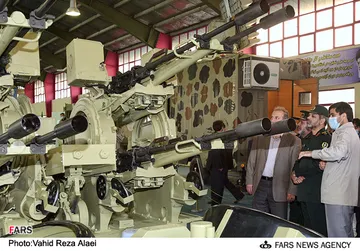
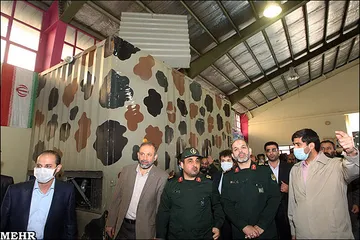
Mesbah 1 is an Iranian short-range air-defense gun system publicly unveiled in May 2010 and built around an eight-barrel 23 mm gun package with radar and optical fire-control support. Official and defense-industry sources describe it as a point-defense system for low-altitude aircraft, helicopters, cruise missiles, UAVs, and similar air threats, with a claimed firing rate of 4,000 rounds per minute.

Profile / Specs

Profile

Origin
Iran
Type
23 mm short-range air-defense gun system
Service note
Contemporary Iranian air defense; publicly unveiled in 2010
Designer
Defense Industries Organization
Designed
Late 2000s
Produced
2010 to present
Developed from
ZU-23/ZU-23-2 23 mm gun lineage

Specifications

Caliber
23 mm
Armament
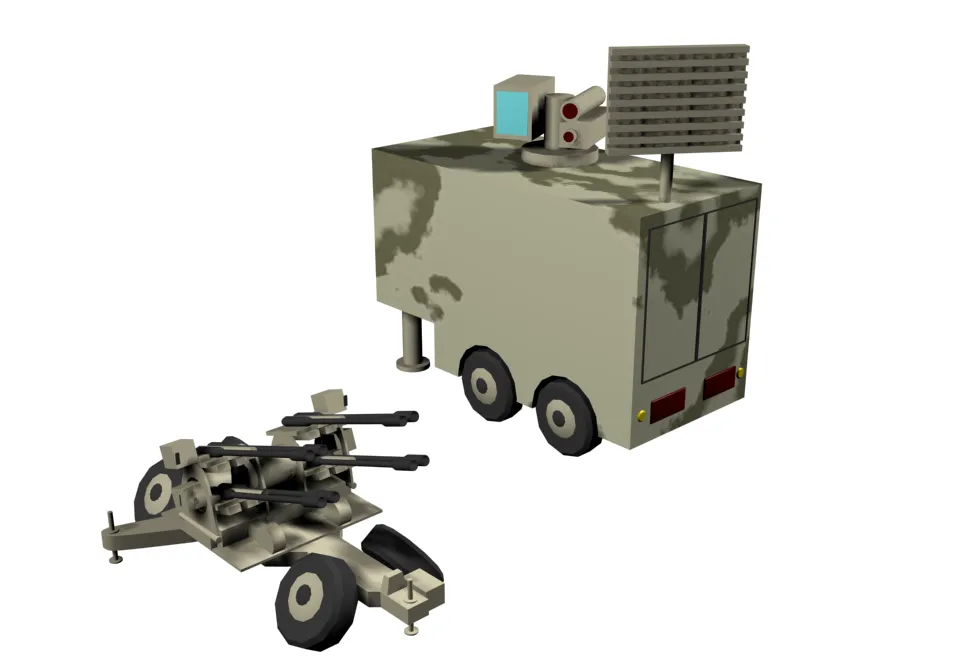
Eight 23 mm barrels in a ZU-23-8-style automated gun package; MINDEX describes four twin-barrel 23 mm guns
Fire control
Three-dimensional seeker/interception radar, smart fire-control unit, and optical/electro-optic guidance support
Detection range
0.2-20 km radar detection range reported by MINDEX
Target speed
Up to 300 m/s maximum detected-target speed reported by MINDEX
Traverse/elevation
360 degrees azimuth and 0-100 degrees elevation reported for the radar/weapon motion envelope
Rate of fire
4,000 rounds per minute claimed in Iranian official reporting
Primary role
Low-altitude air defense against aircraft, cruise missiles, helicopters, UAVs, and similar air threats
Documented Features

The strongest public descriptions of Mesbah 1 focus on its gun package, fire-control suite, and intended low-altitude target set rather than on production totals or verified combat use.

Gun package

MINDEX describes Mesbah 1 as an 8-barrel system using four twin-barrel 23 mm guns; Uskowi on Iran describes the package as an automated, radar-guided ZU-23-8 gun system.

Sources: MINDEX MESBAH 1 Air Defence System; Mesbah-1 Air Defense System.

Fire control

Iranian reporting and MINDEX describe 3D radar plus optical or electro-optic fire-control support, with MINDEX adding a smart fire-control unit and power-supply set.

Sources: Iran starts mass production of Mesbah 1 air defense system; MINDEX MESBAH 1 Air Defence System.

Target set

Official reporting describes the intended targets as fighters, helicopters, cruise missiles, UAVs, and other low-altitude air threats.

Sources: خط تولید سامانه پدافند هوایی مصباح(1) با حضور وزیر دفاع افتتاح شد; Iran starts mass production of Mesbah 1 air defense system.
Gun Lineage

Open sources describe Mesbah 1 as an Iranian automated 23 mm gun package derived from the ZU-23 family rather than as a wholly separate cannon design.

Compatible itemItem typeCompatibility evidence
ZU-23-2, Towed twin 23 mm anti-aircraft autocannon, Air DefenseZU-23-2Twin 23 mm anti-aircraft gun family

Uskowi on Iran describes Mesbah-1 as an automated radar-guided ZU-23-8 gun system, while MINDEX describes the Mesbah 1 product as using four twin-barrel 23 mm guns.

Sources: Mesbah-1 Air Defense System, MINDEX MESBAH 1 Air Defence System

Timeline

Mesbah 1 Key Events

  1. Publicly unveiled in Tehran

    Uskowi on Iran described Mesbah-1 as a newly unveiled mobile short-range AAA system with anti-cruise missile and PGM defense, radar guidance, TI-optical tracking, and a claimed 4,000 rounds per minute.

    Sources: Mesbah-1 Air Defense System

  2. Production line opened

    IRNA reported that Defense Minister Ahmad Vahidi inaugurated the Mesbah(1) air-defense production line at the Defense Ministry's aerospace industries organization.

    Sources: خط تولید سامانه پدافند هوایی مصباح(1) با حضور وزیر دفاع افتتاح شد

  3. Defense-industry product listing documents the 8-barrel configuration

    MINDEX listed Mesbah 1 as a Defense Industry Organization armament product with four twin-barrel 23 mm guns, a 3D seeker radar, a smart fire-control unit, and a power-supply set.

    Sources: MINDEX MESBAH 1 Air Defence System

Media
Related Weapon Systems
Iranian anti-aircraft artillery, Gun-based short-range air defense artillery, Air DefenseAir DefenseIranian anti-aircraft artilleryGun-based short-range air defense artilleryIranian anti-aircraft artillery is an aggregate category for gun-based air-defense systems in Iranian service, including ZU-23-2 and Mesbah 23 mm weapons, Oerlikon-derived 35 mm Samavat guns, and older heavy-caliber systems. The record is most directly documented in the 1988 Tanker War phase of the 1980 Iran-Iraq War, where a Sassan platform 23 mm gun mount engaged U.S. forces, and in the 2020 United States-Iran Conflict, where ZU-23-2-type guns appeared as low-altitude point-defense threats and strike targets.
Pantsir-S1, Self-propelled short-range surface-to-air missile and anti-aircraft gun system, Air DefenseAir DefensePantsir-S1Self-propelled short-range surface-to-air missile and anti-aircraft gun systemThe Pantsir-S1 is a Russian mobile point-defense system that combines 57E6-family command-guided surface-to-air missiles, twin 30 mm 2A38M automatic cannon, target-acquisition radar, engagement radar, and electro-optical fire control on a wheeled combat vehicle. It is designed to protect military units, air-defense sites, infrastructure, and longer-range air-defense formations against aircraft, helicopters, cruise missiles, precision weapons, and UAVs, with documented or reported conflict relevance in Ukraine, Syria, Libya, Yemen, and Sudan.
2K22 Tunguska, Tracked self-propelled gun-missile air defense system, Air DefenseAir Defense2K22 TunguskaTracked self-propelled gun-missile air defense systemThe 2K22 Tunguska is a Soviet-designed tracked short-range air defense system that combines twin 30 mm autocannons, 9M311-family surface-to-air missiles, search and tracking radars, and a protected self-propelled chassis. Built to cover maneuver formations against low-flying aircraft, helicopters, cruise missiles, and later unmanned threats, it appears in the 2014 Russia-Ukraine War on both Russian and Ukrainian sides, with Russian combat losses and Ukrainian missile firings documented in open sources.

Sources