Air Defense

Flakpanzer Gepard

Also known as
  • Flugabwehrkanonenpanzer Gepard
  • FlakPz Gepard
  • Gepard 1A2
  • PRTL
  • Pantser Rups Tegen Luchtdoelen
  • Cheetah
  • CA1

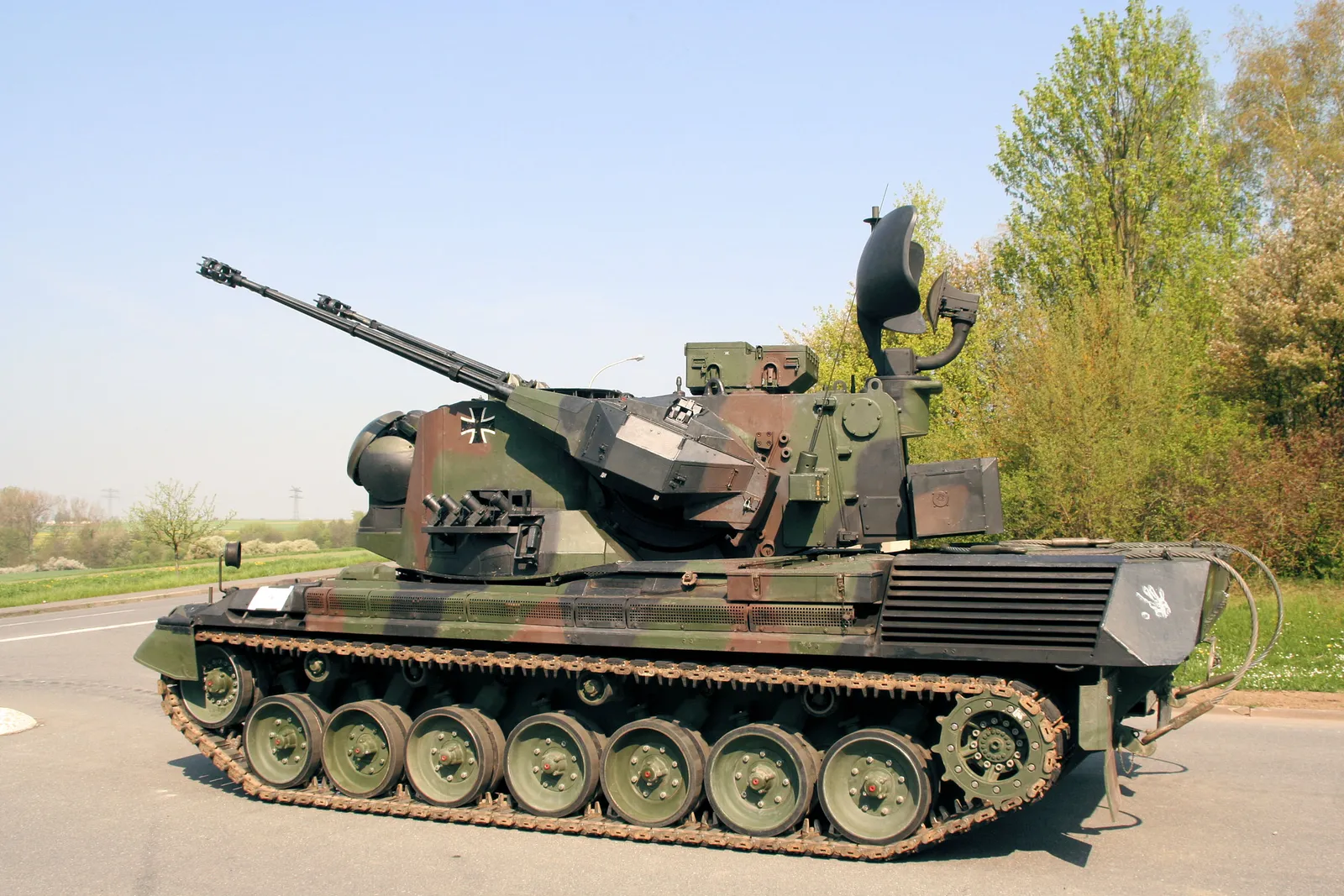
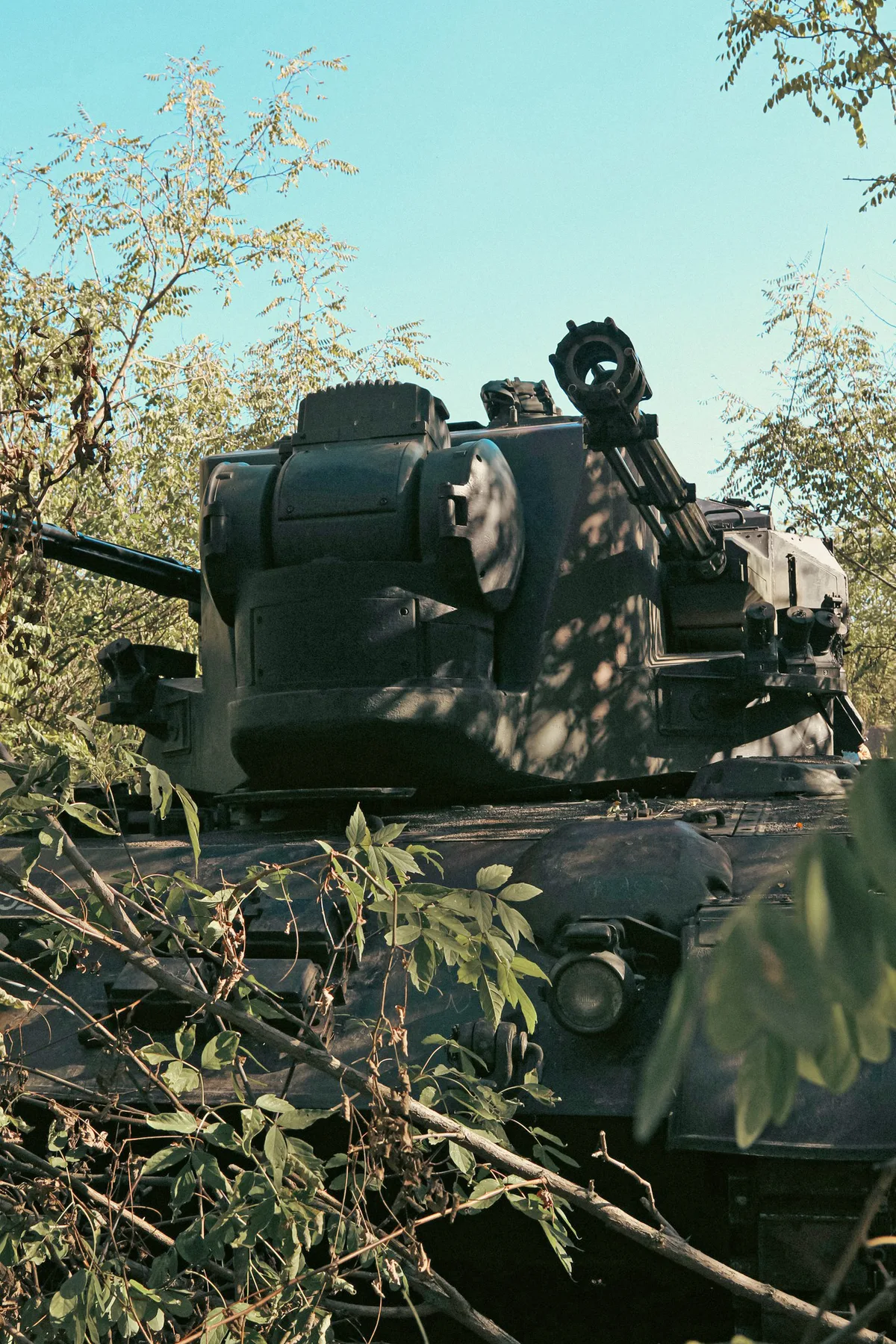
The Flakpanzer Gepard is a tracked German self-propelled anti-aircraft gun built around twin 35 mm automatic cannons, onboard search and tracking radars, and a Leopard 1-derived chassis. Germany later refurbished Gepards for Ukraine, where the system became a mobile short-range air defense and counter-UAV weapon against Shahed loitering munitions, cruise missiles, and other low-altitude threats.

Role in Conflicts

Ukrainian forces operate German-supplied Gepards as mobile short-range air defense against Shahed loitering munitions, cruise missiles, and other low-flying threats; Germany's frozen April 17, 2025 aid list recorded 60 delivered Gepards with spare parts and 330,000 rounds of ammunition.

Role details
Profile / Specs

Profile

Origin
West Germany; donated to Ukraine by Germany
Built in
Germany
Type
Self-propelled anti-aircraft gun
Service note
Cold War design in Ukrainian service during the 2022 full-scale invasion
Designer
Krauss-Maffei Wegmann with radar and gun-system partners
Designed
1960s-1970s development
Unit cost
Not publicly standardized for Ukraine transfers
Produced
1970s-1980s production and modernization
Number built
570 systems mass-produced by KNDS as general contractor

Specifications

Crew
3
Armament
Two 35 mm automatic cannons
Search radar
S-band surveillance radar with 15 km range
Combat range
Up to 5,000 m against aerial targets in KNDS data; Bundeswehr lists air targets up to 5,500 m
Mobility
65 km/h maximum road speed, 550 km range, 610 kW engine
Dimensions
7.68 m long, 3.71 m wide, 3.29 m high to turret roof
Variants

Gepard designations split between German Bundeswehr marks and export/local-service names, with Dutch PRTL/Cheetah vehicles differing mainly in their radar fit.

VariantConfigurationDesignation notes
Gepard 1Original German/Belgian production model

Weaponsystems.net describes Gepard 1 as the original serial-production model, with German and Belgian production batches before later updates.

Sources: Gepard - Weaponsystems.net

Gepard 1A1Laser-rangefinder improvement

Weaponsystems.net identifies Gepard 1A1 as an improved model fitted with a laser rangefinder.

Sources: Gepard - Weaponsystems.net

PRTL / CheetahDutch-service variant

The Dutch PRTL, later known as Cheetah, used a distinct radar suite and can be recognized by its bar-shaped search radar.

Sources: Gepard - Weaponsystems.net

Shared 35 mm Gun Line

Gepard belongs to the same Oerlikon 35 mm air-defense lineage as the towed GDF family, which makes that gun line the closest internal comparison for its cannon and ammunition setup.

Compatible itemItem typeCompatibility evidence
GDF-001 / GDF-002 anti-aircraft gun, Towed twin 35 mm anti-aircraft gun, Air DefenseGDF-001 / GDF-002 anti-aircraft gunTowed twin 35 mm gun

Weaponsystems.net and KNDS both place Gepard and the GDF family in the same 35 mm Oerlikon cannon ecosystem, so the towed gun line is the cleanest comparison for Gepard's firepower and ammunition story.

Sources: GEPARD, GDF

Timeline

Flakpanzer Gepard Key Events

  1. Bundeswehr service begins

    The Gepard entered Bundeswehr service in 1976 as the West German army's mobile gun-based air-defense vehicle.

    Sources: Der Flugabwehrkanonenpanzer Gepard

  2. Bundeswehr retires the Gepard

    Germany kept the Gepard in service until 2010 before moving the platform out of Bundeswehr use.

    Sources: Der Flugabwehrkanonenpanzer Gepard

  3. Germany starts sending Gepards to Ukraine

    Germany's official military-aid list includes Gepard anti-aircraft gun tanks, spare parts, and ammunition delivered to Ukraine.

    Sources: Military support for Ukraine

  4. Rheinmetall restarts Gepard ammunition production

    Rheinmetall said a contract for 300,000 rounds had been signed and that new production capacity was being created in Germany for Gepard ammunition.

    Sources: Gepard ammunition on its way to Ukraine

  5. First new Gepard ammo reaches Ukraine

    Rheinmetall reported that a first lot of new 35 mm air-defense ammunition was headed to Ukraine under Germany's support effort.

    Sources: Gepard ammunition on its way to Ukraine, Germany ships first batch of new Gepard ammo to Ukraine

  6. U.S. buys 60 Gepards from Jordan for Ukraine

    A U.S. procurement covered 60 used Gepards from Jordan for Ukraine, underscoring how the platform was still being sourced for Ukraine's air defense.

    Sources: US purchases 60 Gepard anti-aircraft guns from Jordan to send to Ukraine

  7. Rheinmetall reports more ammo orders

    Rheinmetall said Ukraine had ordered another 180,000 HEI-T rounds funded by Germany and noted that Germany had already handed over 55 Gepards.

    Sources: Rheinmetall delivers 35mm-ammunition for anti-aircraft gun Gepard to Ukraine

  8. German aid list reaches 60 delivered Gepards

    Germany's final Ukraine military-aid overview listed 60 delivered Gepards with spare parts, 330,000 rounds delivered for the system, and 10 more Gepards in preparation.

    Sources: Military support for Ukraine

Ammunition Supply Chain

Ukraine turned Gepard into more than a vehicle transfer story. The system also forced a 35 mm ammunition restart after Germany's own stocks had fallen away following Bundeswehr retirement.

DateSupply stepOperational meaning
2023-02Germany and Rheinmetall moved toward a 300,000-round order and new German production capacity for Gepard ammunition.The contract path addressed the shortage of compatible rounds after the first vehicle transfers.
2023-09Rheinmetall said the first lot of new 35 mm ammunition was on its way to Ukraine; Defense News reported a EUR 168 million value for the 300,000-round contract.The published value gives an approximate EUR 560 per round baseline for that contract.
2025-01Rheinmetall reported a separate 180,000-round HEI-T order funded by Germany.Ukraine's Gepard fleet still needed dedicated ammunition procurement more than two years after the first deliveries.
2025-04-17Germany's final aid overview listed 60 delivered Gepards, 330,000 delivered rounds, and 10 more Gepards in preparation.The frozen official count shows Gepard had become a sustained air-defense supply line, not a one-time donation.

Sources: Gepard ammunition on its way to Ukraine; Germany ships first batch of new Gepard ammo to Ukraine; Rheinmetall delivers 35mm-ammunition for anti-aircraft gun Gepard to Ukraine; Military support for Ukraine.
Media
Related Weapon Systems
Leopard 1 Skyranger 35, Tracked self-propelled short-range air-defense gun system, Air DefenseAir DefenseLeopard 1 Skyranger 35Tracked self-propelled short-range air-defense gun systemLeopard 1 Skyranger 35 combines a surplus Leopard 1 tank chassis with Rheinmetall's unmanned Oerlikon Skyranger 35 turret, turning a Cold War tank hull into a mobile short-range air-defense system for drones, cruise missiles, and low-flying aircraft. The configuration was publicly demonstrated in Switzerland in September 2024 and later ordered for Ukraine, with Rheinmetall describing Rheinmetall Italia as the production and integration site for the Ukraine systems.
ZU-23-2, Towed twin 23 mm anti-aircraft autocannon, Air DefenseAir DefenseZU-23-2Towed twin 23 mm anti-aircraft autocannonThe ZU-23-2 is a Soviet twin 23 mm towed anti-aircraft autocannon built around two 2A14 guns on a light carriage. Its manual sighting, rapid emplacement, and high volume of fire make it a close-range air-defense weapon against low-flying aircraft, helicopters, and drones, while many operators also use it for direct fire against light vehicles and infantry positions. Ukrainian forces have used ZU-23-2 guns in mobile and positional air-defense teams during the 2014 Russia-Ukraine War, Armenian-side losses in the 2020 Nagorno-Karabakh fighting included towed and vehicle-mounted ZU-23 guns, and conflict monitors documented ZU-23 or ZU-23-2-pattern use in Yemen, Tigray, and northern Mali.
Iranian anti-aircraft artillery, Gun-based short-range air defense artillery, Air DefenseAir DefenseIranian anti-aircraft artilleryGun-based short-range air defense artilleryIranian anti-aircraft artillery is an aggregate category for gun-based air-defense systems in Iranian service, including ZU-23-2 and Mesbah 23 mm weapons, Oerlikon-derived 35 mm Samavat guns, and older heavy-caliber systems. The record is most directly documented in the 1988 Tanker War phase of the 1980 Iran-Iraq War, where a Sassan platform 23 mm gun mount engaged U.S. forces, and in the 2020 United States-Iran Conflict, where ZU-23-2-type guns appeared as low-altitude point-defense threats and strike targets.
Skynex, Networked short-range air defense system, Air DefenseAir DefenseSkynexNetworked short-range air defense systemSkynex is Rheinmetall Air Defence's modular short-range air defense architecture built around the Oerlikon Skymaster battle management system, networked X-TAR3D-class sensors, and autonomous 35 mm Revolver Gun Mk3 effectors firing programmable AHEAD ammunition. German-funded Skynex systems in Ukrainian service have been reported in truck-mounted power-plant defense roles, while Italy received the first NATO-member Skynex battery in December 2025.
2K22 Tunguska, Tracked self-propelled gun-missile air defense system, Air DefenseAir Defense2K22 TunguskaTracked self-propelled gun-missile air defense systemThe 2K22 Tunguska is a Soviet-designed tracked short-range air defense system that combines twin 30 mm autocannons, 9M311-family surface-to-air missiles, search and tracking radars, and a protected self-propelled chassis. Built to cover maneuver formations against low-flying aircraft, helicopters, cruise missiles, and later unmanned threats, it appears in the 2014 Russia-Ukraine War on both Russian and Ukrainian sides, with Russian combat losses and Ukrainian missile firings documented in open sources.
Pantsir-S2, Self-propelled short-range surface-to-air missile and anti-aircraft gun system, Air DefenseAir DefensePantsir-S2Self-propelled short-range surface-to-air missile and anti-aircraft gun systemThe Pantsir-S2 is a Russian modernized member of the Pantsir missile-gun air-defense family, retaining the truck-mounted 57E6-family missile and twin 30 mm gun layout while adding a new SOTS S-band search radar and longer stated missile reach than the baseline Pantsir-S1. Open sources place the variant in Russian service from 2015, in Russia's Syrian deployment at Hmeymim, and in Russian service during the 2014 Russia-Ukraine War.

Sources