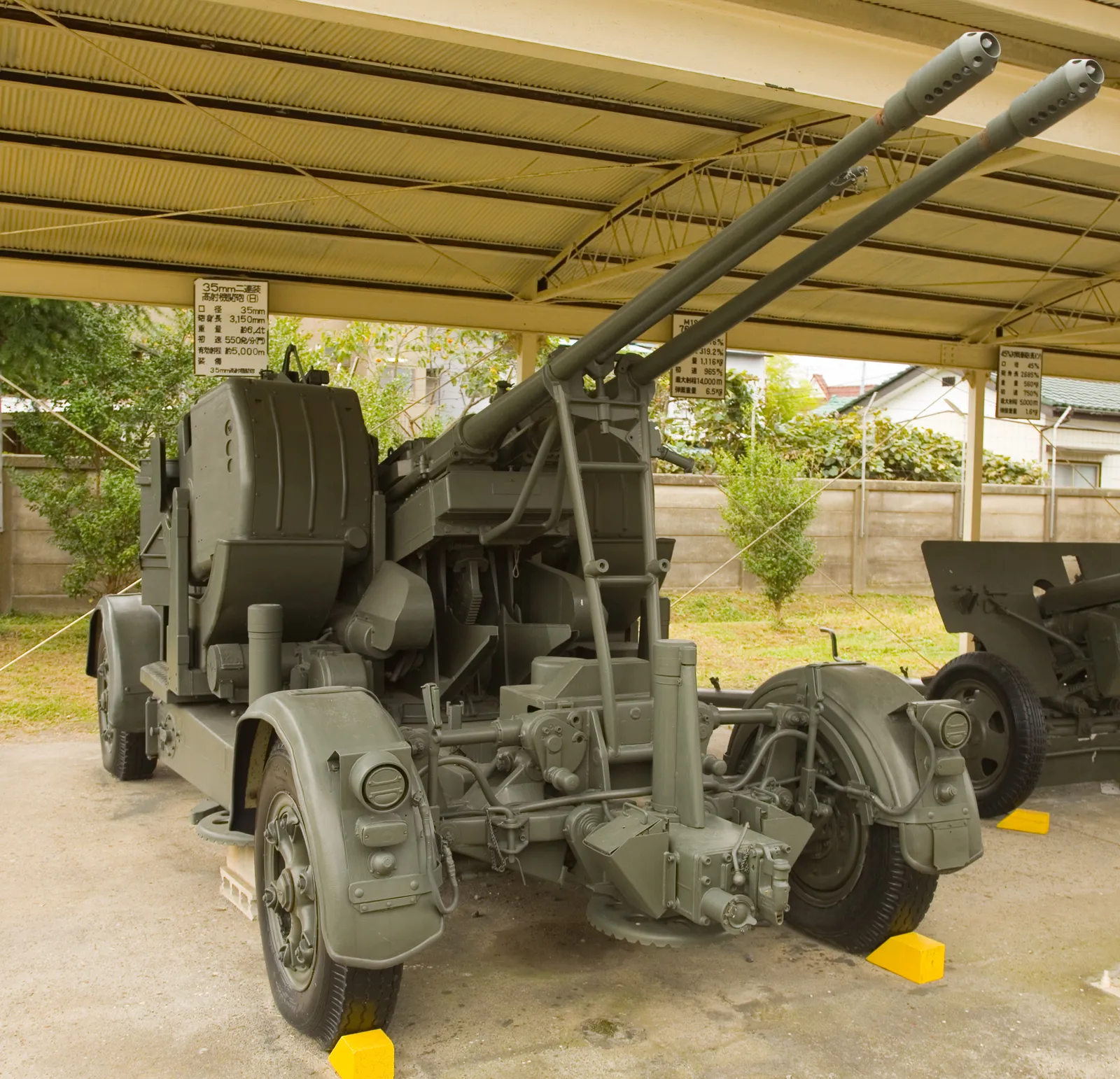

Documented in 2015 among pre-war Yemeni Army GDF-001/GDF-002 anti-aircraft guns available to Yemeni parties after the Houthi takeover; available evidence supports battlefield availability rather than a specific shootdown claim.
Role detailsAir Defense
GDF-001 / GDF-002 anti-aircraft gun
Also known as
- Oerlikon GDF
- Oerlikon 35 mm twin cannon
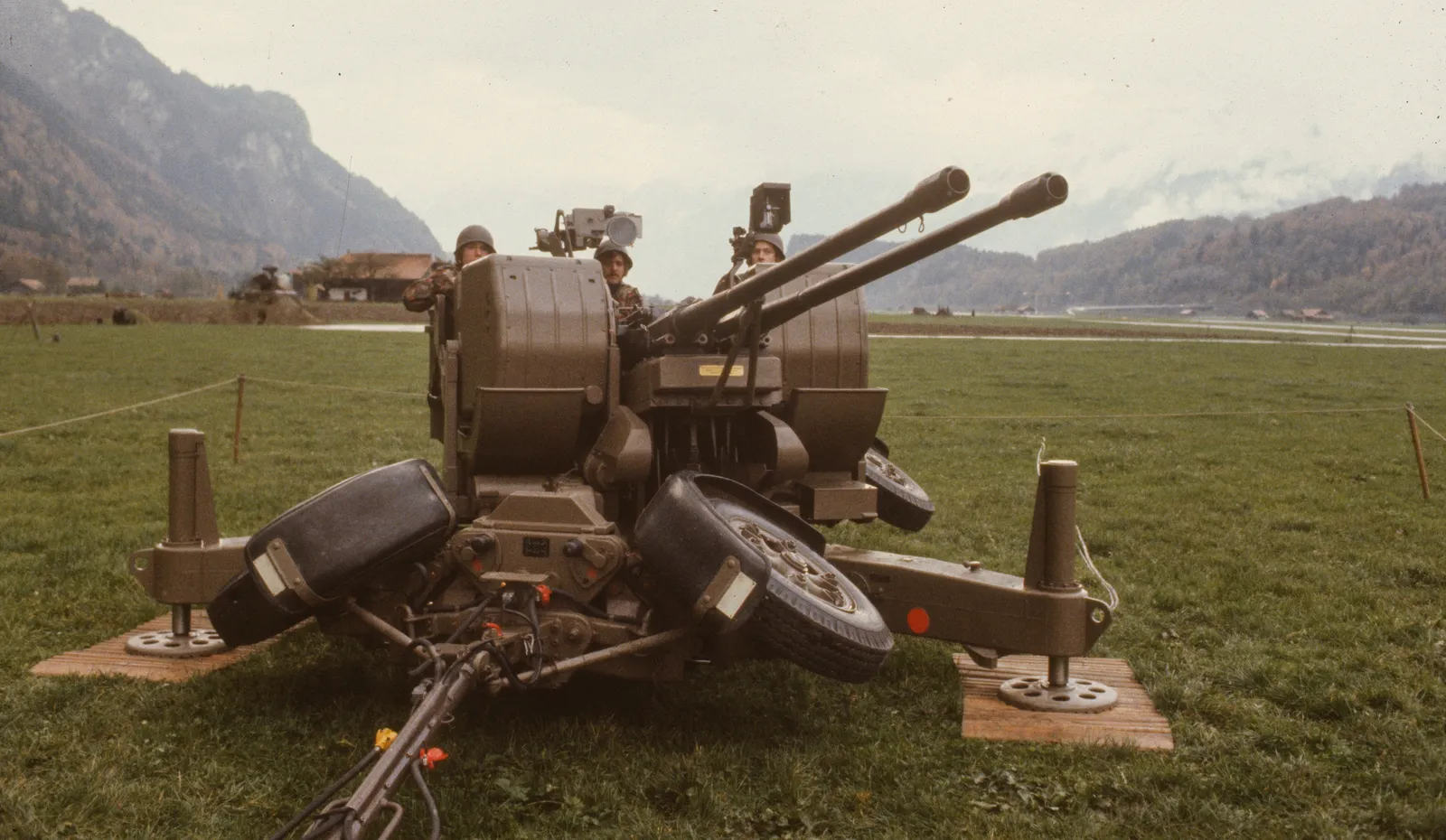
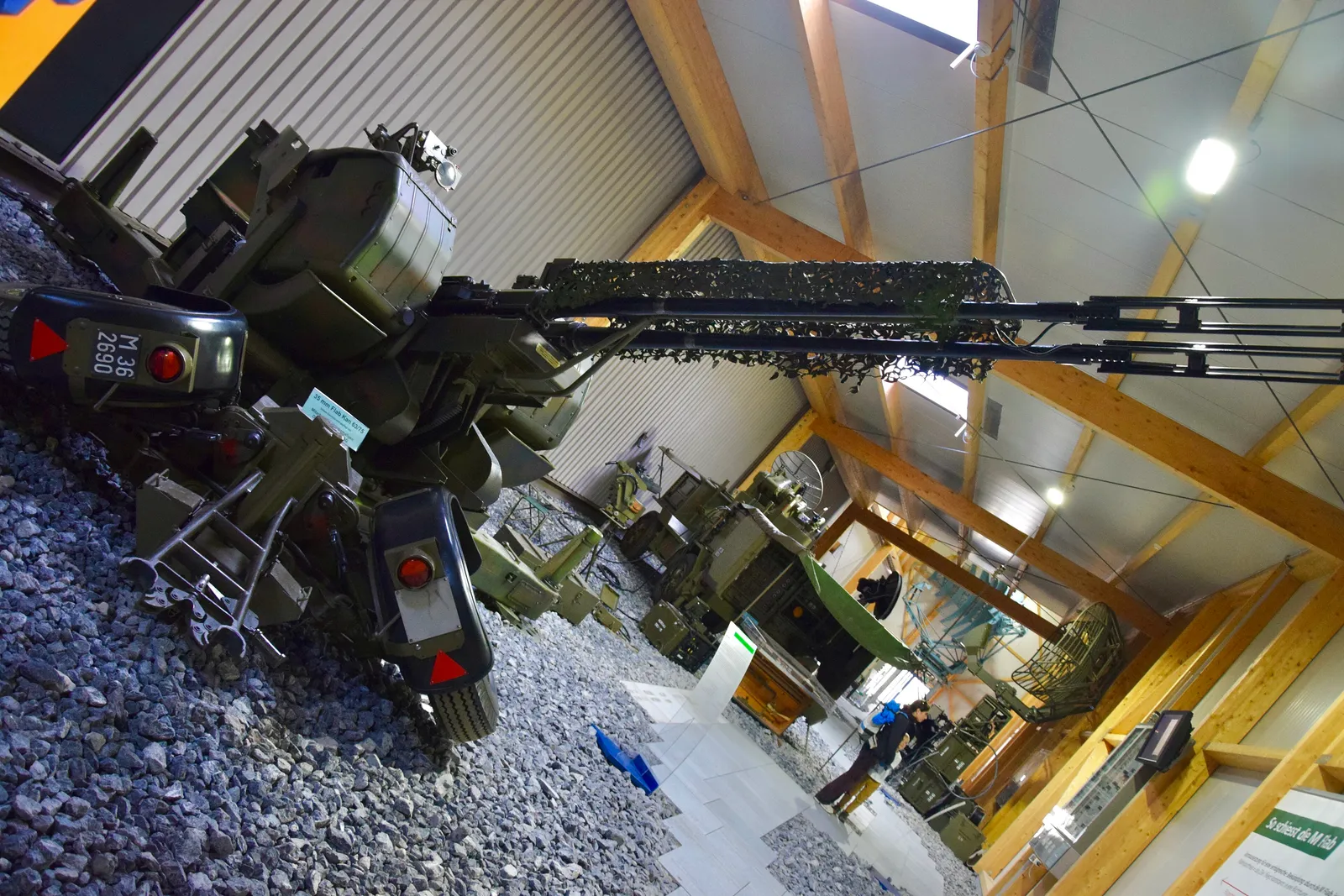
The GDF-001 and GDF-002 are early Oerlikon GDF twin 35 mm towed anti-aircraft guns. Weaponsystems says the family entered service in 1963, and from the GDF-002 onward it added a Ferranti GSR sight and digital data-bus linkage for Skyguard fire control. In Yemen, open-source documentation places GDF-001/GDF-002 guns in the pre-war Yemeni Army inventory and available to Yemeni battlefield parties after the Houthi takeover, but does not support a precise engagement or shootdown claim.
Role in Conflicts
Profile / Specs
Profile
- Origin
- Switzerland
- Built by
- Oerlikon Contraves
- Type
- Towed twin 35 mm anti-aircraft gun
- Service note
- Late 1950s-present family; Yemen record tied to the 2014-2015 takeover period
- Designer
- Oerlikon Contraves
- Designed
- Late 1950s
- Unit cost
- Not publicly documented for GDF-001/GDF-002
- Produced
- 1960s onward for the GDF family
- Number built
- Over 2,000 units sold to over 30 nations
Specifications
- Crew
- 3 on GDF-001/GDF-002 class guns
- Armament
- Two 35x228 mm Oerlikon KDA L/90 autocannons
- Rate of fire
- 550 rounds per minute per barrel; 1,100 rounds per minute combined
- Effective range
- About 3.2 km against aircraft and 4 km against ground targets
- Ammunition
- Original models carried 112 ready rounds plus 126 additional rounds on the carriage
- Weight
- About 6.3 t empty; 6.7 t loaded
- Fire control
- GDF-001 used the XABA sight; GDF-002 added the Ferranti GSR sight and a digital data bus for external Skyguard control
- Mobility
- Four-wheel towed carriage, normally moved by a 6x6 truck
Variant Split
The GDF-001 and GDF-002 are early production variants of the same 35 mm twin-gun family. The main documented differences are the sighting fit and the external fire-control interface.
| Variant | Key distinction | Operational note |
|---|---|---|
| GDF-001 | First production version | Uses the original XABA sight and relies on external Super Fledermaus control. |
| GDF-002 | Updated production version | Adds the Ferranti GSR sight and a digital data bus for Skyguard fire control. |
Variants
- GDF-001
- GDF-002
Skyguard Control Compatibility
Weaponsystems links the GDF-002 onward family to Skyguard radar fire control.
| Compatible item | Item type | Compatibility evidence |
|---|---|---|
 | Radar fire-control system | The GDF source says the GDF-002 added a digital data bus for integration with Skyguard fire-control radar. Sources: GDF |
Timeline
GDF-001 / GDF-002 anti-aircraft gun Key Events
GDF family development
Weaponsystems says Oerlikon Contraves developed the GDF in the late 1950s as a towed anti-aircraft gun family.
Sources: GDF
Entered service
Weaponsystems lists the GDF as entering service in 1963 and still in service today.
Sources: GDF
GDF-002 adds external fire-control linkage
Weaponsystems says the GDF-002 introduced the Ferranti GSR sight and a digital data bus for Skyguard fire control.
Sources: GDF
Documented in Yemen
Oryx documented pre-war Yemeni Army GDF-001/GDF-002 guns available to Yemeni parties after the Houthi takeover.
Sources: Handbook Of Pre-War Yemeni Fighting Vehicles
Media
GDF-001 / GDF-002 anti-aircraft gun Videos
Related Weapon Systems


Sources
GDFPublisher: Weaponsystems.net | Note: Supports Oerlikon GDF-001/GDF-002 background, manufacturer, design history, service entry, production total, variants, fire-control linkage, armament, crew, rate of fire, range, ammunition, weight, and mobility specifications. | Accessed: 2026-06-20Handbook Of Pre-War Yemeni Fighting VehiclesPublisher: Oryx | Note: Supports 2014 Yemen Civil War context: GDF-001/GDF-002 guns were fielded by the pre-war Yemeni Army and documented in 2015 as available to Yemeni parties on the battlefield after the Houthi takeover. | Accessed: 2026-06-20U.S. Destroyer Arrives Off Saudi Arabia Amid Plans To Bolster The Kingdom's Air DefensesPublisher: The War Zone | Note: Supports regional 2014 Yemen Civil War air-defense context around Houthi-claimed drone and missile attacks and Saudi Oerlikon GDF/Skyguard point-defense deployments; not used as the direct Yemen battlefield-use source for this entry. | Accessed: 2026-06-20Japanese L90 or GDF-002 35 mm twin cannonPublisher: Wikimedia Commons | Note: Supports image provenance for a Japanese-produced GDF-002/L90 example released into the public domain by the photographer. | Accessed: 2026-06-20Swiss Oerlikon GDF 35 mm Anti-aircraft Gun with Skyguard Fire Control System 1979Publisher: Wikimedia Commons | Note: Supports image provenance for a Swiss GDF gun with Skyguard fire-control system, credited to ETH-Bibliothek Zurich / Comet Photo AG under CC BY-SA 4.0. | Accessed: 2026-06-20Dubendorf Flieger Flab Museum - 35mm Oerlikon twin cannon anti-aircraft gunPublisher: Wikimedia Commons | Note: Supports image provenance for a museum-preserved 35 mm Oerlikon twin cannon photographed by Ank Kumar under CC BY-SA 4.0. | Accessed: 2026-06-20