Air Defense

LLAD guns

Also known as
  • low-level air defence guns
  • low-level air defense guns
  • LLAD gun layer

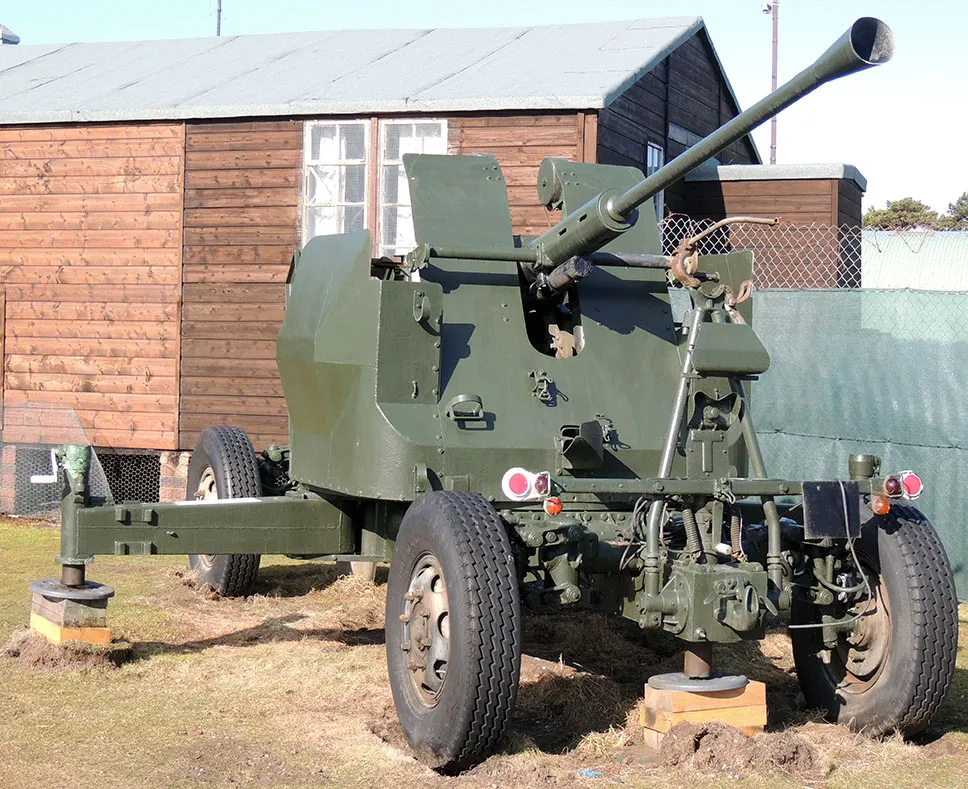
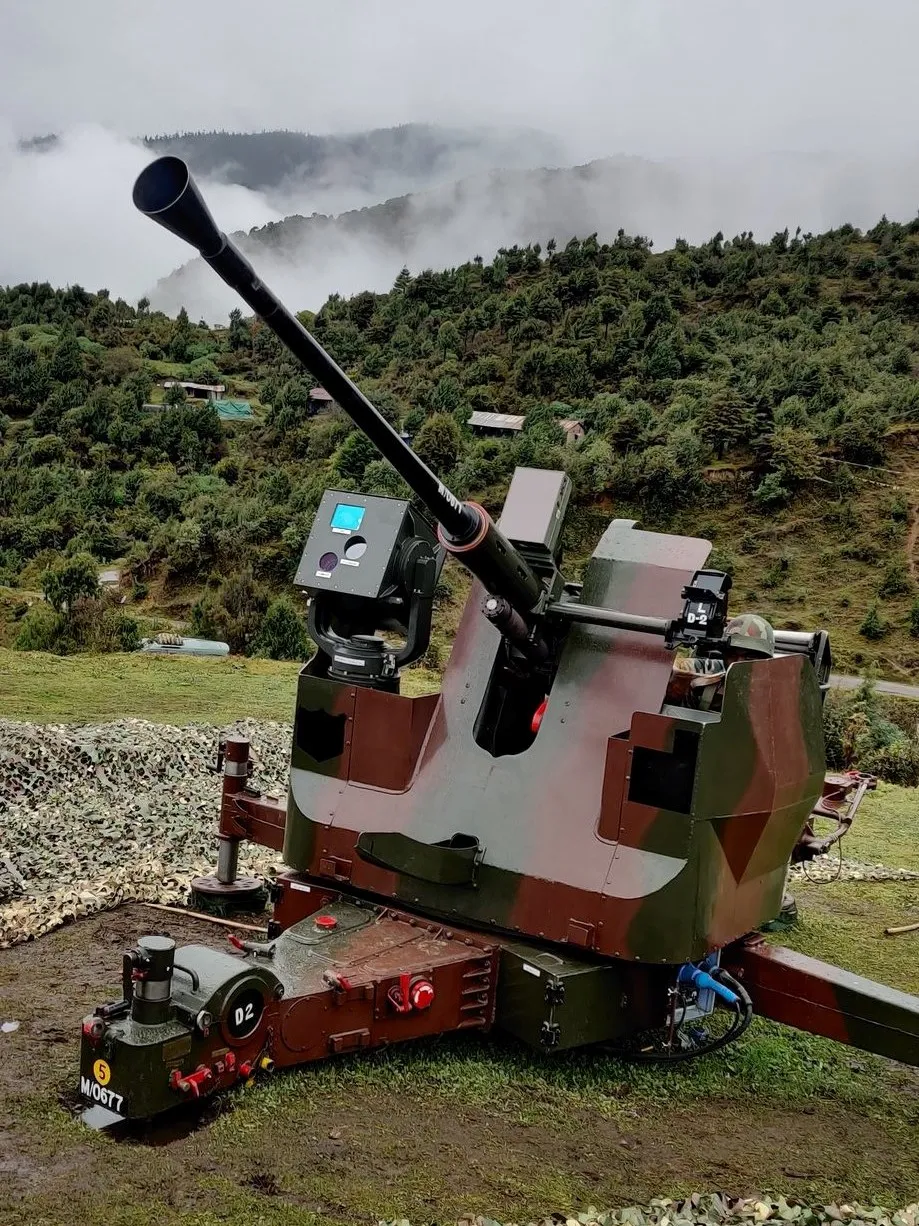
LLAD guns are India's low-level air-defense gun layer, built around modernized 40 mm L/70 batteries and 23 mm twin-barrel mounts for point defense against low-flying aircraft, drones, and loitering munitions. During the 2025 India-Pakistan Conflict, Indian official reporting placed them inside Operation Sindoor's layered air-defense network alongside MANPADS and longer-range surface-to-air missiles.

Role in Conflicts

Side
India

Indian Army air-defense units fielded low-level air-defense guns in Operation Sindoor as part of a layered defense against Pakistani drones and loitering munitions, working alongside MANPADS and longer-range surface-to-air missiles.

Documented Service Mix

Indian reporting treats LLAD guns as a mixed low-level layer rather than a single model. Modernized 40 mm L/70 batteries and 23 mm twin-barrel mounts are the representative families most often described in service.

Representative familyIndian-service roleWhy it matters
Bofors 40 mm L/70, 40 mm towed anti-aircraft autocannon, Air DefenseBofors 40 mm L/70 familyPoint air defenseBAE Systems' Mk4 datasheet lists the modern family at up to 300 rounds per minute and about 12,500 m maximum firing range, while Indian reporting places upgraded L/70 guns in the short-range counter-drone layer.
ZU-23-2, Towed twin 23 mm anti-aircraft autocannon, Air DefenseZU-23-2 twin-barrel familyMobile low-level air defenseDefense reporting describes Indian upgrade programs that add electric laying, improved sighting, and electro-optical fire-control tools.
Profile / Specs

Profile

Origin
Multiple; Indian service includes Swedish- and Soviet-origin gun families
Type
Low-level air-defense gun layer
Service note
1960s-present gun families modernized for contemporary point air defense
Designer
Multiple gun designers; Bofors and Soviet design bureaus for representative in-service families
Designed
Postwar and Cold War low-level air-defense gun designs
Unit cost
Not publicly standardized across LLAD gun families and upgrades
Produced
Varies by gun family and upgrade program
Number built
Not publicly standardized across the LLAD gun layer

Specifications

Role
Point defense against low-altitude aircraft, helicopters, drones, and loitering munitions
Representative armament
40 mm L/70 autocannon and 23 mm twin-barrel anti-aircraft guns in Indian service
Bofors L/70 caliber
40 mm L/70
Bofors L/70 rate of fire
Up to about 300 rounds per minute in modernized variants
Bofors L/70 maximum range
Modern Bofors 40 Mk4 L/70-family datasheet lists about 12,500 m maximum firing range; Indian reporting describes L/70 point-defense engagements in the 3-4 km effective-range class
23 mm twin-barrel role
Manual, mobile low-level air-defense gun upgraded in Indian service with improved sighting and electric laying
L-70 upgrade features
BEL lists all-electric drives, an integrated fire-control system with optronic sight, eye-safe laser rangefinder, day TV, thermal imager, ballistic computation, battery operation, and radar interface
Modernization pattern
Electric laying, optronic sights, thermal imaging, laser ranging, and fire-control improvements are recurring Indian upgrade themes
Variants
  • Bofors L/70 40 mm gun
  • 23 mm twin-barrel air-defense gun
Timeline

LLAD guns Key Events

  1. Representative gun families enter Indian service

    Defense reporting describes the 40 mm L/70 and 23 mm twin-barrel low-level air-defense families as long-serving Indian Army point-defense guns that became the backbone of the LLAD layer.

    Sources: Air Defence Guns - Current and Future Relevance

  2. Modernization shifts the guns toward electric laying and better sights

    Indian LLAD gun upgrades moved away from purely manual operation toward electric laying, improved sighting, electro-optical fire-control, thermal imaging, laser ranging, and radar-interface improvements for closer-in air defense.

    Sources: Air Defence Guns - Current and Future Relevance, L 70 Gun Upgradation

  3. Operation Sindoor puts LLAD guns in the layered air-defense fight

    PIB said Indian Army air-defense units used LLAD guns with MANPADS and longer-range surface-to-air missiles to counter Pakistani drone and loitering-munition attacks during Operation Sindoor.

    Sources: Operation SINDOOR: Forging One Force, Operation SINDOOR: The Rise of Aatmanirbhar Innovation in Defence

Media
Related Weapon Systems
Bofors 40 mm L/70, 40 mm towed anti-aircraft autocannon, Air DefenseAir DefenseBofors 40 mm L/7040 mm towed anti-aircraft autocannonThe Bofors 40 mm L/70 is a Swedish postwar anti-aircraft autocannon developed by AB Bofors as a higher-velocity, faster-firing successor to the wartime 40 mm L/60 family. Its towed and naval variants remained in service through upgrades, with source-backed modern use including Lithuanian-supplied guns in Ukrainian air defense and Indian upgraded L/70 guns used as a short-range counter-drone layer during the 2025 India-Pakistan Conflict.
Indian Field Gun, 105 mm towed field gun family, ArtilleryArtilleryIndian Field Gun105 mm towed field gun familyThe Indian Field Gun is an Indian 105 mm towed artillery family designed by ARDE to replace older 25-pounder guns and keep light fire support workable in mountain, plain, and desert terrain. The family includes the original IFG and lighter LFG, with Field Gun Factory Kanpur and Gun Carriage Factory Jabalpur tied to production and support, and 2020s reporting still connecting the guns to border deployments, ceremonial salutes, and automatic-laying modernization.
Igla, Man-portable infrared-homing surface-to-air missile system, Air DefenseAir DefenseIglaMan-portable infrared-homing surface-to-air missile systemThe Igla family is a Soviet/Russian shoulder-fired MANPADS built to give small air-defense teams a mobile, infrared-guided weapon against low-flying aircraft, helicopters, drones, and cruise missiles. Documented conflict use and fielding spans Ukrainian mobile air-defense teams, PKK use against a Turkish AH-1W helicopter, Syrian armed-group inventories, RSF fielding in Sudan, and Indian Army Igla-S teams reported in Operation Sindoor coverage.
HQ-16 / LY-80, Medium-range surface-to-air missile system, Air DefenseAir DefenseHQ-16 / LY-80Medium-range surface-to-air missile systemThe HQ-16, exported as the LY-80 family, is a Chinese medium-range surface-to-air missile system spanning road-mobile land batteries and the ship-launched HHQ-16 branch. It fills the layer between short-range point defenses and long-range strategic SAMs, with six-canister land launchers, radar and command vehicles, and a naval VLS fit on Type 054A-family frigates. In the 2025 India-Pakistan Conflict, Indian government and Indian press reporting identified Pakistan as relying on imported HQ-16 systems during Operation Sindoor, making it a documented part of Pakistan's contested air-defense picture.
Iranian anti-aircraft artillery, Gun-based short-range air defense artillery, Air DefenseAir DefenseIranian anti-aircraft artilleryGun-based short-range air defense artilleryIranian anti-aircraft artillery is an aggregate category for gun-based air-defense systems in Iranian service, including ZU-23-2 and Mesbah 23 mm weapons, Oerlikon-derived 35 mm Samavat guns, and older heavy-caliber systems. The record is most directly documented in the 1988 Tanker War phase of the 1980 Iran-Iraq War, where a Sassan platform 23 mm gun mount engaged U.S. forces, and in the 2020 United States-Iran Conflict, where ZU-23-2-type guns appeared as low-altitude point-defense threats and strike targets.

Sources