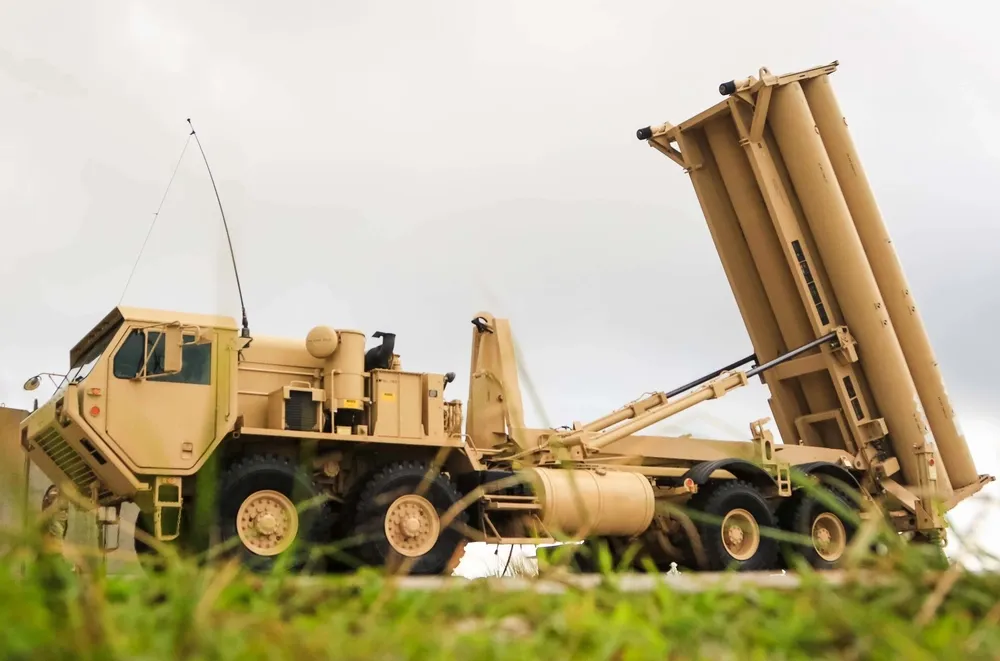
- Side
- United States

During Operation Epic Fury, the Pentagon listed THAAD anti-ballistic missile systems among the assets used by CENTCOM in the campaign against Iranian military targets.
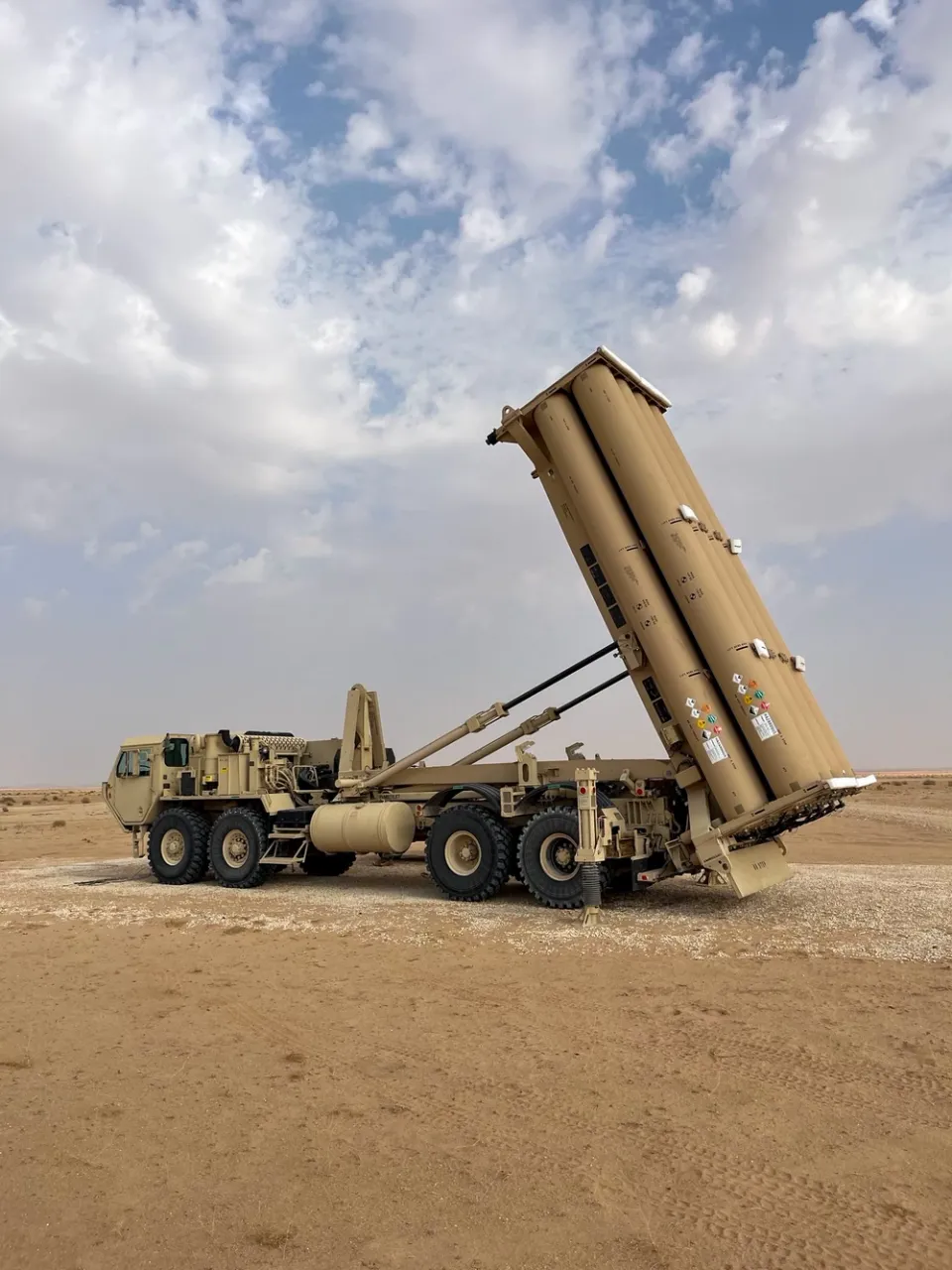
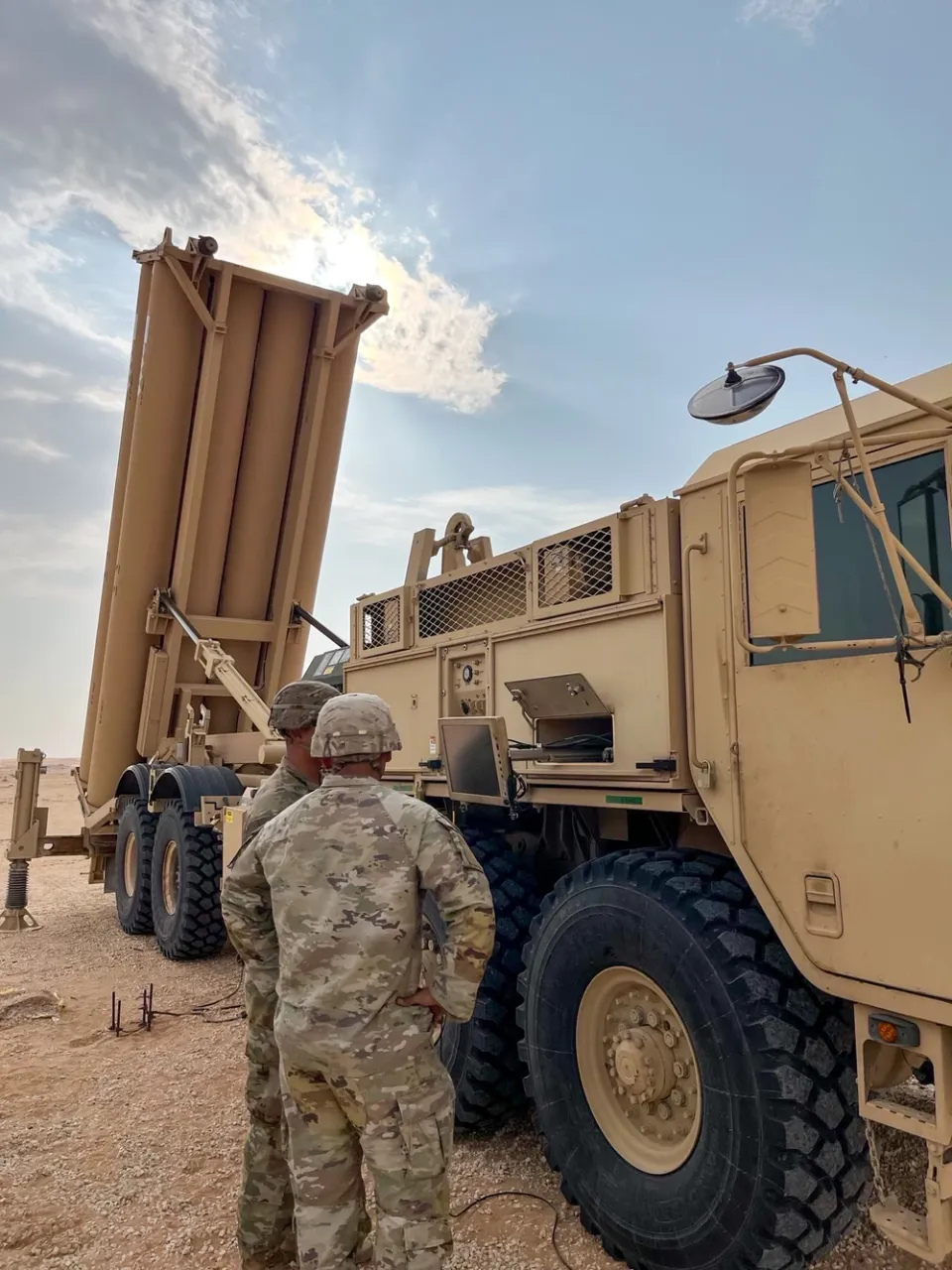
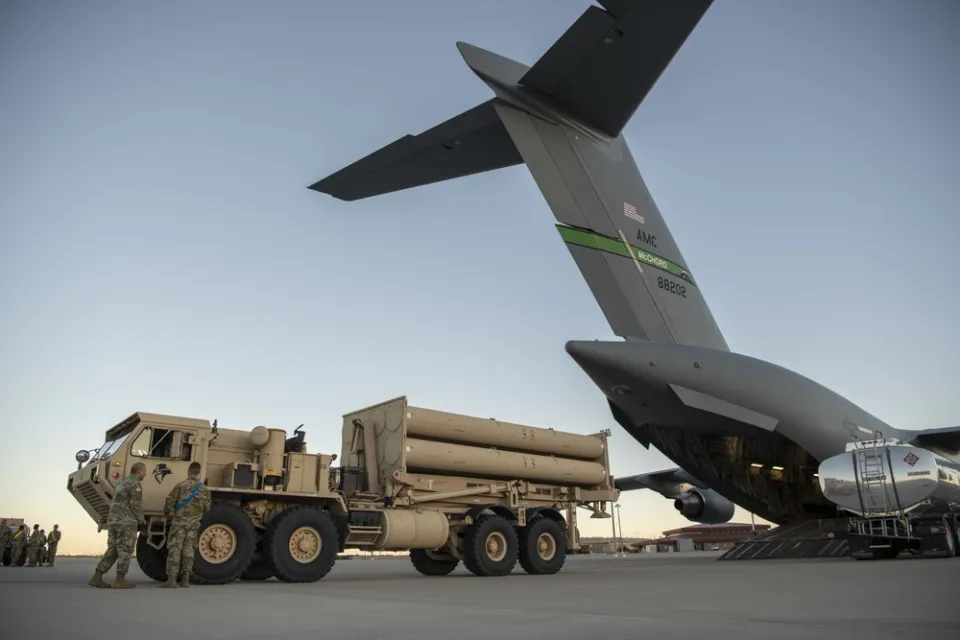
THAAD is a Lockheed Martin-built, transportable U.S. terminal missile-defense system for short-, medium-, and intermediate-range ballistic missiles. Its batteries combine launchers, hit-to-kill interceptors, AN/TPY-2 radar, fire-control communications, and support equipment to extend layered defense in late mid-course and terminal engagements inside or outside the atmosphere.
During Operation Epic Fury, the Pentagon listed THAAD anti-ballistic missile systems among the assets used by CENTCOM in the campaign against Iranian military targets.
U.S.-operated THAAD batteries in Israel were used during the June 2025 missile-defense effort against Iranian ballistic-missile attacks; FPRI documented video-identified THAAD launches and TWZ cited reporting that more than 150 THAAD interceptors were fired.
Role detailsReuters reported that a U.S. THAAD battery in Israel was used to try to intercept a projectile from Yemen on December 27, 2024, and Israeli reporting tied the engagement to a Houthi ballistic missile launched toward Israel.
Role detailsTHAAD's missile is built around kinetic hit-to-kill interception rather than blast fragmentation. Official and industry sources describe the interceptor as a no-warhead round guided toward ballistic targets during late mid-course or terminal flight, with BAE Systems identifying its infrared seeker as part of the guidance package that locks onto incoming missiles.
Direct collision by a non-explosive interceptor.
Infrared seeker tied into the THAAD guidance system.
Late mid-course and terminal ballistic-missile engagement, inside or outside the atmosphere.
Calculator
FY2026 procurement documents estimate THAAD interceptors at about $12.4 million each. THAAD batteries commonly field six launchers with eight interceptors per launcher.
Official budget material treats THAAD as a five-part weapon system: interceptors, launchers, AN/TPY-2 radar, fire-control communications, and support equipment. The U.S. force-structure baseline remains an eight-battery Army fleet, while Lockheed Martin's 2026 product page lists ten active batteries worldwide across U.S., UAE, and Saudi inventories.
| Element | Official detail | Design role |
|---|---|---|
| Launchers | Six per U.S. battery baseline | Truck-mounted launchers carry the ready interceptors and provide the mobile firing element. |
| Interceptors | Eight per launcher; 48 ready rounds per battery | Hit-to-kill missiles collide with ballistic targets rather than using a blast-fragmentation warhead. |
| Radar | AN/TPY-2 | Provides surveillance, targeting, and track data for THAAD intercept missions. |
| Fire control | THAAD fire control and communications | Coordinates engagement control and links the battery into the broader missile-defense network. |
| Support equipment | Includes Missile Round Pallet-Transportable equipment | Supports missile handling, sustainment, and reload activity around the firing battery. |
Public THAAD variant language usually describes fielded hardware/software configurations and battery packages rather than separate named missile models.
| Variant | Configuration | Designation notes |
|---|---|---|
| THAAD Configuration 2 | Fielded hardware/software configuration | DOT&E reporting identifies Configuration 2 hardware with THAAD 2.8 and 2.8.1 software in fielded batteries and 2017 flight testing. Sources: FY2017 DOT&E THAAD Report |
| Minimum Engagement Package | Reduced initial battery package | Lockheed Martin's eighth-battery delivery notice said the Army would begin training on the battery's minimum engagement package after delivery. Sources: Lockheed Martin Delivers Eighth U.S. Terminal High Altitude Area Defense Battery |
THAAD is designed to work inside a wider missile-defense network rather than as a standalone shield.
| Compatible item | Item type | Compatibility evidence |
|---|---|---|
 | Patriot battery | GAO's missile-defense review says THAAD can exchange tracking data with Patriot, which lets the two systems work together in layered defense. Sources: GAO-22-105075, MISSILE DEFENSE |
 | Aegis BMD | GAO's layered defense architecture places THAAD alongside Aegis ballistic missile defense as part of the same networked missile-defense picture. Sources: GAO-22-105075, MISSILE DEFENSE |
 | Ballistic-missile defense radar | U.S. Army budget material lists AN/TPY-2 radar as one of THAAD's five major weapon-system components, and Army training material describes it as the surveillance and targeting sensor for THAAD intercept missions. Sources: FY2027 Army Missile Procurement Justification Book, Fort Sill Trains THAAD Batteries |
 | Battle-management system | Lockheed Martin describes C2BMC as connecting THAAD with other missile-defense elements so sensors, shooters, and command nodes can share the integrated defense picture. Sources: C2BMC product page |
Lockheed Martin said the first U.S. THAAD battery was delivered and activated in May 2008, marking the system's entry into operational service.
Sources: Lockheed Martin Delivers Eighth U.S. Terminal High Altitude Area Defense Battery
Lockheed Martin reported THAAD's first successful intercept of a separating target at the Pacific Missile Range Facility, a milestone in the system's development and test history.
Sources: Lockheed Martin's THAAD Weapon System Achieves First Successful Intercept of a Separating Target
Lockheed Martin said it received a $74 million contract to produce the eighth THAAD battery for the U.S. government.
Sources: Lockheed Martin to Produce Eighth THAAD Battery for the US Government
The Pentagon said it deployed a THAAD battery and U.S. crew to Israel to reinforce Israeli air defenses after Iranian attacks.
Sources: Statement by Pentagon Press Secretary Maj. Gen. Pat Ryder on the Deployment of a THAAD Battery to Israel
Reuters reported that a U.S. THAAD battery in Israel intercepted a projectile launched from Yemen, tying the system to the 2023 Red Sea Crisis air-defense campaign.
Sources: Reuters THAAD in Israel Used to Intercept Projectile From Yemen
Lockheed Martin said it delivered the eighth U.S. THAAD battery and said the Army would begin training on the battery's minimum engagement package.
Sources: Lockheed Martin Delivers Eighth U.S. Terminal High Altitude Area Defense Battery
Lockheed Martin said the U.S. government awarded a seven-year undefinitized contract action worth up to $35 billion to quadruple THAAD interceptor production.
Sources: $35 Billion THAAD Seven-Year Procurement Award Propels Acceleration of Critical Missile Defense Interceptor Production