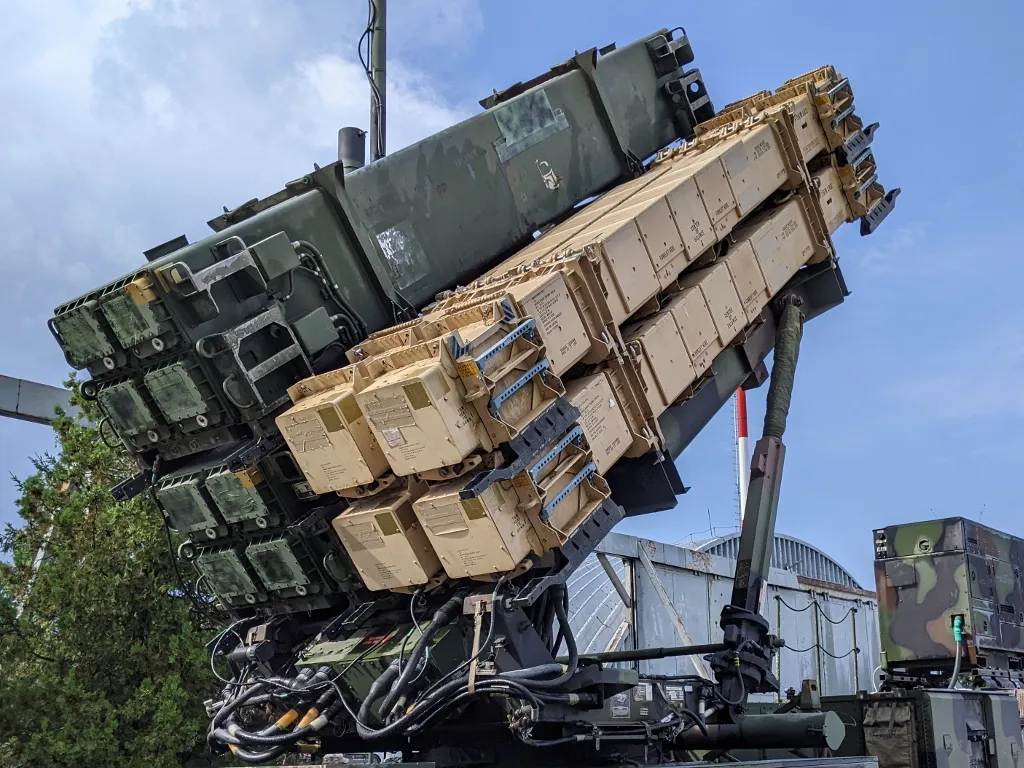

U.S.-led coalition Patriot batteries fielded PAC-3 interceptors during the 2003 invasion of Iraq; contemporary reporting described PAC-3 use as limited but tied it to Patriot defenses against Iraqi Ababil-100 and Al Samoud tactical ballistic missiles fired toward coalition forces and Kuwait.
Role detailsAir Defense
PAC-3
Also known as
- MIM-104F
- MIM-104 PAC-3
- MIM-104 PAC-3 MSE
- Patriot PAC-3
- Patriot Configuration-3
- Patriot Configuration 3
- PAC-3 Configuration 3
- PAC-3 CRI
- PAC-3 MSE
- PAC-3 Missile Segment Enhancement
- Patriot Advanced Capability-3
- Patriot Advanced Capability-3 Missile Segment Enhancement
- ERINT
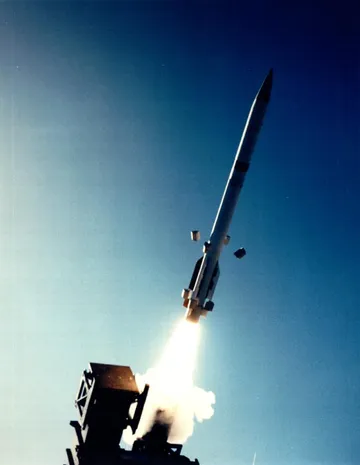
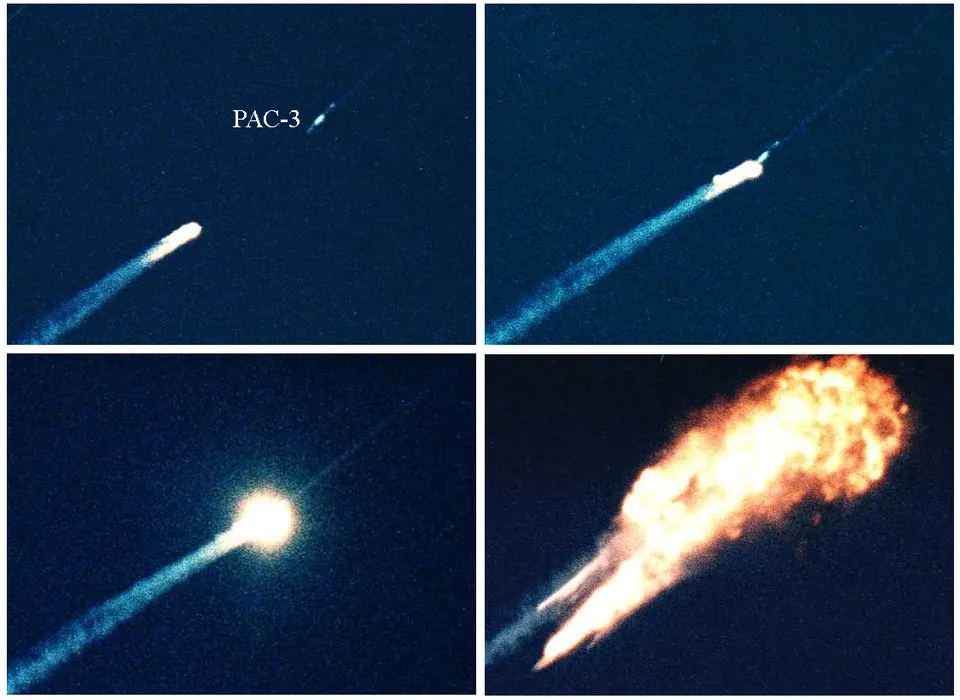
PAC-3 is the hit-to-kill interceptor family for Patriot air-defense batteries, using active radar homing and direct-impact defeat against tactical ballistic missiles, cruise missiles, aircraft, and other high-value air threats. PAC-3 CRI gives Patriot launchers a dense 16-round loadout, while PAC-3 MSE uses a larger dual-pulse motor and control changes for greater defended battlespace; documented combat and transfer contexts include Iraq in 2003, Yemen, Ukraine, and U.S.-Qatari Patriot defense during the June 2025 Iran missile attack on Al Udeid.
Role in Conflicts
- Side
- Ukraine

Ukraine has received PAC-3 and PAC-3 MSE missiles for Patriot air-defense systems, including German-supplied batches and other donor transfers documented by SIPRI, to strengthen defenses against Russian ballistic and hypersonic missile threats.
Role details- Side
- United States
During Iran's June 2025 strike on Al Udeid Air Base, U.S. and Qatari Patriot batteries launched Patriot interceptors against Iranian ballistic missiles; public reporting identified PAC-3 MSE remnants but does not provide a shot-by-shot interceptor breakdown.
- Side
- United States
U.S. Patriot crews, joined by Qatari Patriot crews, launched Patriot interceptors against Iran's June 23, 2025 ballistic-missile attack on Al Udeid Air Base after U.S. strikes on Iranian nuclear sites; public sources tie the engagement to PAC-3 inventory pressure but often do not separate PAC-3 from other Patriot interceptor shots round by round.

Saudi and Emirati Patriot batteries were used during the 2014 Yemen Civil War to defend against Houthi missile, rocket, and drone attacks; missile-defense summaries identify PAC-2 and PAC-3 system context, while public sources often do not identify the exact interceptor variant for each engagement.
Role detailsProfile / Specs
Profile
- Origin
- United States
- Built by
- Lockheed Martin
- Type
- Hit-to-kill Patriot interceptor missile
- Service note
- 1990s-present; PAC-3 MSE in service from the mid-2010s
- Designer
- Lockheed Martin
- Designed
- PAC-3 family developed from the Patriot missile series; PAC-3 MSE reached first-unit-equipped status in 2015
- Unit cost
- PAC-3 MSE unit costs vary by accounting basis; the Army FY2027 budget lists a $4.988 million FY2027 missile-hardware unit cost and about $5.318 million gross weapon-system unit cost
- Produced
- PAC-3 MSE low-rate initial production from 2014; first unit equipped in October 2015; initial operational capability in July 2016; full-rate production authorized in 2018; a January 2026 U.S. framework agreement set a goal of raising annual PAC-3 MSE output from about 600 to about 2,000 interceptors
- Developed from
- MIM-104 Patriot missile family
Specifications
- Role
- Terminal-phase interception of short- and medium-range ballistic missiles, cruise missiles, air-breathing threats, and unmanned aerial systems
- Guidance
- Active Ka-band radar seeker with data-link updates from the Patriot fire-control system
- Kill mechanism
- Hit-to-kill direct body-to-body impact with a lethality enhancer
- PAC-3 CRI range
- Public secondary estimates place ballistic-missile engagement range at about 20 km
- PAC-3 MSE range
- Public secondary estimates place ballistic-missile engagement range at about 30 km; official test reporting describes higher-altitude and longer-range capability than earlier PAC-3 variants
- Launcher loadout
- Up to 16 PAC-3 CRI missiles or 12 PAC-3 MSE missiles on compatible Patriot launchers
- MSE propulsion
- Dual-pulse solid rocket motor with larger fins and upgraded actuators
- Integration
- Integrated with Patriot launch batteries; demonstrated with IBCS; U.S.-only THAAD interoperability is documented in Army budget material and DOT&E testing
- MSE production scaling
- A January 2026 U.S. framework agreement with Lockheed Martin targeted expansion from approximately 600 to approximately 2,000 PAC-3 MSE interceptors per year
PAC-3 MSE Upgrade
PAC-3 MSE is the larger Missile Segment Enhancement member of the PAC-3 hit-to-kill interceptor family. It keeps the Patriot launcher and fire-control relationship but changes the missile package enough that loadout, production, and user demand are often discussed separately from earlier PAC-3 CRI rounds.
Motor and control
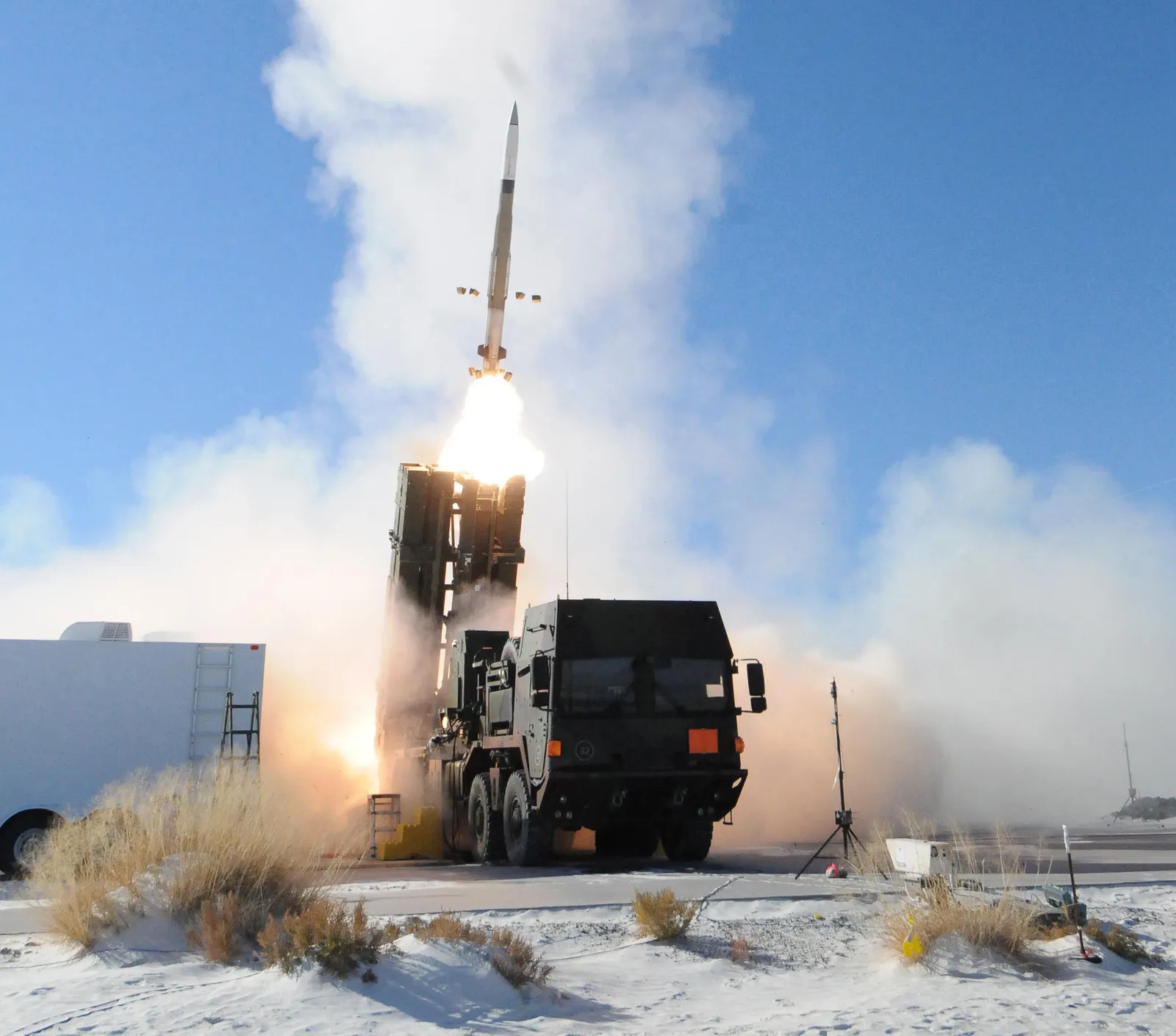
MSE uses a larger dual-pulse solid rocket motor, enlarged control surfaces, upgraded actuators, and guidance changes to extend the defended battlespace.
Launcher fit
Compatible Patriot launchers can carry fewer MSE rounds than CRI rounds; the entry models 12 PAC-3 MSE interceptors or 16 PAC-3 CRI interceptors per launcher.
Production pressure
U.S. acquisition reporting and a 2026 framework agreement point to rising demand for PAC-3 MSE inventory across U.S., allied, and partner missile-defense forces.
Variants
The catalog page uses PAC-3 for the Patriot hit-to-kill interceptor family and the PAC-3 Configuration 3 designation that brought the ERINT-derived interceptor into Patriot service; CRI is the production baseline, while MSE is the larger Missile Segment Enhancement upgrade derived from the CRI design.
| Variant | Configuration | Designation notes |
|---|---|---|
| PAC-3 Cost Reduction Initiative (CRI) | Baseline hit-to-kill interceptor | The CRI round is the smaller PAC-3 family interceptor carried in 16-round Patriot launcher loadouts and serves as the design basis for MSE. Sources: PAC-3 MSE Overview, Patriot Advanced Capability-3 Missile, Patriot |
| PAC-3 Missile Segment Enhancement (MSE) | Extended-battlespace hit-to-kill interceptor | MSE adds a larger dual-pulse motor, enlarged control surfaces, and upgraded support equipment; compatible Patriot launchers carry up to 12 MSE missiles. Sources: PAC-3 MSE Overview, Lockheed Martin PAC-3, Patriot Advanced Capability-3 Missile, PAC-3 MSE Selected Acquisition Report December 2018 |
Launch System
PAC-3 is an interceptor round for Patriot batteries, not a standalone firing system.
| Launcher | Launcher type | Launch evidence |
|---|---|---|
 | Integrated air and missile defense system | Patriot launchers fire PAC-3 CRI and PAC-3 MSE interceptors; CSIS notes modern M903 launcher capacity for 16 PAC-3 CRI or 12 PAC-3 MSE missiles, and Lockheed Martin describes PAC-3 as the Patriot system's hit-to-kill interceptor family. Sources: Patriot, Lockheed Martin PAC-3 |
Calculator
PAC-3 Ready Load
Launchers4
Ready interceptors56
Average per launcher14.0
Loadout value$207,200,000
PAC-3 CRI2 launchers50% 50%
PAC-3 MSE2 launchers50% 50%
Default unit-cost fields use the entry's generic PAC-3 cost estimate and are editable; public costs vary by variant, canister, spares, support package, and contract scope.
Timeline
PAC-3 Key Events
Hit-to-kill Patriot interceptor work begins
The U.S. Army began concept development for a hit-to-kill Patriot interceptor in 1983, and the May 1987 FLAGE test intercepted a Lance ballistic missile to demonstrate direct-impact missile defense.
Sources: Patriot
ERINT becomes the PAC-3 foundation
The Extended Range Interceptor program completed final design review in December 1989, flew tests from 1992 to 1994, and was selected on May 19, 1994 as the basis for the Patriot Advanced Capability-3 missile.
Sources: Patriot
PAC-3 testing and readiness
PAC-3 flight testing began in 1997, Configuration 3 entered low-rate initial production in 2000, initial operational capability followed in 2001, and the interceptor was declared combat ready in August 2002.
Sources: Patriot
PAC-3 combat debut in Iraq
CSIS reports that the Army employed the first PAC-3 units in combat during Operation Iraqi Freedom in 2003.
Sources: Patriot
PAC-3 MSE flight testing validates the upgrade
The PAC-3 Missile Segment Enhancement had its first guided flight test in March 2009 and successfully intercepted a tactical ballistic missile target in February 2010.
Sources: PAC-3 MSE Overview, Patriot Advanced Capability-3 Missile
PAC-3 MSE enters production and service
PAC-3 MSE was approved for low-rate initial production in 2014, first production missiles were accepted by the U.S. Army in October 2015, initial operational capability was declared in 2016, and full-rate production began in 2018.
Sources: PAC-3 MSE Overview, Patriot Advanced Capability-3 Missile, PAC-3 MSE Selected Acquisition Report December 2018
Patriot PAC-3 used in the Yemen conflict
Saudi and Emirati Patriot batteries, including PAC-3 interceptors, have been used against Houthi ballistic missile and drone attacks during the Yemen conflict.
Sources: Houthis
Ukraine begins PAC-3 combat operations
Ukraine began operational use of Western-supplied Patriot PAC-3 systems in May 2023; Ukrainian reporting highlighted the May 4 Kinzhal interception over Kyiv and further Kinzhal intercepts during the May 16 missile attack.
Sources: Intercepting Kinzhal, Iskander, and Zircon missiles: key facts about PAC-3 missiles
Patriot defenses protect Al Udeid Air Base
During Iran's June 2025 missile attack on Al Udeid Air Base in Qatar, U.S. and Qatari Patriot batteries intercepted ballistic missiles in what the Joint Chiefs chairman called the largest single Patriot engagement in U.S. military history.
Sources: Iran missile strikes at US base in Qatar a 'simple task' for air defences, Iran Launches Missile Attack at Al Udeid, Hegseth and Caine News Conference
Additional PAC-3 missiles delivered to Ukraine
Germany delivered an additional batch of PAC-3 missiles to Ukraine, strengthening Patriot-based defenses against Russian ballistic and hypersonic missile threats.
Sources: Intercepting Kinzhal, Iskander, and Zircon missiles: key facts about PAC-3 missiles
U.S. framework targets higher PAC-3 MSE output
The U.S. Department of War announced a seven-year framework with Lockheed Martin intended to expand PAC-3 MSE annual production from roughly 600 missiles to roughly 2,000, reflecting demand from U.S., allied, and partner inventories.
Sources: PAC-3 MSE Production Framework Agreement
Related Weapon Systems


Sources
SIPRI Arms Transfers DatabasePublisher: Stockholm International Peace Research Institute | Note: Supports 2014 Russia-Ukraine War PAC-3 and PAC-3 MSE transfer context: SIPRI's public transfer register records German, U.S., and Romanian PAC-3-family missile deliveries to Ukraine after Russia's 2022 full-scale invasion. | Accessed: 2026-07-08PAC-3 MSE OverviewPublisher: Lockheed Martin | Note: Supports PAC-3 family background, hit-to-kill method, MSE variant changes, launcher loadout, and international user context. | Accessed: 2026-07-08Patriot Advanced Capability-3 MissilePublisher: Missile Defense Advocacy Alliance | Note: Supports general PAC-3 role, producer, target set, ranges, guidance, and PAC-3 CRI/MSE variant context. | Accessed: 2026-07-08US Army awards Patriot Advanced Capability-3 contract worth up to $368.6 millionPublisher: DVIDS | Note: Supports U.S. Army production-capacity and capability context for PAC-3 MSE. | Accessed: 2026-07-08FY 2027 Missile Procurement, Army - MSE MissilePublisher: Assistant Secretary of the Army for Financial Management and Comptroller | Note: Supports PAC-3 MSE FY2027 procurement quantities, unit-cost context, target set, Patriot/IBCS/THAAD integration, and expanded production funding. | Accessed: 2026-07-08PAC-3 MSE Selected Acquisition Report December 2018Publisher: U.S. Department of Defense | Note: Supports PAC-3 MSE Milestone C/LRIP in 2014, first unit equipped in 2015, IOC in 2016, FRP authorization and first FRP quantities in 2018, and Lockheed Martin Missiles and Fire Control production contracts. | Accessed: 2026-07-08PAC-3 MSE Modernized Selected Acquisition Report December 2023Publisher: U.S. Department of Defense | Note: Supports PAC-3 MSE design features, acquisition milestones, first-unit-equipped and IOC definitions, and the 2022 production assurance effort to raise annual output. | Accessed: 2026-07-08DOT&E FY2018 Patriot Advanced Capability-3Publisher: Director, Operational Test and Evaluation | Note: Supports PAC-3 CRI/MSE mixed-interceptor testing, MSE full-rate production decision support, THAAD interoperability testing, and higher-altitude/longer-range MSE capability over earlier PAC-3 variants. | Accessed: 2026-07-08PatriotPublisher: CSIS Missile Threat | Note: Supports 2003 Iraq War direct use: PAC-3 units were fielded by U.S.-led coalition forces during Operation Iraqi Freedom in 2003. Also supports 2014 Yemen Civil War Patriot use by Saudi Arabia and the United Arab Emirates against Houthi rockets, missiles, and drones, plus PAC-3 development chronology, Patriot interceptor family context, and launcher loadout. | Accessed: 2026-07-08Intercepting Kinzhal, Iskander, and Zircon missiles: key facts about PAC-3 missilesPublisher: Ministry of Defence of Ukraine | Note: Supports 2014 Russia-Ukraine War PAC-3 missiles delivered to and used by Ukraine for Patriot air defense against Russian ballistic and hypersonic missile threats. | Accessed: 2026-07-08Iran missile strikes at US base in Qatar a 'simple task' for air defencesPublisher: ABC News | Note: Supports 2020 United States-Iran Conflict Patriot/PAC-3 missile defenses used by U.S. and Qatari forces during Iran's June 2025 strike on Al Udeid Air Base. | Accessed: 2026-07-08Iran Launches Missile Attack at Al UdeidPublisher: Air & Space Forces Magazine | Note: Supports 2020 United States-Iran Conflict Patriot batteries fielded by American and Qatari forces at Al Udeid, including reported PAC-3 MSE interceptor remnants from the June 2025 defense. | Accessed: 2026-07-08Missile and Interceptor Cost Estimates During the U.S.-Israel-Iran WarPublisher: Jewish Institute for National Security of America | Note: Supports 2025 Israel-Iran Conflict direct use and 2020 United States-Iran Conflict overlap context: estimates that two Patriot batteries at Al Udeid used roughly 30 Patriot interceptors against 14 Iranian ballistic missiles on June 23, 2025, and gives the generic PAC-3 cost estimate used for editable loadout-cost defaults. | Accessed: 2026-07-08US helps Israel shoot down barrage of Iranian missilesPublisher: Associated Press | Note: Supports 2025 Israel-Iran Conflict direct air-defense context: U.S. air-defense systems, including Patriot systems in the Middle East, helped defend against Iranian ballistic missiles launched during the June 2025 Israel-Iran fighting. | Accessed: 2026-07-08Hegseth and Caine News ConferencePublisher: U.S. Department of War | Note: Supports 2025 Israel-Iran Conflict direct use: Gen. Dan Caine described U.S. and Qatari Patriot crews defending Al Udeid against Iranian missiles on June 23, 2025, calling it the largest single Patriot engagement in U.S. military history. | Accessed: 2026-07-08Largest Patriot Missile Salvo In U.S. Military History Launched Defending Al Udeid Air Base Against Iranian AttackPublisher: The War Zone | Note: Supports 2025 Israel-Iran Conflict direct use: reports Patriot interceptors defending Al Udeid from Iranian ballistic missiles and preserves the caveat that public imagery and reporting often identify Patriot or PAC-3 interceptors without a full shot-by-shot official count. | Accessed: 2026-07-08The Depleting Missile Defense Interceptor InventoryPublisher: Center for Strategic and International Studies | Note: Supports 2025 Israel-Iran Conflict direct use and inventory context: CSIS reports U.S. Patriot interceptors were used in Qatar to defend Al Udeid after the June 2025 Israel-Iran hostilities and discusses PAC-3 MSE procurement pressure. | Accessed: 2026-07-08HouthisPublisher: Missile Defense Advocacy Alliance | Note: Supports 2014 Yemen Civil War Patriot PAC-2 and PAC-3 systems used by Saudi missile defenses against Houthi missile attacks. | Accessed: 2026-07-08Kingdom of Saudi Arabia - Patriot Advanced Capability-3 (PAC-3) Missiles and Support EquipmentPublisher: Defense Security Cooperation Agency | Note: Supports Saudi PAC-3 procurement context and the requested PAC-3 CRI missile package. | Accessed: 2026-07-08Kingdom of Saudi Arabia - PATRIOT Advanced Capability-3 Missile Segment Enhancement MissilesPublisher: Defense Security Cooperation Agency | Note: Supports Saudi PAC-3 MSE procurement background, Lockheed Martin as principal contractor, and Saudi integrated air and missile defense context. | Accessed: 2026-07-08Patriot PAC-3 MSE SIAF-2022.jpgPublisher: Wikimedia Commons | Note: Image provenance and licensing page for the primary PAC-3 MSE launcher image, published under CC BY-SA 3.0. | Accessed: 2026-07-08PAC-3 Erint Missile.jpgPublisher: Wikimedia Commons | Note: Image provenance and public-domain U.S. government source context for a PAC-3 launch image from the Missile Defense Agency. | Accessed: 2026-07-08PAC-3 Interception.jpgPublisher: Wikimedia Commons | Note: Image provenance and public-domain U.S. Army licensing context for a PAC-3 interception image. | Accessed: 2026-07-08MEADS Launch WSMR 2734-1.jpgPublisher: Wikimedia Commons | Note: Image provenance and public-domain U.S. Air Force licensing context for a PAC-3 MSE launch during a MEADS test. | Accessed: 2026-07-08Lockheed Martin PAC-3Publisher: Lockheed Martin | Note: Supports manufacturer background, PAC-3 hit-to-kill role, target set, Patriot integration, and PAC-3 MSE upgrade context. | Accessed: 2026-07-08PAC-3 MSE Production Framework AgreementPublisher: U.S. Department of War | Note: Supports current PAC-3 MSE production-scaling context: the January 2026 framework agreement with Lockheed Martin targets an increase from approximately 600 to approximately 2,000 interceptors per year. | Accessed: 2026-07-08Patriot Scorecard Mixed; PAC-3 Use LimitedPublisher: Arms Control Association | Note: Supports 2003 Iraq War direct use context: PAC-3 interceptors were fielded with Patriot defenses during the 2003 Iraq campaign, with reported Iraqi tactical ballistic missile attacks against coalition forces and Kuwait. | Accessed: 2026-07-08