Air Defense

2A14 23 mm cannon

Also known as
  • 23mm 2A14
  • 2A14M
  • Afanasyev-Yakushev 2A14
  • ZU-23 cannon
  • ZU-23-2 cannon

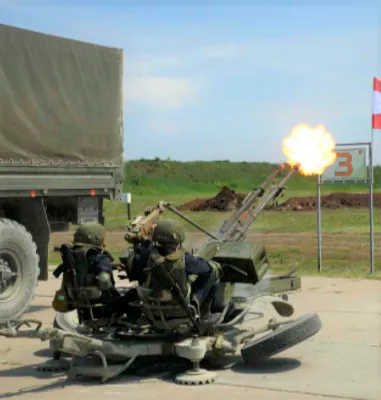
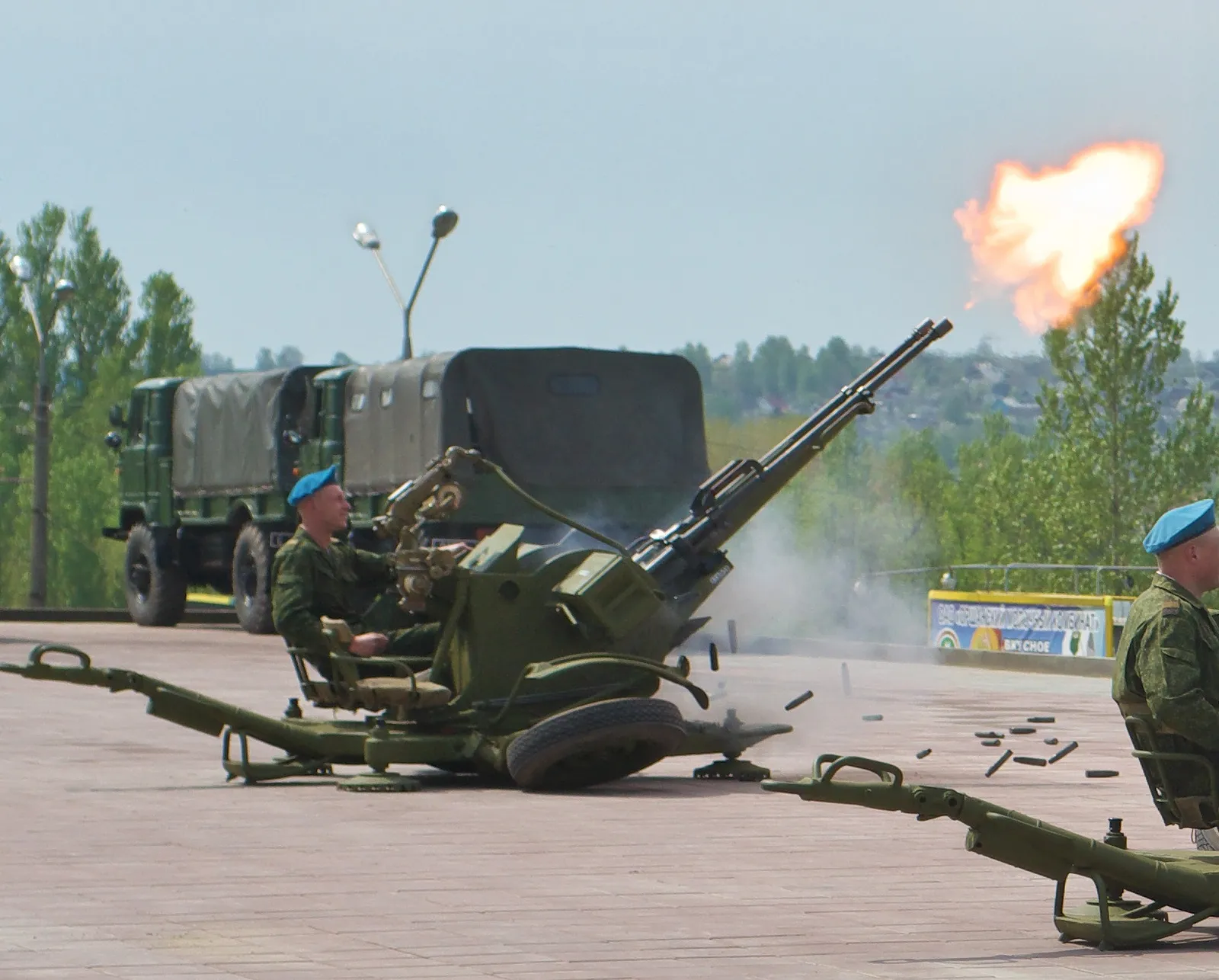
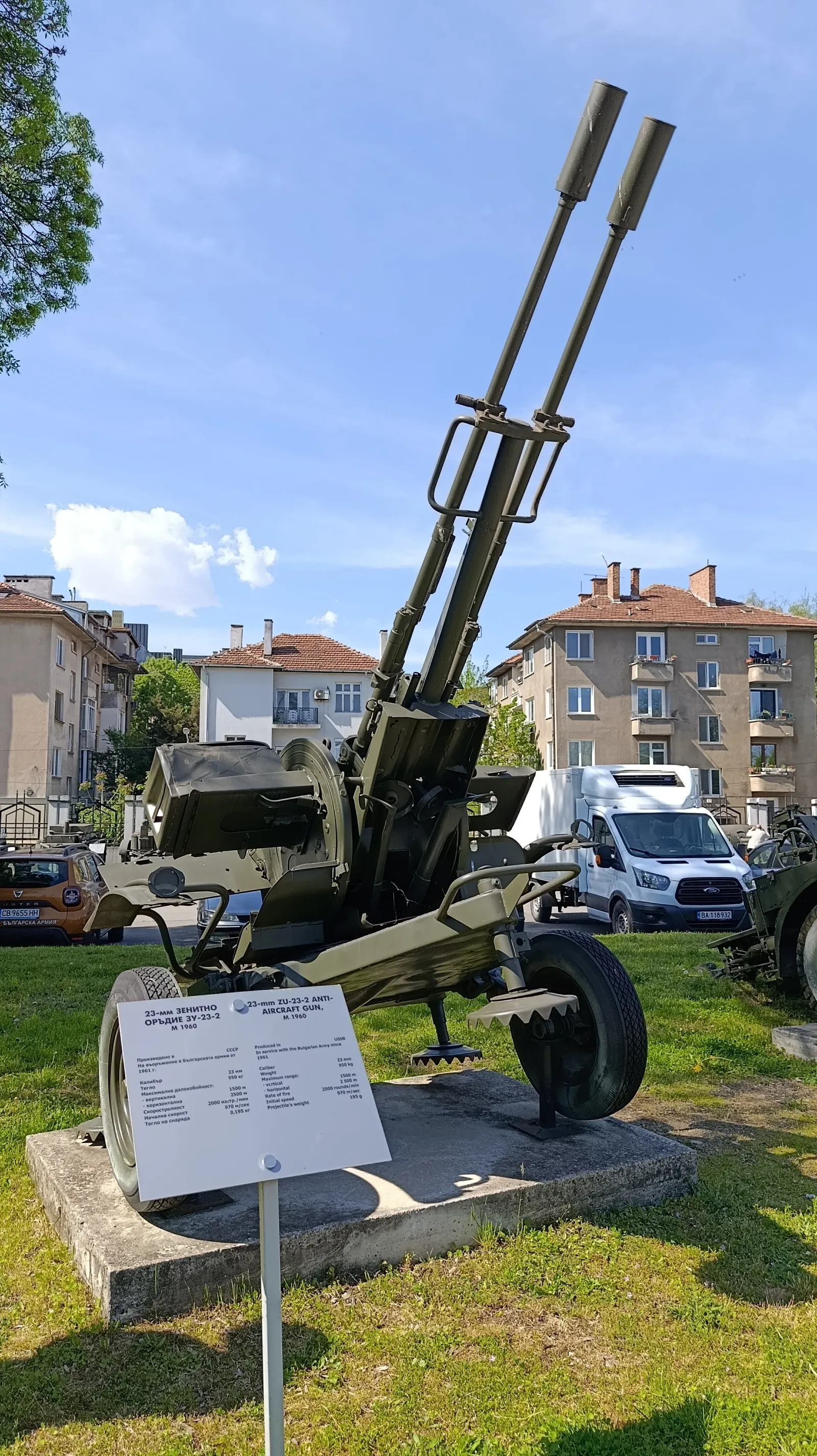
The 2A14 is the air-cooled 23 x 152B mm autocannon at the core of ZU-23 and ZU-23-2 short-range air-defense guns, with a quick-change barrel and a belt-feed layout that can be arranged from either side. Public conflict evidence most often documents it through the mounts that carry it: ZU-23-2 guns in Ukrainian service, SPLA-N air-defense fire in South Kordofan, Armenian and Artsakh losses in Nagorno-Karabakh, Houthi firing around Hudaydah, Tigray Defence Forces heavy weapons, and 2A14-pattern or ZU-23-2-pattern weapons with rebel forces in northern Mali.

Role in Conflicts

Side
Tigray forces

Oryx documented 23 mm ZU-23 anti-aircraft guns in Tigray Defence Forces heavy-weapons holdings; reference sources identify ZU-23-2-type mounts as twin 2A14 autocannon installations.

Side
Rebel and jihadist armed groups

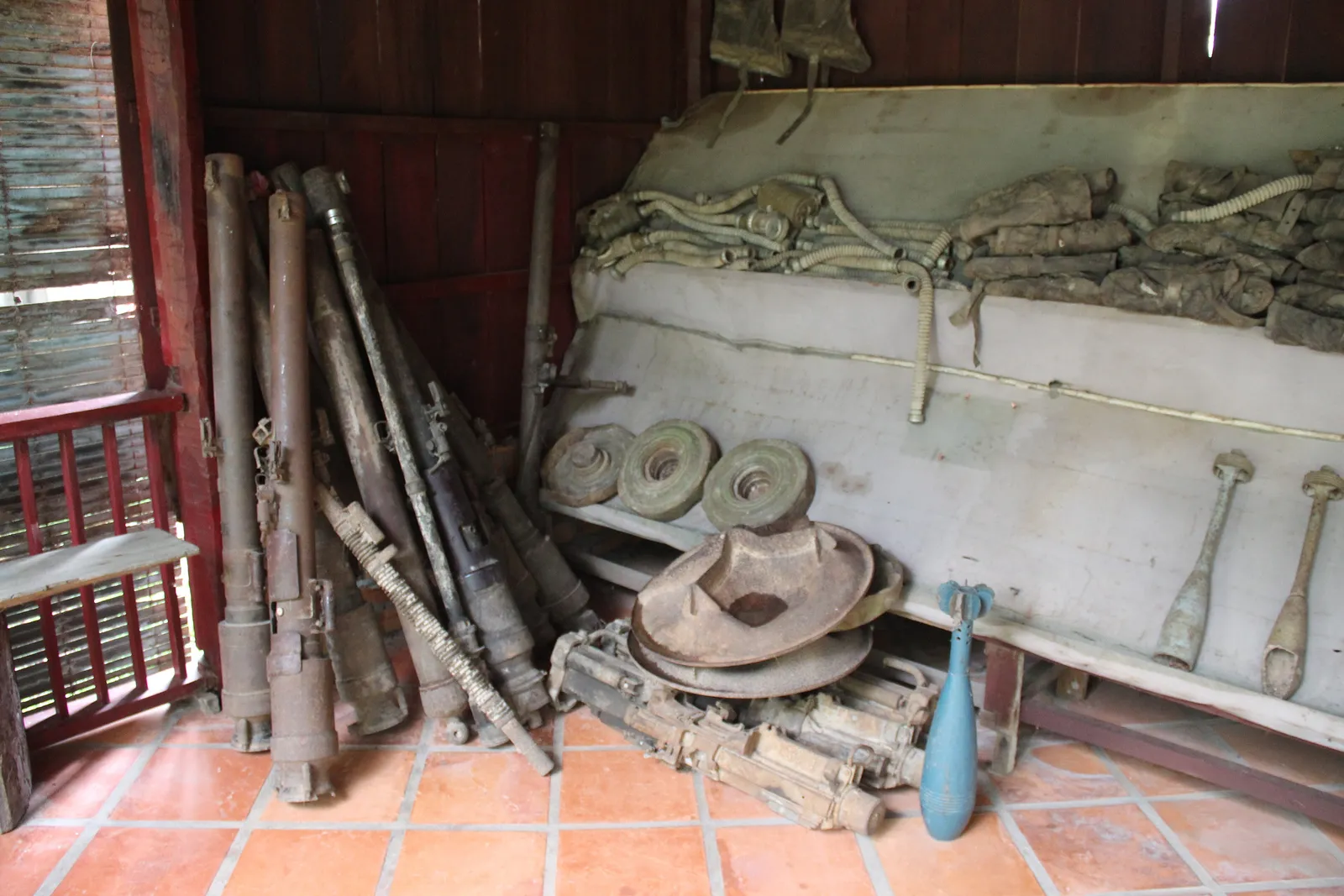
Conflict Armament Research and Small Arms Survey documented a 2A14-pattern single-barrel 23 x 152B mm cannon in service with rebel forces in Gao in April-May 2012, while related ZU-23-2-pattern twin mounts appeared with rebel forces in Gao and Aguelhok.

Profile / Specs

Profile

Origin
Soviet Union
Type
23 mm gas-operated autocannon
Service note
Cold War design, still encountered in modern conflicts
Designer
TsKB-14; N. M. Afanasyev and P. G. Yakushev
Designed
1957 development for the ZU-23 family after a 1954 Soviet requirement
Unit cost
Not publicly available
Produced
1957-1977 for 2A14; 1977-1993 for 2A14M
Number built
About 23,000 2A14 and more than 35,500 2A14M guns reported by WeaponSystems.net

Specifications

Caliber
23 x 152B mm
Action
Gas-operated autocannon with vertical breech block
Feed
Single belt feed, configurable for left- or right-hand feed
Barrel length
2.01 m with muzzle brake; 1.88 m rifled length
Rifling
10 grooves with progressive twist
Muzzle velocity
970-980 m/s depending on ammunition
Rate of fire
800-1,000 rounds per minute cyclic per gun
Cooling
Air-cooled with quick-change barrel
Barrel life
3,500 rounds for 2A14; 4,500 rounds for 2A14M
Weight
75 kg for 2A14; 77 kg for 2A14M
Compatible ammunition
23 x 152 mm HEI, HEI-T, and API-T family ammunition used by 2A14/2A14M and related 23 mm air-defense guns
Gun And Ammunition Fit

The 2A14 is a component cannon, so the practical features that matter most are the feed direction, barrel change, and 23 x 152 mm ammunition family used in ZU-23-style mounts.

Feed layout

The gun uses single-belt feed and can be configured for either left- or right-hand feed, allowing paired left and right guns in a ZU-23 mount.

Sources: WeaponSystems.net 23mm 2A14; Army Guide ZU-23.

Barrel handling

Reference sources describe an air-cooled, quick-change barrel; WeaponSystems.net lists higher barrel life for the 2A14M than the baseline 2A14.

Source: WeaponSystems.net 23mm 2A14.

Ammunition

Arcus lists 23 x 152 mm high-explosive incendiary ammunition for 2A14, 2A14M, 2A7, and 2A7M guns on ZU-23-2 and ZSU-23-4 air-defense mounts.

Source: Arcus 23x152mm HEI Round.
Variants

The 2A14 is the air-cooled member of the Afanasyev-Yakushev 23 mm autocannon line used in ZU-23-family mounts; the later 2A14M kept the same basic role with improved barrel life.

VariantConfigurationDesignation notes
2A14Baseline air-cooled ZU-23-family cannon

WeaponSystems.net identifies the 2A14 as the air-cooled AYa-23 variant introduced on the ZU-23-2, with quick-change barrels and single-belt feed.

Sources: WeaponSystems.net 23mm 2A14

2A14MImproved barrel-life variant

WeaponSystems.net distinguishes the 2A14M by a longer listed barrel life and slightly higher gun weight than the baseline 2A14.

Sources: WeaponSystems.net 23mm 2A14

2A7Water-cooled related AYa-23 autocannon

WeaponSystems.net treats the 2A7 as the water-cooled member of the same 23 mm autocannon family, introduced for the ZSU-23-4 rather than the ZU-23-2 mount.

Sources: WeaponSystems.net 23mm 2A14

Carrier Platforms

The 2A14 normally appears to readers through complete mounts or vehicles that carry it, rather than as a loose cannon.

CarrierCarrier typeCarriage evidence
ZU-23-2, Towed twin 23 mm anti-aircraft autocannon, Air DefenseZU-23-2Twin 23 mm anti-aircraft mount

Army Guide states the 2A14 was designed for the twin 23 mm ZU-23 mount, and WeaponSystems.net identifies the ZU-23-2 as mounting two air-cooled 2A14 autocannons.

Sources: Army Guide 2A14 Gun, Army Guide ZU-23, WeaponSystems.net ZU-23-2

BMP-23, Infantry fighting vehicle, Armored VehiclesBMP-23Infantry fighting vehicle

Army Guide identifies the BMP-23 as armed with a 23 mm 2A14 cannon.

Sources: Army Guide BMP-23

MT-LB with ZU-23 anti-aircraft gun, Improvised tracked self-propelled anti-aircraft gun, Air DefenseMT-LB with ZU-23 anti-aircraft gunTracked ZU-23 carrier conversion

The linked MT-LB conversion carries a ZU-23 anti-aircraft gun; reference sources identify the ZU-23-2 family as a twin-2A14 cannon mount.

Sources: WeaponSystems.net ZU-23-2

Timeline

2A14 23 mm cannon Key Events

  1. 2A14 development for the ZU-23

    Army Guide places 2A14 development in 1957 after a 1954 Soviet requirement for the ZU-23 anti-aircraft gun.

  2. ZU-23 enters Soviet service

    Army Guide states that the ZU-23 entered Soviet service in 1960 with twin 2A14 guns and the 2A13 index.

  3. 2A14-pattern cannon documented in northern Mali

    Conflict Armament Research and Small Arms Survey documented a 2A14-pattern single-barrel cannon in Gao and related ZU-23-2-pattern twin mounts with rebel forces.

  4. SPLA-N fires ZU-23-2 in South Kordofan

    Small Arms Survey photographed a ZU-23-2 at an SPLA-N base behind the Daldoko front line and reported it was fired at an Antonov minutes later.

  5. Ukrainian short-range air-defense use

    Ukrainian official and defense-media reporting described ZU-23-2 crews using the twin-2A14 mount for air-defense and direct-fire tasks during the full-scale war.

Media
Related Weapon Systems
ZU-23-2, Towed twin 23 mm anti-aircraft autocannon, Air DefenseAir DefenseZU-23-2Towed twin 23 mm anti-aircraft autocannonThe ZU-23-2 is a Soviet twin 23 mm towed anti-aircraft autocannon built around two 2A14 guns on a light carriage. Its manual sighting, rapid emplacement, and high volume of fire make it a close-range air-defense weapon against low-flying aircraft, helicopters, and drones, while many operators also use it for direct fire against light vehicles and infantry positions. Ukrainian forces have used ZU-23-2 guns in mobile and positional air-defense teams during the 2014 Russia-Ukraine War, Armenian-side losses in the 2020 Nagorno-Karabakh fighting included towed and vehicle-mounted ZU-23 guns, and conflict monitors documented ZU-23 or ZU-23-2-pattern use in Yemen, Tigray, and northern Mali.
MT-LB with ZU-23 anti-aircraft gun, Improvised tracked self-propelled anti-aircraft gun, Air DefenseAir DefenseMT-LB with ZU-23 anti-aircraft gunImprovised tracked self-propelled anti-aircraft gunThe MT-LB with ZU-23 anti-aircraft gun is an improvised tracked fire-support and short-range air-defense vehicle that combines the Soviet MT-LB multipurpose armored tractor with a twin 23 mm ZU-23 gun mount. Public records show the configuration in Iraqi, Russian, Ukrainian, Syrian, and Armenian or Artsakh service contexts, with documented examples ranging from an Iraqi wreck in Baghdad to vehicles destroyed, damaged, or captured in later wars.
T-55-ZU-23, Improvised self-propelled anti-aircraft gun, Air DefenseAir DefenseT-55-ZU-23Improvised self-propelled anti-aircraft gunThe T-55-ZU-23 is an improvised Ukrainian short-range air-defense vehicle that combines a T-55-series tank chassis with a ZU-23-family twin 23 mm anti-aircraft gun installation. Public sourcing is narrow but specific: OSCE monitors observed the same T-55/ZU-23 configuration in the Donetsk security zone in January 2017, and MilitaryLand identifies T-55-ZU-23 in the equipment inventory of Ukraine's 54th Mechanized Brigade. The record is best read as a field or depot conversion that trades the T-55's original tank role for mobile high-volume 23 mm fire against low-altitude threats and exposed ground targets.
PKP Pecheneg, 7.62 mm general-purpose machine gun, Infantry WeaponsInfantry WeaponsPKP Pecheneg7.62 mm general-purpose machine gunThe PKP Pecheneg is a Russian 7.62x54mmR belt-fed general-purpose machine gun developed from the PKM to solve sustained-fire problems with a heavier, jacket-cooled barrel, forced-air cooling, a mirage-shielding carry handle, and a forward bipod. Russian sources place production at Kovrov in 1999 and service acceptance in 2001, with later documented use by Russian forces, Syrian special forces, Russian-backed separatists, and Ukrainian troops, plus naval mounting on Russian patrol and assault craft.
2A72 30 mm automatic cannon, 30 mm dual-feed automatic cannon, ArtilleryArtillery2A72 30 mm automatic cannon30 mm dual-feed automatic cannonThe 2A72 is a Russian 30x165 mm dual-feed automatic cannon designed by KBP Instrument Design Bureau and manufactured by Tulamashzavod Joint Stock Company. It is a lighter, recoil-operated 2A42-family gun used as a coaxial cannon on BMP-3 and BMD-4M-type turrets and as the main weapon on 30 mm BTR-80A/BTR-82A installations, with direct open-source reporting tying BTR-82A 2A72 fire to fighting near Latakia during the 2011 Syrian Civil War.

Sources