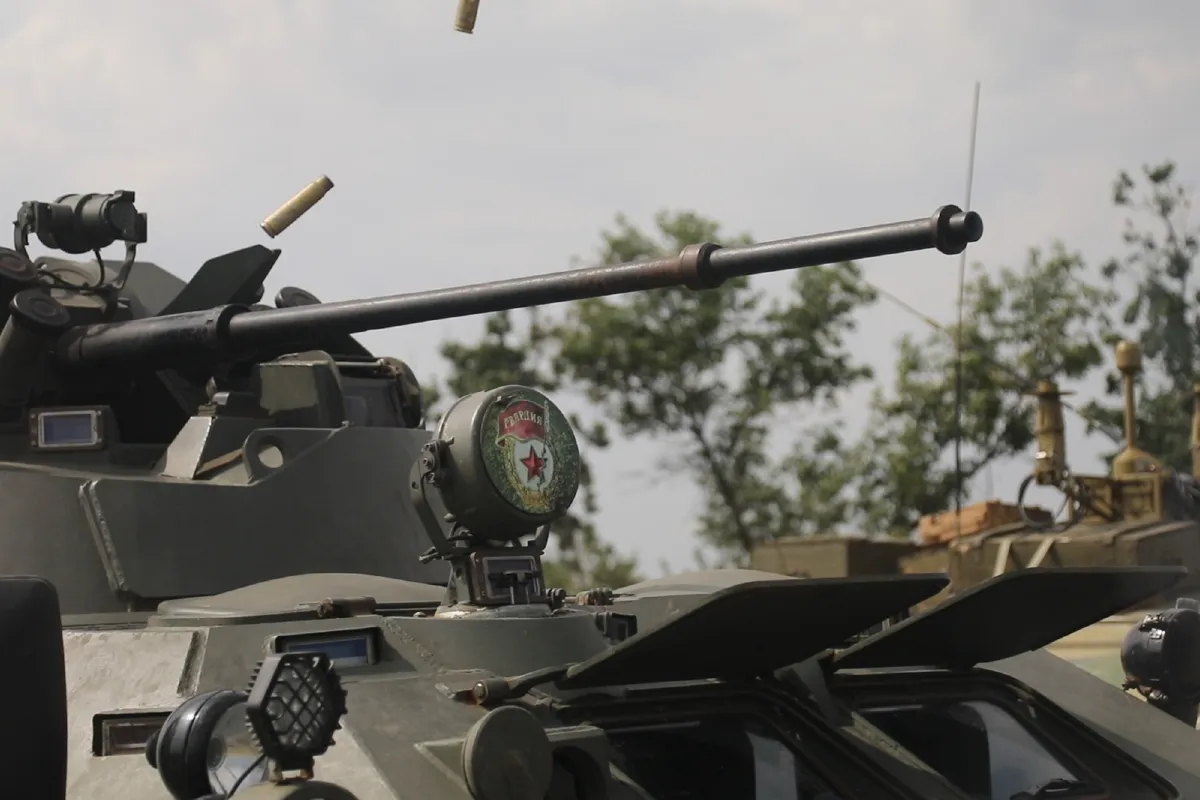

Bellingcat assessed August 2015 footage from fighting near Latakia as showing a BTR-82A with a Russian-speaking crew and identified the heard double shots as fire from the vehicle's 30 mm 2A72 cannon.
Role detailsArtillery
2A72 30 mm automatic cannon
Also known as
- 2A72
- 30 mm 2A72
- 2A72 automatic cannon
- 2A72 autocannon
- 2A72 30mm autocannon
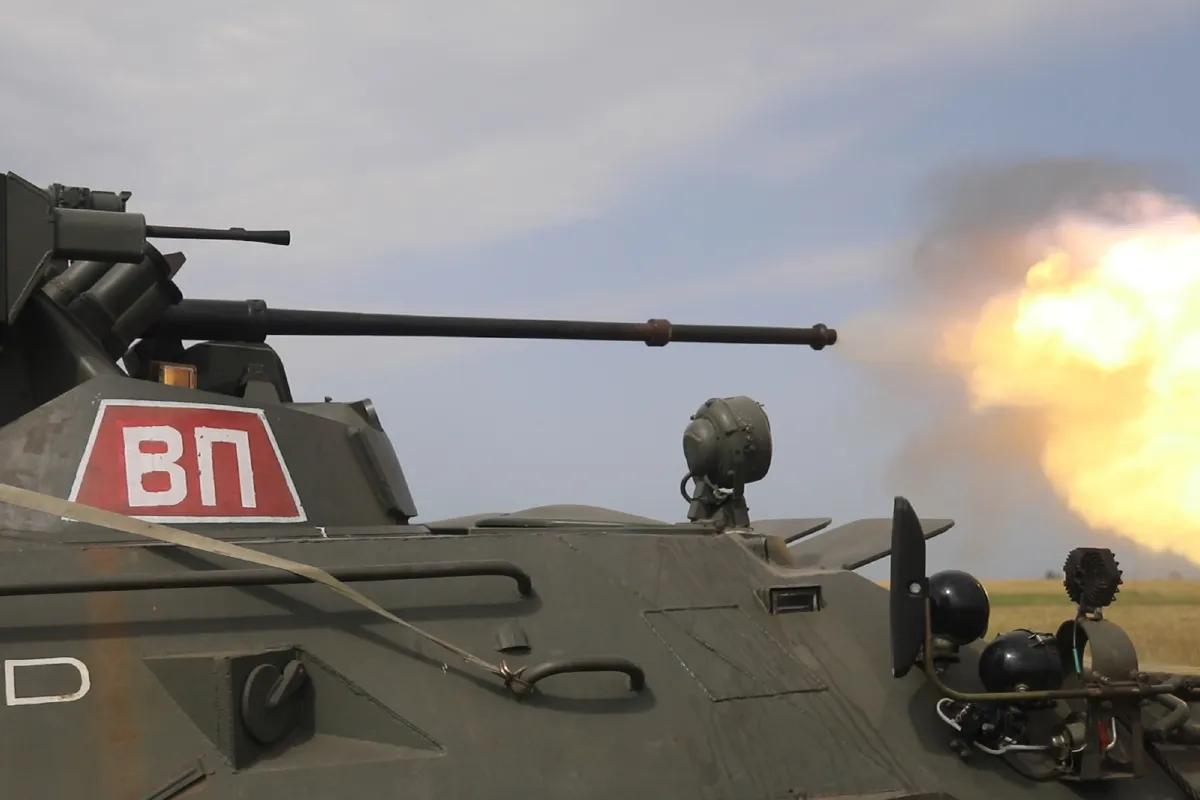
The 2A72 is a Russian 30x165 mm dual-feed automatic cannon designed by KBP Instrument Design Bureau and manufactured by Tulamashzavod Joint Stock Company. It is a lighter, recoil-operated 2A42-family gun used as a coaxial cannon on BMP-3 and BMD-4M-type turrets and as the main weapon on 30 mm BTR-80A/BTR-82A installations, with direct open-source reporting tying BTR-82A 2A72 fire to fighting near Latakia during the 2011 Syrian Civil War.
Role in Conflicts
Profile / Specs
Profile
- Origin
- Russia
- Type
- 30 mm dual-feed automatic cannon
- Service note
- 1990s-present
- Designer
- KBP Instrument Design Bureau
- Designed
- 1995
- Produced
- 1990s-present
Specifications
- Caliber
- 30 mm
- Cartridge
- 30x165 mm
- Feed system
- Twin-feed, belt-fed selectable feed
- Action
- Recoil operated, electrically powered
- Muzzle velocity
- 960 m/s
- Rate of fire
- 400 rounds per minute
- Weight
- 84 kg
- Recoil force
- 6,000 kg
- Ammunition
- AP-T and HE-I
- Effective range
- 1,500 m against armored targets; 2,000 m against lightly armored targets; 4,000 m against helicopters
Carrier Platforms
Open references document the 2A72 both as a main weapon in 30 mm wheeled APC turrets and as a coaxial gun in 100 mm/30 mm infantry-fighting-vehicle turrets.
| Carrier | Carrier type | Carriage evidence |
|---|---|---|
 | 8x8 amphibious APC | Rosoboronexport names the 2A72 as the BTR-82A main weapon. Sources: BTR-82A Armoured Personnel Carrier |
 | BTR-80A 8x8 APC variant | Army Guide lists the 2A72 as installed on the BTR-80A; the catalog BTR-80 entry covers the BTR-80A as a listed alias. Sources: 2A72 - Army Guide |
 | Tracked amphibious IFV | Rosoboronexport lists the BMP-3 armament suite with a 2A72 30 mm automatic cannon and a 500-round 30 mm ammunition load. Sources: BMP-3 Infantry Fighting Vehicle |
 | Airborne amphibious IFV | Army Guide describes the BMD-4M's Bakhcha turret as using the same weapons and ammunition as the BMP-3 and lists a 30 mm 2A72 with 500 rounds. Sources: BMD-4M Sadovnitsa - Army Guide |
Ammunition Fired
The 2A72 belongs to the Soviet-pattern 30x165 mm cannon family used by several ground-vehicle automatic guns.
| Ammunition | Ammunition type | Firing evidence |
|---|---|---|
 | 30x165 mm ammunition family | STV GROUP lists 30x165 mm ammunition as compatible with 2A38, 2A42, and 2A72 automatic guns. Sources: Ammunition 30x165 mm - STV GROUP |
Design And Mounting Context
The 2A72 fills two common integration roles: a stabilized main cannon in BTR-80A/BTR-82A-style wheeled turrets and a coaxial 30 mm gun beside the 2A70 100 mm gun-launcher in BMP-3 and BMD-4M-type turrets. Weaponsystems.net describes it as a simplified, recoil-operated 2A42-family design, while STV GROUP documents its place in the 30x165 mm ammunition family.
Operating principle
Recoil-operated cannon with electrically powered operation rather than the 2A42's gas-operated fixed-barrel arrangement.
Feed and cartridge
Twin-feed 30x165 mm system, allowing selectable ammunition types in vehicle mounts.
Mounting pattern
Used as main armament on 30 mm BTR turrets and as a coaxial cannon in BMP-3/BMD-4M armament suites.
Media
2A72 30 mm automatic cannon Videos
2A72 30 mm automatic cannon Images
Related Weapon Systems


Sources
2A72 - Army GuidePublisher: Army Guide | Note: Supports the 2A72's manufacturer, design authority, 1995 public debut, ammunition types, muzzle velocity, rate of fire, weight, recoil force, effective range, and documented installations on Russian platforms. | Accessed: 2026-07-01BTR-82A Armoured Personnel CarrierPublisher: Rosoboronexport | Note: Official export page identifying the BTR-82A main weapon and supporting the carried-by relationship from the cannon to the vehicle. | Accessed: 2026-07-01BMP-3 Infantry Fighting VehiclePublisher: Rosoboronexport | Note: Official export page identifying the BMP-3 armament suite, including the 2A72 30 mm automatic cannon and ammunition load, and supporting the carried-by relationship from the cannon to the vehicle. | Accessed: 2026-07-01BMD-4M Sadovnitsa - Army GuidePublisher: Army Guide | Note: Supports BMD-4M/Bakhcha turret context and identifies the 2A72 as the 30 mm automatic cannon in the BMD-4M armament package. | Accessed: 2026-07-01Ammunition 30x165 mm - STV GROUPPublisher: STV GROUP | Note: Manufacturer page supporting 30x165 mm ammunition compatibility with 2A38, 2A42, and 2A72 automatic guns and listed vehicle installations. | Accessed: 2026-07-0130mm 2A72 - Weaponsystems.netPublisher: Weaponsystems.net | Note: Specialist reference supporting the 2A72's recoil-operated design, 30x165 mm feed context, simplified relationship to the 2A42, and documented applications on BMP-3, BTR-80A, BTR-82, and BMD-4 platforms. | Accessed: 2026-07-01Bellingcat Russian Troops Syria 2A72Publisher: Bellingcat | Note: Supports 2011 Syrian Civil War direct use: assesses fighting near Latakia footage as showing a BTR-82A with a Russian-speaking crew and identifies heard double shots as the vehicle's 30 mm 2A72 cannon firing. | Accessed: 2026-07-01Commons BTR-82A 2A72 Autocannon 01Publisher: Wikimedia Commons | Note: Image provenance and licensing page for a Commons photograph showing the 2A72 on a BTR-82A. | Accessed: 2026-07-01Commons BTR-82A 2A72 Autocannon 02Publisher: Wikimedia Commons | Note: Image provenance and licensing page for a second Commons photograph showing the 2A72 on a BTR-82A. | Accessed: 2026-07-01