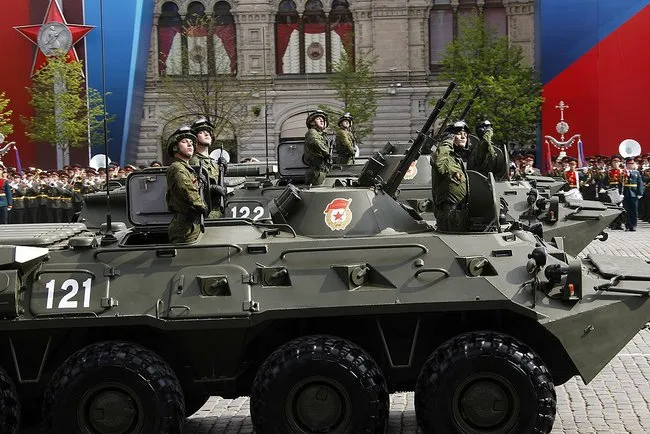
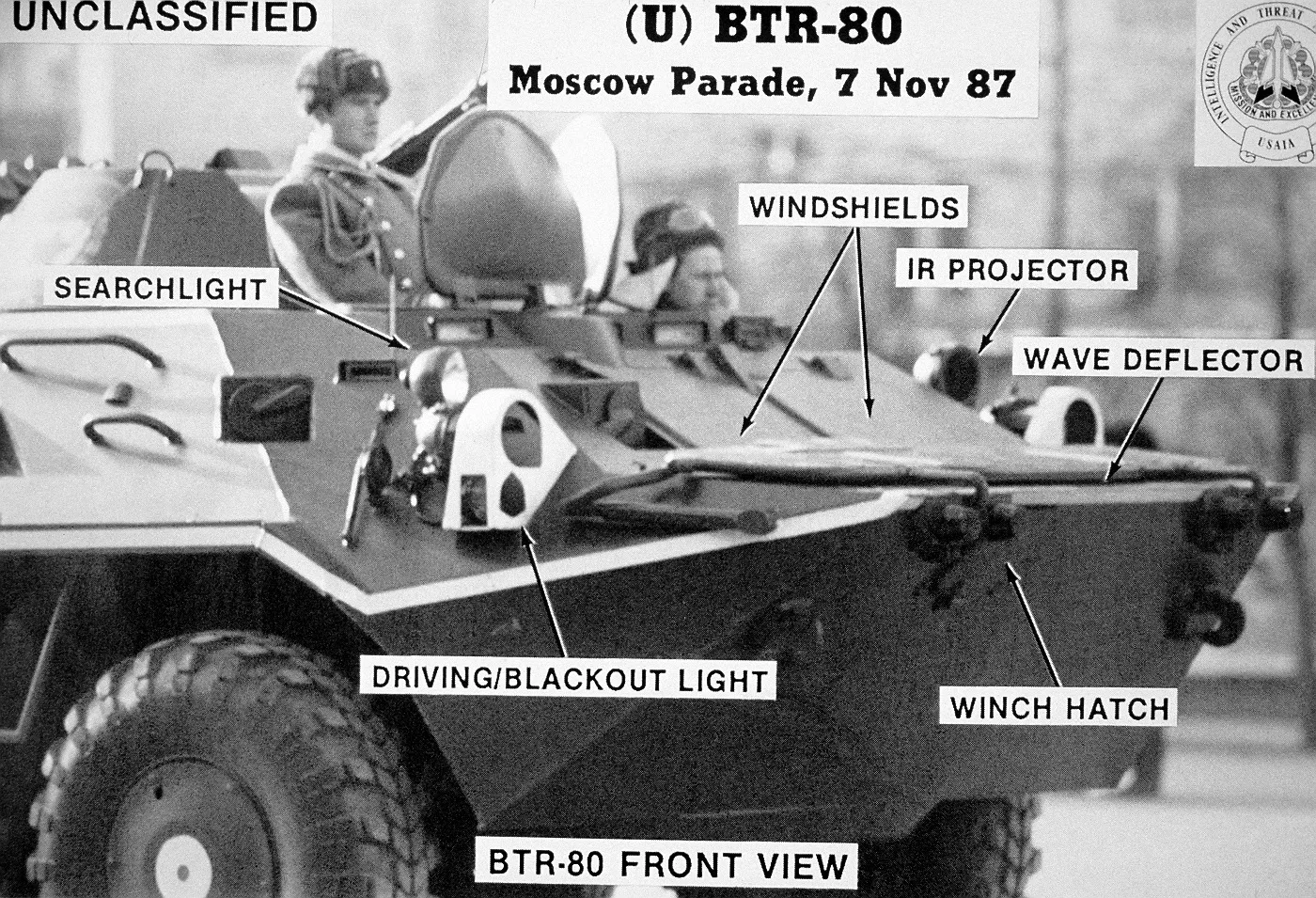
The BTR-80 is a Soviet-designed 8x8 amphibious armored personnel carrier built to move motor rifle troops under armor while giving them heavy machine-gun fire support. Rosoboronexport describes it as a combat wheeled vehicle for transporting motor rifle units, and the type remains widespread across former Soviet and export operators more than four decades after introduction.
Oryx's First Chechen War equipment-loss list records BTR-80 armored personnel carriers among documented losses, including Russian BTR-80 losses and a smaller Chechen separatist BTR-80 loss entry.
Oryx documents BTR-80 losses in the Second Chechen War for Russian forces and Chechen separatist and insurgent forces, supporting the vehicle's presence on both sides of the conflict.
DVIDS imagery from 2010 at Contingency Operating Base Taji identifies a Russian BTR-80 armored personnel carrier used by the 9th Iraqi Army Division during coalition-era operations in Iraq.
Oryx's Russo-Georgian War loss list documents Russian BTR-80 armored personnel carrier losses, directly supporting Russian fielding of the vehicle during the 2008 war.
Azerbaijani forces used BTR-80 armored personnel carriers in the 2020 battle for Shusha as part of a mechanized brigade attached to the assault force; the source identifies the vehicles as brigade equipment rather than individual loss records.
Both Russian and Ukrainian forces fielded BTR-80 armored personnel carriers during the full-scale invasion; Oryx documents Russian BTR-80-family losses and separate Ukrainian BTR-80 losses with photo or video evidence.
Oryx's 2024 Syrian rebel offensive loss list records BTR-80 armored personnel carriers captured from Syrian government forces; the source supports government inventory and opposition capture rather than confirmed sustained service after capture.
2023 Sudan War used by Sudanese Armed Forces: Oryx's 2023 crisis reporting documents a destroyed BTR-80A in the conflict, supporting BTR-80-family APC service with the SAF.
Houthi-aligned forces fielded BTR-80A/BTR-80-family vehicles from Yemen's pre-war armored inventory; Oryx lists BTR-80s among vehicles available to Yemeni parties on the battlefield, and a 2021 report described Yemeni government/Hadi forces capturing a BTR-80A from Houthis near Taiz.
Army Recognition places the BTR-80's entry into service in 1984, while broader references usually describe mid-1980s fielding.
Sources: BTR-80 APC
First Chechen War losses
Oryx records BTR-80 losses in the First Chechen War, including Russian and Chechen separatist entries.
Sources: Equipment Losses During The First Chechen War
Russo-Georgian War losses
Oryx documents Russian BTR-80 armored personnel carrier losses in the August 2008 Russo-Georgian War.
Sources: Russian Equipment Losses During The 2008 Russo-Georgian War
Modernization kit shown
UralVagonZavod displayed a BTR-80 modernization package at Russian Arms Expo 2015, including a remote weapon station and survivability upgrades.
Sources: RAE 2015 BTR-80 Modernization Kit
2014 Russia-Ukraine War attrition
Open-source loss tracking documented continued BTR-80-family losses on both sides during the full-scale war.
Sources: Attack On Europe: Documenting Russian Equipment Losses During The Russian Invasion Of Ukraine, Attack On Europe: Documenting Ukrainian Equipment Losses During The Russian Invasion Of Ukraine
Captured in the Syrian rebel offensive
Oryx lists BTR-80 armored personnel carriers captured from Syrian government forces during the 2024 rebel offensive.
Sources: Documenting Equipment Losses During The 2024 Syrian Rebel Offensive