Armored Vehicles

BTR-70

Also known as
  • GAZ-4905
  • M1978
  • SPW-70

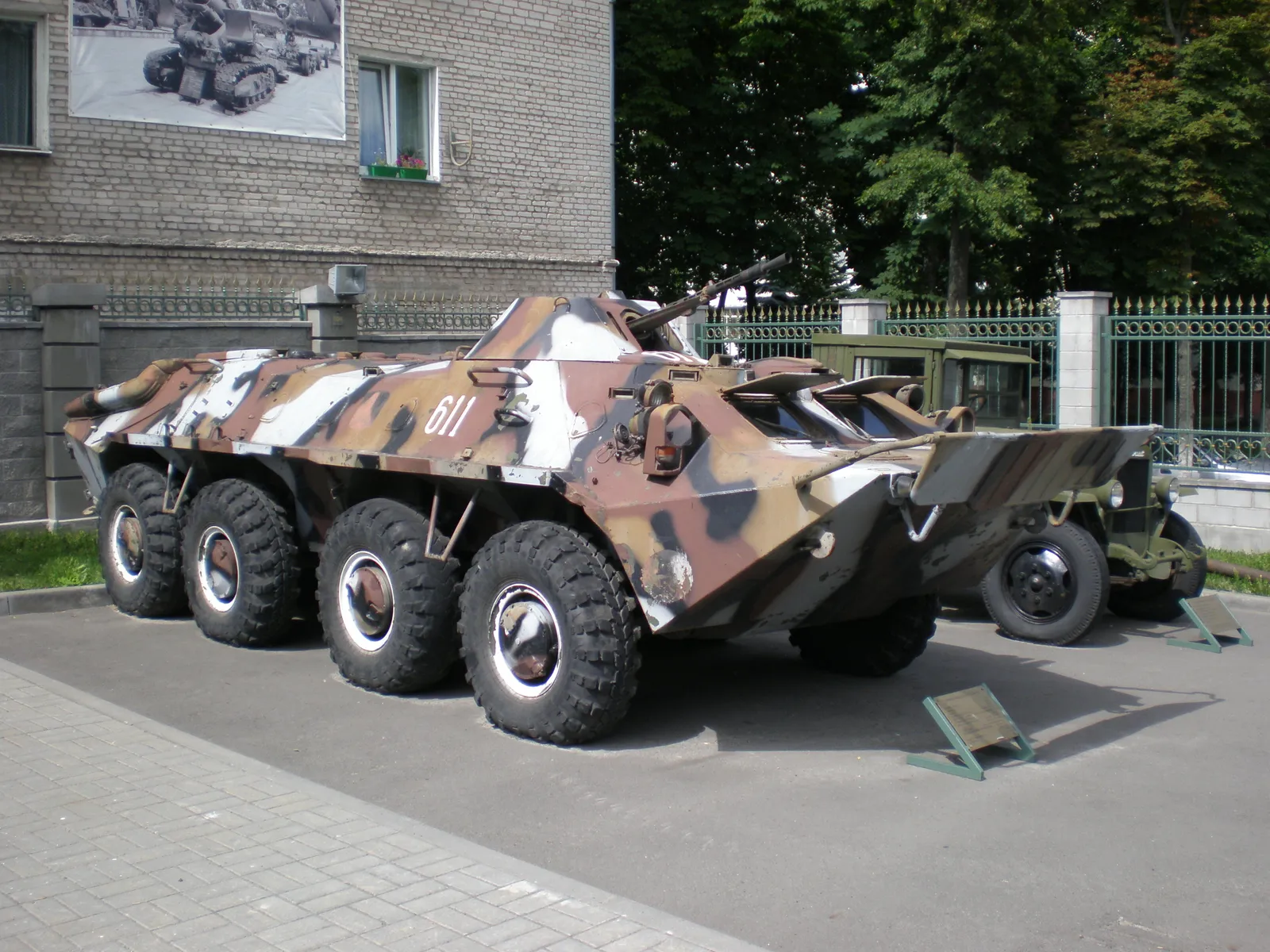
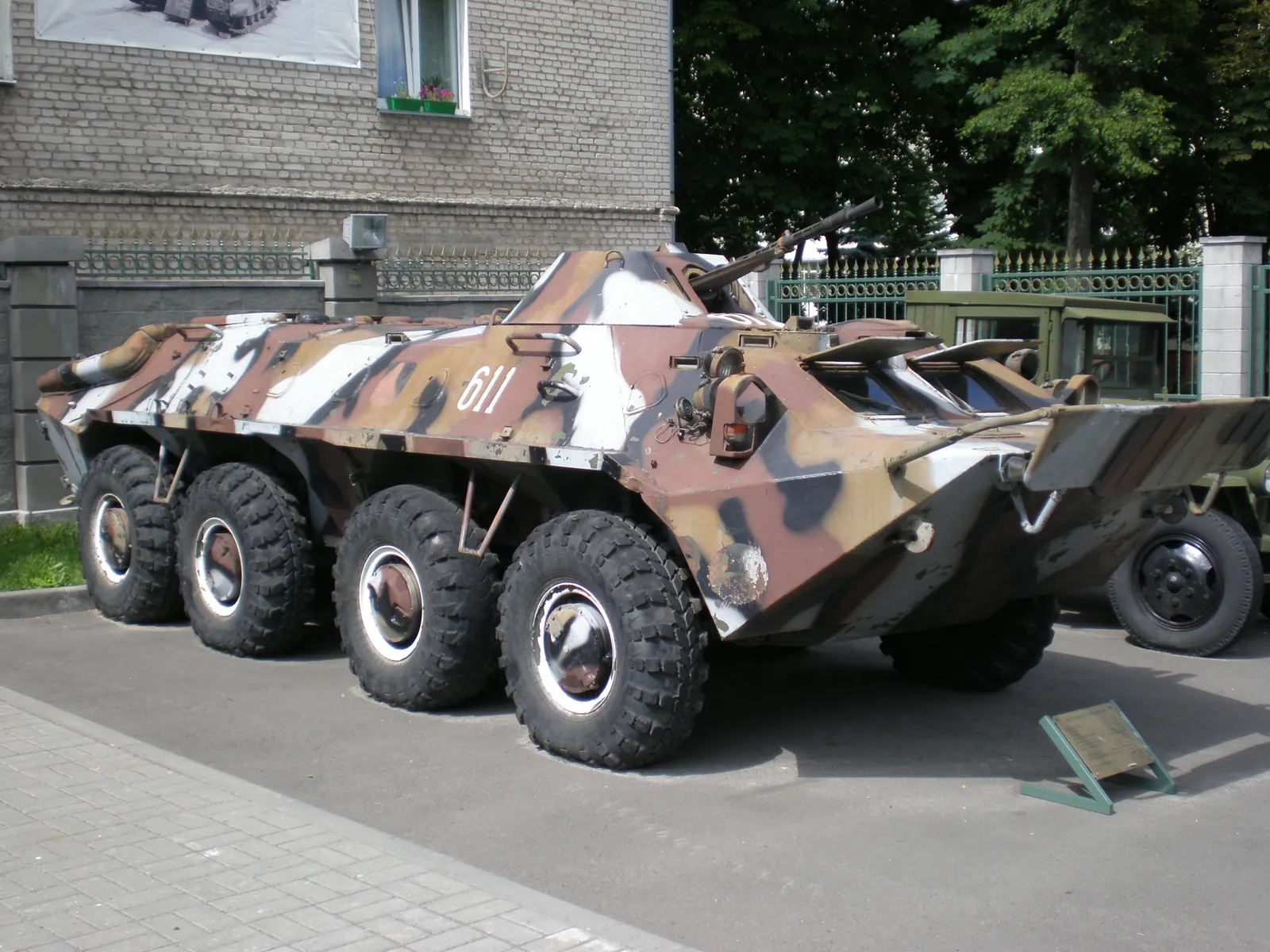
The BTR-70 is a Soviet 8x8 amphibious armored personnel carrier developed from the BTR-60PB family to move motor-rifle troops under armor while retaining the KPVT/PKT turret armament. Afghan-war experience exposed both its practical value and its limits, including side-exit and protection improvements over the BTR-60PB, before later Soviet production shifted toward the diesel-powered BTR-80.

Role in Conflicts

Side
Soviet Union and Afghan government forces
Role in conflict
Motorized rifle troop carrier and fire-support APC

Soviet motorized rifle subunits fielded BTR-70 armored personnel carriers in Afghanistan, where the Russian General Staff study describes the type replacing older BTR-60PBs and being used for troop transport and dismounted fire support.

Role in conflict
Protected troop transport

BTR-70 armored personnel carriers from both Azerbaijani and Armenian-side inventories were visually documented among damaged, destroyed, or captured equipment during the 2020 Nagorno-Karabakh fighting.

Lineage and modernization

The BTR-70 sits between the earlier BTR-60 family and the later BTR-80. Afghanistan-era reporting and later Ukrainian modernization notes show why the middle generation matters: side exits, improved armor, retained KPVT/PKT firepower, and post-Soviet rebuild paths all shaped the vehicle's service life.

Design areaDocumented featureSource
Family positionThe BTR-70 was developed from the BTR-60PB and was later succeeded by the BTR-80.BTR-70 - Weaponsystems.net
Afghan-war lessonsThe Russian General Staff study contrasts the BTR-70's side hatches and improved armor with the older BTR-60PB, while still describing limited elevation for fire in mountainous terrain.The Soviet-Afghan War: How a Superpower Fought and Lost
Baseline armamentThe standard turret carried a 14.5 mm KPVT heavy machine gun and coaxial 7.62 mm PKT machine gun.BTR-70 - National Defence University of Ukraine; BTR-70 - Weaponsystems.net

Ukrainian modernization paths

VariantCore changesDocumented emphasis
BTR-70DI / BTR-7Diesel engines, enhanced protection, AGS-17 grenade launcher, Barrier ATGMFirepower and survivability upgrade
BTR-70MMulti-fuel diesel engine and retained KPVT / PKT armamentStandardized modernization
BTR-70 KBA-2300 hp diesel and 30 mm KBA-2 cannonHeavier armament package
BTR-70TNew hatches, R-173 radio, 312 hp diesel, new wheelsMobility and crew-access upgrade
Profile / Specs

Profile

Origin
Soviet Union
Type
Wheeled armored personnel carrier
Service note
Cold War design with documented service from the Soviet-Afghan War through current post-Soviet conflicts
Designer
GAZ design bureau
Designed
Early 1970s
Produced
1972-mid-1980s
Number built
Several thousand estimated
Developed from
BTR-60PB
Developed into
BTR-80

Specifications

Crew and passengers
2 crew plus 8 troops, depending on source and variant
Armament
14.5 mm KPVT heavy machine gun and coaxial 7.62 mm PKT machine gun
Weight
About 11.5 tonnes combat load
Mobility
8x8 wheeled amphibious chassis; up to about 80 km/h on road with water-jet propulsion afloat
Engine
Two gasoline engines, commonly two 120 hp ZMZ-4905 engines on later production vehicles
Protection
Welded steel armor against small-arms fire and shell fragments; frontal armor commonly cited around 8-10 mm
Variants

BTR-70 designations cover Soviet production updates, Ukrainian rebuilds, and adjacent BTR-family vehicles that show how the same 8x8 APC layout developed before and after Afghan-war service.

VariantConfigurationDesignation notes
BTR-60, 8x8 amphibious armored personnel carrier, Armored VehiclesBTR-60Predecessor 8x8 APC family

The BTR-70 was developed from the BTR-60PB layout, with Afghan-war sources contrasting its side exits and armor changes against the earlier vehicle.

Sources: BTR-70 - Weaponsystems.net, The Soviet-Afghan War: How a Superpower Fought and Lost

BTR-70 obr. 1978Early production model

Weaponsystems.net identifies the 1978 model as an early production version with 115 hp GAZ-49B engines.

Sources: BTR-70 - Weaponsystems.net

BTR-70 obr. 1982Main production model

Weaponsystems.net lists the 1982 model as the main production pattern with 120 hp ZMZ-4905 engines.

Sources: BTR-70 - Weaponsystems.net

BTR-70 obr. 1986Final production model

The final production model added a left-side turret periscope and roof firing ports for higher-angle fire.

Sources: BTR-70 - Weaponsystems.net

BTR-70MUkrainian diesel modernization

The National Defence University of Ukraine describes the BTR-70M as a Ukrainian modification with a multi-fuel diesel engine and retained KPVT/PKT turret armament.

Sources: BTR-70 - National Defence University of Ukraine

BTR-70DI / BTR-7Ukrainian firepower and survivability upgrade

Ukrainian source material describes BTR-70DI/BTR-7 upgrades including diesel engines, enhanced mine protection, modern sights, an AGS-17 grenade launcher, and Barrier ATGM fit.

Sources: BTR-70 - National Defence University of Ukraine

BTR-80, 8x8 amphibious armored personnel carrier, Armored VehiclesBTR-80Successor 8x8 APC

The BTR-80 followed the BTR-70 with a single diesel engine and further protection and mobility changes described in Afghan-war and reference sources.

Sources: BTR-70 - Weaponsystems.net, The Soviet-Afghan War: How a Superpower Fought and Lost

Turret Armament
Carried itemItem typeCarriage evidence
KPV, 14.5 mm heavy machine gun, Infantry WeaponsKPV14.5 mm heavy machine gun

Weaponsystems.net and National Defence University of Ukraine sources describe the BTR-70 as fitted with a 14.5 mm KPVT heavy machine gun as its main armament.

Sources: BTR-70 - Weaponsystems.net, BTR-70 - National Defence University of Ukraine

PKM/PK, 7.62 mm general-purpose machine gun, Infantry WeaponsPKM/PK7.62 mm coaxial machine gun

Weaponsystems.net and National Defence University of Ukraine describe the BTR-70 as carrying a coaxial 7.62 mm PKT machine gun in the turret.

Sources: BTR-70 - Weaponsystems.net, BTR-70 - National Defence University of Ukraine

Timeline

BTR-70 Key Events

  1. Entered Soviet service

    The BTR-70 entered Soviet service in the mid-1970s after development from the BTR-60PB family.

    Sources: BTR-70 - National Defence University of Ukraine

  2. Combat use in Afghanistan

    The Russian General Staff study describes BTR-70s serving with Soviet motorized rifle subunits during the Soviet-Afghan War, including dismount and fire-support use alongside older BTR-60PBs and later BTR-80s.

    Sources: The Soviet-Afghan War: How a Superpower Fought and Lost

  3. Production moved to Arzamas

    Weaponsystems reports that production shifted from GAZ to the Arzamas Machine-Building Plant, with the first Arzamas-built vehicle completed on 23 February 1981.

    Sources: BTR-70 - Weaponsystems.net

  4. Later-series production pattern

    Later production BTR-70s used the 120 hp ZMZ-4905 engine pair and other updates described in the reference sources.

    Sources: BTR-70 - Weaponsystems.net, BTR-70 - National Defence University of Ukraine

Media
Related Weapon Systems
BTR-50, Tracked amphibious armored personnel carrier, Armored VehiclesArmored VehiclesBTR-50Tracked amphibious armored personnel carrierThe BTR-50 is a Soviet tracked amphibious armored personnel carrier based on the PT-76 light tank chassis. Designed to move infantry and light weapons across rivers and broken terrain, it carried a small crew plus a large troop compartment behind light welded steel armor. Its record spans Arab-Israeli wars, the Iran-Iraq War, Syria, and Russia's Ukraine deployment of stored vehicles, including photographed and loss-documented BTR-50PK carriers fitted with BPU-1 turrets.

Sources