Armored Vehicles

BTR-80 with UB-32 rocket pods

Also known as
  • BTR-80-UB-32
  • BTR-80 UB-32
  • BTR-80 with 57mm UB-32 unguided aircraft rocket pods
  • BTR-80 with S-5 rocket pods

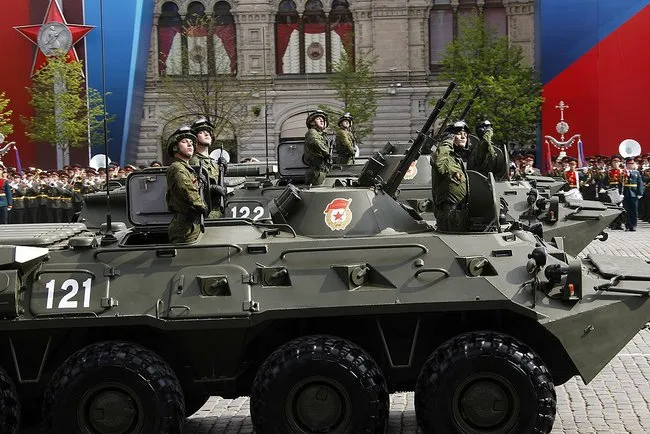
This BTR-80 field modification combined a Soviet/Russian 8x8 armored personnel carrier with aircraft-derived UB-32 rocket pods for 57 mm S-5-family unguided rockets. Open-source loss tracking and Ukrainian reporting documented one Russian example damaged near Vuhledar in June 2023, making it a rare improvised fire-support configuration rather than a standard production BTR variant.

Role in Conflicts

Profile / Specs

Profile

Origin
Russia / Soviet Union
Type
Improvised 8x8 rocket-armed armored vehicle
Service note
Documented in Russian service during the 2022 phase of the 2014 Russia-Ukraine War
Designer
Russian field modification using Soviet-designed components
Designed
Improvised configuration publicly documented in 2023
Unit cost
Not publicly documented
Produced
Field modification; no serial production documented
Number built
At least one documented example

Specifications

Base vehicle
BTR-80 8x8 amphibious armored personnel carrier
Rocket pods
Two UB-32-series aircraft pods reported on the documented vehicle
Rocket type
57 mm S-5-family unguided aircraft rockets
Launcher capacity
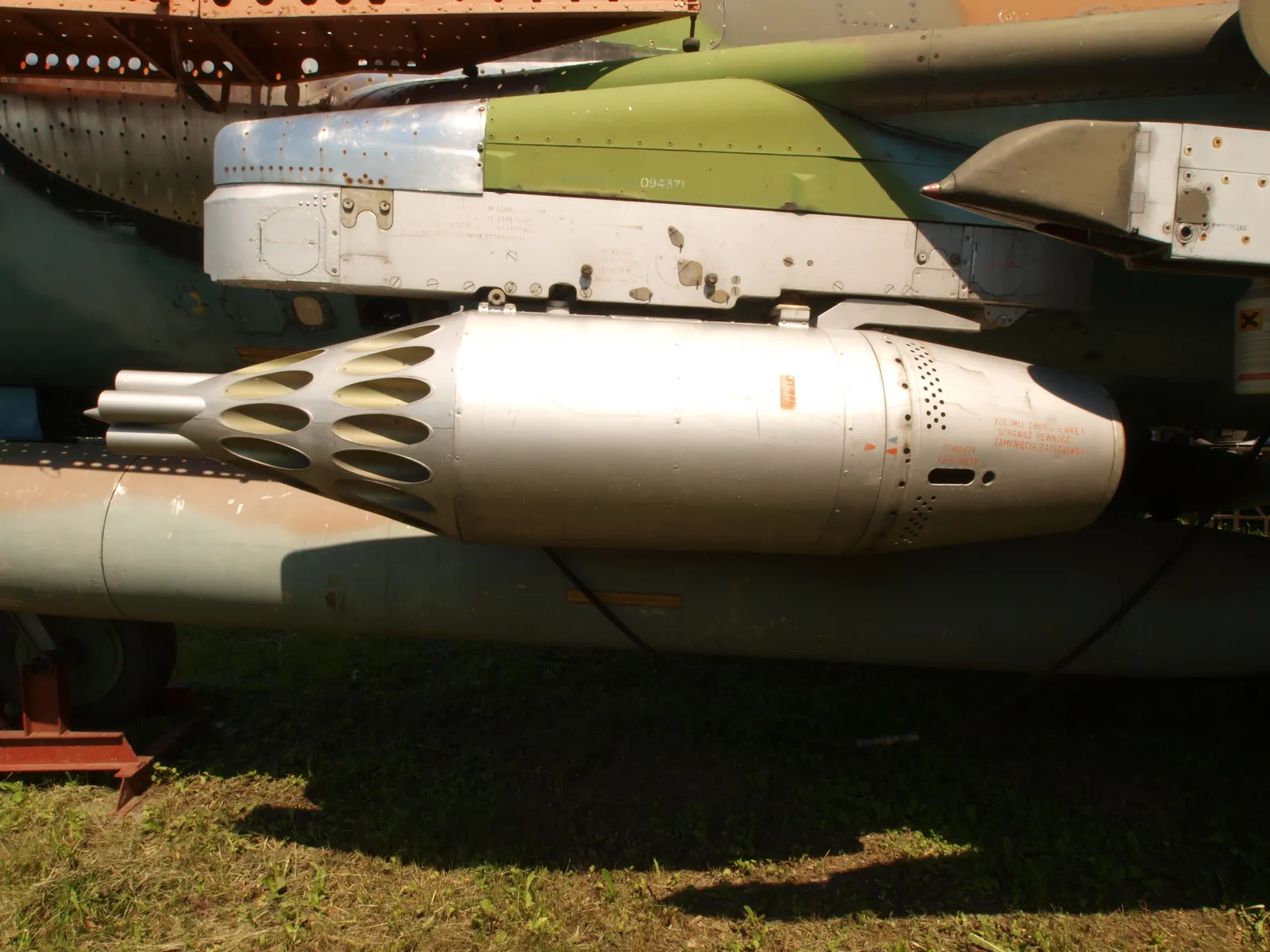
32 rockets per UB-32 pod; 64 total tubes when two pods are fitted
Base vehicle crew and passengers
BTR-80 baseline: 3 crew plus 7 troops
Base vehicle combat weight
BTR-80 baseline: 13.6 t before improvised rocket-pod fit
Base vehicle mobility
BTR-80 baseline: 8x8 wheeled, amphibious, about 80 km/h road speed
Sourcing limit
Public sources document the damaged example and component characteristics, but not a factory designation, fire-control arrangement, or combat load plan for the improvised conversion
Base Vehicle

The documented conversion used the BTR-80 APC as the carrier chassis rather than a purpose-built rocket-artillery vehicle.

Compatible itemItem typeCompatibility evidence
BTR-80, 8x8 amphibious armored personnel carrier, Armored VehiclesBTR-808x8 armored personnel carrier

Oryx identifies the damaged Russian example as a BTR-80 fitted with 57 mm UB-32 unguided aircraft rocket pods.

Sources: Oryx Russian Equipment Losses During The Russian Invasion Of Ukraine

Rocket Ammunition

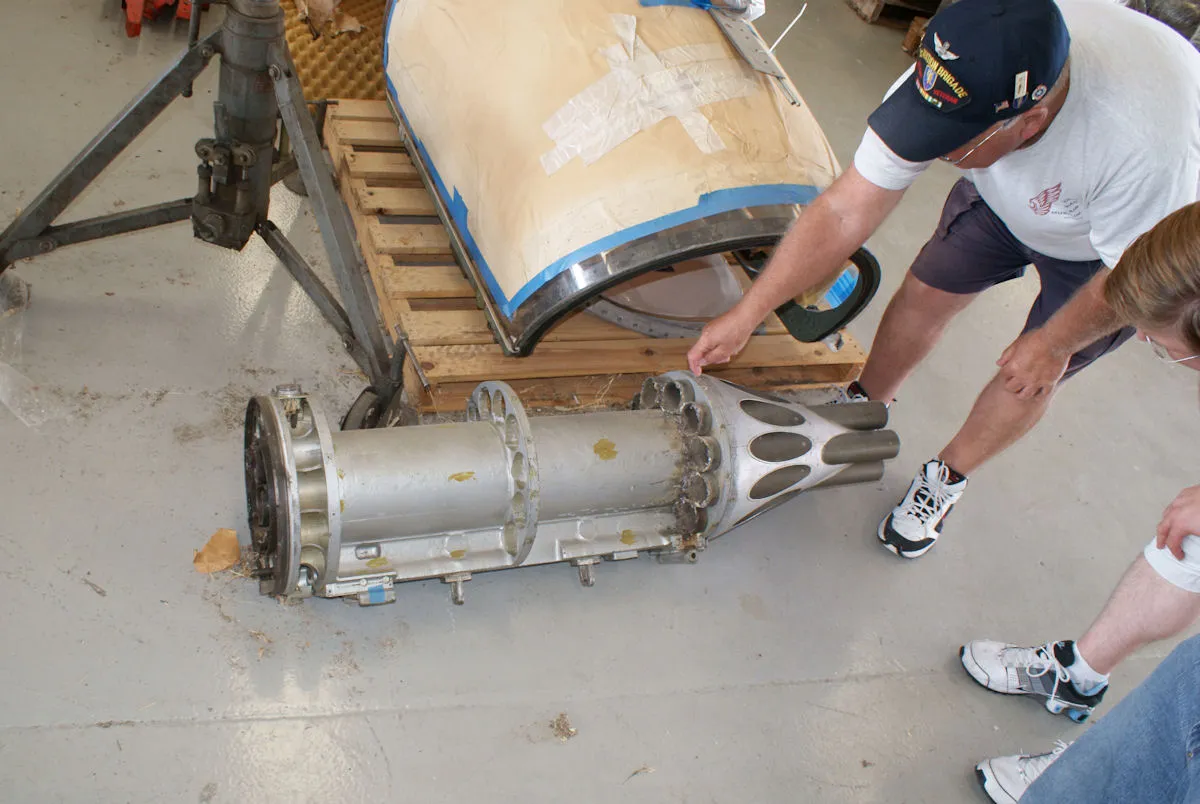
The UB-32 pod is part of the S-5 rocket launcher family, so the conversion traded normal APC armament for a short-range salvo of aircraft rockets.

AmmunitionAmmunition typeFiring evidence
S-5 rocket, 57 mm unguided air-to-surface rocket, MunitionsS-5 rocket57 mm unguided rocket family

ARES and ODIN describe the UB-32 as a 32-shot launcher for S-5-family 57 mm rockets, matching the rocket-pod type reported on the BTR-80 conversion.

Sources: ARES Research Report No. 1: S-5 Rockets in Land Warfare, ODIN UB-32 Rocket Pod

Improvised Fire-Support Fit

The documented vehicle was not a cataloged factory BTR-80 variant. It used the protected mobility of the BTR-80 chassis as a carrier for aircraft rocket pods, a pattern consistent with earlier S-5 land-warfare improvisations documented by ARES.

Documented example

One Russian BTR-80 with 57 mm UB-32 unguided aircraft rocket pods was listed by Oryx as damaged.

Rocket load

Two 32-tube UB-32 pods imply up to 64 S-5-family rockets if fully loaded.

Practical limit

Public reporting does not document a stabilized launcher, ballistic sight, fire-control system, or standard Russian designation for the conversion.

Timeline

BTR-80 with UB-32 rocket pods Key Events

  1. BTR-80 family enters Soviet service

    The BTR-80 armored personnel carrier family becomes the base vehicle later used in the improvised rocket-pod conversion.

    Sources: BTR-80 Armoured Personnel Carrier

  2. ARES documents S-5 land-warfare improvisations

    Armament Research Services describes UB-16-57 and UB-32-57 aircraft rocket pods being repurposed on ground vehicles in multiple conflicts.

    Sources: ARES Research Report No. 1: S-5 Rockets in Land Warfare

  3. BTR-80/UB-32 example damaged near Vuhledar

    Ukrainian reporting said the BTR-80 with aircraft rocket pods was struck by FPV drones near Vuhledar; Oryx later cataloged the Russian vehicle as damaged.

    Sources: Ukrainian News BTR-80 Aircraft Rocket Pods, Oryx Russian Equipment Losses During The Russian Invasion Of Ukraine

Media
Related Weapon Systems
Drone-dropped fragmentation grenade, Improvised grenade-drop tactic using a commercial UAV, Aircraft & UAVsAircraft & UAVsDrone-dropped fragmentation grenadeImprovised grenade-drop tactic using a commercial UAVDrone-dropped fragmentation grenade is a field-adapted strike method that uses commercial quadcopters or similar small UAVs to release hand grenades or comparable fragmentation charges. Reporting from Ukraine and Gaza ties the method to improvised battlefield use by multiple sides, while a 2025 U.S. Army test with a Skydio X10D, an Audible dropper, and an M67 grenade shows the same concept moving into formal experimentation.
BMD-1, Airborne amphibious infantry fighting vehicle, Armored VehiclesArmored VehiclesBMD-1Airborne amphibious infantry fighting vehicleThe BMD-1 is a Soviet airborne infantry fighting vehicle built for paratroop units, combining a very light amphibious tracked chassis with the BMP-1-style 73 mm 2A28 Grom gun and anti-tank missile armament. Its hydropneumatic suspension and low combat weight supported airborne deployment, while the same design priorities left the aluminum hull protected mainly against small-arms fire and fragments. Cataloged conflict evidence spans Soviet use in Afghanistan, Russian and Iraqi wartime fielding, Russian airborne use in Georgia and Ukraine, and Ukrainian 25th Airborne Brigade service in Donbas.
BMD-4/BMD-4M, Airborne amphibious infantry fighting vehicle, Armored VehiclesArmored VehiclesBMD-4/BMD-4MAirborne amphibious infantry fighting vehicleThe BMD-4/BMD-4M is a Russian airborne amphibious infantry fighting vehicle built for VDV units, combining a light parachutable tracked chassis with the Bakhcha-U turret's 100 mm 2A70 gun-launcher, 30 mm 2A72 autocannon, and coaxial machine gun. In the 2014 Russia-Ukraine War it appears as a Russian airborne assault vehicle, with visually documented losses at Hostomel and later BMD-4M deliveries showing factory add-on armor, slat armor, and Nakidka signature-reduction kits shaped by the Ukraine battlefield.

Sources