- Side
- Azerbaijan

Azerbaijani forces used BMP-3 infantry fighting vehicles during the 2020 Nagorno-Karabakh fighting; Oryx visually documented six Azerbaijani BMP-3 losses, including destroyed and damaged vehicles.
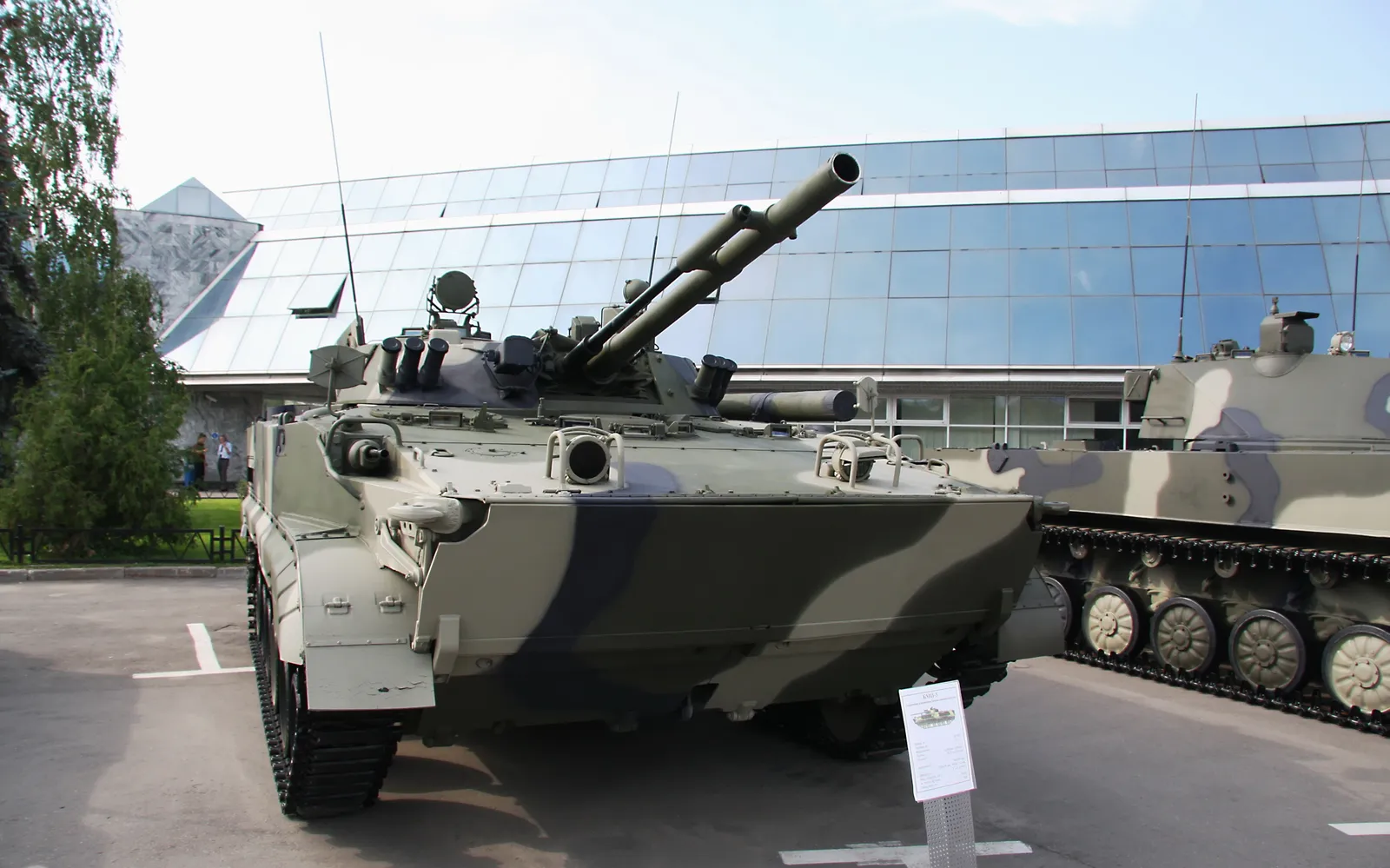
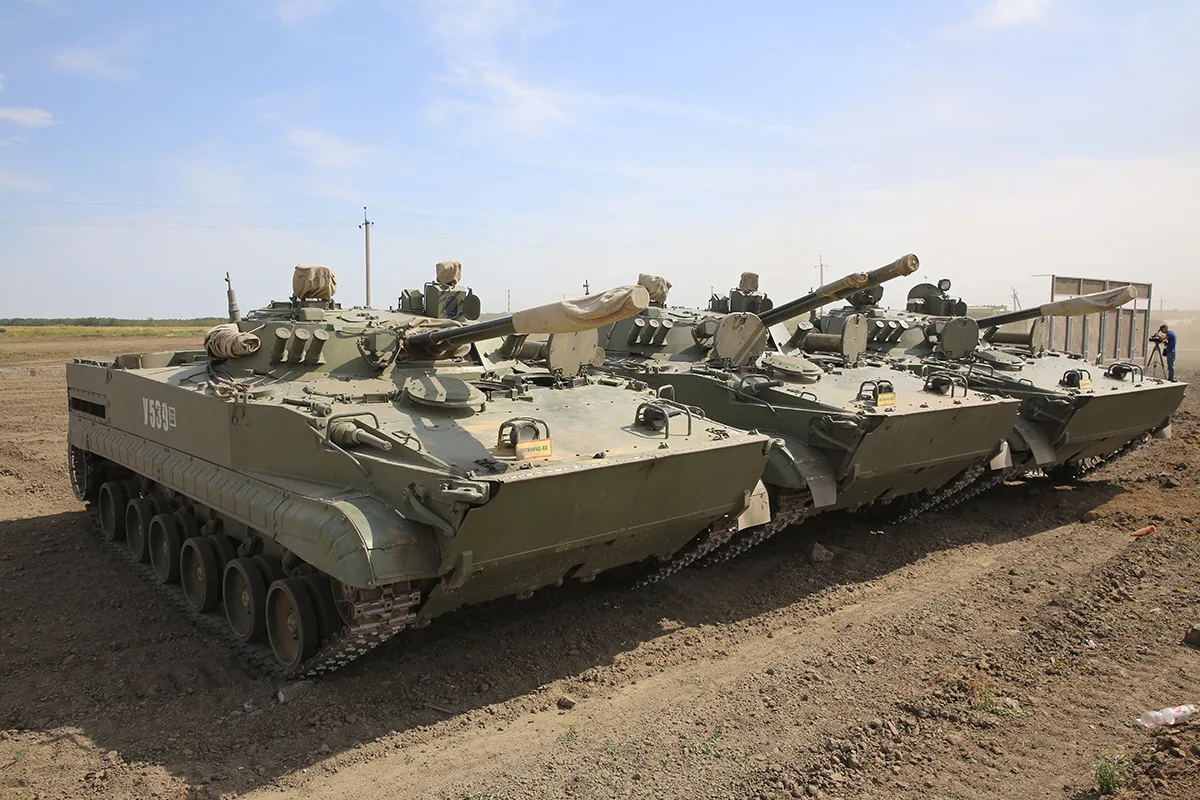
The BMP-3 is a Soviet-designed, Russian-built tracked amphibious infantry fighting vehicle that combines a 100 mm gun-launcher, 30 mm autocannon, and machine guns in a light armored troop carrier. It has appeared in Russian mechanized formations, Ukrainian captured-vehicle use, Azerbaijani service in Nagorno-Karabakh, and UAE coalition operations in Yemen, while Russia's Ukraine-war production batches have added extra mine and drone protection to address battlefield losses.
Azerbaijani forces used BMP-3 infantry fighting vehicles during the 2020 Nagorno-Karabakh fighting; Oryx visually documented six Azerbaijani BMP-3 losses, including destroyed and damaged vehicles.
Russian forces have used BMP-3 infantry fighting vehicles in Ukraine, including documented fire-support employment in the Kupyansk direction and visually confirmed losses. Ukrainian forces also operated captured BMP-3s; Army Recognition reported in May 2022 that Ukrainian troops had captured enough Russian BMP-3 IFVs to equip a battalion.
Role detailsUAE Army BMP-3 infantry fighting vehicles were deployed to Yemen with coalition forces from 2015, including documented participation around Aden, Al Anad air base, and Bab al-Mandab.
Role detailsThis record covers the baseline BMP-3 family while distinguishing modernized, command, marine, and reconnaissance configurations that use the same chassis or role family.
| Variant | Configuration | Designation notes |
|---|---|---|
| BMP-3M | Modernized infantry fighting vehicle | Army Recognition describes the BMP-3M as an upgraded BMP-3 with revised fire-control equipment, thermal imaging, target tracking, and an anti-tank guided missile loading mechanism. Sources: BMP-3M |
| BMP-3K | Command variant | Army Recognition lists the BMP-3K as a command configuration with navigation equipment and a modified machine-gun and antenna arrangement. Sources: BMP-3 IFV |
| BMP-3F | Marine/amphibious variant | Army Recognition identifies the BMP-3F as a sea-operations variant with improved seaworthiness, buoyancy, and sustained amphibious operating endurance. Sources: BMP-3 IFV |
| BRM-3K Rys | Reconnaissance variant | Army Recognition lists the BRM-3K Rys as a reconnaissance vehicle variant in the BMP-3 family, fitted with dedicated sighting and reconnaissance equipment. Sources: BMP-3 IFV |
| Improved BMP-3 (Army-2024 configuration) | Wartime protection and robotization demonstrator | Rostec said Kurganmashzavod showed an improved BMP-3 at Army-2024 with added armor and cage screens for drone and shaped-charge threats, upper-hemisphere protection, better driver video observation, and equipment enabling crewed, remote, or algorithmic control modes. Sources: Rostec Army-2024 BMP-3 Upgrade |
Rosoboronexport and Army Guide place the 3UBK23-3 Arkan round in the BMP-3's guided-ammunition family. The BMP-3 reference lists 30-mm HEI-T among the vehicle's 30 mm ammunition types. The BMP-3's 100 mm 2A70 gun-launcher can fire guided rounds and high-explosive ammunition from the same main weapon.
| Ammunition | Ammunition type | Firing evidence |
|---|---|---|
 | 100 mm guided anti-tank round | Army Guide lists 3UBK23-3 as a round included in the BMP-3 family, and Army Recognition says the Arkan fixed round with the 9M117M1-3 ATGM is offered for the BMP-3 IFV and fired from its gun-launcher. Sources: BMP-3 Infantry Fighting Vehicle, Analysis Russian anti-tank guided missiles & ammunition able to destroy modern armored vehicles |
 | 30 mm HEI-T round | The BMP-3 reference lists 30-mm HEI-T as one of the vehicle's other 30 mm ammunition types. Sources: BMP-3 Infantry Fighting Vehicle |
 | 100 mm laser-guided anti-tank round | Rosoboronexport lists the 3UBK10M-3 round with the 9M117M guided missile as ammunition intended for the BMP-3's 2A70 gun-launcher. |
 | 100 mm high-explosive round | The FAS BMP-3 reference lists 3UOF17 among the vehicle's main-armament ammunition types for the 100 mm 2A70 gun-launcher. Sources: BMP-3 (FAS) |
The BMP-3 combines troop carriage, amphibious mobility, and unusually heavy IFV armament. Recent Ukraine-war reporting and official Russian industry material also show protection changes aimed at mines, artillery fragments, shaped-charge weapons, and drones.
| Feature | Documented detail | Reader context |
|---|---|---|
| Main armament | 100 mm 2A70 gun-launcher paired with a 30 mm 2A72 automatic cannon and 7.62 mm machine guns | Lets the vehicle fire high-explosive 100 mm rounds, guided rounds, and autocannon ammunition from one turret. |
| Guided ammunition | Rosoboronexport lists 3UBK10M-3 / 9M117M ammunition for the BMP-3's 2A70 gun-launcher; Army Recognition identifies the later 3UBK23-3 Arkan round. | The same gun-launcher can use conventional 100 mm ammunition and guided anti-tank rounds, while the 30 mm cannon covers lighter targets. |
| Mobility | Export data lists 70 km/h road speed, 10 km/h water speed, and 600 km operational range. | Amphibious mobility is central to the design, but conflict notes still distinguish documented use from general capability. |
| Wartime protection | Russian 2026 reporting described added side screens, mine-protection kits, anti-drone grilles, and masking measures on new production batches; Rostec's Army-2024 display added armor, cage screens, upper-hemisphere protection, and improved video observation. | These changes reflect Ukraine-war threat pressure and modernization of the BMP-3 line rather than a fully separate cataloged vehicle family. |
Army Recognition dates the BMP-3's Soviet Army service entry and first public appearance to 1990, with Kurganmashzavod manufacturing the chassis and KBP responsible for the turret.
Sources: BMP-3 IFV
Bellingcat traced UAE Army BMP-3 deployments in Yemen from 2015, including coalition operations around Aden, Al Anad air base, and Bab al-Mandab.
Sources: Logbook, Part I: The UAE's BMP-3 IFV in Yemen
Oryx visually documented Azerbaijani BMP-3 losses during the 2020 Nagorno-Karabakh war, supporting direct Azerbaijani battlefield use.
Sources: The Fight For Nagorno-Karabakh: Documenting Losses On The Sides Of Armenia And Azerbaijan
Oryx documented Russian BMP-3 losses and captures after the full-scale invasion, while Army Recognition separately reported Ukrainian operation of captured BMP-3 vehicles.
Sources: Attack On Europe: Documenting Russian Equipment Losses During The Russian Invasion Of Ukraine, Ukrainian soldiers captured enough Russian BMP-3 IFVs to equip one battalion
Rostec described a Kurganmashzavod improved BMP-3 with added anti-drone and shaped-charge protection, retained amphibious mobility, better driver video observation, and optional robotization equipment.
Sources: Rostec Army-2024 BMP-3 Upgrade
Army Recognition reported Russian 2026 BMP-3 production above plan and described new mine, drone, and fragmentation protection tied to Ukraine-war battlefield attrition.
Sources: Russia Increases BMP-3 IFV Production With New Drone and Mine Protection for Ukraine War