Armored Vehicles

BMP-1

Also known as
  • BMP
  • BMP-76PB
  • Boyevaya Mashina Pekhoty
  • BVP-1
  • Type 86
  • WZ-501
  • MLI-84
  • Boragh

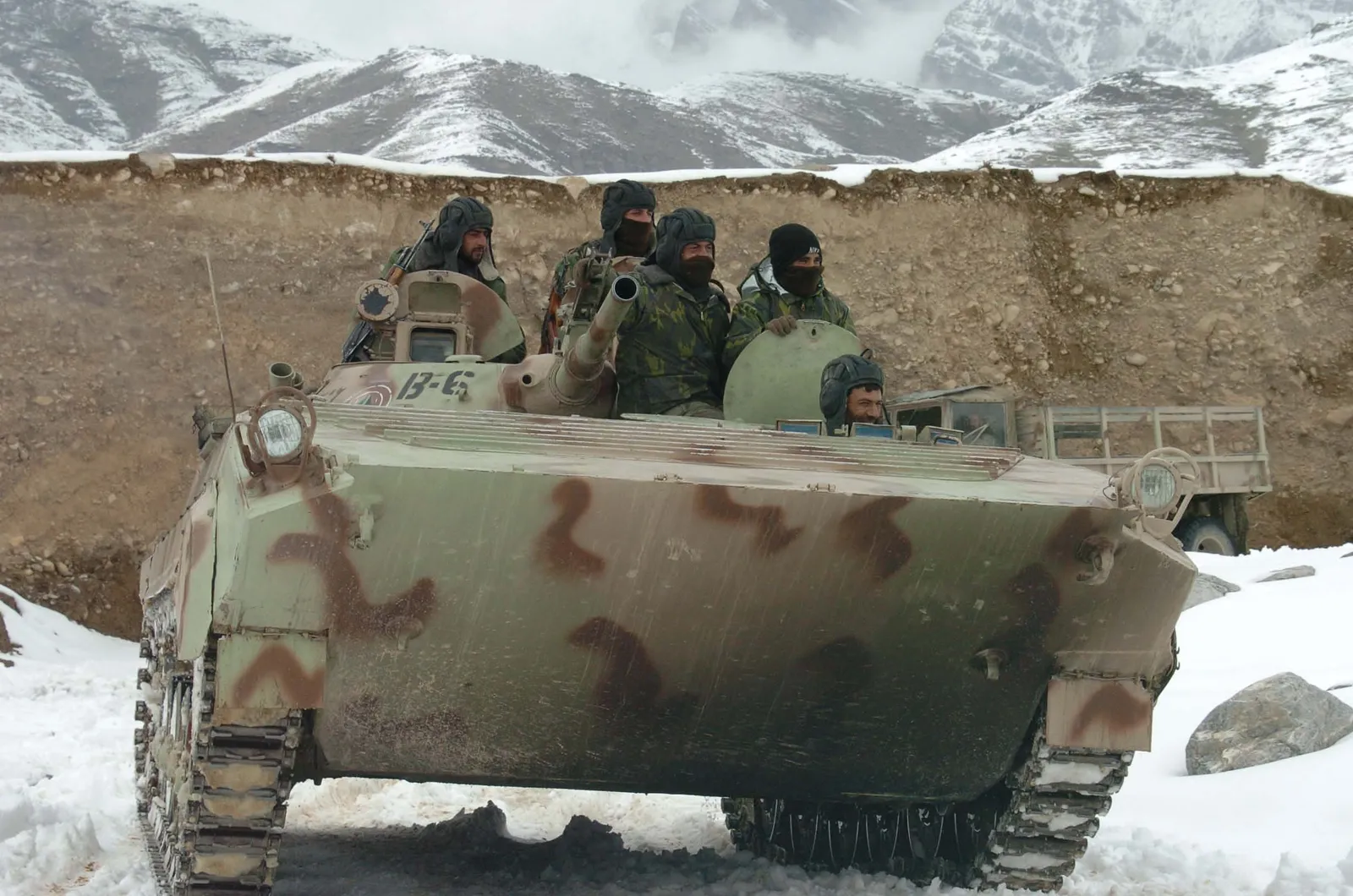
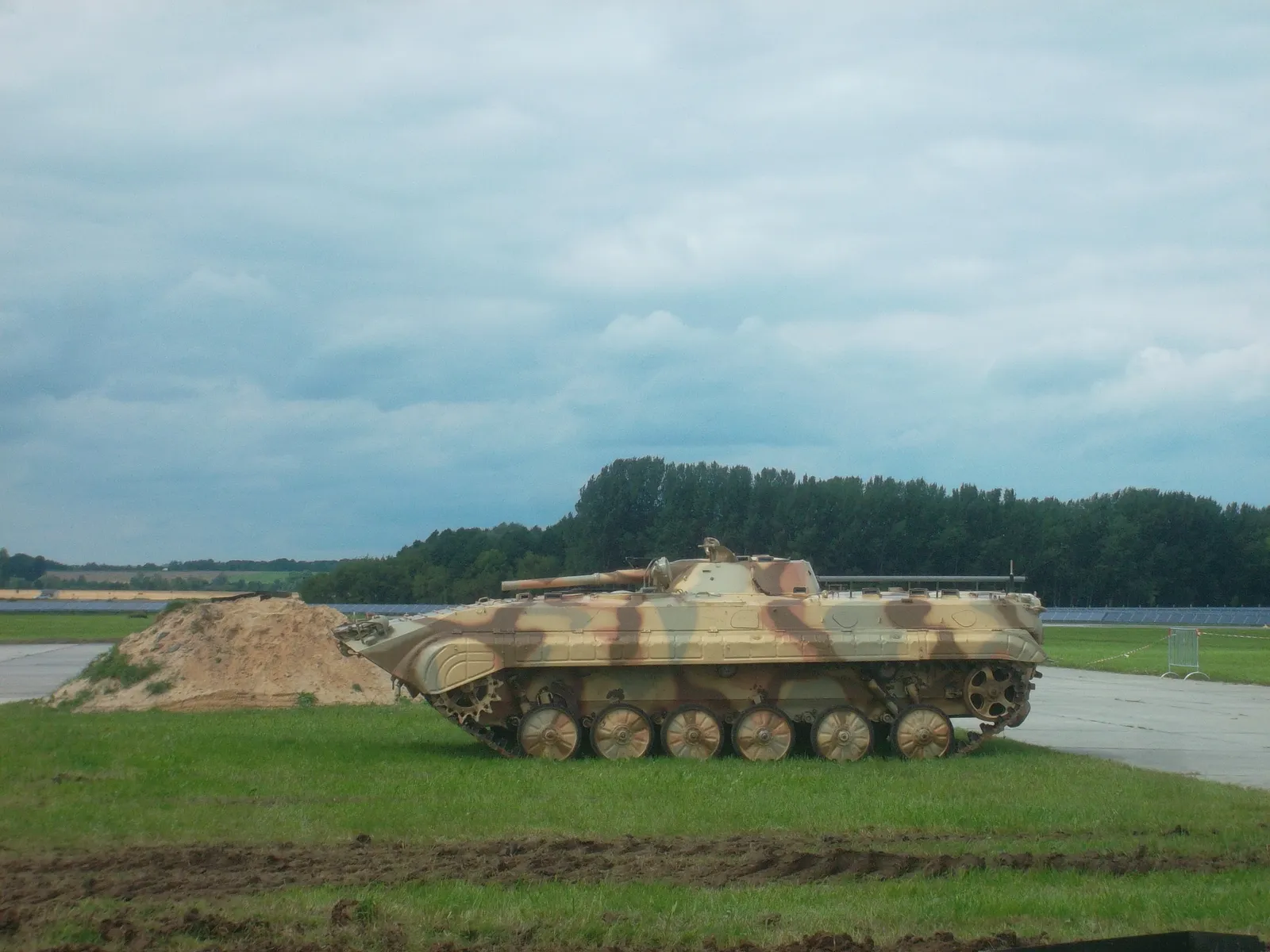
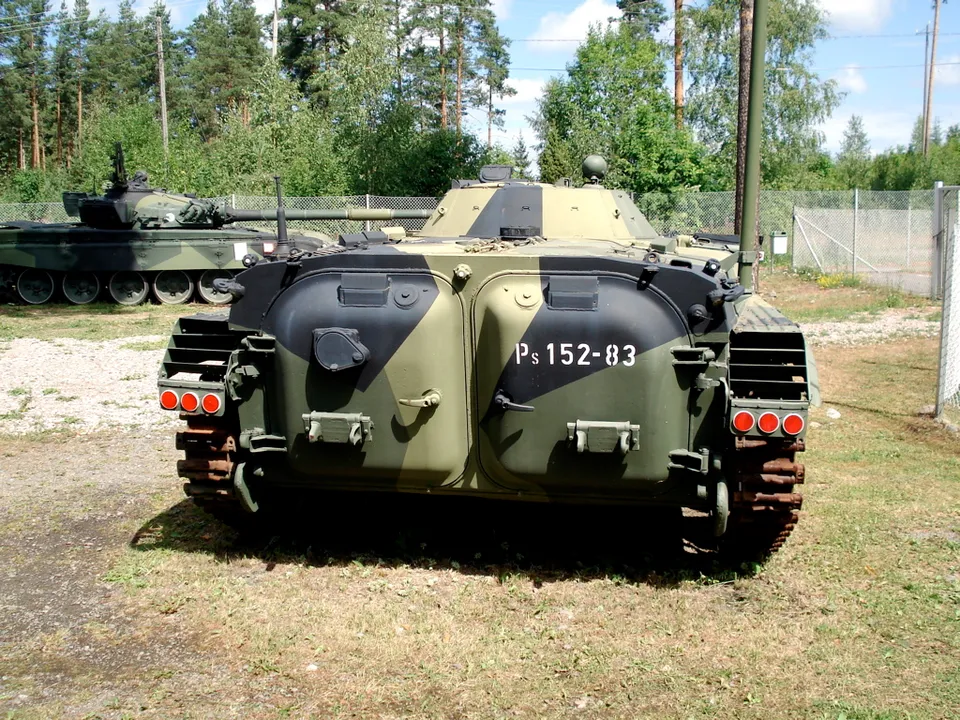
The BMP-1 was the Soviet Union's first mass-produced infantry fighting vehicle: a tracked, amphibious troop carrier built around a 73 mm 2A28 Grom gun, a coaxial PKT, and the original 9M14 Malyutka missile rail. Its export scale and simple upgrade path have kept BMP-1 hulls in service from the 1973 Yom Kippur War to Ukraine, Syria, Iraq, Afghanistan, and the Caucasus.

Role in Conflicts

Side
EgyptSyria
Role in conflict
Mechanized infantry transport and direct fire support

Egyptian and Syrian forces used BMP-1 infantry fighting vehicles in the 1973 Yom Kippur War, which U.S. Army display history identifies as the vehicle's first live-combat employment.

Role in conflict
Armored troop movement and direct fire support

Armenian and Artsakh forces fielded BMP-1 infantry fighting vehicles during the 2020 fighting, with Oryx documenting destroyed, damaged, and captured examples.

Design And Service Context

The BMP-1's long service life comes from a compact Cold War design that combined troop carriage, amphibious mobility, a low-pressure gun, and anti-tank missile capability in one tracked vehicle.

ThemeReader-visible contextSource
Original conceptThe standard turret paired the 73 mm 2A28 Grom with a rail-launched 9M14 Malyutka, giving a mechanized infantry vehicle both direct-fire and anti-tank roles.BMP-1 | Weaponsystems.net; BMP-1 Infantry Combat Vehicle
Combat lessonsThe U.S. Army display history links 1973 combat experience to the BMP-2 development path and notes that the BMP-1 stayed active despite protection and armament limits.RIA Self-Guided Tour: BMP-1 Armored Personnel Carrier
Production spreadSoviet and Czechoslovak production alone exceeded 38,000 vehicles, while aliases and variants such as BVP-1, Type 86, MLI-84, and Boragh reflect a wider license, copy, and derivative ecosystem.BMP-1 | Weaponsystems.net; BMP-1 Infantry Combat Vehicle
Modern persistenceIWM and Forces News both document BMP-1s still appearing in the Russia-Ukraine War, where legacy stocks, donor transfers, and captures make older IFVs operationally visible.The BMP-1 Belongs in a Museum. Why Is It Still Being Used in Ukraine?; BMP-1: The 'Radical' Soviet-Era Infantry Fighting Vehicle Being Used by Both Sides in Ukraine War
Profile / Specs

Profile

Origin
Soviet Union
Type
Infantry fighting vehicle
Service note
Cold War design
Designer
GSKB-2 design bureau, part of Chelyabinsk Tractor Factory
Designed
1961-1965
Produced
1966-1983 (USSR); 1970-1989 (Czechoslovakia)
Number built
Over 38,000 in Soviet and Czechoslovak production, excluding later licensed and copy production

Specifications

Crew
3 plus 8 infantry
Weight
13.2 t combat load
Main armament
73 mm 2A28 Grom low-pressure cannon
Secondary armament
7.62 mm PKT coaxial machine gun
Anti-tank armament
9M14 or 9M14M Malyutka missile on a launch rail above the main gun
Mobility
65 km/h on road; 45 km/h off road; 7 km/h in water; 600 km range
Protection
Steel armor; 19 mm hull front and 23 mm turret front
Variants

The BMP-1 family includes original production vehicles, licensed or copied export designations, turret and missile upgrades, and specialist command or reconnaissance vehicles built on the same chassis.

VariantConfigurationDesignation notes
BMP-1 Model 1970Primary production variant

The U.S. Army display history identifies the BMP-1 Model 1970 as the primary production variant.

Sources: RIA Self-Guided Tour: BMP-1 Armored Personnel Carrier

Type 86 / WZ-501Chinese copy or derivative designation

The FAS reference lists Chinese Type WZ 501 / Type 86 series designations among BMP-1-derived vehicles.

Sources: BMP-1 Infantry Combat Vehicle

BRM-1K, Tracked armored reconnaissance vehicle, Armored VehiclesBRM-1KReconnaissance vehicle on BMP-1 chassis

Weaponsystems.net describes the BRM-1K as a reconnaissance vehicle based on the BMP-1 chassis with a larger turret, observation devices, radar, and specialist equipment.

Sources: BMP-1 | Weaponsystems.net

BMP-1KSh command vehicle, Tracked armored command post vehicle, Support EquipmentBMP-1KShCommand and staff vehicle on BMP-1 chassis

Weaponsystems.net describes the BMP-1KSh as a command and staff vehicle based on the BMP-1 chassis with radios and a telescopic mast instead of the standard turret armament.

Sources: BMP-1 | Weaponsystems.net

Original Armament

The original BMP-1 turret combined a 73 mm low-pressure gun with a launch rail for the Malyutka anti-tank missile family.

Carried itemItem typeCarriage evidence
2A28 Grom, 73 mm low-pressure smoothbore cannon, Artillery2A28 Grom73 mm low-pressure smoothbore cannon

Weaponsystems.net lists the BMP-1's main armament as the 73 mm 2A28 Grom low-pressure cannon with 40 rounds.

Sources: BMP-1 | Weaponsystems.net

9M14 Malyutka, MCLOS wire-guided anti-tank guided missile, Infantry Weapons9M14 MalyutkaMCLOS wire-guided anti-tank guided missile

Weaponsystems.net lists the BMP-1's anti-tank guided weapon as the 9M14 or 9M14M Malyutka on a launch rail above the 73 mm cannon, and the FAS reference notes the original AT-3 Sagger fit.

Sources: BMP-1 | Weaponsystems.net, BMP-1 Infantry Combat Vehicle

Timeline

BMP-1 Key Events

  1. Development program

    GSKB-2 at the Chelyabinsk Tractor Factory developed the BMP-1 family during the 1961-1965 design period.

    Sources: BMP-1 | Weaponsystems.net

  2. Enters Soviet service

    Weaponsystems.net lists 1966 as the BMP-1's entry into service with the Soviet Union.

    Sources: BMP-1 | Weaponsystems.net

  3. Soviet production run

    Kurganmashzavod produced the BMP-1 in the USSR until 1983.

    Sources: BMP-1 | Weaponsystems.net

  4. Czechoslovak BVP-1 production

    Licensed Czechoslovak production ran from 1970 to 1989 under the BVP-1 designation.

    Sources: BMP-1 | Weaponsystems.net

  5. Combat debut in the Yom Kippur War

    The U.S. Army display history says Egyptian and Syrian forces used the BMP-1 in live combat during the 1973 Yom Kippur War.

    Sources: RIA Self-Guided Tour: BMP-1 Armored Personnel Carrier

  6. Captured Iraqi example from Desert Storm

    IWM and the U.S. Army both describe museum BMP-1 examples captured or abandoned during Operation Desert Storm in 1991.

    Sources: The BMP-1 Belongs in a Museum. Why Is It Still Being Used in Ukraine?, RIA Self-Guided Tour: BMP-1 Armored Personnel Carrier

Media
Related Weapon Systems
BMD-1, Airborne amphibious infantry fighting vehicle, Armored VehiclesArmored VehiclesBMD-1Airborne amphibious infantry fighting vehicleThe BMD-1 is a Soviet airborne infantry fighting vehicle built for paratroop units, combining a very light amphibious tracked chassis with the BMP-1-style 73 mm 2A28 Grom gun and anti-tank missile armament. Its hydropneumatic suspension and low combat weight supported airborne deployment, while the same design priorities left the aluminum hull protected mainly against small-arms fire and fragments. Cataloged conflict evidence spans Soviet use in Afghanistan, Russian and Iraqi wartime fielding, Russian airborne use in Georgia and Ukraine, and Ukrainian 25th Airborne Brigade service in Donbas.
BRM-1K, Tracked armored reconnaissance vehicle, Armored VehiclesArmored VehiclesBRM-1KTracked armored reconnaissance vehicleThe BRM-1K is a Soviet tracked armored reconnaissance vehicle derived from the BMP-1 chassis, combining amphibious mobility with battlefield surveillance equipment and a 73 mm 2A28 cannon. Russia later modernized the type as the BRM-1KM/BRM-1K Model 2021 with a BTR-82A-style combat compartment, 30 mm 2A72 armament, updated communications, and newer reconnaissance equipment; both legacy and modernized vehicles are visually documented in post-Soviet conflicts.
BMP-1KSh command vehicle, Tracked armored command post vehicle, Support EquipmentSupport EquipmentBMP-1KSh command vehicleTracked armored command post vehicleThe BMP-1KSh is a Soviet BMP-1-based command-and-staff vehicle that replaces the infantry carrier's standard turret weapon with a fixed command-post fit, a telescopic mast, multiple radios, navigation equipment, generators, and antenna systems. Open-source loss documentation ties the vehicle to Armenian command equipment captured in the 2020 Nagorno-Karabakh Conflict and to Russian and Ukrainian command-and-communications losses in the 2014 Russia-Ukraine War.
BMP-1AM Basurmanin, Modernized infantry fighting vehicle, Armored VehiclesArmored VehiclesBMP-1AM BasurmaninModernized infantry fighting vehicleThe BMP-1AM Basurmanin is a Russian modernization of the BMP-1 infantry fighting vehicle that replaces the original 73 mm Grom turret with a BTR-82A-derived fighting compartment carrying a 30 mm 2A72 cannon, PKTM machine gun, updated sights, and Metis anti-tank missile capability. Russian industry sources describe repaired and upgraded vehicles delivered under state defense orders, while Ukrainian and open-source loss reporting place BMP-1AM vehicles in Russian service during the full-scale phase of the 2014 Russia-Ukraine War.
BMP-1U Shkval, Infantry fighting vehicle modernization, Armored VehiclesArmored VehiclesBMP-1U ShkvalInfantry fighting vehicle modernizationThe BMP-1U Shkval is a Ukrainian modernization of the Soviet BMP-1 infantry fighting vehicle that replaced the original 73 mm turret with the KBA-105 Shkval weapon station. The upgrade centers on 30 mm cannon fire, a coaxial machine gun, a 30 mm automatic grenade launcher, and Konkurs anti-tank missile launchers, trading some troop capacity for a heavier remote combat module. Its most clearly documented wartime trail runs through Georgian vehicles captured by Russia in the 2008 Russo-Georgian War and later seen or lost in Russian service during the full-scale phase of the Russia-Ukraine War.

Sources