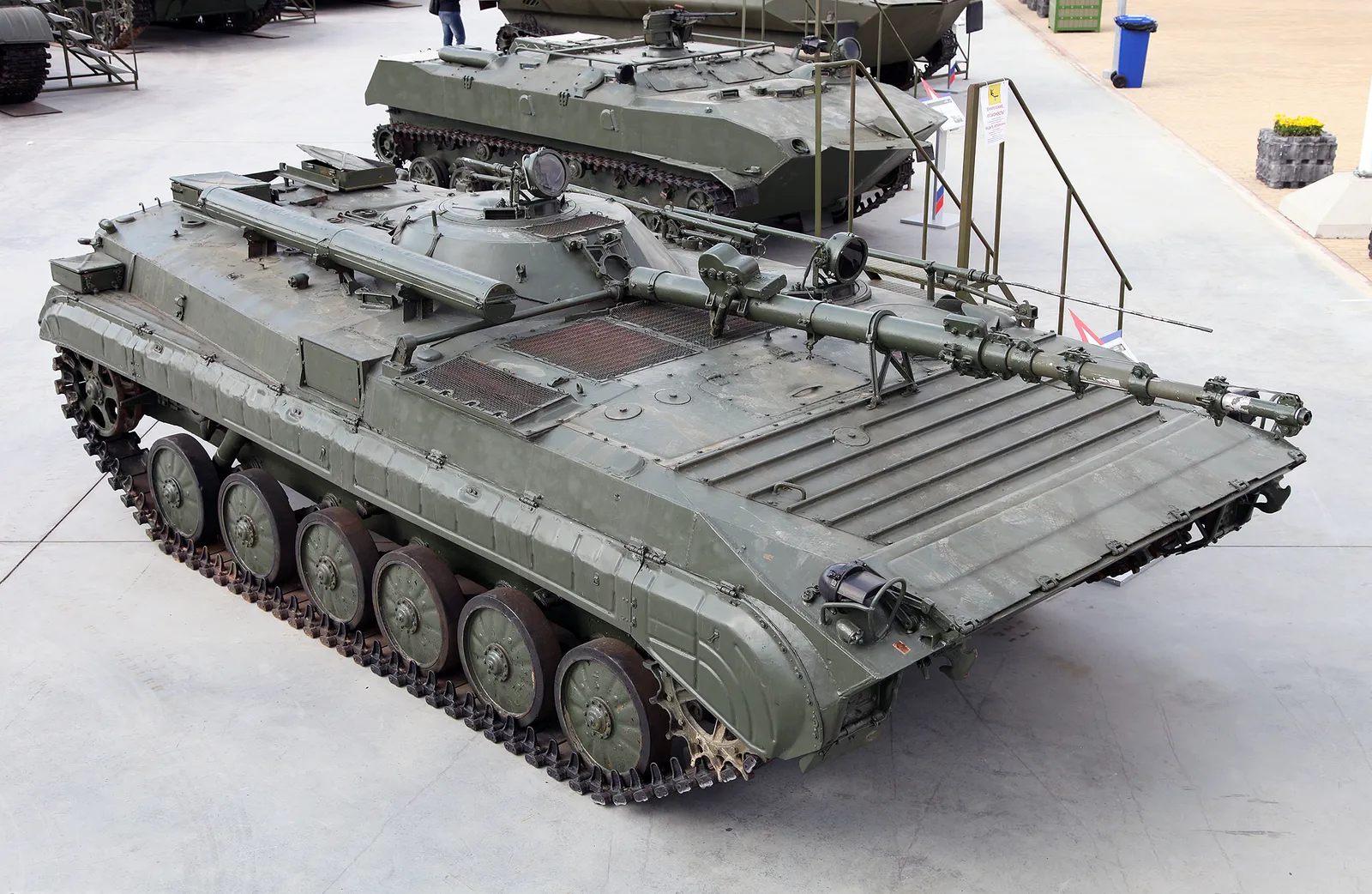


BMP-1KSh command-and-staff vehicles are visually documented in the 2014 Russia-Ukraine War on both sides, with Oryx listing Russian and Ukrainian destroyed or captured examples and UNITED24 reporting a 59th Brigade capture of a Russian vehicle near Novopavlivka in November 2025.
Role detailsSupport Equipment
BMP-1KSh command vehicle
Also known as
- BMP-1KSh
- BMP-1KSh command and staff vehicle
- BMP-1KSh command post vehicle
- BMP M1978
- Object 774
- Obyekt 774
- Potok-2
- 9S743
- BMP-1KShM
The BMP-1KSh is a Soviet BMP-1-based command-and-staff vehicle that replaces the infantry carrier's standard turret weapon with a fixed command-post fit, a telescopic mast, multiple radios, navigation equipment, generators, and antenna systems. Open-source loss documentation ties the vehicle to Armenian command equipment captured in the 2020 Nagorno-Karabakh Conflict and to Russian and Ukrainian command-and-communications losses in the 2014 Russia-Ukraine War.
Role in Conflicts

Oryx lists one Armenian BMP-1KSh command-and-staff vehicle as captured during the 2020 Nagorno-Karabakh fighting, documenting the type as part of Armenia/Artsakh command and communications equipment losses.
Profile / Specs
Profile
- Origin
- Soviet Union
- Built by
- Rubtsovsk Machine-Building Plant
- Type
- Tracked armored command post vehicle
- Service note
- Late Cold War Soviet command-and-staff vehicle
- Designer
- Chelyabinsk Tractor Plant design bureau
- Designed
- 1972
- Produced
- From 1976
- Number built
- Limited production rate
- Developed from
- BMP-1 infantry fighting vehicle
Specifications
- Crew
- 3 crew plus 4 staff personnel
- Weight
- 13.0 tonnes combat load
- Dimensions
- 6.74 m length, 2.94 m width, 1.92 m height
- Armament
- 7.62 mm PK machine gun for self-protection
- Command equipment
- R-130M, R-111, and R-123MT radios, TNA-3 navigation equipment, telegraph and telephone equipment, and generator support
- Antenna fit
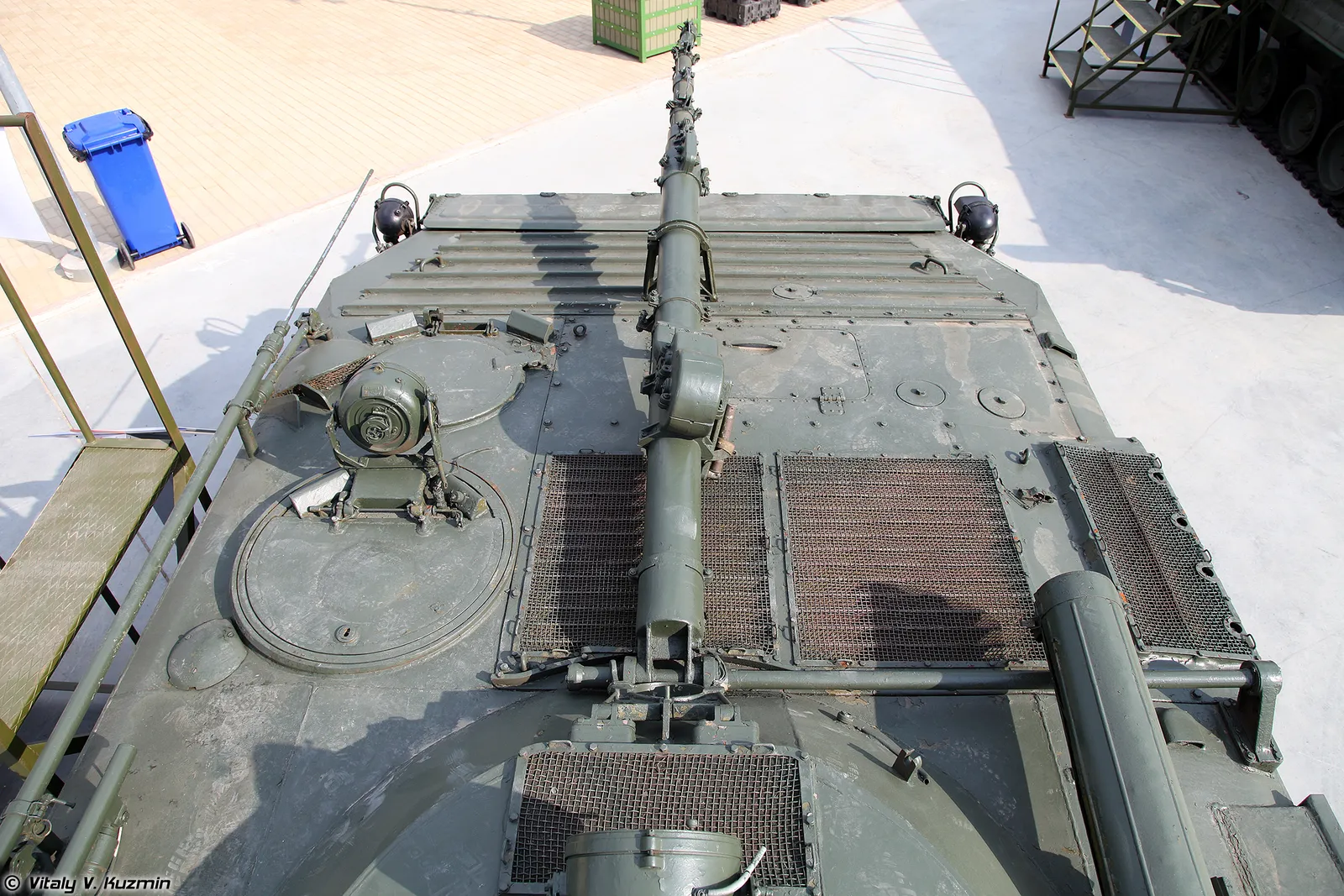
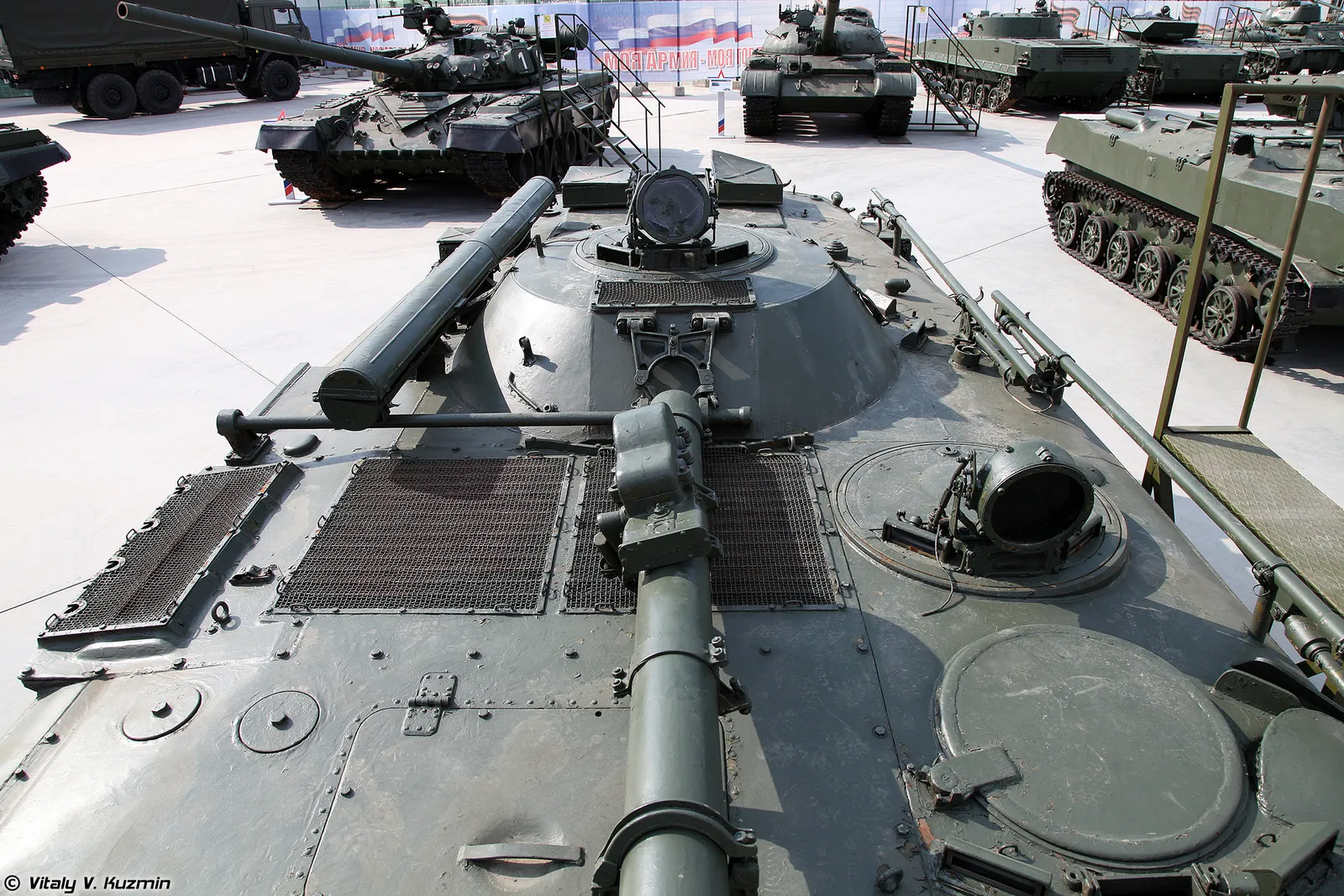
- Fixed turret with AMU Hawkeye 10 m telescopic mast and additional whip antennas
- Mobility
- 65 km/h road speed, 45 km/h off road, 7 km/h swimming speed, about 600 km road range
- Engine
- UTD-20 300 hp diesel
- Protection
- Welded steel armor with NBC protection
Command Post Configuration
The BMP-1KSh is a specialist command-post conversion rather than a normal infantry fighting vehicle. Sources describe the standard gun armament as removed or reduced, with command radios, navigation equipment, an erectable mast, whip antennas, and generator support taking priority inside and around the hull.
Base vehicle
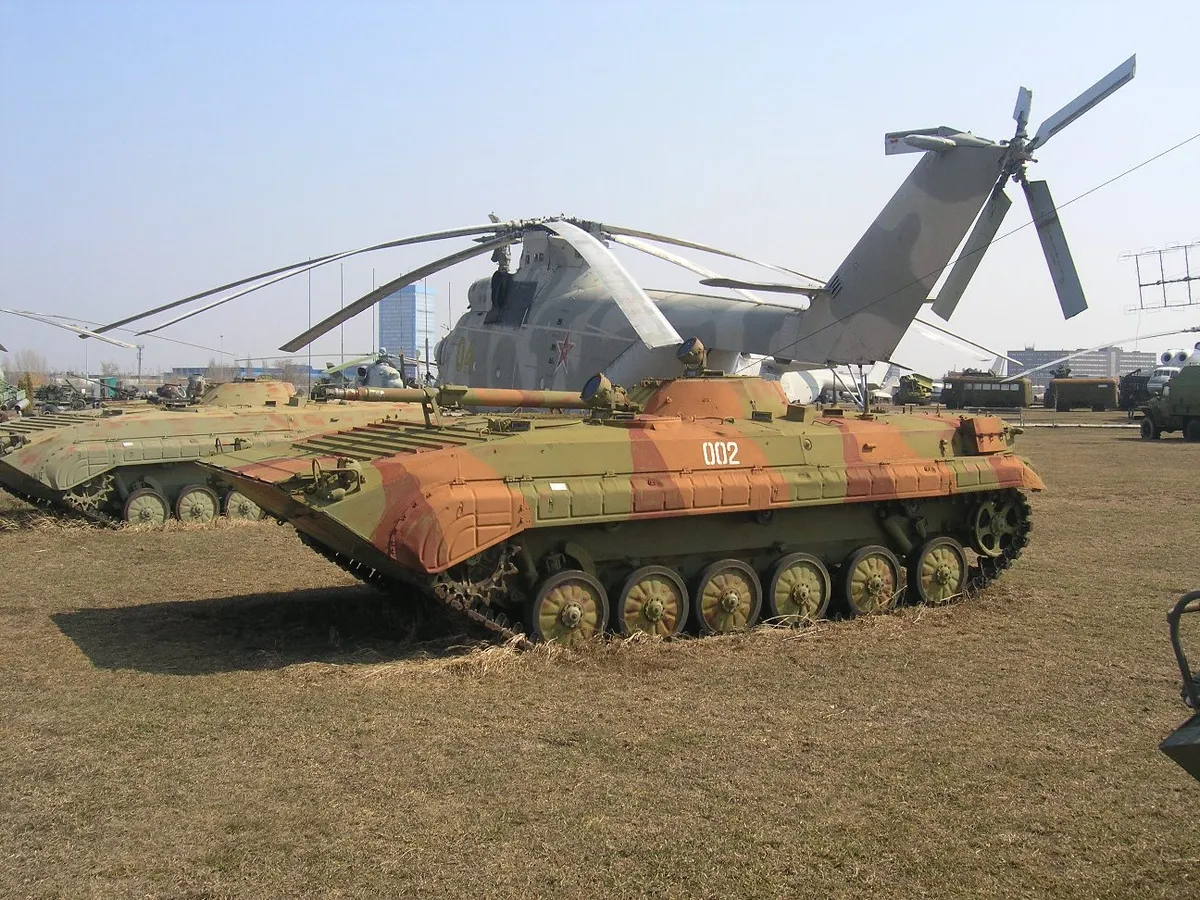
BMP-1 tracked amphibious chassis, with the command vehicle retaining the BMP-1 hull layout and mobility class.
Supported by BMP-1KSh | Weaponsystems.net and BMP-1KSh Command Post Vehicle.
Command fit
Multiple radios, TNA-3 navigation, telegraph and telephone equipment, and generator support are documented for the KSh command-post role.
Supported by BMP-1KSh | Weaponsystems.net and BMP-1 Variants.
Visual cues
A fixed turret, telescopic mast, rear antenna equipment, and additional whip antennas distinguish the vehicle from gun-armed BMP-1 infantry carriers.
Supported by BMP-1KSh Command Post Vehicle and the Commons image set.
Variants
The BMP-1KSh designation covers the Object 774 / Potok-2 command-and-staff vehicle on the BMP-1 chassis; later KSh-family derivatives mainly changed the radio, navigation, generator, or command-system equipment rather than the basic hull form.
| Variant | Configuration | Designation notes |
|---|---|---|
| BMP-1KShM | Modernized command-and-staff vehicle | The BMP-1KShM is described as a modernization of the BMP-1KSh with improved navigation and radio equipment and few obvious external differences. Sources: BMP-1 Variants |
| MP-31 / BMP-76 | Automated command-system derivative | The MP-31 / BMP-76 derivative is described with a stronger generator and additional equipment for artillery or air-defense command-and-control roles within the Manyevr command system. Sources: BMP-1 Variants |
Mounted Weapons
The BMP-1KSh retains only a light machine-gun self-protection fit while its main internal purpose is command-and-staff communications.
| Carried item | Item type | Carriage evidence |
|---|---|---|
 | 7.62 mm PK machine gun | Weaponsystems.net lists a 7.62 mm PK machine gun for the BMP-1KSh, and Army Recognition describes a PK 7.62 mm machine gun retained for self-protection. Sources: BMP-1KSh | Weaponsystems.net, BMP-1KSh Command Post Vehicle |
Timeline
BMP-1KSh command vehicle Key Events
BMP-1KSh developed
Weaponsystems.net lists 1972 as the development year for the BMP-1KSh and identifies the Chelyabinsk Tractor Plant design bureau as the developer.
Sources: BMP-1KSh | Weaponsystems.net
Serial production begins
Weaponsystems.net and Army Recognition both place BMP-1KSh production at Rubtsovsk from 1976.
Sources: BMP-1KSh | Weaponsystems.net, BMP-1KSh Command Post Vehicle
Captured Armenian example documented
Oryx documents one Armenian BMP-1KSh command-and-staff vehicle captured during the 2020 Nagorno-Karabakh war.
Sources: Nagorno-Karabakh Losses
Russian losses tracked after full-scale invasion
Oryx's Russia equipment-loss list records multiple Russian BMP-1KSh command-and-staff vehicles destroyed or captured during the full-scale phase of the Russia-Ukraine War.
Sources: Russian Equipment Losses
Novopavlivka capture reported
UNITED24 reported that Ukraine's 59th Separate Assault Brigade announced the capture of a Russian BMP-1KSh near Novopavlivka after a failed Russian assault.
Sources: UNITED24 Novopavlivka BMP-1KSh Capture
Media
BMP-1KSh command vehicle Images
Related Weapon Systems


Sources
BMP-1KSh | Weaponsystems.netPublisher: WeaponSystems.net | Note: Supports BMP-1KSh background, Soviet origin, developer, producer, service period, designations, communications equipment, armament, mobility, and technical specifications. | Accessed: 2026-07-03BMP-1KSh Command Post VehiclePublisher: Army Recognition | Note: Supports background on the BMP-1KSh command-post role, service and production context, PK machine-gun self-protection fit, protection, mobility, and technical specifications. | Accessed: 2026-07-03BMP-1 VariantsPublisher: Wikipedia | Note: Used only for baseline variant terminology and leads on BMP-1KShM and MP-31 / BMP-76 designation relationships. | Accessed: 2026-07-03Russian Equipment LossesPublisher: Oryx | Note: Supports 2014 Russia-Ukraine War direct use: Russian BMP-1KSh command-and-staff vehicles fielded by Russia and visually documented as destroyed or captured during the war. | Accessed: 2026-07-03Ukrainian Equipment LossesPublisher: Oryx | Note: Supports 2014 Russia-Ukraine War direct use: Ukrainian BMP-1KSh command-and-staff vehicles fielded by Ukraine and visually documented as destroyed or captured during the war. | Accessed: 2026-07-03UNITED24 Novopavlivka BMP-1KSh CapturePublisher: UNITED24 Media | Note: Supports 2014 Russia-Ukraine War direct use: a Russian BMP-1KSh command vehicle reported captured by Ukrainian forces near Novopavlivka in November 2025. | Accessed: 2026-07-03Nagorno-Karabakh LossesPublisher: Oryx | Note: Supports 2020 Nagorno-Karabakh Conflict direct use: a BMP-1KSh command-and-staff vehicle used by Armenian / Artsakh forces and captured by Azerbaijan during the 2020 war. | Accessed: 2026-07-03Commons ParkPatriot2015part11-131Publisher: Wikimedia Commons | Note: Supports image provenance for a BMP-1KSh photo by Vitaly V. Kuzmin under CC BY-SA 4.0. | Accessed: 2026-07-03Commons ParkPatriot2015part11-132Publisher: Wikimedia Commons | Note: Supports image provenance for a BMP-1KSh photo by Vitaly V. Kuzmin under CC BY-SA 4.0. | Accessed: 2026-07-03Commons ParkPatriot2015part11-133Publisher: Wikimedia Commons | Note: Supports image provenance for a BMP-1KSh photo by Vitaly V. Kuzmin under CC BY-SA 4.0. | Accessed: 2026-07-03Commons BMP-1KSh in TogliattiPublisher: Wikimedia Commons | Note: Supports image provenance for a BMP-1KSh museum photo by ShinePhantom under CC BY-SA 3.0. | Accessed: 2026-07-03