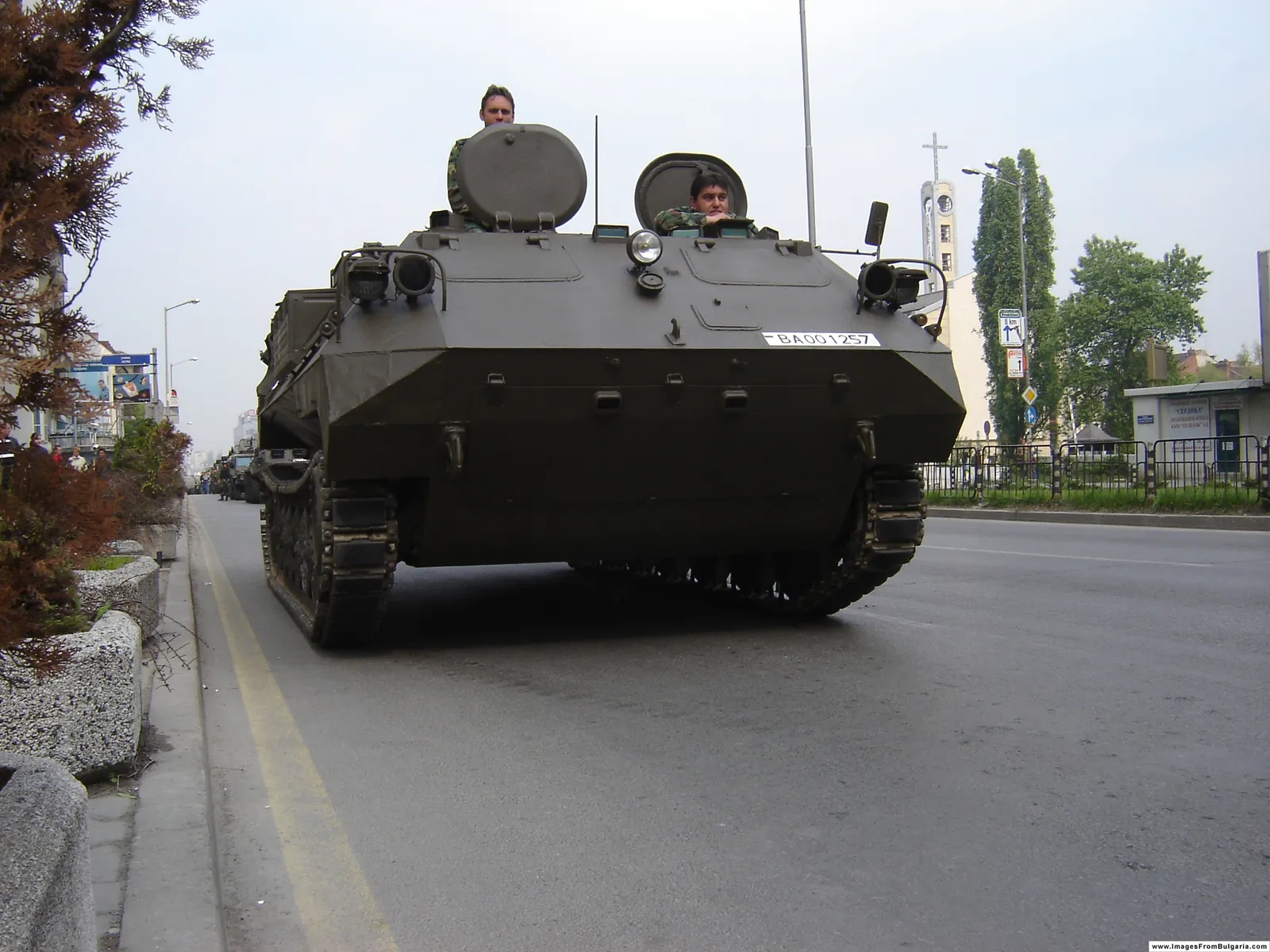
- Side
- Iraq

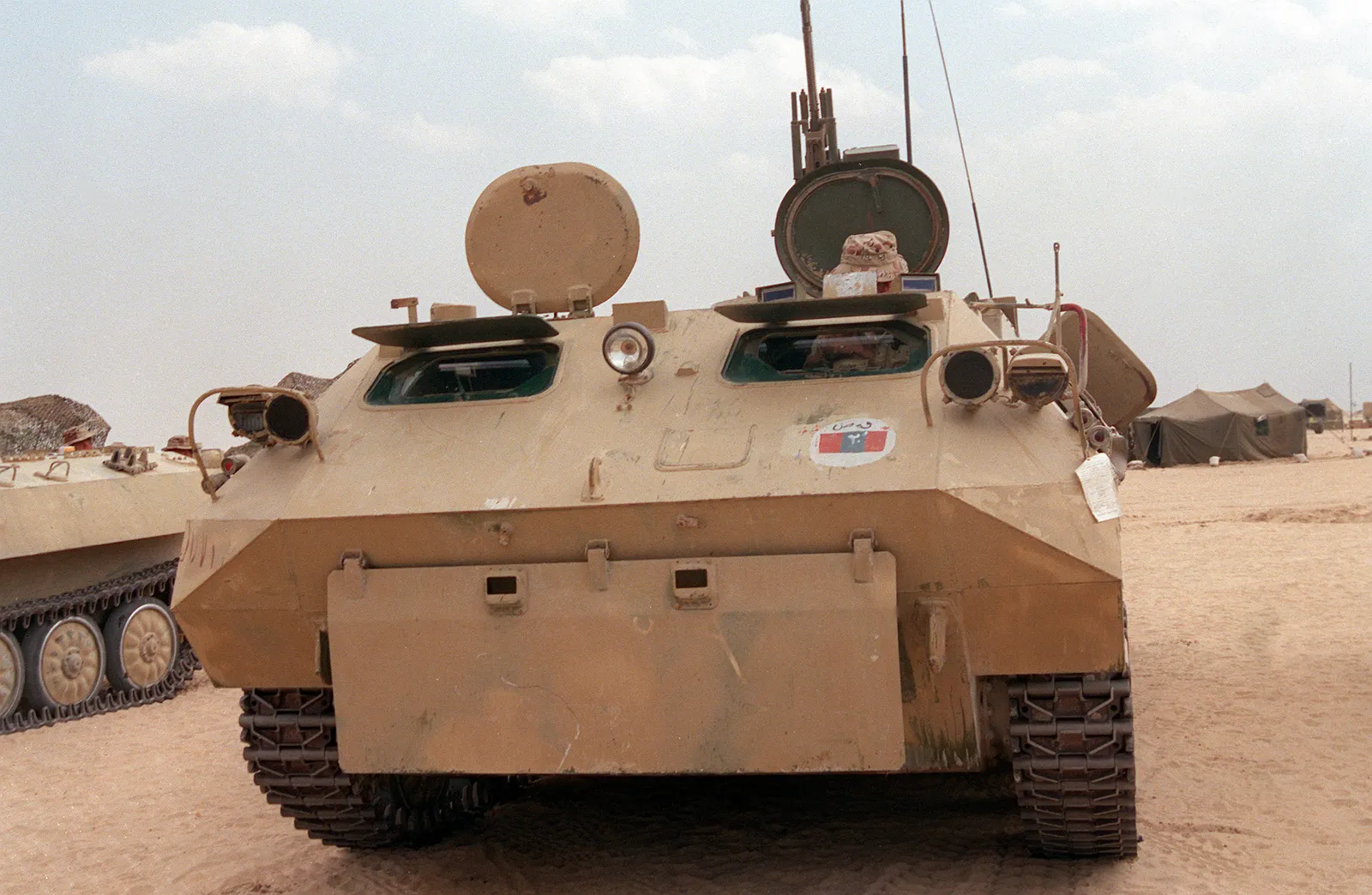
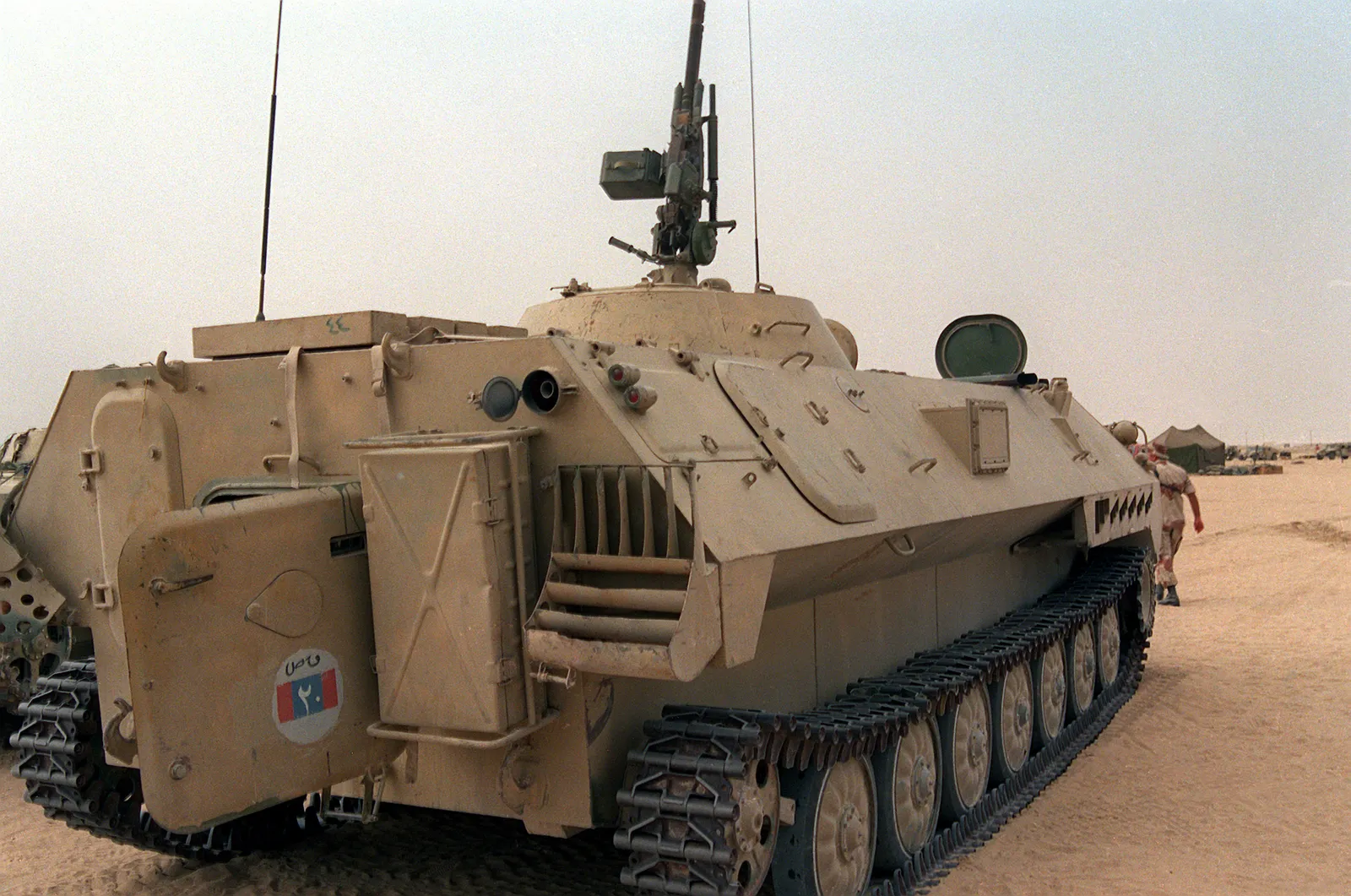
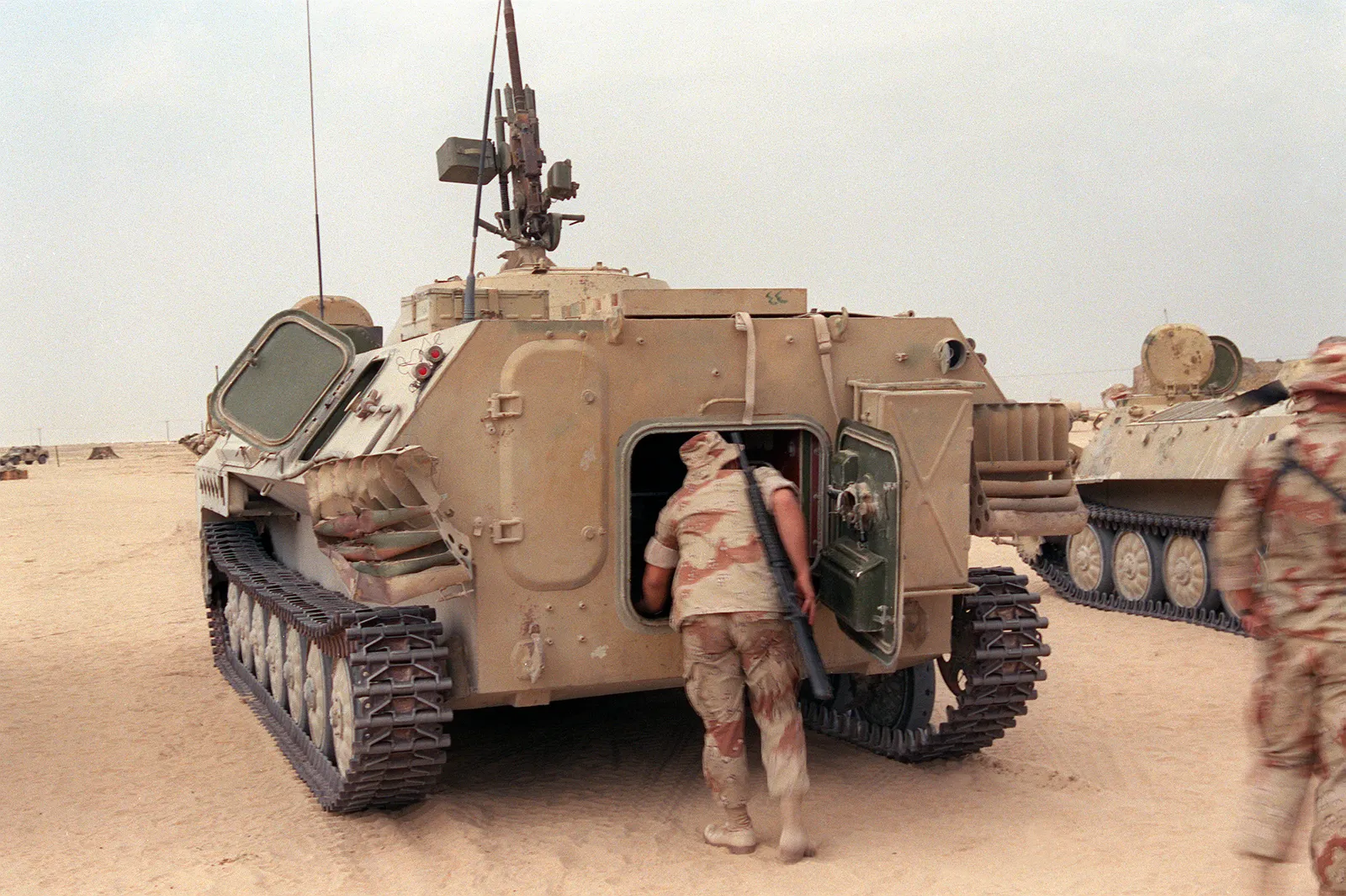
U.S. military imagery documents Iraqi MT-LBu vehicles captured by coalition forces during Operation Desert Storm, including front and rear views photographed on March 17, 1991.
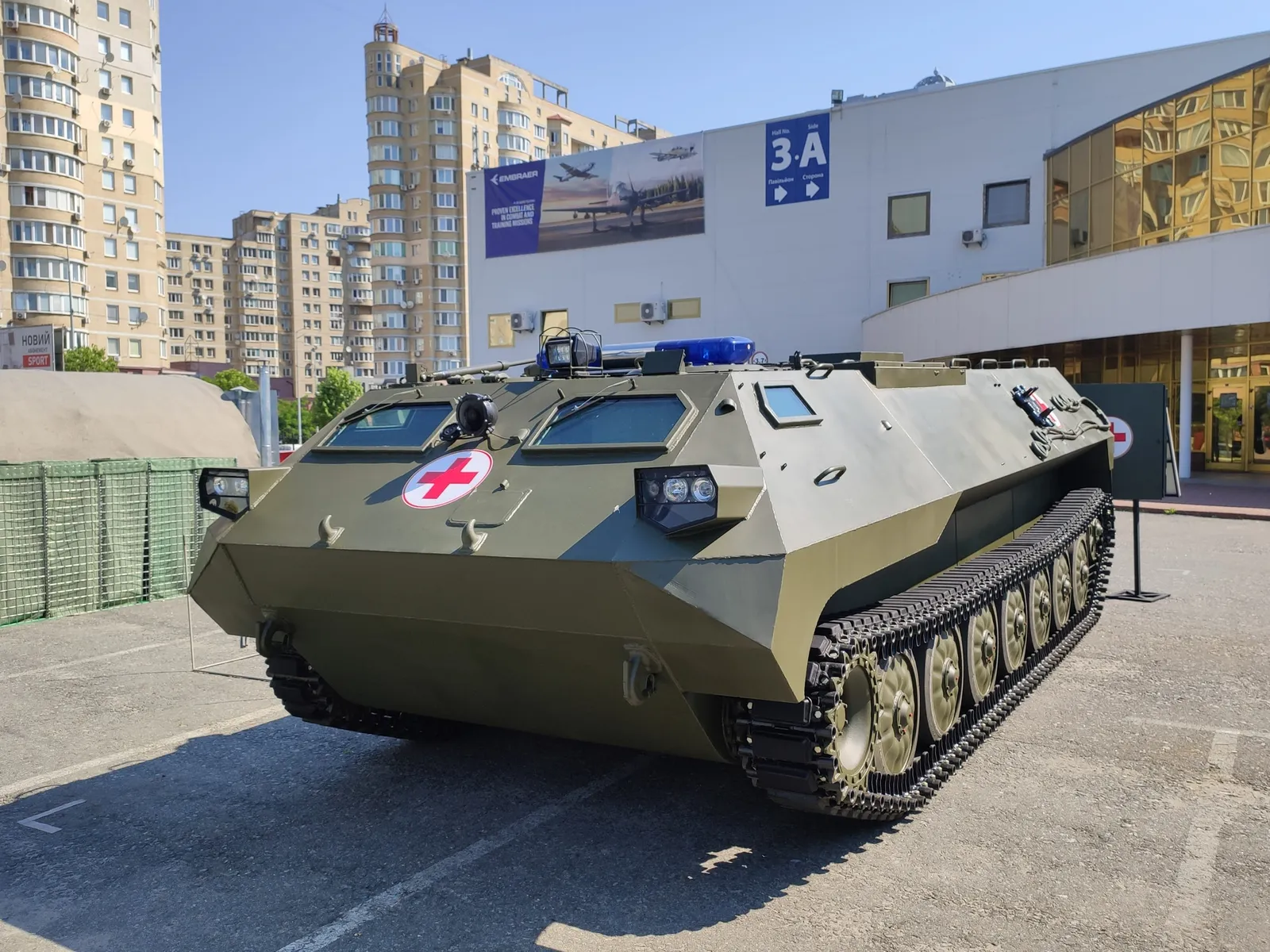
Role detailsThe MT-LBu is a Soviet amphibious tracked armored carrier and specialist chassis derived from the MT-LB family. Its higher hull, longer seven-road-wheel chassis, and 300 hp YaMZ diesel engine gave armies more internal volume and payload margin for command posts, artillery fire-control vehicles, radar carriers, electronic-warfare systems, and later battlefield conversions in conflicts such as the 2014 Russia-Ukraine War.
U.S. military imagery documents Iraqi MT-LBu vehicles captured by coalition forces during Operation Desert Storm, including front and rear views photographed on March 17, 1991.
Role detailsRussian and Ukrainian MT-LBu-family losses and captures are documented in the full-scale war, including Russian MT-LBu-based specialist vehicles, a captured R-381T2M Taran-M SIGINT vehicle, and Ukrainian MT-LBu vehicles fitted with BM-7 Parus combat modules.
Role detailsOpen-source loss documentation lists an Armenian-side MT-LBu captured during the 2020 Nagorno-Karabakh fighting, separately from baseline MT-LB vehicles and MT-LB gun conversions.
The MT-LBu differs from the baseline MT-LB by using a higher hull, a lengthened seven-road-wheel chassis, and a 300 hp diesel engine. That extra volume and payload margin made it a frequent base for command posts, artillery fire-control vehicles, radar carriers, electronic-warfare systems, and later battlefield conversions.
Specialist chassis for command, radar, signals, electronic-warfare, artillery-support, and troop-carrier adaptations.
Seven road wheels per side, compared with six on the baseline MT-LB.
The chassis provides amphibious mobility and volume for equipment, but protection remains light and role-specific vehicles depend heavily on their mission electronics or mounted combat module.
The MT-LBu is best treated as the longer specialist chassis inside the MT-LB family rather than as one fixed combat fit. Public references use it as the base for artillery command vehicles, radar and electronic-warfare carriers, signals vehicles, and later wartime combat conversions.
| Variant | Configuration | Designation notes |
|---|---|---|
 | Artillery command and fire-control system | Army Recognition lists the 1V12 Mashina set among MT-LBu variants, and FAS describes the ACRV M1974 family as artillery command and reconnaissance vehicles in self-propelled howitzer battalions. Sources: Army Recognition MT-LBu, FAS MT-LBu ACRV M1974 |
 | Battery command-observation vehicle | FAS identifies the IV14/IV15 ACRV M1974 command vehicles as the battery and battalion command-observation branch of the MT-LBu-based artillery command family. Sources: FAS MT-LBu ACRV M1974 |
 | Battalion command-observation vehicle | FAS identifies the IV14/IV15 ACRV M1974 command vehicles as the battery and battalion command-observation branch of the MT-LBu-based artillery command family. Sources: FAS MT-LBu ACRV M1974 |
 | Battalion fire-direction vehicle | FAS describes the IV16 ACRV M1974 branch as a battalion fire-direction center that probably carried an electronic field-artillery computer. Sources: FAS MT-LBu ACRV M1974 |
| R-381T Taran | Signals-intelligence and electronic-warfare system | Army Recognition and The War Zone describe Taran and Taran-M vehicles as MT-LBu-based SIGINT or electronic-warfare systems. Sources: Army Recognition MT-LBu, The War Zone Taran-M Capture |
 | Artillery reconnaissance radar carrier | The MT-LBu variant list includes the ARK-1 artillery locating radar family, and the linked catalog record covers the 1RL239/1RL239M ARK-1/ARK-1M Rys system. Sources: MT-LBu Wikipedia |
| 1L219 Zoopark-1 | Artillery reconnaissance radar carrier | Army Recognition lists 1L219 Zoopark-1 as an MT-LBu-family artillery reconnaissance radar vehicle; no linked Zoopark record was present during this pass. Sources: Army Recognition MT-LBu |
The MT-LBu shares the MT-LB family lineage but is the larger specialist chassis used when command, radar, fire-control, or electronic-warfare bodies need more internal volume.
| Compatible item | Item type | Compatibility evidence |
|---|---|---|
 | Baseline armored tractor and carrier | MT-LBu references describe it as a larger, unarmed, lengthened derivative of the MT-LB, with a higher hull and seven road wheels per side. Sources: MT-LBu Wikipedia, Army Recognition MT-LBu |
| Artillery command-observation vehicle | The linked 1V15 record covers one of the MT-LBu-based ACRV M1974 artillery command vehicles used for battalion command and observation. Sources: FAS MT-LBu ACRV M1974 |
| Battery command-observation vehicle | FAS identifies the 1V14/1V15 ACRV M1974 vehicles as the command-observation branch of the MT-LBu-based artillery command family. Sources: FAS MT-LBu ACRV M1974 |
| Artillery fire-control vehicle set | Army Recognition lists the 1V12 Mashina fire-control system as an MT-LBu variant set used with Soviet self-propelled artillery units. Sources: Army Recognition MT-LBu |
| Battalion fire-direction vehicle | The 1V16 branch of the ACRV M1974 family functioned as the battalion fire-direction center in the same MT-LBu-based artillery command family. Sources: FAS MT-LBu ACRV M1974 |
| Counter-battery radar vehicle | The ARK-1 artillery locating radar appears in MT-LBu variant lists, and the linked catalog entry covers the 1RL239/1RL239M ARK-1/ARK-1M Rys radar vehicle. Sources: MT-LBu Wikipedia |
FAS notes that the MT-LBu-based ACRV M1974 artillery command and reconnaissance vehicle family was first observed in 1974 and introduced with Soviet self-propelled howitzer units.
Sources: FAS MT-LBu ACRV M1974
U.S. military public-domain imagery documented captured Iraqi MT-LBu vehicles after Operation Desert Storm.
Sources: Commons Captured Iraqi MT-LBu 2, Commons Captured Iraqi MT-LBu 3, Commons Captured Iraqi MT-LBu Rear
Oryx listed an Armenian-side MT-LBu captured during the 2020 Nagorno-Karabakh war.
Sources: Oryx Nagorno-Karabakh Losses
The War Zone reported the Ukrainian capture of a Russian R-381T2M Taran-M SIGINT vehicle in Kharkiv Oblast and identified the Taran family as MT-LBu-based.
Sources: The War Zone Taran-M Capture