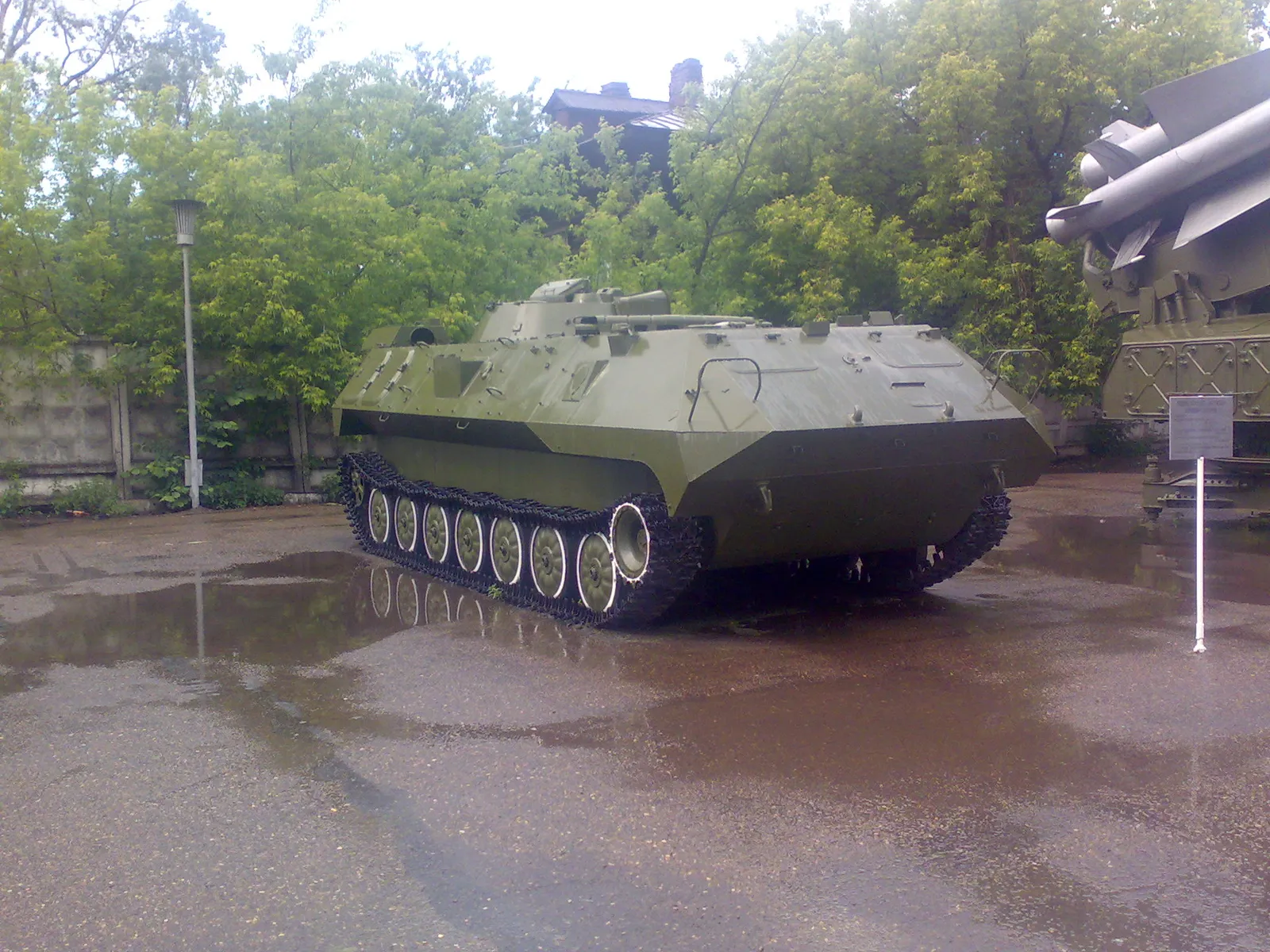


Oryx lists Russian 1V12(M) Mashina-S/Faltset fire-control systems as destroyed in Ukraine and separately records Ukrainian losses of 1V13, 1V14, 1V15, and 1V16M component vehicles. Defense Express, Telegraf, and WarSpotting document Russian 1V12-family vehicles abandoned or captured by Ukrainian forces in 2022. The evidence supports battlefield presence, losses, and capture of family vehicles, not a complete captured 1V12(M) set.
Role detailsSupport Equipment
1V12(M) Mashina-S/Faltset fire control system
Also known as
- 1V12
- 1V12 Mashina-S
- 1V12 Mashina
- 1V12 Mashina / 1V12M Faltset
- 1V12M
- 1V13
- 1V13M
- 1V13(M)
- 1V13 battery fire control center
- 1V13(M) battery fire control center
- 1V13 artillery command vehicle
- 1V13(M) artillery command vehicle
- 1V12M Faltset
- 1V12M Falset
- 1V12M Falcet
- 1V12-1BM
- 1V12-3 Mashina-M
- 1V12M-1
- 1V12M-2
- 1В12
- 1В13
- 1В12 Машина-С
- 1В12М Фальцет
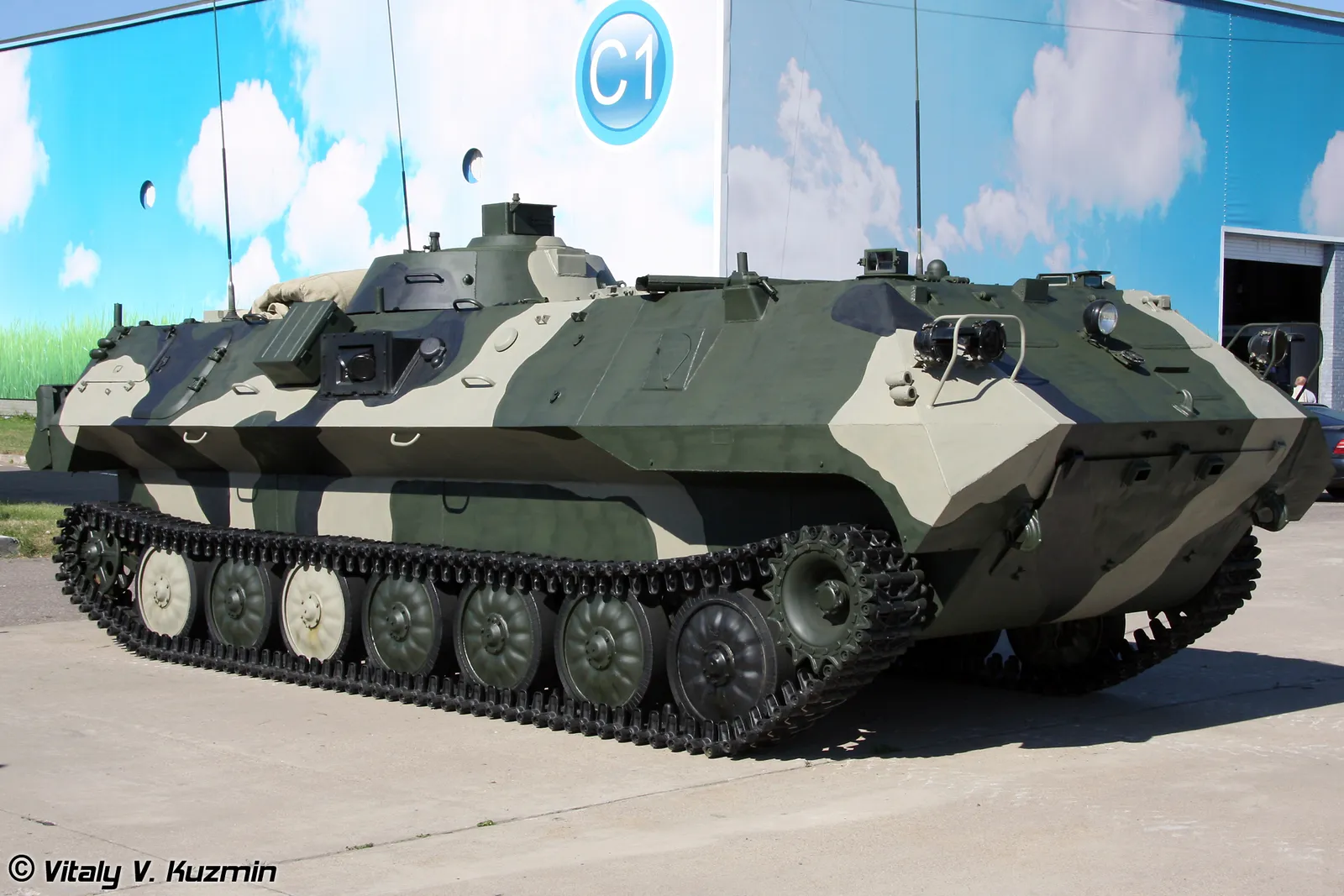
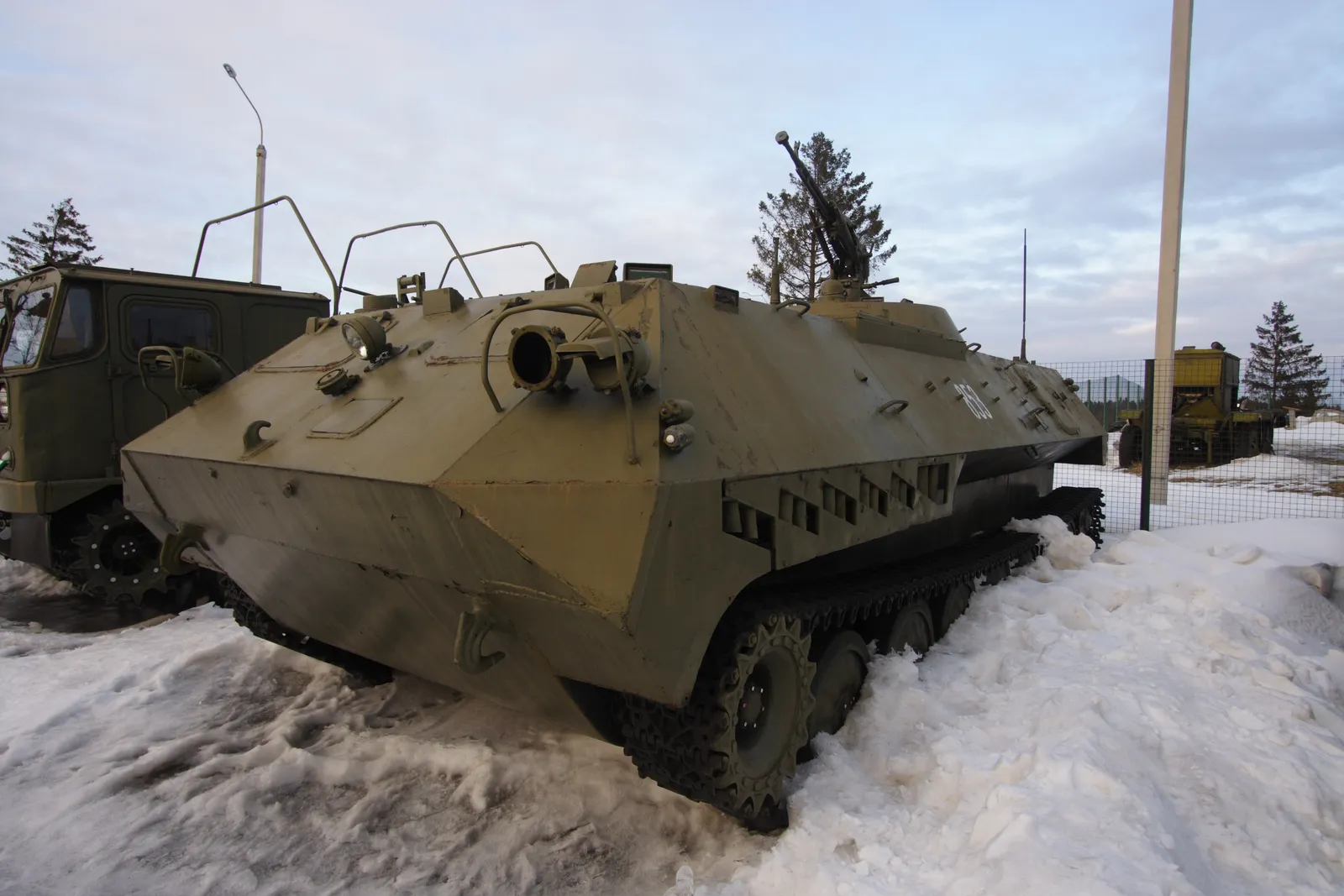
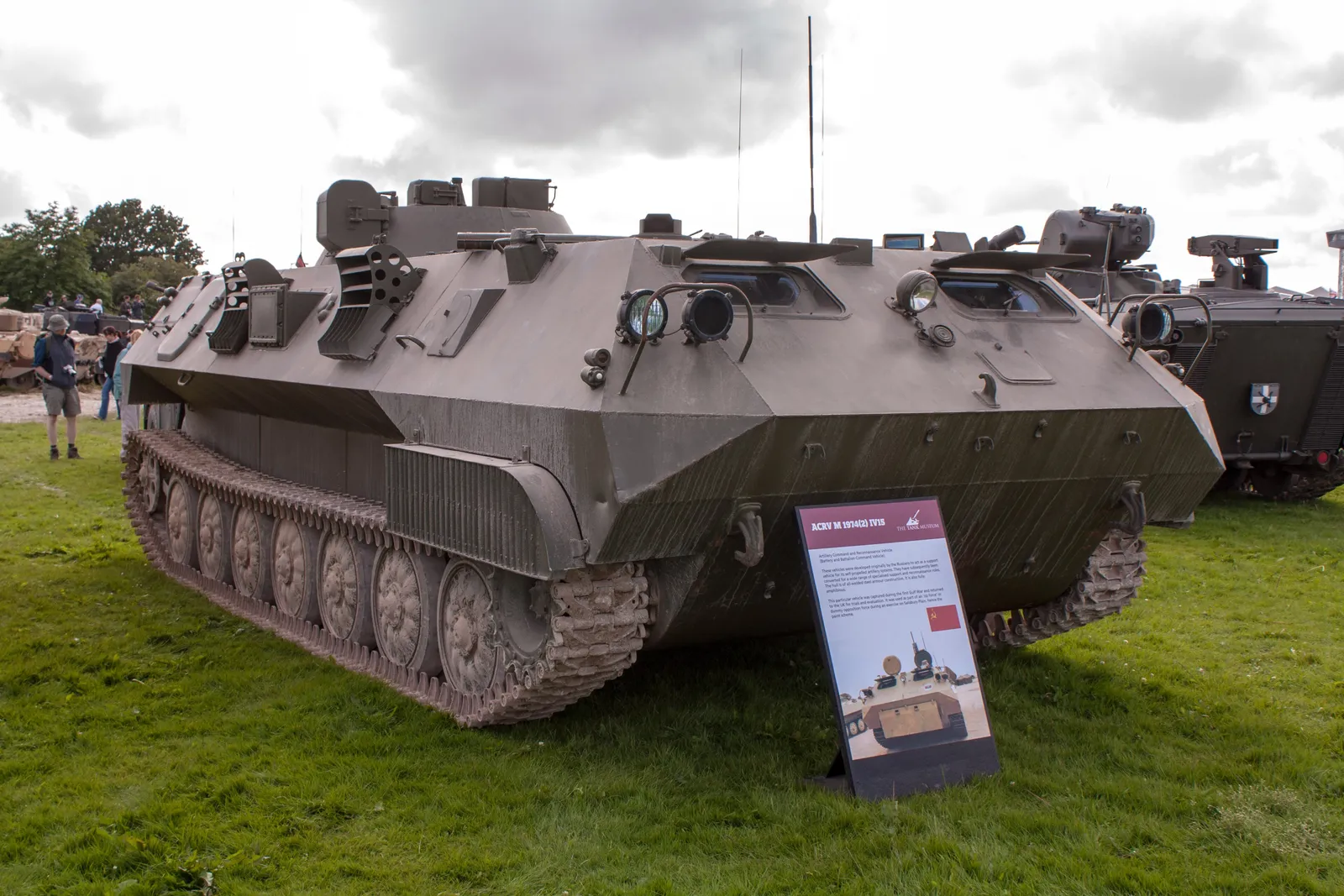
The 1V12 Mashina-S is a Soviet tracked artillery command and fire-control set for self-propelled artillery battalions, later modernized as the 1V12M Faltset family. Built around MT-LBu-based command vehicles, the set includes 1V13(M) battery fire-control centers alongside battalion and battery command vehicles, linking reconnaissance, topographic preparation, meteorological inputs, and firing-data calculation for systems such as 2S1, 2S3, 2S4, 2S5, 2S7, and 2S19. Loss trackers and Ukrainian reporting document Russian 1V12-family vehicles destroyed, abandoned, and captured during the 2014 Russia-Ukraine War.
Role in Conflicts
- Side
- Russia and South Ossetian forces
Oryx lists one 1V13(M) battery fire-control center destroyed among Russian artillery support vehicle losses in the 2008 Russo-Georgian War. The source supports combat loss of a 1V12-family component vehicle, not a complete 1V12(M) fire-control set.
- Side
- Russia
Oryx lists two Russian 1V13 command/forward-observation vehicles destroyed during the Second Chechen War. The evidence supports combat loss of 1V12-family component vehicles, not a complete 1V12(M) fire-control set.
Profile / Specs
Profile
- Origin
- Soviet Union
- Built by
- Motovilikha Plants
- Built in
- Soviet UnionRussia
- Type
- Tracked artillery command and fire-control system
- Service note
- Cold War artillery fire-control system in modern Russian service
- Designer
- NPO Signal
- Designed
- Development began in the late 1960s; state trials followed in 1971-1972
- Produced
- Serial production organized from 1973, with 1V12M modernization introduced in the mid-1980s
- Number built
- About 500 1V12 fire-control sets reported by Armforc
- Developed from
- MT-LBu tracked chassis and Soviet automated artillery fire-control development for self-propelled artillery
Specifications
- System role
- Automated and non-automated fire control for self-propelled artillery battalions and batteries
- System composition
- One 1V15, one 1V16, three 1V14, and three 1V13 vehicles in the baseline open-source composition
- 1V13(M) battery role
- Battery fire-direction/fire-control center in the 1V12/1V12M artillery command and reconnaissance vehicle set
- Modernized composition
- 1V12-1BM uses one 1V15-1BM, one 1V16-1BM, three 1V14-1BM, and three 1V13-1BM vehicles
- Base chassis
- MT-LBu tracked armored chassis for the 1V12 family
- Engine
- YaMZ-238N diesel listed for the MT-LBu-based chassis in Armforc technical data
- Engine power
- 300 hp / 221 kW in Armforc and ArmedConflicts chassis data
- Maximum road speed
- 60 km/h in Armforc chassis technical table
- Amphibious speed
- 4-5 km/h in Armforc chassis technical table
- Fuel range
- 500 km in Armforc chassis technical table
- Combat weight
- 11,800 kg for the MT-LBu chassis in Armforc technical data
- Armor
- 7-14 mm listed in Armforc chassis technical data
- Operating temperature range
- -40 C to +45 C in Armforc and BSVT descriptions
- Supported artillery systems
- 2S1, 2S3, 2S4, 2S5, 2S7, and 2S19 self-propelled artillery families in open-source descriptions
- 1V12-1BM deployment time
- Up to 3 minutes to deploy into combat position and up to 6 minutes to transfer into travel position in BSVT technical data
- 1V12-1BM night observation range
- 5,500 m observation range in limited visibility conditions in BSVT technical data
- 1V12-1BM range-finder distance
- 110-20,000 m measured-distance range in BSVT technical data
- 1V12-1BM fire-data equipment
- PC in each command-and-control vehicle, replacing the baseline 9V59 analog fire-data computer listed by BSVT
System Layout
The 1V12 family is best read as a set of command vehicles distributed across an artillery battalion. The battalion-level vehicles coordinate the division command post and fire-control workflow, while battery commander and battery fire-control vehicles carry the command, observation, calculation, navigation, and communications tasks closer to individual firing batteries.
Battalion vehicles
One 1V15 commander vehicle and one 1V16 chief-of-staff command vehicle form the battalion command layer in the open-source composition.
Battery vehicles
Three 1V14 battery commander vehicles and three 1V13 battery fire-control or senior battery officer vehicles provide the battery-level command and fire-control layer.
Fire-control tasks
Sources describe reconnaissance, target-coordinate work, topographic preparation, meteorological inputs, firing-data calculation, communications, and fire correction as core system functions.
Variants
Open sources treat 1V12 as the baseline Mashina-S system and 1V12M/Faltset as the modernized family. The set is assembled from battalion and battery command vehicles rather than one single vehicle.
| Variant | Configuration | Designation notes |
|---|---|---|
| 1V12 Mashina-S | Baseline tracked fire-control set | Armforc describes the original 1V12 set as accepted after 1971-1972 trials and produced from 1973 for self-propelled artillery battalions. Sources: Armforc 1V12 Mashina-S |
| 1V12M Faltset | Modernized fire-control set | ArmedConflicts and MT-LBu reference material list 1V12M Faltset/Falcet as a modernized 1V12-family designation, while Armforc says the mid-1980s modernization added improved reconnaissance, observation, and communications equipment. Sources: ArmedConflicts 1V12 Mashina-S, Armforc 1V12 Mashina-S, MT-LBu Wikipedia |
| 1V12-1BM | Belarusian upgraded command-and-control set | Belspetsvneshtechnika describes the 1V12-1BM upgrade as an MTLB-U-mounted command-and-control set with one 1V15-1BM, one 1V16-1BM, three 1V14-1BM, and three 1V13-1BM vehicles. Sources: BSVT 1V12-1BM |
Self-Propelled Artillery Supported
The 1V12 family is a command and fire-control set for self-propelled artillery units. Source descriptions tie its variants to several Soviet self-propelled artillery systems rather than to a single gun.
| Compatible item | Item type | Compatibility evidence |
|---|---|---|
 | 122 mm self-propelled howitzer | Armforc and ArmedConflicts describe the 1V12-1 branch as intended for units equipped with the 2S1 Gvozdika. Sources: Armforc 1V12 Mashina-S, ArmedConflicts 1V12 Mashina-S |
 | 152 mm self-propelled howitzer | Armforc and ArmedConflicts describe the 1V12-2 branch as intended for units equipped with the 2S3 Akatsiya. Sources: Armforc 1V12 Mashina-S, ArmedConflicts 1V12 Mashina-S |
 | 240 mm self-propelled mortar | Armforc and ArmedConflicts describe the 1V12-3 branch as intended for units equipped with the 2S4 Tyulpan. Sources: Armforc 1V12 Mashina-S, ArmedConflicts 1V12 Mashina-S |
 | 152 mm self-propelled gun | Armforc and ArmedConflicts describe the 1V12-4 branch as intended for units equipped with the 2S5 Giatsint-S. Sources: Armforc 1V12 Mashina-S, ArmedConflicts 1V12 Mashina-S |
 | 203 mm self-propelled gun | Armforc and ArmedConflicts describe the 1V12-5 branch as intended for units equipped with the 2S7 Pion. Sources: Armforc 1V12 Mashina-S, ArmedConflicts 1V12 Mashina-S |
 | 152 mm self-propelled howitzer | Armforc lists the 2S19 among the self-propelled artillery systems for which the 1V12 complex can provide automated and non-automated fire control. Sources: Armforc 1V12 Mashina-S |
Related Fire-Control Family
The catalog also tracks the 1V110 Bereza, a wheeled battery command vehicle from the related 1V17 Mashina-B family for towed and rocket artillery.
| Compatible item | Item type | Compatibility evidence |
|---|---|---|
 | Wheeled battery command vehicle | Armforc and the 1V110 catalog record place 1V110 in the related 1V17 Mashina-B artillery fire-control complex, while 1V12 is the tracked self-propelled-artillery branch. Sources: Armforc 1V12 Mashina-S |
Command Vehicle Components
The 1V12 set is built from specialized battalion and battery command vehicles. Several component vehicles have their own catalog records because wartime loss records and technical references identify them separately.
| Compatible item | Item type | Compatibility evidence |
|---|---|---|
 | Battery command-observation vehicle | Armforc, ArmedConflicts, and BSVT place three 1V14-family battery commander vehicles in the 1V12/1V12-1BM set, paired with three 1V13 battery fire-control vehicles at battery level. Sources: Armforc 1V12 Mashina-S, ArmedConflicts 1V12 Mashina-S, BSVT 1V12-1BM |
 | Battalion command-observation vehicle | Open-source composition lists one 1V15-family battalion commander vehicle in the set, while BSVT describes the upgraded 1V15-1BM as the divisional commander command-and-control vehicle. Sources: Armforc 1V12 Mashina-S, ArmedConflicts 1V12 Mashina-S, BSVT 1V12-1BM |
 | Battalion fire-direction vehicle | Armforc and ArmedConflicts list one 1V16-family chief-of-staff or command vehicle in the baseline set, and BSVT lists one 1V16-1BM in the upgraded 1V12-1BM composition. Sources: Armforc 1V12 Mashina-S, ArmedConflicts 1V12 Mashina-S, BSVT 1V12-1BM |
Timeline
1V12(M) Mashina-S/Faltset fire control system Key Events
Mashina-S development begins
Armforc traces the start of development for the self-propelled-artillery fire-control complex to April 1968, with NII Signal selected as lead developer.
Sources: Armforc 1V12 Mashina-S
State trials begin
Armforc reports that the 1V12 complex was presented for state trials in 1971, with trials continuing into 1972.
Sources: Armforc 1V12 Mashina-S
Serial production organized
Armforc says serial production of the 1V12 fire-control complex was organized at the Perm Machine-Building Plant, later associated with Motovilikha Plants.
Sources: Armforc 1V12 Mashina-S
1V12M modernization era
Armforc places the 1V12M modernization in the mid-1980s, adding improved reconnaissance, observation, and communications equipment; related references list Faltset/Falcet as the 1V12M designation.
Sources: Armforc 1V12 Mashina-S, ArmedConflicts 1V12 Mashina-S
Russian losses documented in Ukraine
Oryx lists three Russian 1V12(M) Mashina-S/Faltset fire-control systems as destroyed during the full-scale phase of the 2014 Russia-Ukraine War.
Sources: Oryx Russian equipment losses
Media
1V12(M) Mashina-S/Faltset fire control system Videos
1V12(M) Mashina-S/Faltset fire control system Images
Related Weapon Systems


Sources
MT-LBu WikipediaPublisher: Wikipedia | Note: Baseline starting source for the MT-LBu chassis family, 1V12 Mashina variant naming, 1V12M Faltset naming, and listed compatible self-propelled howitzer families; not used for direct conflict-use claims. | Accessed: 2026-07-02ODIN 1V13 artillery command vehiclePublisher: U.S. Army Training and Doctrine Command / ODIN Worldwide Equipment Guide | Note: Supports the 1V13 vehicle as a Russian artillery command and reconnaissance vehicle in the 1V12M Faltset ACRV set, including the modernization context for the electronics package. | Accessed: 2026-07-02Armforc 1V12 Mashina-SPublisher: Armforc.su | Note: Supports 1V12 development history, NII Signal designer attribution, MT-LBu chassis selection, 1971-1972 trial period, 1973 serial-production claim, Motovilikha/Perm production context, approximate production count, system composition, supported artillery systems, modernization background, and technical specifications. | Accessed: 2026-07-02ArmedConflicts 1V12 Mashina-SPublisher: ArmedConflicts.com / Valka.cz | Note: Supports the 1V12 Mashina-S identity, alternate Faltset/Falcet designation, command-vehicle set composition, MT-LBu chassis context, and branch associations with 2S1, 2S3, 2S4, 2S5, and 2S7 artillery units. | Accessed: 2026-07-02BSVT 1V12-1BMPublisher: Belspetsvneshtechnika | Note: Supports the 1V12-1BM upgrade's reconnaissance and fire-control role, MTLB-U chassis statement, vehicle composition, replacement of legacy equipment with automated digital-control hardware, and comparative baseline-to-upgrade figures including deployment and stow times, night observation range, topographic accuracy, range measurement, analog-to-digital radios, baseline 9V59 fire-data computer, and PC-equipped modernized command vehicles. | Accessed: 2026-07-02Armament RF 1V12M MashinaPublisher: Вооружение.рф | Note: Supports 1V12M Mashina family composition, NII Signal developer attribution, Motovilikha production attribution, 1973 service-entry claim, and operating-environment figures. | Accessed: 2026-07-02Oryx Russian equipment lossesPublisher: Oryx | Note: Supports 2014 Russia-Ukraine War direct conflict use by listing three Russian 1V12(M) Mashina-S/Faltset fire-control systems as destroyed among Russian artillery and missile support vehicle losses. | Accessed: 2026-07-02Oryx Ukrainian equipment lossesPublisher: Oryx | Note: Supports 2014 Russia-Ukraine War direct conflict use by listing Ukrainian losses of 1V13, 1V14, 1V15, and 1V16M artillery command and fire-control vehicles from the 1V12-family component set. | Accessed: 2026-07-02WarSpotting 1V14(M) KatiuzhankaPublisher: WarSpotting | Note: Supports the 1V14(M) vehicle identity as part of the 1V12(M) Mashina-S/Faltset fire-control system in the Russo-Ukrainian War loss record, used as corroborating family context rather than as the primary conflict-use source. | Accessed: 2026-07-02WarSpotting 1V13(M) SribnePublisher: WarSpotting | Note: Supports 2014 Russia-Ukraine War direct conflict use by recording a Russian 1V13(M) artillery command vehicle for the 1V12(M) system operated in Sumy Oblast and captured by Ukrainian forces in Chernihiv Oblast in February 2022. | Accessed: 2026-07-02WarSpotting 1V14(M) KharkivPublisher: WarSpotting | Note: Supports 2014 Russia-Ukraine War direct conflict use by recording a Russian 1V14(M) artillery command vehicle for the 1V12(M) system captured in Kharkiv Oblast and attributed to Ukraine's 14th Separate Mechanized Brigade. | Accessed: 2026-07-02Defense Express captured 1B14Publisher: Defense Express | Note: Supports 2014 Russia-Ukraine War direct conflict use by reporting a Russian 1V14 battery command and forward observer vehicle from the 1V12 Mashina-S complex abandoned during the Kharkiv counteroffensive and captured by Ukrainian forces. | Accessed: 2026-07-02Telegraf captured 1V14Publisher: Telegraf | Note: Supports 2014 Russia-Ukraine War direct conflict use by reporting a rare Russian 1V14 battery commander vehicle captured by Ukrainian forces in Kherson Oblast during the Ukrainian counteroffensive. | Accessed: 2026-07-02Oryx 2008 Russo-Georgian War lossesPublisher: Oryx | Note: Supports 2008 Russo-Georgian War direct conflict use by listing one Russian 1V13(M) battery fire-control center destroyed among artillery support vehicle losses. | Accessed: 2026-07-02Oryx Second Chechen War lossesPublisher: Oryx | Note: Supports 1999 Second Chechen War direct conflict use by listing two Russian 1V13 command/forward-observation vehicles destroyed among Russian artillery support vehicle losses. | Accessed: 2026-07-02Wikimedia Commons 1V12 museum imagePublisher: Wikimedia Commons | Note: Supports image provenance and Creative Commons/GFDL licensing for the primary image showing a 1V12 artillery fire-control vehicle at the Motovilikha Plants open-air museum in Perm. | Accessed: 2026-07-02Wikimedia Commons 1V13-1 imagePublisher: Wikimedia Commons | Note: Supports image provenance and Creative Commons licensing for a gallery image identified as a 1V13-1 artillery fire command vehicle on an MT-LBu chassis. | Accessed: 2026-07-02Wikimedia Commons 1V13 SOB imagePublisher: Wikimedia Commons | Note: Supports image provenance and Creative Commons licensing for a gallery image identified as a 1V13 senior battery officer vehicle for the 1V12 self-propelled-artillery fire-control system. | Accessed: 2026-07-02Wikimedia Commons 1V15 ACRV imagePublisher: Wikimedia Commons | Note: Supports image provenance and Creative Commons licensing for a gallery image identified as an ACRV M1974(2) / 1V15 component vehicle. | Accessed: 2026-07-02