Support Equipment

1V16 artillery command vehicle

Also known as
  • 1V16
  • 1V16(M)
  • 1V16M
  • 1V16-1
  • 1V16-2
  • 1V16-3
  • 1V16-4
  • 1V16-5
  • 1V16-8
  • 1V16-9
  • 1V16M-1
  • 1V16M-3
  • 1V16 battery command vehicle
  • 1V16 battalion fire direction vehicle
  • 1V16 battalion FDC
  • 1V16 Mashina-S
  • 1V12 Mashina-S 1V16
  • 1V12M Faltset 1V16M
  • ACRV M1974/3
  • 1В16
  • 1В16М

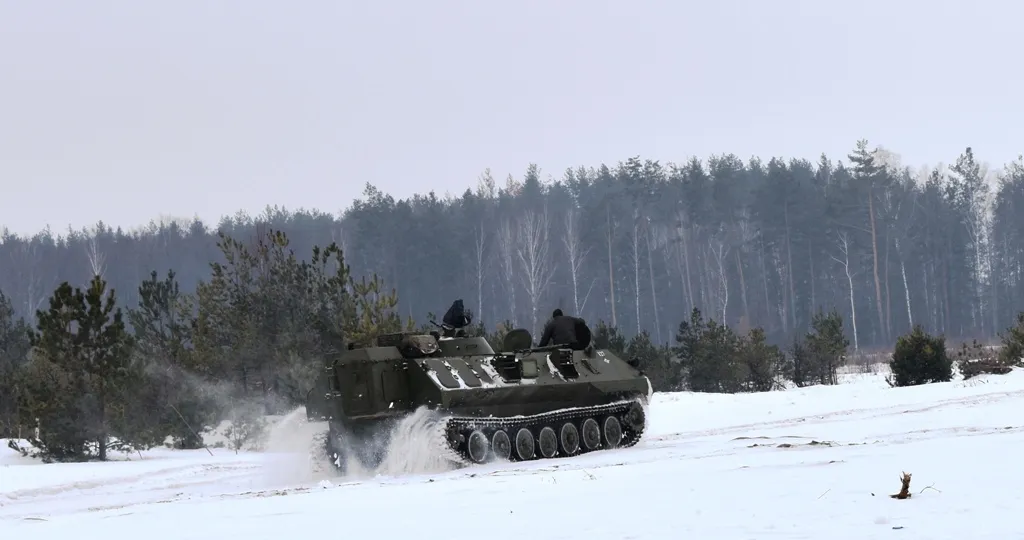
The 1V16 is the battalion-level fire-direction and command-staff vehicle in the Soviet 1V12 Mashina-S self-propelled-artillery fire-control system. Built on the MT-LBu tracked chassis, it carries computing, meteorological, communications, and command equipment for coordinating artillery batteries from the firing-position area rather than acting as a gun or launcher. Russian 1V16 and 1V16(M) vehicles are documented in the 2014 Russia-Ukraine War through visually confirmed loss and capture records.

Role in Conflicts

Side
Russia

Oryx lists two Russian 1V16 battalion fire-direction vehicles among visually documented losses in the full-scale invasion, one destroyed and one captured. WarSpotting identifies one destroyed Russian 1V16(M) artillery command vehicle from the 1V12(M) Mashina-S/Faltset fire-control system in Siverskodonetsk raion on 14 August 2025; this appears to correspond to Oryx's destroyed 1V16-linked entry.

Role details
Profile / Specs

Profile

Origin
Soviet Union
Type
Artillery battalion fire-direction and command-staff vehicle
Service note
Cold War Soviet artillery fire-control vehicle in post-Soviet service
Designed
Early 1970s; Russian reference material lists production and service from 1972
Produced
1972 onward for the 1V12-family service vehicle, with later 1V16M and 1V16-1BM modernization lines described in open sources
Developed from
1V12 Mashina-S automated fire-control system for self-propelled artillery

Specifications

System role
Battalion chief-of-staff / battalion fire-direction vehicle for the 1V12 Mashina-S self-propelled-artillery fire-control system
NATO reporting designation
ACRV M1974/3
Base chassis
MT-LBu tracked amphibious armored chassis
Crew
7 in Armforc technical table; FAS lists 6-7 for ACRV M1974/3
Combat weight
Not more than 15.5 t in Russian reference table
Dimensions
7,210 mm length, 2,970 mm width, 2,035 mm height in Russian reference table
Engine
YaMZ-238N diesel, 300 hp / 220 kW in Russian reference table
Maximum road speed
At least 60 km/h in Russian reference table
Road range
500 km in Russian reference table
Armament
One 12.7 mm DShKMT machine gun with 500 rounds and one RPG-7 with five grenades in Armforc equipment list
Fire-control equipment
9V59 computer, PUO-9M fire-control instrument, PRK-75 correction calculator; 1V16M uses 1V510 and 1V520 equipment in Armforc description
Communications
R-123/R-123M, R-111, R-130MT, R-326, T-219M secure-communications equipment, P-193M switchboard, TA-57 telephones, and cable reels listed by Armforc
Radio range
20-25 km on R-123, 220-250 km on R-111, and 130 km on R-130MT in Armforc technical table
Meteorological equipment
DMK landing meteorological kit, with 15-minute deployment time listed by Armforc
Fire-data timing
No more than 40 seconds to prepare settings for an unplanned target within the battalion in Armforc technical table
Battalion Fire-Direction Role

The 1V16 sits at battalion level in the 1V12 Mashina-S fire-control set. Open references describe it as the command-staff or fire-direction vehicle that calculates firing data, passes settings to battery firing positions, exchanges information with higher artillery headquarters, and coordinates attached artillery reconnaissance support.

Command position

Armforc describes the vehicle as a mobile battalion fire-control point normally located near the firing positions of the battalion's batteries.

Computation

The baseline vehicle carries 9V59 computing equipment with PUO-9M and PRK-75 fire-control instruments; Armforc lists 1V510 and 1V520 equipment for the 1V16M modernization.

Communications

Radio, field telephone, data-transfer, selective-call, and secure-communications equipment connect the vehicle with higher artillery headquarters, the battalion commander, battery command vehicles, senior battery officers, and attached reconnaissance elements.

Meteorology

The vehicle includes a landing meteorological kit, used to deploy a local meteorological post and prepare near-real-time firing corrections for the battalion.

Variants

The 1V16 designation covers the battalion chief-of-staff or battalion fire-direction vehicle in the 1V12 Mashina-S family. Russian-language references map suffixes to artillery systems or upgraded 1V12 complexes, while modern loss records often group wartime examples as 1V16 or 1V16(M).

VariantConfigurationDesignation notes
1V16Baseline battalion chief-of-staff vehicle

Baseline 1V12 / 1V12-1 vehicle on the MT-LBu chassis for battalion-level fire direction, communications, meteorological data, and firing-data distribution.

Sources: Armforc 1V16 Mashina-S, Russian Wikipedia 1V16

1V16MModernized 1V12M Faltset vehicle

Armforc identifies modernized 1V16M equipment changes including 1V510 computing equipment, 1A30M command transceivers, and a 1V520 ballistic computer.

Sources: Armforc 1V16 Mashina-S

1V16-12S1 Gvozdika unit variant

Russian reference material associates the 1V16-1 suffix with 1V12 fire-control equipment for 2S1 Gvozdika self-propelled howitzer units.

Sources: Russian Wikipedia 1V16, ArmedConflicts 1V12 Mashina-S

1V16-22S3 Akatsiya unit variant

Russian reference material associates the 1V16-2 suffix with 1V12 fire-control equipment for 2S3 Akatsiya self-propelled howitzer units.

Sources: Russian Wikipedia 1V16, ArmedConflicts 1V12 Mashina-S

1V16-32S4 Tyulpan unit variant

Russian reference material associates the 1V16-3 suffix with 1V12 fire-control equipment for 2S4 Tyulpan self-propelled mortar units.

Sources: Russian Wikipedia 1V16, ArmedConflicts 1V12 Mashina-S

1V16-42S5 Giatsint-S unit variant

Russian reference material associates the 1V16-4 suffix with 1V12 fire-control equipment for 2S5 Giatsint-S self-propelled gun units.

Sources: Russian Wikipedia 1V16, ArmedConflicts 1V12 Mashina-S

1V16-52S7 Pion unit variant

Russian reference material associates the 1V16-5 suffix with 1V12 fire-control equipment for 2S7 Pion self-propelled gun units.

Sources: Russian Wikipedia 1V16, ArmedConflicts 1V12 Mashina-S

1V16-1BMBelarusian 1V12-1BM modernization

Belspetsvneshtechnika lists one 1V16-1BM battalion chief-of-staff command-and-control vehicle in the upgraded 1V12-1BM self-propelled-artillery fire-control system.

Sources: BSVT 1V12-1BM

Fire-Control System Family

The 1V16 is a command-and-fire-direction node within the 1V12 Mashina-S family rather than a standalone firing weapon.

Compatible itemItem typeCompatibility evidence
1V12(M) Mashina-S/Faltset fire control system, Tracked artillery command and fire-control system, Support Equipment1V12(M) Mashina-S/Faltset fire control systemTracked artillery fire-control system

Armforc, ArmedConflicts, Grau and Bartles, and BSVT place the 1V16-family battalion chief-of-staff vehicle inside the 1V12 / 1V12M Mashina-S/Faltset fire-control set.

Sources: Armforc 1V12 Mashina-S, ArmedConflicts 1V12 Mashina-S, Grau and Bartles Russian Way of War, BSVT 1V12-1BM

MT-LBu, Amphibious tracked armored carrier and specialist chassis, Armored VehiclesMT-LBuTracked armored specialist chassis

Armforc, FAS, and Russian reference material identify the 1V16 as an MT-LBu-based artillery command and fire-direction vehicle.

Sources: Armforc 1V16 Mashina-S, FAS MT-LBu ACRV M1974, Russian Wikipedia 1V16

1V14 battery command and forward observer vehicle, Artillery battery command and forward observer vehicle, Support Equipment1V14 battery command and forward observer vehicleBattery command-observation vehicle

BSVT and Grau/Bartles place the 1V14 battery commander vehicle in the same eight-vehicle 1V12 battalion-level set as the 1V16 battalion chief-of-staff or FDC vehicle.

Sources: BSVT 1V12-1BM, Grau and Bartles Russian Way of War

1V15 command and forward observer vehicle, Artillery battalion command and forward observer vehicle, Support Equipment1V15 command and forward observer vehicleBattalion command-observation vehicle

Grau and Bartles place the 1V15 battalion commander vehicle in the same 1V12 battalion-level command-vehicle structure as the 1V16 battalion fire-direction vehicle.

Sources: Grau and Bartles Russian Way of War

Self-Propelled Artillery Sets

Open designation lists tie 1V16 suffixes to specific self-propelled artillery families served by the 1V12 fire-control complex.

Compatible itemItem typeCompatibility evidence
2S1 Gvozdika, 122 mm tracked self-propelled howitzer, Artillery2S1 Gvozdika122 mm self-propelled howitzer

Russian reference material associates the 1V16-1 variant with 1V12 equipment for 2S1 Gvozdika units.

Sources: Russian Wikipedia 1V16

2S3 Akatsiya, 152 mm tracked self-propelled howitzer, Artillery2S3 Akatsiya152 mm self-propelled howitzer

Russian reference material associates the 1V16-2 variant with 1V12 equipment for 2S3 Akatsiya units.

Sources: Russian Wikipedia 1V16

2S4 Tyulpan, 240 mm self-propelled heavy mortar, Artillery2S4 Tyulpan240 mm self-propelled mortar

Russian reference material associates the 1V16-3 variant with 1V12 equipment for 2S4 Tyulpan units.

Sources: Russian Wikipedia 1V16

2S5 Giatsint-S, 152 mm tracked self-propelled gun, Artillery2S5 Giatsint-S152 mm self-propelled gun

Russian reference material and ArmedConflicts associate the 1V16-4 variant with 1V12 equipment for 2S5 Giatsint-S units.

Sources: Russian Wikipedia 1V16, ArmedConflicts 1V12 Mashina-S

2S7 Pion, 203 mm tracked self-propelled gun, Artillery2S7 Pion203 mm self-propelled gun

Russian reference material associates the 1V16-5 variant with 1V12 equipment for 2S7 Pion units.

Sources: Russian Wikipedia 1V16

Timeline

1V16 artillery command vehicle Key Events

  1. Production-era baseline

    Russian reference material lists production and operation from 1972 for the 1V16, placing it in the early-1970s Soviet 1V12 Mashina-S command-automation generation.

    Sources: Russian Wikipedia 1V16

  2. 1V12M Faltset modernization lineage

    Grau and Bartles describe the 1V12M Faltset as a modernized version of the 1V12 Kharkov/Mashina-S artillery fire-control system with the same vehicle naming convention, including 1V16M.

    Sources: Grau and Bartles Russian Way of War

  3. Ukrainian-service MT-LBu image published

    The primary Commons image comes from Ukrainian airborne artillery training imagery and is used as a cautious open-license visual reference for a Ukrainian-service MT-LBu-family artillery command vehicle rather than confirmed 1V16 loss imagery.

    Sources: Wikimedia Commons MT-LBu Ukrainian service image

  4. Russian 1V16 losses documented in Ukraine

    Oryx's Russian equipment-loss list for the full-scale invasion records two Russian 1V16 battalion fire-direction vehicles, one destroyed and one captured.

    Sources: Oryx Russian equipment losses

  5. 1V16(M) destroyed in Siverskodonetsk raion

    WarSpotting records a Russian 1V16(M) artillery command vehicle for the 1V12(M) Mashina-S/Faltset fire-control system destroyed in Siverskodonetsk raion.

    Sources: WarSpotting 1V16M Siverskodonetsk

Related Weapon Systems
1V15 command and forward observer vehicle, Artillery battalion command and forward observer vehicle, Support EquipmentSupport Equipment1V15 command and forward observer vehicleArtillery battalion command and forward observer vehicleThe 1V15 is the battalion commander's mobile command-observation vehicle in the Soviet 1V12 Mashina-S artillery fire-control family. Built on the MT-LBu tracked chassis, it combines observation, rangefinding, navigation, communications, and fire-control equipment so an artillery battalion commander can reconnoiter targets, coordinate with supported maneuver units, and direct battalion fire from a protected forward post. Russian 1V15 losses are visually documented from the 1994 First Chechen War, and Russian and Ukrainian 1V15-family vehicles are documented in the 2014 Russia-Ukraine War through loss and capture records.
1V12(M) Mashina-S/Faltset fire control system, Tracked artillery command and fire-control system, Support EquipmentSupport Equipment1V12(M) Mashina-S/Faltset fire control systemTracked artillery command and fire-control systemThe 1V12 Mashina-S is a Soviet tracked artillery command and fire-control set for self-propelled artillery battalions, later modernized as the 1V12M Faltset family. Built around MT-LBu-based command vehicles, the set includes 1V13(M) battery fire-control centers alongside battalion and battery command vehicles, linking reconnaissance, topographic preparation, meteorological inputs, and firing-data calculation for systems such as 2S1, 2S3, 2S4, 2S5, 2S7, and 2S19. Loss trackers and Ukrainian reporting document Russian 1V12-family vehicles destroyed, abandoned, and captured during the 2014 Russia-Ukraine War.
1V14 battery command and forward observer vehicle, Artillery battery command and forward observer vehicle, Support EquipmentSupport Equipment1V14 battery command and forward observer vehicleArtillery battery command and forward observer vehicleThe 1V14 is the battery commander's mobile observation and fire-control vehicle in the Soviet 1V12 Mashina-S artillery command system. Built on the MT-LBu tracked chassis, it carries observation, navigation, rangefinding, communications, and fire-control equipment so a battery commander can reconnoiter targets, correct artillery fire, and coordinate with supported maneuver units from a protected forward position. Russian and Ukrainian 1V14 vehicles are documented in the 2014 Russia-Ukraine War through visually confirmed loss and capture records.
MT-LBu, Amphibious tracked armored carrier and specialist chassis, Armored VehiclesArmored VehiclesMT-LBuAmphibious tracked armored carrier and specialist chassisThe MT-LBu is a Soviet amphibious tracked armored carrier and specialist chassis derived from the MT-LB family. Its higher hull, longer seven-road-wheel chassis, and 300 hp YaMZ diesel engine gave armies more internal volume and payload margin for command posts, artillery fire-control vehicles, radar carriers, electronic-warfare systems, and later battlefield conversions in conflicts such as the 2014 Russia-Ukraine War.
1V110 BM-21 Grad battery command vehicle, Artillery battery command and fire-control vehicle, Support EquipmentSupport Equipment1V110 BM-21 Grad battery command vehicleArtillery battery command and fire-control vehicleThe 1V110 Bereza is the senior battery officer's command vehicle in the Soviet 1V17 Mashina-B artillery fire-control complex, used with towed and rocket-artillery units including BM-21 Grad batteries. Built on a GAZ-66 truck chassis, it carries navigation, communications, meteorological, and fire-control equipment for battery-level coordination; Oryx has documented Russian 1V110 BM-21 Grad battery command vehicles among losses in the 2014 Russia-Ukraine War.
1V119 Reostat, Airborne artillery reconnaissance and fire-control vehicle, Support EquipmentSupport Equipment1V119 ReostatAirborne artillery reconnaissance and fire-control vehicleThe 1V119 Reostat is a Soviet airborne, amphibious tracked artillery reconnaissance and fire-control vehicle based on the BTR-D chassis. Developed in the late 1970s for Soviet airborne artillery units, it combined observation, navigation, communications, and ballistic fire-control equipment to support self-propelled artillery formations, especially 2S9 Nona batteries. OSCE monitoring and Ukrainian reporting document Ukrainian 1V119s in the Donbas phase of the 2014 Russia-Ukraine War, while visual-loss records and defense reporting document Russian examples destroyed or captured after the 2022 full-scale invasion.
1V1003 command-observation vehicle, Artillery command-observation vehicle, Support EquipmentSupport Equipment1V1003 command-observation vehicleArtillery command-observation vehicleThe 1V1003 is the BTR-80-based command-observation vehicle in Russia's 1V198 Kanonada automated artillery fire-control system, used to help detect targets and automate fire missions for artillery batteries. Rostec says the 1V198 package was developed and produced by VNII Signal and includes 1V1003 vehicles with 1V1004 command-staff vehicles; open-source loss tracking and Ukrainian reporting documented at least one Russian 1V1003 captured during the 2022 phase of the Russia-Ukraine War.

Sources